Key Takeaways
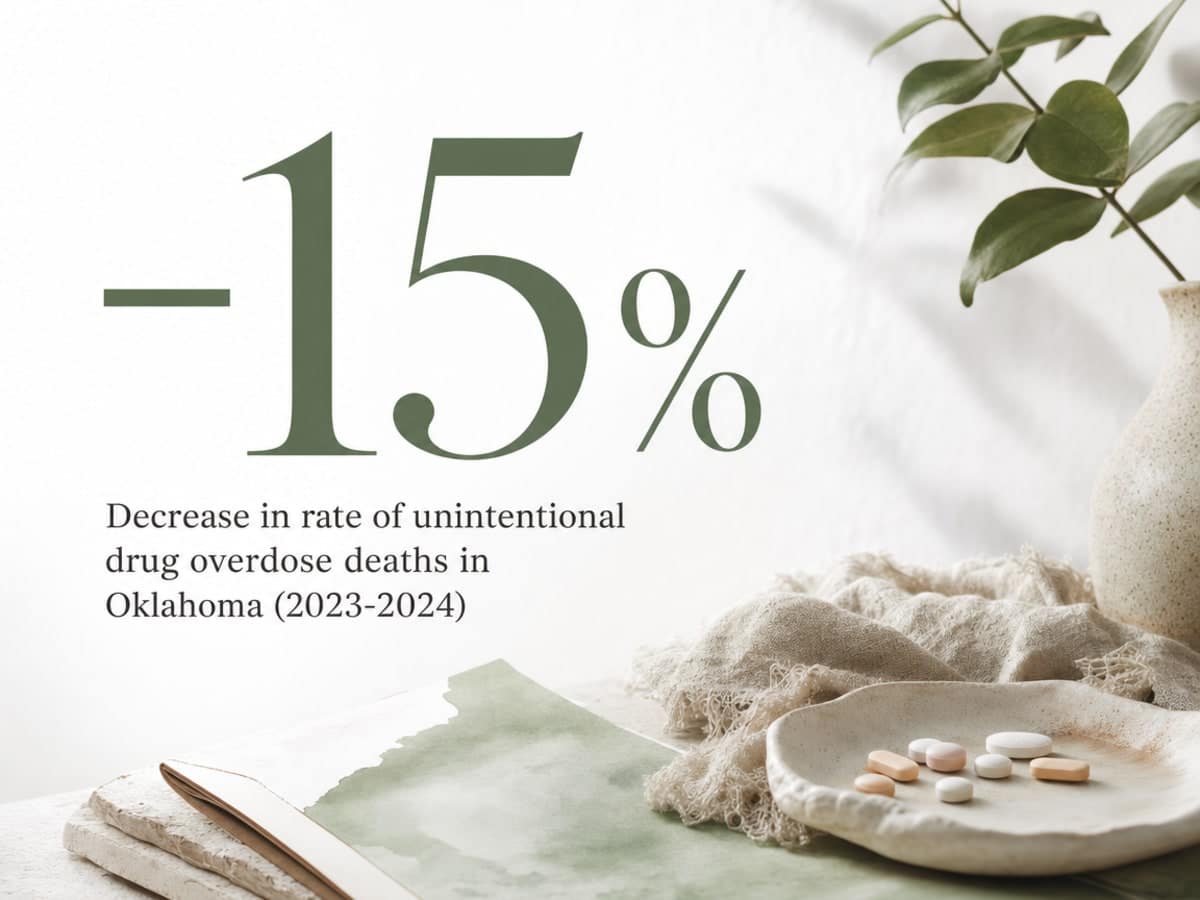
- Oklahoma overdose deaths dropped 15% from 2023 to 2024 as medication access and naloxone distribution expanded, meaning the system around someone in withdrawal is genuinely built to catch them.8
- Withdrawal timing depends on the specific opioid: short-acting drugs like heroin and oxycodone IR peak at 36 to 72 hours, while longer-acting opioids peak later and tail longer.14,15
- SoonerCare covers methadone, buprenorphine, and naltrexone as a mandatory benefit, and the 2020 IMD waiver opened residential beds Medicaid previously could not pay for.1,5
- Calling Renewal Springs in Oklahoma City connects you to same-day admission when beds are open, with free insurance verification and SoonerCare eligibility checks handled on the line.
What Oklahoma Looks Like If You’re Trying to Quit Opioids Right Now
If you’re reading this while your legs won’t stop moving and your stomach is turning, you’re not the only person in Oklahoma doing this today. You’re one of thousands. And the shape of that crowd matters, because it tells you something honest about your odds.
Here’s what Oklahoma actually looked like in 2024: 1,137 people died from a drug overdose, 4,228 ended up in an inpatient hospital bed after a nonfatal overdose, and 6,804 landed in an emergency department and walked back out. That’s roughly ten people surviving an overdose for every one who didn’t. The people who didn’t make it deserve to be named. The people who did are proof that most opioid crises in this state are still reachable. If you’re upright enough to be reading this, you’re in the reachable group.9
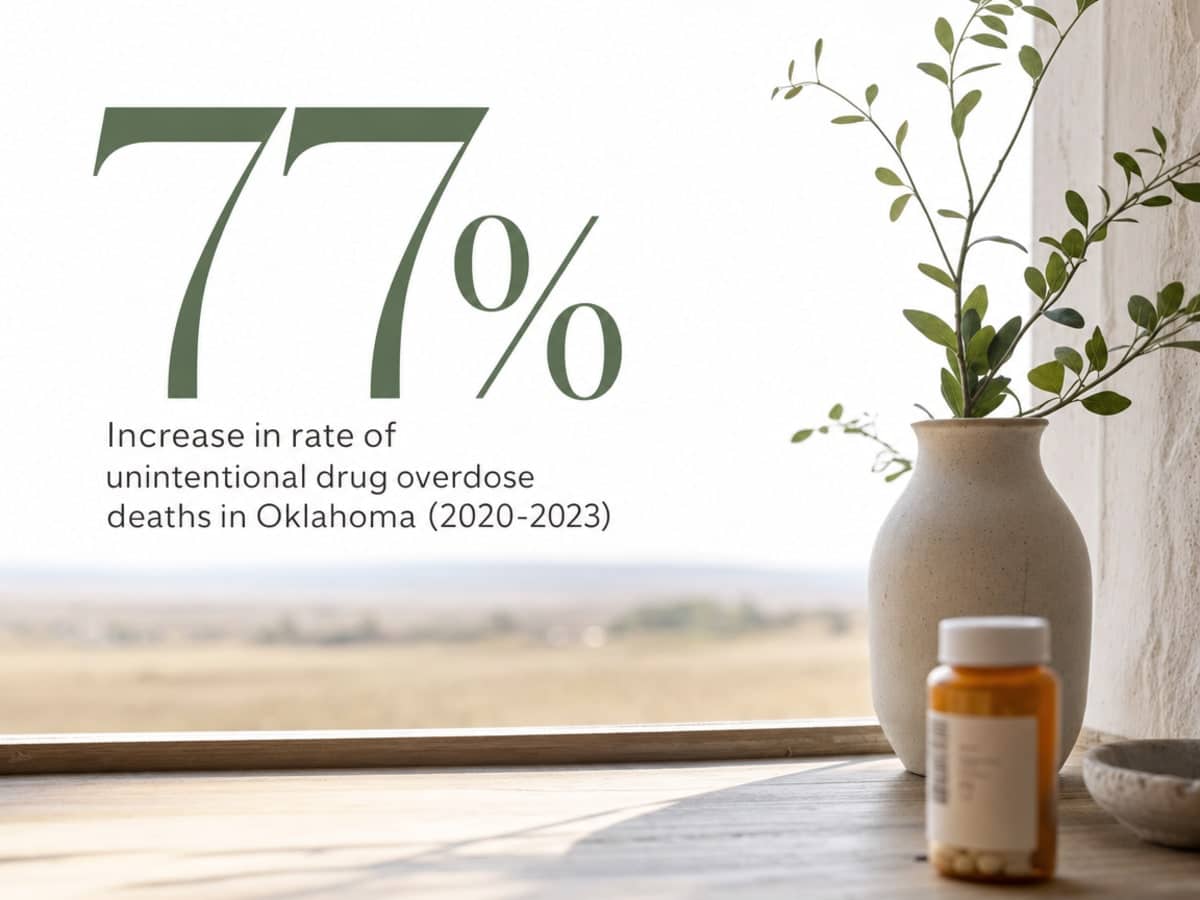
The bigger arc gives a little more room to breathe. Unintentional overdose deaths in Oklahoma climbed 77% from 2020 to 2023, then dropped 15% from 2023 to 2024. Something is starting to work — medication access, wider naloxone distribution, more people picking up the phone.8
None of that fixes what you feel in your body right now. But it does mean the system around you is actually built to catch you. Detox beds exist. Coverage exists. Medications that quiet the worst of withdrawal exist. The next sections walk through exactly how each piece works, starting with why fentanyl is a different conversation than the one you’re here for.
Why This Article Is About Heroin, Oxy, Hydro, and Morphine — Not Fentanyl
Quick note before you keep reading, because it matters for what you’ll find here.
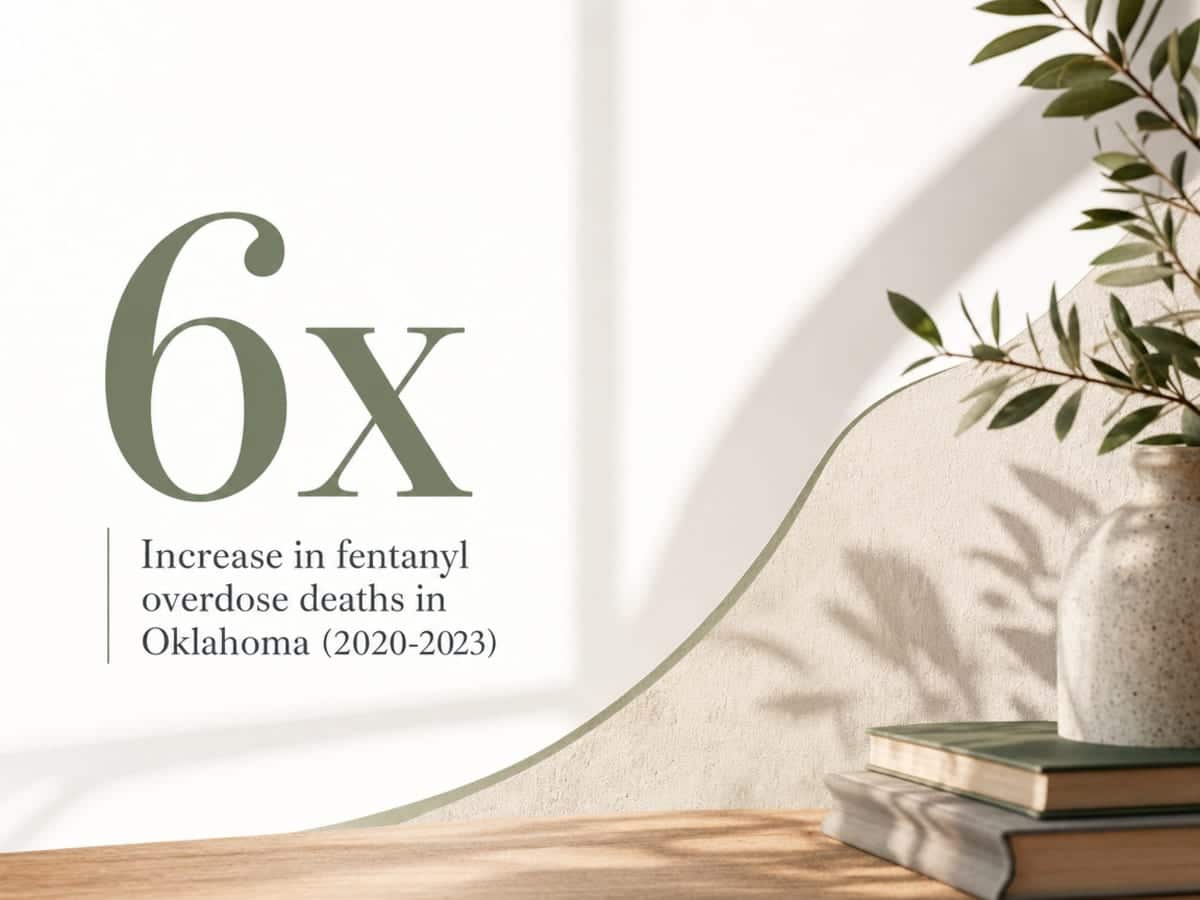
This page is about withdrawal from heroin, oxycodone, hydrocodone, and morphine — the opioids that dominated the crisis for a decade and still send plenty of Oklahomans into detox every week. Fentanyl is a different animal and gets its own article. In 2024, fentanyl was involved in 86% of Oklahoma’s opioid-related overdose deaths, and detoxing off it requires different medication timing, different monitoring, and different expectations for the tail end of withdrawal.8
If you’re using pills from a legitimate prescription that got out of hand, buying oxy or hydro on the side, or shooting or snorting heroin, keep reading. What follows is written for you. If you know or suspect fentanyl is in your supply, the fentanyl-specific piece will serve you better — though the phone number to call is the same.
What Opioid Withdrawal Actually Feels Like, Hour by Hour
The Symptoms You Can Expect (And Why They Happen)
Your body got used to opioids doing a job it used to do on its own. When the drug leaves, that job doesn’t restart smoothly. It comes back all at once, everywhere, and it hurts.
You already know some of this. The runny nose. The yawning that won’t stop. Goosebumps that show up out of nowhere and won’t go away — the old street term for withdrawal is “cold turkey” for a reason. Your pupils blow wide. Your eyes water. You sweat and then you’re freezing five minutes later.
Then the deeper stuff arrives. Muscle aches that settle in your lower back and your calves. Restless legs that keep you from sleeping at exactly the moment you’d give anything to sleep. Stomach cramps, then nausea, then vomiting and diarrhea that can leave you dangerously dehydrated. Your heart rate climbs. Your blood pressure climbs. Anxiety cranks up until it feels like your skin is on wrong.
Knowing what’s coming won’t make you enjoy it. It will make it feel less like something is wrong with you.
Timeline by the Drug in Your System
Most timelines you’ll read online lump every opioid together and give you a generic Day 1, Day 2, Day 3. That’s not useful when you’re the one counting hours. The drug you’ve been using has a half-life, and that half-life determines when withdrawal starts, when it peaks, and how long the tail lasts.
Here’s the honest split, drawn from SAMHSA’s medically supervised withdrawal guidance and the TIP 45 clinician summary.14,15
Short-acting opioids — heroin, oxycodone IR, hydrocodone:
- Onset: 8 to 24 hours after your last dose. If you use heroin, expect symptoms closer to the 8-hour end. Oxy IR and hydro tend to sit closer to 12–16 hours.
- Peak: 36 to 72 hours. This is when the vomiting, the cramping, and the sleeplessness stack on top of each other. The worst window.
- Acute symptoms resolve: Roughly 5 to 7 days for the physical piece.
Longer-acting opioids — morphine ER, oxycodone ER, or anyone who’s been dosed on methadone:
- Onset: 24 to 48 hours, sometimes later. It takes longer to feel the floor drop out.
- Peak: 72 to 96 hours. The peak arrives later and lasts longer.
- Acute symptoms resolve: 7 to 14 days, with a longer tail of low energy, sleep problems, and cravings.
A quick word about that tail. After the acute physical stuff eases, most people go through what clinicians call protracted withdrawal — weeks of poor sleep, low mood, and a nervous system that startles too easily. This is not a failure on your part. It’s your brain rebuilding its own dopamine and endorphin systems after they were essentially outsourced to a pill or a needle.
Find yourself on this timeline. If you took your last oxycodone eight hours ago and your nose is starting to run, you have not started the peak yet. That’s important, because the smart move is to be somewhere safe with medication and a nurse before the peak lands — not after. Making the call in hour 10 is a very different experience than making it in hour 50.
How a Detox Team Measures What You’re Going Through (COWS)
When you walk into a detox unit, no one is going to ask you to rate your suffering on a scale of one to ten and take your word for it. They’ll use something called the Clinical Opiate Withdrawal Scale, or COWS.
COWS is a short checklist a nurse fills out at the bedside. Resting pulse. Sweating. Pupil size. Runny nose. Tremor. Yawning. Gooseflesh. Restlessness. GI upset. Anxiety. Each item gets a small number, and the numbers add up to a score that tells the team, in plain terms, whether you’re in mild, moderate, moderately severe, or severe withdrawal. A systematic review of hospital OUD guidelines found this scale is the standard tool clinicians reach for before starting buprenorphine.17
Why does that matter to you? Because COWS is what decides when your first dose of medication is safe to give and how much to give. It gets repeated every few hours. You don’t have to describe how bad it is. They’ll see it, score it, and dose accordingly.
The Medications That Make Withdrawal Survivable
Buprenorphine, Methadone, Naltrexone, and Clonidine — What Each One Does
You don’t have to suffer through this. That sentence is not marketing. It’s the actual clinical standard, and there are four medications behind it.
Buprenorphine is usually the first one a detox team reaches for. It’s a partial opioid agonist, which means it binds to the same receptors heroin and oxycodone were sitting on, but only turns them on partway. That’s enough to shut off the cramping, the sweating, and the crawling-out-of-your-skin feeling within about an hour of the first dose. There’s a catch: if you take it too early, while there’s still enough of the other opioid on board, it can knock that opioid off the receptor and slam you into worse withdrawal — called precipitated withdrawal. This is why the COWS score matters. The nurse waits until your score shows you’re actually in withdrawal, then dosing begins. SAMHSA lists buprenorphine as one of the three most common FDA-approved medications for opioid use disorder.18
Methadone is a longer-acting full agonist. It’s given in opioid treatment programs under strict federal rules, and for someone who’s been using heavy doses of heroin or high-tolerance pill use for years, it can be a gentler taper than buprenorphine. It doesn’t cause precipitated withdrawal the same way. It has to be dosed daily at a licensed clinic.12
Naltrexone is different from the other two. It’s not an agonist — it blocks opioid receptors entirely. You cannot start it while there are still opioids in your system. SAMHSA TIP 63 is specific: at least 7 days without short-acting opioids like heroin, oxycodone, and hydrocodone, and 10 to 14 days without long-acting opioids like morphine ER before your first dose. Miss that window and naltrexone will trigger severe withdrawal all over again. This is why the extended-release shot usually shows up later in the process, not on day one.14
Clonidine is the utility player. It’s an alpha-2 agonist, originally a blood pressure medication, and it quiets the sympathetic nervous system storm — the racing heart, the sweating, the anxiety, the goosebumps. TIP 45 names it alongside methadone and buprenorphine as a primary agent for opioid withdrawal. It doesn’t touch cravings, so it’s rarely used alone, but it’s often layered in alongside buprenorphine to take the edge off the symptoms medication alone can’t fully cover.15
Why Detox Alone Isn’t Enough — and What Happens After
Here’s the part no one wants to say out loud when you’re already scared: getting through the physical withdrawal is the beginning, not the end.
The Canadian national guideline says the same thing in different words: offering withdrawal management alone, without immediate transition to long-term treatment, is associated with increased relapse, morbidity, and death. Two independent bodies looking at the same evidence, reaching the same conclusion.16
This is why a good detox doesn’t end at the door. It ends with a plan — buprenorphine or naltrexone continuing on the outside, a counseling appointment on the calendar, and a warm hand-off to residential, intensive outpatient, or an OBOT provider. Finishing detox and walking out with nothing lined up is the highest-risk moment. Finishing detox with the next appointment already booked is a completely different story.7
What 24/7 Medically Supervised Detox Looks Like in Oklahoma City
The First 24 Hours: Intake, Vitals, and Stabilization
Walking in is the hardest part. Once you’re through the door at Renewal Springs in Oklahoma City, the work is not on you anymore.
Intake starts with a conversation, not a clipboard interrogation. A nurse asks what you’ve been using, how much, how long, and when your last dose was. She’ll ask about other substances too — alcohol, benzos, kratom — because those change how the next 72 hours are managed. Vitals go on: blood pressure, pulse, temperature, oxygen. Someone runs a COWS score to see exactly where you are on the withdrawal curve.
Then the wearable goes on. Renewal Springs integrates Huml Health biotech that tracks your heart rate, sleep, and stress signals in real time, so the overnight nurse isn’t waiting for you to press a call button to know something has shifted. If your pulse climbs at 3 a.m., someone knows before you do.
If your COWS score says you’re ready, buprenorphine or another medication is started that first day. If you’re not there yet, clonidine and comfort meds bridge you until you are. You get fluids, a private room, and permission to stop performing being okay.
Days 2 Through 7: Getting Through the Peak
Day two and day three are the ones you’re most afraid of. They’re the ones the medications are built for.
By day two, if you were using heroin, oxycodone IR, or hydrocodone, you’re heading into the peak window — the 36-to-72-hour stretch. The team keeps rechecking your COWS score every few hours and adjusts your buprenorphine or methadone dose to match what your body is doing, not what the schedule says. Clonidine gets layered in for the racing heart and the sweats. Anti-nausea meds and IV fluids handle the vomiting so you’re not losing more than you can replace.
Sleep starts to come back somewhere around day four or five. Appetite follows. You’ll still feel wrung out. That’s normal.
Small wins count here. Keeping water down. Walking to the bathroom on your own. Twenty minutes of actual sleep. The staff notices these things because they know what they mean.
How Renewal Springs Hands You Off to What Comes Next
The last two or three days of your stay are about what happens after.
This is where the CDC and Canadian guideline warnings actually get honored. Nobody at Renewal Springs is going to discharge you at 7 a.m. with a printout of hotline numbers and wish you luck. The case manager sits down with you and lines up the next appointment before you walk out — an OBOT provider to continue your buprenorphine, a methadone clinic if that’s the right fit, or a naltrexone shot once you’ve cleared the washout window.13,14,16
If you need more structure than outpatient can give you, Oklahoma’s Section 1115 IMD waiver now lets SoonerCare pay for residential SUD treatment, so a step down into a longer program is a real option, not a fantasy. ODMHSAS runs statewide MOUD services you can plug into no matter which county you live in.5,7,10
You leave with a plan on paper and a phone number that answers.
Paying for It: SoonerCare, Private Insurance, and the Verification Call
What SoonerCare Covers for Opioid Detox and MAT
If you have SoonerCare, or you qualify for it and haven’t enrolled yet, the coverage situation for opioid detox in Oklahoma is better than most people realize.
In 2020, Oklahoma became the first Medicaid agency in the country to get federal approval to cover every FDA-approved medication for opioid use disorder through both opioid treatment programs and office-based settings. That approval is written into the State Plan Amendment as a mandatory benefit for adults and children who meet medical necessity — methadone, buprenorphine, naltrexone, and the counseling that goes with them. It’s not a special program you have to qualify for on top of Medicaid. If you have SoonerCare, MAT is part of what SoonerCare does.1,2,3
Detox and residential SUD treatment sit under the same umbrella. The SoonerCare benefits table lists detox and residential substance use disorder services as covered, with prior authorization required. That prior auth is real — the facility handles it, not you — but it’s the reason the case manager will ask you specific questions about your use history at intake.4
Here’s the piece that changed the local map in 2020: Oklahoma’s Section 1115 IMD waiver now lets Medicaid pay for medically necessary residential SUD treatment and inpatient care in facilities that used to be blocked by the old IMD payment exclusion. Beds that Medicaid couldn’t touch a few years ago are reachable now. That’s why you’ll hear the word “covered” a lot more often than you might expect.5,10
Private Insurance, Prior Authorization, and the Free Benefits Check
If you have private insurance through a job, a spouse, or the marketplace, opioid detox is almost always a covered benefit under mental health parity rules. What varies is the deductible, the copay, and whether your specific plan requires prior authorization before admission.
You don’t have to figure that out on your phone at 2 a.m. Renewal Springs runs free benefits verification. You give them the name on the card, the member ID, and the group number, and they call your insurer directly to confirm what’s covered, what a stay will cost you out of pocket, and whether prior auth needs to happen before you walk in or can be handled the same day.
Uninsured is not the same as ineligible. If you don’t have coverage, the admissions team can help you check SoonerCare eligibility on the spot — Medicaid expansion widened the door significantly for adults who used to fall through the cracks.
One phone call answers the money question. Make it before you talk yourself out of it.
How to Make the Call Today
You’ve read enough. Here’s what actually happens when you pick up the phone and call Renewal Springs in Oklahoma City.
A person answers. Not a menu tree. You tell them what you’ve been using and when your last dose was — that’s it, that’s the whole opening. They’ll ask a few more questions to get a sense of where you are on the withdrawal curve, and if you have insurance, they’ll take your card info and run the free verification while you’re still on the line. If you don’t have coverage, they’ll help you check SoonerCare eligibility right there.3, 4
If a bed is open and you’re ready, you can be admitted the same day. Bring your ID, your insurance card if you have one, and a short list of anything else you take — prescriptions, vitamins, the occasional beer. Leave everything else. They’ll handle it.
The hardest thing you’ll do today is dial. Everything after that is someone else’s job.
Speak now for opioid detox guidance and support
Talk to a real person about safe, supervised opioid withdrawal and next steps right now.
Frequently Asked Questions
How long does opioid withdrawal last if I’ve been using heroin, oxycodone, or hydrocodone?
For short-acting opioids like heroin, oxycodone IR, and hydrocodone, symptoms usually start 8 to 24 hours after your last dose, peak between 36 and 72 hours, and the worst physical stuff eases up around day 5 to 7. Sleep, mood, and cravings can drag on for weeks after that. Medication shortens the peak and takes the sharpest edges off.14
Can I detox from opioids at home, or do I need a medical facility?
You can try, and plenty of people have. SAMHSA’s clinical guidance says outright that managing significant opioid withdrawal without effective medications is not recommended. Dehydration from vomiting and diarrhea, spiking blood pressure, and the crash in tolerance that follows all raise real risks. A supervised setting gives you buprenorphine or methadone, IV fluids, and someone watching your vitals — plus a plan for what comes after.15
Does SoonerCare cover opioid detox and medication-assisted treatment in Oklahoma?
Yes. SoonerCare covers medication-assisted treatment as a mandatory benefit for adults and children who meet medical necessity, including methadone, buprenorphine, and naltrexone through both opioid treatment programs and office-based settings. Detox and residential SUD services are also covered, though prior authorization is required — the facility handles that call, not you 4. The 2020 IMD waiver opened up residential beds that Medicaid couldn’t pay for before.1,2,5
What’s the difference between buprenorphine, methadone, and naltrexone during detox?
Buprenorphine is a partial agonist that quiets withdrawal within about an hour but has to be started once you’re already in withdrawal, or it can make you sicker. Methadone is a full agonist given daily at a licensed clinic and often fits high-tolerance users better. Naltrexone blocks opioid receptors entirely — it can’t start until you’ve been off short-acting opioids 7 days or long-acting opioids 10 to 14 days.14,18
What happens if my loved one refuses to go, or wants to leave partway through?
Detox in Oklahoma is voluntary for adults, so they can leave. What you can do is call Renewal Springs yourself and talk through what you’re seeing. Admissions staff will coach you on how to have the conversation, what to say when withdrawal starts, and how insurance verification can be pre-run so there’s no delay. Leaving mid-detox is especially dangerous because tolerance has already dropped.13
How fast can I actually get a bed at a detox facility in Oklahoma City?
Often the same day. When you call Renewal Springs, a person picks up, asks what you’ve been using and when, and runs your insurance while you’re still on the line. If a bed is open and you’re medically appropriate, you can be admitted within hours. Bring your ID, insurance card if you have one, and a list of any medications you take.
References
- Oklahoma State Plan Amendment (SPA) 20-0036 – Medicaid. https://www.medicaid.gov/Medicaid/spa/downloads/OK-20-0036.pdf
- 317:30-5-241.7. Medication-assisted treatment (MAT) services for eligible individuals with opioid use disorder. https://oklahoma.gov/ohca/policies-and-rules/xpolicy/medical-providers-fee-for-service/individual-providers-and-specialties/outpatient-behavioral-health-services/medication-assisted-treatment-services-for-eligible-individuals-with-opioid-use-disorder.html
- Oklahoma Health Care Authority to Increase Coverage for Opioid Treatment Programs. https://oklahoma.gov/ohca/about/newsroom/2021/march/ohca-to-increase-coverage-for-opioid-treatment-programs.html
- Mental Health and Substance Abuse Services – Oklahoma.gov (SoonerCare benefits table). https://oklahoma.gov/ohca/individuals/programs/mental-health-and-substance-abuse-services.html
- Oklahoma Institutions for Mental Diseases Waiver for Serious Mental Illness/Substance Use Disorder (Section 1115 demonstration). https://www.medicaid.gov/medicaid/section-1115-demonstrations/downloads/ok-imd-waiver-smi-sud-pa.pdf
- SECTION 95.50. Residential substance use disorder (SUD) reimbursement. https://oklahoma.gov/ohca/policies-and-rules/xpolicy/medical-providers-fee-for-service/individual-providers-and-specialties/inpatient-psychiatric-services/residential-substance-use-disorder-reimbursement1.html
- Medications for Opioid Use Disorder – Oklahoma Department of Mental Health and Substance Abuse Services. https://oklahoma.gov/odmhsas/treatment/adult-family-treatment-services/moud.html
- Drug Overdose Data – Oklahoma State Department of Health. https://oklahoma.gov/health/health-education/injury-prevention-service/drug-overdose/data.html
- Drug Overdose Data Graphs and Maps (Oklahoma, 2024). https://oklahoma.gov/content/dam/ok/en/health/health2/aem-documents/prevention-and-preparedness/injury-prevention/drug-overdose/Drug%20Overdose%20Data%20Graphs%20and%20Maps.pdf
- CMS Announces Approval of Oklahoma & Maine’s Substance Use Disorder Demonstrations. https://www.cms.gov/newsroom/press-releases/cms-announces-approval-oklahoma-maines-substance-use-disorder-demonstrations-30th-31st-expand-access
- Oklahoma’s Oversight of Medicaid Outpatient Services for Beneficiaries with Opioid Use Disorder. https://oig.hhs.gov/documents/audit/8294/A-06-20-08000-Complete%20Report.pdf
- Chapter 70. Standards and Criteria for Opioid Treatment Programs (ODMHSAS). https://oklahoma.gov/content/dam/ok/en/odmhsas/documents/policy/provider-certification/administrative-rules/2025/PC–Chapter-70_9_15_2025.pdf
- CDC Clinical Practice Guideline for Prescribing Opioids for Pain (2022). https://stacks.cdc.gov/view/cdc/122248/cdc_122248_DS1.pdf
- TIP 63: Medications for Opioid Use Disorder (Full PDF). https://library.samhsa.gov/sites/default/files/pep21-02-01-002.pdf
- Quick Guide for Clinicians Based on TIP 45 — Detoxification and Substance Abuse Treatment. https://nida.nih.gov/sites/default/files/samhsa_detoxification_and_substance_abuse_treatment.pdf
- Management of opioid use disorders: a national clinical practice guideline. https://www.ncbi.nlm.nih.gov/pmc/articles/PMC5837873/
- Management of Opioid Use Disorder, Opioid Withdrawal, and Opioid Overdose Prevention in Hospitalized Adults: A Systematic Review of Existing Guidelines. https://www.ncbi.nlm.nih.gov/pmc/articles/PMC9474657/
- Treatment Options for Substance Use Disorder (SAMHSA). https://www.samhsa.gov/substance-use/treatment/options