Key Takeaways
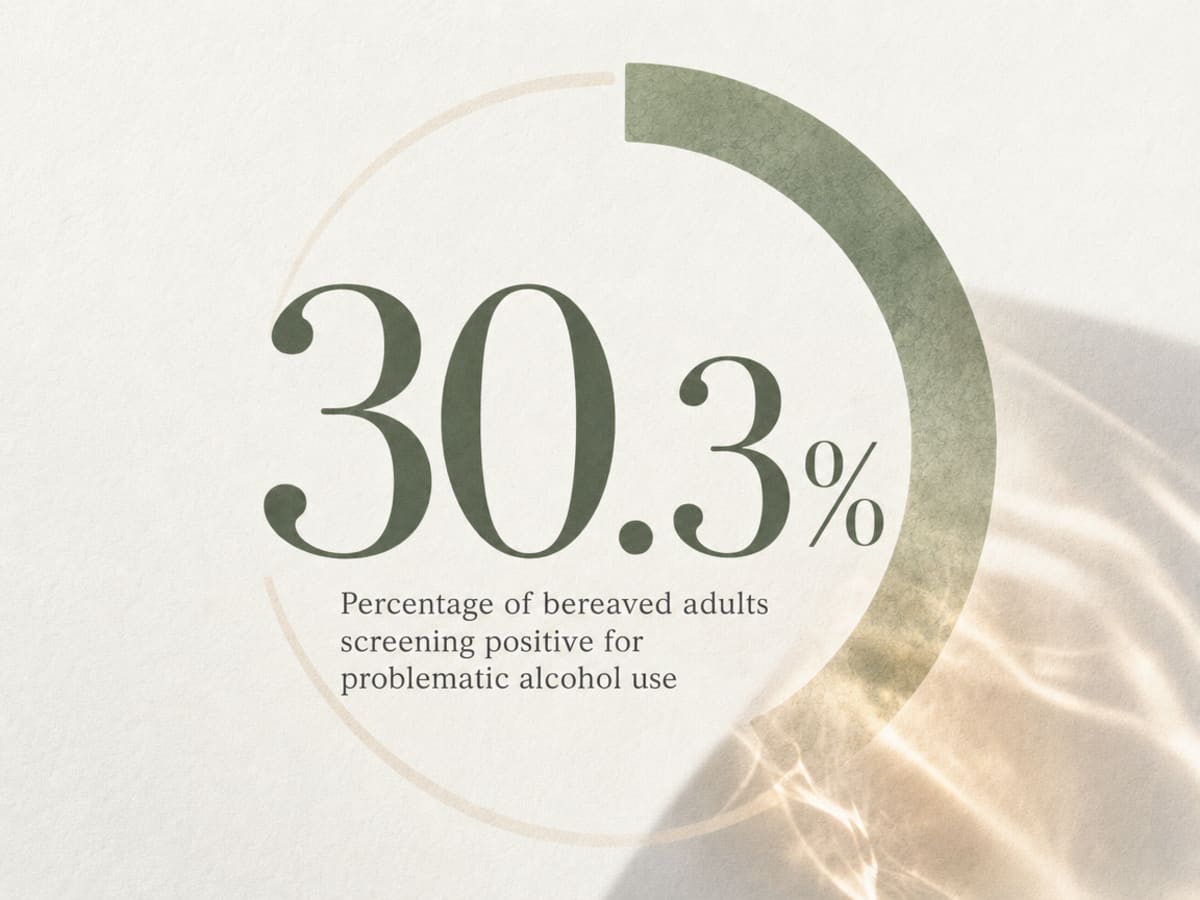
- Nearly one in three bereaved U.S. adults screen positive for problematic alcohol use, with recent loss, depression, and prolonged grief raising the odds further 1.
- Risk concentrates on specific dates like Thanksgiving, Christmas Eve, New Year’s Eve, and personal anniversaries, making a six-night plan more realistic than fighting the whole season.
- Grief, depression, and heavy drinking are three overlapping problems that need concurrent attention, not a sequential wait-and-see approach 9.
- Daily heavy drinking rewires the nervous system, so morning shakes or failed attempts to quit signal the need for medically supervised detox rather than willpower 8.
The Pour Got Heavier This Year
You noticed it somewhere around the first string of lights going up on your neighbor’s porch. The glass of wine with dinner became two. The nightcap started earlier. The bottle that used to last a week is gone by Thursday. And you are not sure when, exactly, that shifted.
Here is the thing worth saying first: you are not broken, and you are not alone in this. In a 2025 national study of 1,529 U.S. adults who had lost someone significant, 30.3% screened positive for problematic alcohol use.1 Nearly one in three. These are grieving people, not strangers to themselves. They are parents who lost a child, spouses who lost a partner, adult kids who lost a mother, friends who lost a friend. They are reaching for the same thing you are reaching for.
Grief is already heavy. The holidays make it heavier. The music is louder, the family gatherings are more crowded with absence, and the quiet after everyone leaves is sharper than any other quiet in the year. Of course the pour got heavier. Alcohol does something, briefly, to the ache. That is not a character flaw. That is a nervous system doing what nervous systems do when the pain is too much and the tools are too few.
This guide is not here to shame you or scare you. It is here to help you understand what is happening, name the dates that are hardest, and show you what a kinder path through this season can look like, including the point where your body may need medical help to stop safely.
Why Grief and Alcohol Keep Finding Each Other
What a Drink Is Actually Doing at 11 p.m.
Here is what nobody tells you about that late-night glass: it is doing something real. It is not weakness, and it is not imagination. Alcohol is a central nervous system depressant. It slows down the part of you that has been running on high alert since the funeral. The shoulders drop. The chest loosens. For about forty-five minutes, the ache gets quieter.
That is why 11 p.m. is so dangerous. The house is still. The people who were texting you earlier have gone to bed. The grief that you kept at arm’s length during the workday walks right up to you. And there, on the counter, is the one thing that reliably makes it stop for a little while.
The problem is not the first drink. The problem is what the first drink teaches your brain. Every time you pair unbearable feeling with drink that softens it, the pathway gets a little more worn. After weeks of that, your brain stops asking whether you want a drink and starts expecting one at 11 p.m. the way it expects to brush your teeth. SAMHSA has long noted that substance use often begins or escalates after a traumatic loss, precisely because it works in the short term.7
Naming this is not a judgment. It is the first step toward choosing differently. You are not fighting a bad habit. You are untangling a nervous system that found a shortcut.
Recent Loss, Depression, and Prolonged Grief Raise the Odds
Not everyone who grieves starts drinking more. That is worth saying plainly, because if the pour did get heavier for you, it means something specific is happening — something the research can actually point to.
The 2025 national study of bereaved adults found three factors that pushed the odds of problematic drinking higher:
- a recent death,
- depressive symptoms running alongside the grief, and
- prolonged grief disorder — the kind of grief that does not soften with time, that keeps you organized around the person who is gone.1
If any of those sound like your last twelve months, you are in the group where drinking tends to climb. That is not a prediction. It is a pattern.
Older adults carry their own version of this. A systematic review of late-life bereavement found moderate evidence that alcohol consumption rises after a spouse dies, right alongside weight loss and nutritional risk.5 The widower who starts pouring bourbon with dinner because the house is too quiet is not a stereotype. He is in the data.
What this means for you: if your loss was recent, if the sadness has teeth that feel sharper than grief alone, or if you still cannot put the person down a year later, your heavier drinking is not a coincidence. It is a signal. Pay attention to it the way you would pay attention to a cough that will not go away.
Why the Calendar Matters More Than the Season
Christmas Eve, New Year’s Eve, and the Dates You Can See Coming
“The holidays” is too big a thing to fight. Six weeks of lights and parties and small talk is not a battle you can win with willpower alone. But a single Tuesday night in late December? That you can plan for.
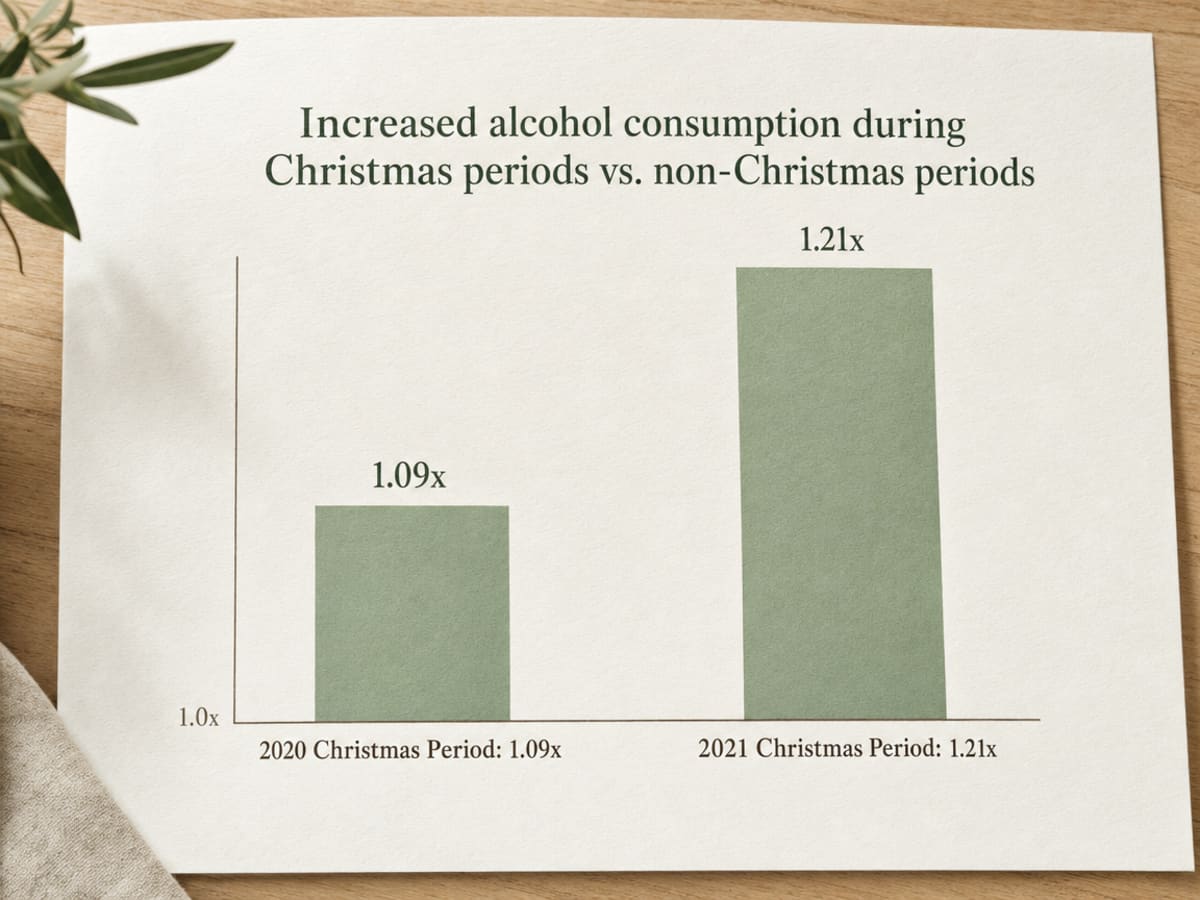
The research backs this up. A longitudinal study of adults found that the mean number of drinking days per week was 1.09 times higher during the 2020 Christmas period and 1.21 times higher during the 2021 Christmas period compared with non-Christmas times of year.3 That is not a dramatic multiplier. But it is a persistent one, across two different years, which tells you something steady is happening around late December that nudges almost everyone’s glass a little closer.
Within that stretch, the spikes concentrate on specific nights. An event-level study of 578 adults tracking daily drinking from December onward found that mean consumption was significantly higher on Christmas and New Year’s Eve than on most weekends in the surrounding weeks.2 A separate study using wearable-device data across federal holidays found alcohol use rose on 14 of 20 holidays and holiday eves, with an average prevalence increase of 46.7% in that sample — though the group was mostly male and the data came from the pandemic era, so take the exact number as a direction, not a prediction.4
Here is why this helps you: you can circle the dates. Thanksgiving. Christmas Eve. Christmas Day. New Year’s Eve. The anniversary of the loss. Those five or six nights are where most of the risk lives for most people. You do not have to white-knuckle six weeks. You have to pick your ground on about six nights.
The Empty Chair at Thanksgiving and the First Christmas Morning
The research can tell you which nights are statistically risky. It cannot tell you which nights are personally brutal. Only you know that.
For a lot of grieving people, the hardest moment is not the party. It is the small ritual that used to belong to the person who is gone. Your mother’s stuffing recipe, and you are the one making it this year. The chair your husband sat in, and no one knows whether to move it or leave it. Pouring two mugs of coffee on Christmas morning because thirty years of habit does not care that she died in March. The voicemail you cannot delete, played once in the car on the way to your sister’s house.
These are not weak moments. They are the exact places where grief has the most leverage, because love built the ritual and absence just moved in. The drink at 11 p.m. after that kind of day is not random. It is the nervous system reaching for the one tool it knows works fast.
Name those moments before they arrive. Say them out loud to one person who will not flinch. Write them on paper if there is no such person yet. The point is not to avoid feeling them. The point is to stop being ambushed. A hard moment you saw coming is survivable. A hard moment that walks up behind you at the counter is the one that pours the second drink.
Grief Risk Does Not End in January
Here is something nobody warns you about: the drinking does not always stop when the tree comes down. The parties end, the relatives fly home, the leftover ham finally gets thrown out — and the pour at 11 p.m. is still there. Sometimes louder, because now the distraction of the season is gone and the loss is just sitting on the couch next to you.
This matters for how you think about the next few weeks. If you white-knuckle December and go back to pouring heavier in February, you have not actually come through anything. You have just postponed the conversation.
So mark the calendar for after the holidays too. The Sunday afternoons in late January when the house is too quiet. The birthday in March. The random Tuesday in July when their favorite song comes on at the grocery store. Grief does not keep a schedule, and your plan for taking care of yourself cannot either. If the pour is still heavy in April, that is information, not failure. It means the pattern needs more than willpower and a new year.
Grief, Depression, and Drinking: Three Things That Need Separate Attention
It is tempting to put all of this in one pile and call it “the hard time.” The sadness, the lost appetite, the trouble sleeping, the heavier pour. But those are not one thing. They are three things that overlap and feed each other, and treating them as one package is how people stay stuck.
- Grief
- A response to loss. It comes in waves, it is tied to the person who is gone, and it can co-exist with love and even moments of lightness.
- Depression
- A clinical condition that flattens everything, not just the parts connected to the loss. The clinical guidance here is explicit: grief and major depressive disorder can occur together, and they need concurrent attention rather than a wait-and-see sequence where one is treated only after the other resolves.9 If you cannot taste food in January the way you could in October, if nothing feels like anything, if you are having thoughts about not being here — that is not just grief doing its work. That is a second thing, and it has its own treatment.
- Drinking
- The third thing. It started as a response to the first two, but at some point it stops being a response and starts being its own problem. It makes depression worse. It stalls grief instead of letting it move through you. And it builds a physical dependence that has nothing to do with how sad you are.
You do not have to sort this out alone or in order. A clinician who screens for all three at once — the grief, the mood, the drinking — gives you a far better shot than tackling them one at a time while the other two keep pulling you back under.
Smaller, Kinder Decisions You Can Make This Season
Before the Day: Picking Your Ground
A hard day you planned for is a different animal than a hard day that arrives. So sit down, on a quiet afternoon that is not already loaded, and look at the week ahead.
Pick the one or two gatherings that actually matter. Thanksgiving dinner at your sister’s, maybe. The small Christmas Eve service you went to with your mother every year. Say yes to those with your whole chest. Say no, or a soft maybe, to the rest. Nobody who loves you needs you at the office white elephant this year.
Then make three decisions in writing before the day arrives:
- Who you are calling at 9 p.m. if the night turns. Put the name and number in your phone’s favorites tonight, not in the moment.
- How you are getting home, and when you are leaving. A ride booked in advance is a decision you cannot un-make at 10:30.
- What is in the fridge for after. Seltzer with lime. The leftovers your friend dropped off. Something warm you do not have to think about.
None of this is about control. It is about not asking the version of you who just made it through dinner to also be the strategist.
During the Day: What to Do With the Glass in Your Hand
You do not have to make a vow before you walk in the door. Vows at the door tend to shatter by dessert, and then the whole day feels like a loss. Try something smaller.
Hold a drink that is not alcohol for the first hour. A club soda in a wine glass is still a glass in your hand, and nobody at the party is tracking what is in it. The point is to let your nervous system settle into the room before you reach for the thing that softens edges.
Eat before you drink, and eat again before the second one. Grief appetite is unreliable, so a small plate of real food is a kind of medicine on these days.
If you do drink, pour it yourself. Open bars and heavy-handed uncles pour grief-sized drinks, not standard ones. Space them with water in between — not as a trick, but because dehydration and alcohol together will wreck you by 10 p.m., and the version of you at 10 p.m. is the one making the hardest calls.
And give yourself one honest sentence for when someone asks why you are going slow tonight. “I’m pacing myself this year.” That is enough. You owe no one the whole story.
After the Day: The Quiet Hours That Catch People Off Guard
The dangerous hour is usually not the party. It is the drive home, the walk into the dark house, the coat still smelling like your sister’s cooking, and the realization that the day you dreaded is over and the person is still gone.
Have a plan for the first thirty minutes back. Not a complicated one. Lights on when you walk in. A playlist already queued, something that does not try to make you feel anything in particular. A hot shower. Pajamas that feel like comfort, not giving up.
Keep the bottle out of the house if you can, or at least out of the kitchen. The research on grief and heavier drinking does not fully explain why 11 p.m. is where the pour grows — but you already know. Make it one step harder to reach for.
Then text the person from your 9 p.m. list, even if the night went fine. “Got home. Hard day. Going to bed.” That is not a cry for help. That is a thread back to the world, laid down for the next hard night, when you will need it already there.
When Stopping on Your Own Is Not Safe
There is a point where the question is not whether you should cut back, but whether cutting back on your own is medically safe. That line is easier to miss than people think, because it is not drawn by how much you drink at parties. It is drawn by what your body does when you stop.
If you have been drinking heavily most days — not just the hard nights, but most nights — for weeks or months, your nervous system has adapted. It expects the alcohol now. Take it away suddenly and the body overshoots in the other direction. Hands shake. Sleep collapses. Anxiety spikes to something that does not feel like anxiety anymore. In the most serious cases, there are seizures and a condition called delirium tremens that can kill people. NIAAA reports that up to half of people with alcohol use disorder may experience withdrawal symptoms, and alcohol withdrawal accounts for roughly 260,000 emergency-department visits and about 850 deaths each year.8
You do not need to be a worst-case story to need help stopping. If your hands tremble before the first drink of the day, if you feel sick until you have one, if you have tried to stop and the sweating and racing heart drove you back to the bottle by noon — that is your body telling you it needs a medical taper, not a New Year’s resolution.
A supervised detox is not a punishment or a last resort. It is the safe version of the thing you are already trying to do.
What Good Care Actually Looks Like in Oklahoma City
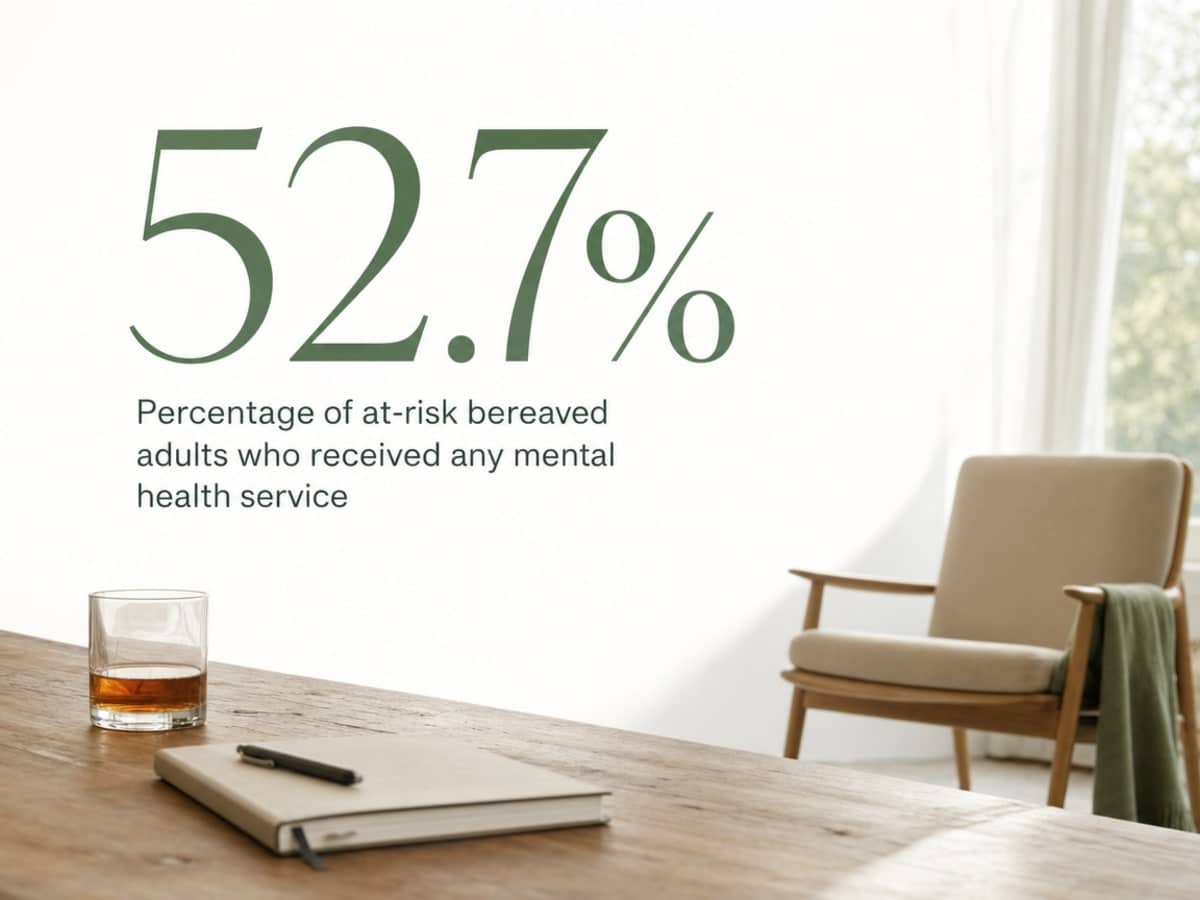
Here is the quiet, hard number from that 2025 national study: of the bereaved adults who screened positive for problematic drinking, only 52.7% reported receiving any mental-health service after the death.1 Almost half were carrying the whole thing alone. If you are in that half, reaching out is not weakness. It is closing a gap the system left open.
Good care for someone in your spot does not start with a lecture about drinking. It starts with safety. A clinician who takes a careful history, asks what you are drinking and how often, and decides with you whether your body needs a medical taper before anything else happens. That is what medically supervised detox is for — a few days with people watching the vitals your nervous system cannot be trusted to manage on its own after months of heavy pours.
From there, good care treats the grief, the mood, and the drinking as three threads of the same rope, not a to-do list.9 A trauma-informed team keeps the pace gentle, screens for depression and prolonged grief, and does not ask you to retell the worst day of your life until you are ready.7
Renewal Springs Detox in Oklahoma City offers that first piece — 24/7 medically supervised detox with a trauma-informed approach — when the drinking has gotten past where willpower can take it. If inpatient feels like too much right now, the Oklahoma Department of Mental Health and Substance Abuse Services keeps a provider directory for lower-intensity options across the state.11 Either way, the next step does not have to be the biggest one. It just has to be the next one.
Talk to someone who understands holiday grief
Connect with a caring professional for support with grief and drinking during the holidays.
Frequently Asked Questions
Is it normal to drink more after losing someone, especially around the holidays?
Yes. It is one of the most common ways people cope, even if nobody talks about it at the table. Research on bereaved U.S. adults found that recent loss, depression, and prolonged grief all raise the odds of problematic drinking, and holiday periods push drinking frequency up for the general population too.1, 3Common does not mean safe, but it does mean you are not strange.
How do I know if my drinking has crossed from grieving into a real problem?
Watch for patterns, not amounts. Drinking most days instead of hard days. Needing a drink to sleep. Hiding bottles or shaving the truth when someone asks how much you had. Trying to cut back and finding you cannot. Shakes, sweats, or nausea in the morning that ease with a drink are a medical warning sign and mean your body has adapted to alcohol, not just your mood.8
Why can’t I just stop drinking on my own after the holidays?
Because after weeks or months of heavy daily drinking, your nervous system has rewired around the alcohol. Stopping suddenly can trigger tremors, racing heart, seizures, and in serious cases delirium tremens. NIAAA reports that alcohol withdrawal accounts for roughly 260,000 emergency-department visits and about 850 deaths each year.8A medical taper is not a sign you failed. It is the safe way to do the exact thing you are already trying to do.
What’s the difference between grief and depression, and does it matter for my drinking?
Grief moves in waves tied to the person you lost. Depression flattens everything, including things that have nothing to do with them. Clinical guidance treats them as separate but overlapping, and recommends addressing them together rather than waiting for one to resolve.9It matters for drinking because untreated depression keeps the pour heavy long after the funeral, and alcohol deepens depression. Screening for both at once gives you a real shot.
How do I talk to a grieving family member whose drinking worries me?
Lead with the person, not the bottle. Say what you have noticed in plain language, name that you love them, and ask what the hardest part of this season has been. Avoid ultimatums and the word “intervention.” Offer one specific thing — a ride to a doctor, help finding a clinician, sitting with them through a phone call. Trauma-informed guidance stresses safety, trust, and not retraumatizing someone who is already raw.7
Where can I find help in Oklahoma City if I’m not ready for inpatient treatment?
The Oklahoma Department of Mental Health and Substance Abuse Services keeps a statewide provider directory that includes outpatient counseling, grief support, and lower-intensity substance-use services; the state health department points residents there as the starting point.11If you are unsure whether your drinking has reached a level that needs medical oversight, a brief phone screen with a detox facility can help you decide the next step without committing to admission.
References
- Bereavement and problematic alcohol use: Prevalence and predictors among a national sample of bereaved adults. https://pubmed.ncbi.nlm.nih.gov/39581744/
- Event-specific drinking in the general population. https://pubmed.ncbi.nlm.nih.gov/25343654/
- A longitudinal study of alcohol consumption among adults during Christmas periods. https://pmc.ncbi.nlm.nih.gov/articles/PMC11627359/
- Sleep and Alcohol Use Patterns During Federal Holidays and Holiday Eves. https://pmc.ncbi.nlm.nih.gov/articles/PMC9309397/
- Changes in routine health behaviors following late-life bereavement: a systematic review. https://pubmed.ncbi.nlm.nih.gov/23881308/
- Alcohol use in the first three years of bereavement: a national representative survey. https://pubmed.ncbi.nlm.nih.gov/22248360/
- Trauma-Informed Care in Behavioral Health Services. https://library.samhsa.gov/sites/default/files/sma15-4912.pdf
- Alcohol Use Disorder: From Risk to Diagnosis to Recovery. https://www.niaaa.nih.gov/health-professionals-communities/core-resource-on-alcohol/alcohol-use-disorder-risk-diagnosis-recovery
- Chapter 4—Mental and Substance-Related Disorders. https://www.ncbi.nlm.nih.gov/books/NBK571021/
- Addiction Psychotherapeutic Care. https://www.ncbi.nlm.nih.gov/books/NBK587365/
- How to Get Help. https://oklahoma.gov/health/health-education/injury-prevention-service/drug-overdose/how-to-get-help.html