Key Takeaways
- Confirm 24/7 medical supervision by asking who is physically on-site overnight, their credentials, and how often staff will check on you during the hardest withdrawal hours.1
- Ask about buprenorphine induction protocols for fentanyl users, because low-dose induction starting around 1 mg dramatically reduces the risk of precipitated withdrawal.3,5
- Insist on individualized monitoring using a validated tool like COWS or SOWS, since factors like higher BMI can slow fentanyl clearance and shift your withdrawal peak.4
- Verify Oklahoma state certification and Chapter 70 compliance, including daily on-site methadone dosing, no take-homes during short-term withdrawal, and an assigned behavioral health professional.10
- Demand a written discharge plan with a named outpatient MAT prescriber, a scheduled appointment, and naloxone in hand, because detox alone does not treat opioid use disorder.7,11
What Safe Fentanyl Detox Actually Means Right Now
If you’re reading this at 2 a.m., or between doses, or while a person you love is sleeping in the next room, take a breath. You are already doing something. Looking for a safe fentanyl detox is not weakness or panic — it’s the exact right move, and the fact that you’re still asking questions instead of guessing is the reason this can go well.
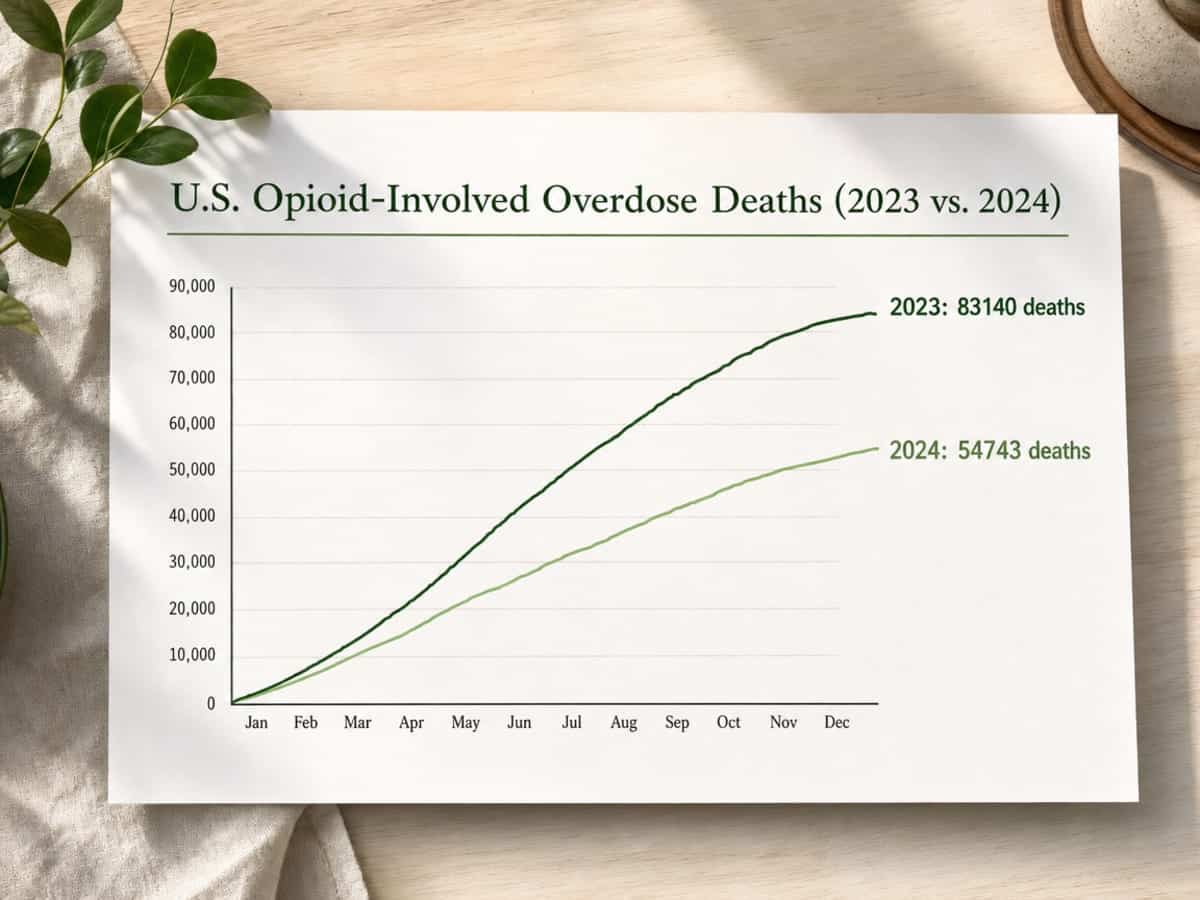
Here’s the honest picture. In 2024, the United States saw an estimated 80,391 drug overdose deaths, down from 110,037 in 2023 — a drop of nearly 27%. Opioid-involved deaths fell from about 83,140 to 54,743 in that same window. That decline didn’t happen because the drugs got safer. It happened because more people got to naloxone, harm reduction, and real medical treatment in time. Calling a detox today is part of that shift, not separate from it.9
So what does “safe” actually mean when fentanyl is involved? It is not a building with a nice sign. It is a set of clinical standards you can verify over the phone before you ever pack a bag. Safe fentanyl detox means around-the-clock medical staff who can watch you for complications, not just check on you at shift change. It means medicines with strong evidence behind them — buprenorphine, methadone, and supportive drugs — used with protocols built for the fentanyl era, not the heroin era. It means someone monitoring your withdrawal with an actual scoring tool instead of guessing from across the room. It means state certification you can look up. And it means a plan for what happens after detox ends, because detox alone does not treat opioid use disorder.1,3,7
The next five steps show you how to check for each of those, one phone call at a time.
Step One: Confirm 24/7 Medical Supervision Before You Walk In
The first question is not “do you have a bed?” It is: “Who is on the floor at 3 a.m.?”
Fentanyl withdrawal can bring vomiting hard enough to dehydrate you, blood pressure swings, racing heart, and stretches where sleep just will not come. None of that is dangerous with the right people watching. All of it can get scary fast if the only person on shift overnight is a tech with a clipboard and a phone number to call a doctor. The World Health Organization’s withdrawal management guidance is direct about this: healthcare workers should be available 24 hours a day, and patients should be monitored regularly — three to four times a day — for symptoms and complications. That is the floor, not the ceiling.1
When you call, ask three specific questions and listen for specific answers.
“Who is physically on-site overnight, and what are their credentials?” You want to hear that a nurse (RN or LPN) is in the building around the clock, and that a physician or advanced practice provider is either on-site or reachable and empowered to give orders at any hour. If the person on the phone hedges, or says a doctor “comes in during the day,” that is real information. Inpatient detox is, by design, a multidisciplinary team effort — nursing, medical, and behavioral health working together in the same building.2
“How often will someone actually check on me?” The answer you want is every few hours in the first 72 hours, more often if your withdrawal score is climbing. Not “we round in the morning.” Regular monitoring is how staff catch a blood pressure problem from clonidine, or a heart rate spike, before it turns into an emergency.1
“What do you do if I get worse in the middle of the night?” A good facility will describe, without stumbling, what they can handle on-site and when they would send you to a hospital. That honesty is a green flag. Vagueness is not.
You do not need to be a nurse to hear the difference between a place that has answered these questions a thousand times and a place that is improvising. Trust that difference. If someone rushes you off the phone or gets defensive when you ask about overnight staffing, that is your answer — keep dialing. You are allowed to be picky about who watches over you while you’re at your most vulnerable. That’s not being difficult. That’s being smart.
Step Two: Ask What Medications They Use and How They Handle the Fentanyl Problem
This is where a lot of readers get scared, and it makes sense. You may have heard stories about buprenorphine “throwing someone into withdrawal” — a sudden, brutal spike in symptoms that happens when the medicine kicks the last of the fentanyl off your brain’s receptors too fast. That’s called precipitated withdrawal, and if you’ve been using fentanyl, it is the specific thing you’re worried about. So let’s put a real number on it.
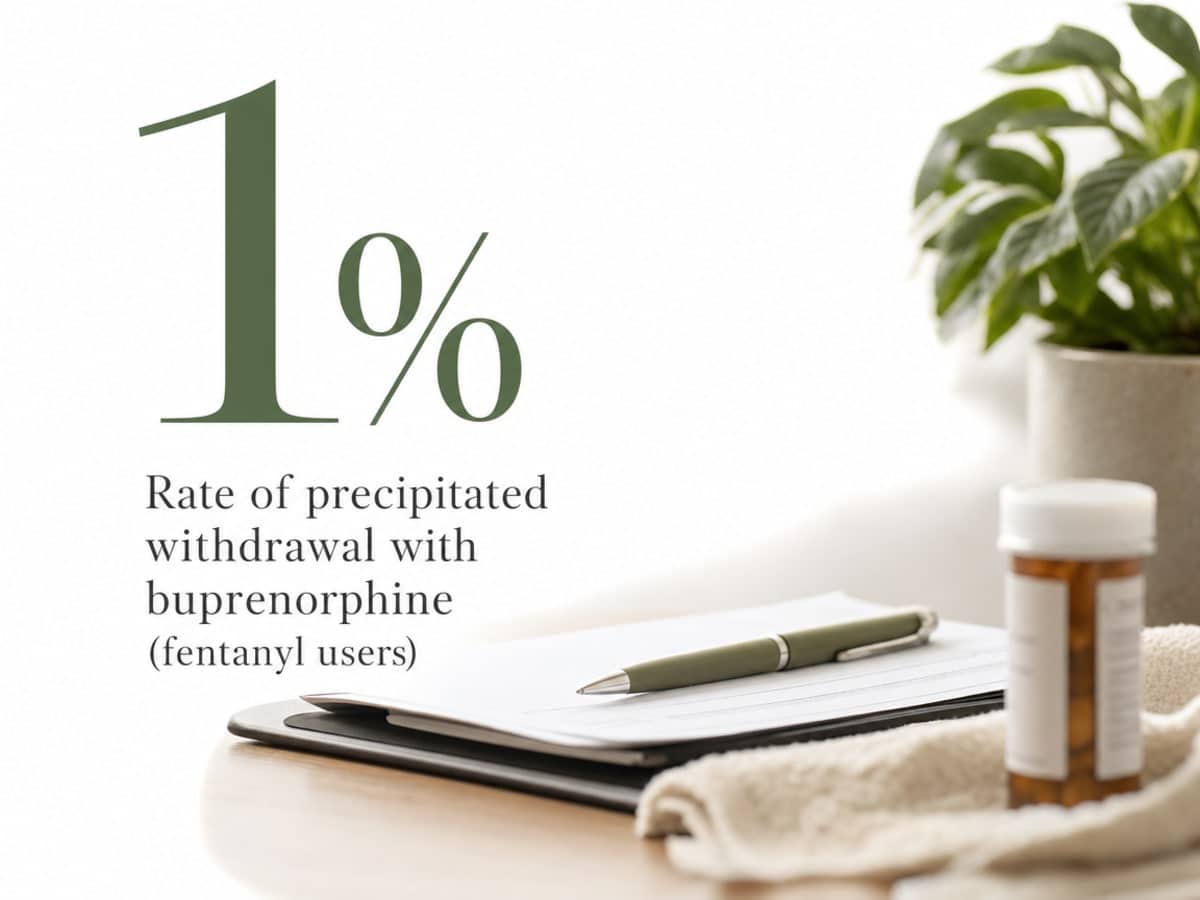
In a 2025 NIH-supported study of 1,200 emergency department patients with opioid use disorder, precipitated withdrawal happened in nine people total — about 0.76% overall — and in only 1% of patients who had been using fentanyl. That’s not a marketing pitch. That’s a large, multi-site clinical study. Buprenorphine, started carefully by people who know what they’re doing, is safe for the vast majority of fentanyl users. The fear is louder than the risk.5
The reason the numbers look that way now is that induction protocols have changed. Older detox programs used to give a full first dose of buprenorphine (say, 4 mg or 8 mg) and hope your timing was right. In the fentanyl era, many facilities have moved to low-dose induction — starting at around 1 mg sublingually, continuing at low doses for roughly 24 hours before escalating to a maintenance dose (up to about 20 mg) on the second day. This approach is designed specifically to reduce the risk of precipitated withdrawal in people who have fentanyl still hanging around in their system.3
When you call, ask: “What medications do you use for opioid withdrawal, and what’s your buprenorphine induction protocol for fentanyl users?” A good facility will not be annoyed by that question. They’ll tell you whether they use standard induction, low-dose induction, or both depending on the patient. They may also talk about methadone, which can be started at around 10 mg orally and repeated every four to six hours if withdrawal persists. Both medicines work. Neither is a shortcut.2
Also ask what they use for the symptoms that medicine doesn’t fully cover — the sweating, the restlessness, the muscle aches, the nausea. Clonidine helps with a lot of that, but it drops blood pressure, so it should only be given by a team that’s checking your vitals regularly Anti-nausea medicine, sleep support, hydration, and gut medicine matter too.1
One more thing worth asking about, especially if your tolerance is very high: “Do you ever use short-acting full opioid agonists during detox?” Some programs now use medicines like hydromorphone alongside or instead of standard protocols for complex, high-tolerance cases in the fentanyl era. You don’t need to become an expert on this. You just need to hear that the facility has options, and that they’ll match the medicine to you — not slot you into whatever the intake nurse learned in 2015.6
Step Three: Get a Straight Answer on How They’ll Monitor You as an Individual
Two people can walk into detox the same afternoon, using the same amount of fentanyl, and have very different weeks. That is not a flaw in the system — it’s the reality of your body, your history, and your other health issues. A safe detox knows this and monitors you as a person, not a protocol.
Research on inpatient opioid withdrawal has found that fentanyl use, by itself, does not reliably predict how severe your withdrawal will be on standard scales. Higher body mass index, on the other hand, predicts slower fentanyl clearance and higher peak withdrawal scores — because fentanyl stores in fat tissue and takes longer to leave. That means the person next to you might feel better on day three while you’re still climbing. Neither of you is doing it wrong. You just need staff who are watching the numbers on you.4
Ask this on the phone: “Do you use a withdrawal scoring tool, and how often?” You want to hear the name of an actual instrument — the Clinical Opioid Withdrawal Scale (COWS) or the Short Opioid Withdrawal Scale (SOWS) — used several times a day to guide medication decisions. A score is not a grade. It’s how a nurse decides whether your next dose of buprenorphine should go up, whether you need more clonidine, whether that racing heart is withdrawal or something else.1
Then ask: “What else are you watching?” Blood pressure and pulse at least a few times a day, especially if clonidine is on board. Hydration status if you’ve been vomiting. Sleep. Mental health check-ins, because anxiety and low mood during withdrawal are not character flaws — they’re symptoms that respond to care.
One more question worth asking: “What do you do differently for someone with high tolerance, or a bigger body, or other medical conditions?” If the answer is “everyone gets the same taper,” that is a signal to keep looking. You are not a template.
Step Four: Verify State Certification and Oklahoma-Specific Rules
You do not need a law degree to check whether a detox is playing by the rules. Oklahoma writes them down, and the ones for opioid treatment programs are specific enough that you can hold a facility’s answers up against the state’s own document.
The rules to know are in Oklahoma’s Chapter 70, which sets the standards for certified opioid treatment programs (OTPs). For short-term managed withdrawal, methadone has to be given daily by the OTP in reducing doses, and the full taper cannot go longer than 30 days. Take-home medication is not allowed during that short-term withdrawal window — you receive your dose on-site, every day. And the program has to assign licensed behavioral health professionals to the people it treats, not just medical staff. Those three things — daily on-site dosing, no take-homes during withdrawal, a licensed behavioral health person actually assigned to you — are checkable.10
On the phone, you can ask straight out: “Are you a state-certified opioid treatment program, and can you tell me your certification number?” If they use methadone at all for short-term withdrawal, that certification is not optional. If they only use buprenorphine and adjunct medicines in a medical detox setting, the certification picture can look different, but the staffing and behavioral health assignment expectations still apply. A facility that has nothing to hide will walk you through what kind of license or certification they hold and under which state agency.
Then ask: “Who will be my assigned behavioral health professional, and when will I meet them?” Not “do you have counselors on staff” — the specific version. You want a name or at least a role, and a timeframe. In the first day or two is normal.
One more: “Do you send anyone home with methadone during short-term withdrawal?” The correct answer, under Oklahoma rules, is no. If you hear anything else, that facility is either confused about the regulation or not following it. Either way, it’s a reason to keep calling.10
Family members, this is the step where your outside eyes help most. Your loved one on the phone with a scratchy voice and no sleep may not push back on a vague answer. You can. Write the questions down. Read them off the page. It is completely reasonable to say, “I’d like to send you a checklist of what we’re verifying — can you email me back a written response?” A facility that treats that request as normal is one that has its paperwork in order.
None of this is about catching anyone out. It is about making sure the place you are trusting with a hard week of your life is the same place on paper that it is on the phone. You get to check. That is not rude. That is care.
Step Five: Insist on a Written Handoff to Ongoing Care
Here is the truth most detox brochures dance around: getting the fentanyl out of your system does not treat opioid use disorder. It resets your tolerance, which is exactly why the two weeks after detox carry a real overdose risk if you use again at your old amount. Detox is a bridge. The safe facilities know this and build the bridge before you ever check in.
Medication-assisted treatment — the combination of FDA-approved medicines like buprenorphine or methadone with counseling and behavioral therapy — is the standard of care for opioid use disorder, and detox is meant to hand you off into it, not drop you at the curb. If the medicine that helped you through withdrawal stops the day you leave, your brain is going to notice. A real handoff means the same medicine, or an equivalent, continues after discharge under a prescriber who already has your chart.7
Ask this before you agree to a bed: “What does my discharge plan look like on paper, and who writes my next buprenorphine or methadone prescription?” You want to hear a name, a location, and a date — a specific outpatient MAT provider, an appointment scheduled while you’re still inpatient, and a prescription bridge that covers the gap between discharge day and that first outside visit. If they can’t tell you who picks up your care on day eight, they haven’t planned for day eight.
Ask also: “Will I leave with naloxone?” The answer should be yes, along with training for whoever lives with you. Oklahoma makes naloxone available for free by mail and through vending machines, and every discharged patient should walk out with it in hand. That is not a pessimistic gesture. It is the same reason a hospital sends a heart patient home with an aspirin plan — because relapse, like any medical event, is something you prepare for, not something you shame.11,12
If a facility treats discharge as your problem, that tells you what the whole stay will feel like. The programs worth trusting talk about the handoff on the first call, not the last day.
What the First 72 Hours Will Actually Feel Like
You already know the shape of withdrawal because you’ve felt the front edge of it before. What you may not know is how different it feels when someone is actually managing it with you. Here’s a rough map of the first three days in a good facility, so the unknown gets a little smaller.
The first 12 hours. Intake, a medical history, a physical, and a baseline withdrawal score using a tool like COWS or SOWS. If you’re already in withdrawal, medicine starts fast — often a low-dose buprenorphine induction if you’ve been using fentanyl, which means 1 mg to start and slow, careful escalation over the next day. If you’re not in withdrawal yet, they’ll wait and watch, because timing matters. You’ll be given something for nausea, something for the muscle aches, and fluids if you need them.1,3
Hours 12 to 48. This is usually the hardest stretch. Sweating, chills, cramping, restless legs, a mind that won’t quiet down. Vitals get checked several times. Your withdrawal score is retaken and your medicine gets adjusted to match — up if you’re climbing, held steady if you’re leveling off. If clonidine is on board, someone is watching your blood pressure closely because it can drop. You may not sleep much. That is expected, not a failure. If your body clears fentanyl more slowly — which is more likely at higher BMI — your peak may come later than the person in the next room, and that’s information for the team, not a verdict on you.1,4
Hours 48 to 72. Most people start to feel the ground come back. Appetite returns in pieces. Sleep gets a little longer. The medicine dose stabilizes. You’ll start meeting with a behavioral health professional and talking about what happens next — the outpatient prescriber, the naloxone you’ll leave with, the appointment already on the calendar.
None of this is comfortable. All of it is survivable with the right people in the room. You are not being asked to be brave alone.
Making the Call Today
You do not have to have this whole thing figured out to pick up the phone. You just need to ask the questions you now know how to ask.
Write these down before you dial. Who is on-site overnight, and what are their credentials? What is your buprenorphine induction protocol for someone using fentanyl? How often will someone check on me, and what scoring tool will you use? Are you state-certified, and who will my behavioral health professional be? What does my discharge plan look like, and will I leave with naloxone? Five calls, maybe fewer, and you will hear the difference between a place that is ready for you and one that is not.
If you are the person in withdrawal, it is okay to ask a family member to make the call with you on speaker. If you are the family member, it is okay to lead. Neither of you has to sound clinical. You just have to keep asking until the answers make sense.
The step you are on right now — reading, checking, deciding — is already the work. When you are ready, Renewal Springs Detox is one of the local numbers you can dial in Oklahoma City. Whichever door you walk through, walk through one.
Talk With Someone Who Truly Understands Withdrawal Now
Get real answers about safe, medically supervised fentanyl detox in your area today.
Frequently Asked Questions
How long does fentanyl withdrawal last in a medical detox?
For most people, the acute stretch runs about five to seven days, with the hardest hours usually between 24 and 72 hours in. Your timeline can run longer if you have a higher BMI, because fentanyl stores in fat tissue and clears more slowly, which can push your peak withdrawal score later than the person in the next room. A good facility adjusts the medicine to your curve, not a calendar.4
Will buprenorphine put me into precipitated withdrawal if I’ve been using fentanyl?
The fear is real, but the risk is smaller than the rumors suggest. In a 2025 NIH-supported study of 1,200 emergency department patients with opioid use disorder, precipitated withdrawal happened in about 0.76% of people overall, and in only 1% of those who had been using fentanyl. Facilities using low-dose induction protocols — starting around 1 mg and building slowly — bring that risk down further.3,5
What’s the difference between a detox and an opioid treatment program (OTP) in Oklahoma?
A medical detox provides short-term, supervised withdrawal care. A certified OTP is a program authorized by the state to use methadone (and buprenorphine) for both short-term withdrawal and longer-term maintenance. Under Oklahoma’s Chapter 70 rules, methadone for short-term managed withdrawal must be dosed daily on-site, capped at 30 days, with no take-homes and a licensed behavioral health professional assigned to you. Some facilities are both. Ask directly.10
Do I have to be in withdrawal before I call or show up?
No. Call before you feel sick. Intake, medical history, and planning happen best when you can still think clearly, and the team can time your first medication dose to your withdrawal score using a tool like COWS or SOWS rather than guessing. If you’re already in withdrawal, that’s fine too — treatment can start quickly. Either way, the phone call is the right first move, not the last one.1
What questions should a family member ask when calling a detox facility today?
Five, in order. Who is on-site overnight and what are their credentials 2? What is your buprenorphine induction protocol for someone using fentanyl? How often will staff check vitals and reassess the withdrawal score? Are you state-certified, and who will be the assigned behavioral health professional? What does the written discharge plan look like, and will your loved one leave with naloxone?1,3,10,11
Is detox alone enough to treat fentanyl dependence?
No, and any facility telling you otherwise is selling something. Detox clears the drug and gets withdrawal managed safely, but opioid use disorder is treated with ongoing medication-assisted treatment — buprenorphine or methadone plus counseling — continued after discharge. The two weeks after detox carry real overdose risk because tolerance drops, which is why leaving with naloxone in hand and a scheduled outpatient prescriber matters as much as the detox itself.7,11
References
- Withdrawal Management. https://www.ncbi.nlm.nih.gov/books/NBK310652/
- Opioid Withdrawal – StatPearls – NCBI Bookshelf. https://www.ncbi.nlm.nih.gov/books/NBK526012/
- Opioid Use Disorder Treatment in the Fentanyl Era. https://pmc.ncbi.nlm.nih.gov/articles/PMC9859934/
- Fentanyl withdrawal: Understanding symptom severity and exploring predictive factors. https://pmc.ncbi.nlm.nih.gov/articles/PMC9992259/
- Buprenorphine initiation in the ER found safe and effective for individuals with opioid use disorder who use fentanyl. https://www.nih.gov/news-events/news-releases/buprenorphine-initiation-er-found-safe-effective-individuals-opioid-use-disorder-who-use-fentanyl
- Treatment of Inpatient Opioid Withdrawal with Short-Acting Full Agonists. https://pmc.ncbi.nlm.nih.gov/articles/PMC12463741/
- Medication-Assisted Treatment (MAT) in the Criminal Justice System. https://library.samhsa.gov/sites/default/files/pep19-matbriefcjs_0.pdf
- Drug Overdose Deaths in the United States, 2023–2024. https://www.cdc.gov/nchs/products/databriefs/db549.htm
- U.S. Overdose Deaths Decrease Almost 27% in 2024. https://www.cdc.gov/nchs/pressroom/releases/20250514.html
- Chapter 70. Standards and Criteria for Opioid Treatment Programs. https://oklahoma.gov/content/dam/ok/en/odmhsas/documents/policy/provider-certification/administrative-rules/2024/PC–Chapter-70_10-30-24.pdf
- Naloxone. https://oklahoma.gov/health/health-education/injury-prevention-service/drug-overdose/opioid-overdose/naloxone.html
- Naloxone Distribution. https://oklahoma.gov/content/dam/ok/en/oag/resources/grants/opioid-abatement-grant/priority-strategies/Naloxone%20Distribution%202025.pdf