
Key Takeaways
- Oklahoma requires detox programs to hold ODMHSAS certification with physician-directed care and 24/7 RN monitoring, standards that home detox and most rural ERs cannot meet 1, 3.
- Fentanyl-involved overdose deaths in Oklahoma jumped from 127 in 2020 to 730 in 2023, with 2024 still nearly four times the 2020 baseline at 487 2.
- For rural residents, a single residential detox trip often carries less travel burden than repeated outpatient or methadone visits, and out-of-network care mirrors how patients already reach specialists 14, 10.
- Before admission, verify ODMHSAS certification, request a free benefits check, confirm SoonerCare or commercial coverage, and ask how the program arranges a warm handoff within the 14-day linkage window 4, 8.
The Challenge of Distance: Accessing Quality Care in Rural Oklahoma
The journey to recovery often begins with a difficult conversation, especially when quality medical care is not readily available. For many in rural Oklahoma, the nearest certified medical detox facility can be a significant distance away. This geographical barrier often leads to dangerous alternatives, such as attempting to detox at home or relying on local emergency rooms that are not equipped for comprehensive withdrawal management. These options are not only ineffective but can also be life-threatening.
Statistics show that rural Oklahomans have lower rates of initiating and continuing substance use treatment compared to those in metropolitan areas. Despite this, they are often compelled to seek care outside their local networks anyway.10 Traveling for detox is not a sign of failure; for many families, it represents a crucial step towards saving a life. This guide aims to address the logistical challenges and demonstrate why traveling for medically supervised detox can be a worthwhile and necessary decision.
Why Home Detox and Local ERs Are Not Safe Options
The Dangers of Unsupervised Withdrawal
Withdrawal from substances like alcohol and benzodiazepines can be deadly, leading to seizures, delirium tremens, and dangerous blood pressure fluctuations. These are serious medical emergencies requiring constant supervision. While opioid withdrawal from substances like fentanyl, heroin, or prescription painkillers is typically not fatal on its own, it is intensely painful and distressing. The severe vomiting, muscle pain, cold sweats, and anxiety often drive individuals to seek immediate relief, frequently leading to relapse with potentially stronger, more dangerous doses, increasing the risk of overdose.
Local emergency rooms can provide temporary stabilization but are generally not equipped to manage the full detox process. Most rural ERs lack certification for withdrawal management, cannot provide the extended care needed for detox, and do not have established protocols for safe tapering of benzodiazepines or initiating buprenorphine. This often results in discharge before the withdrawal process is complete, sending individuals back to square one.
The Evolving Overdose Crisis in Oklahoma
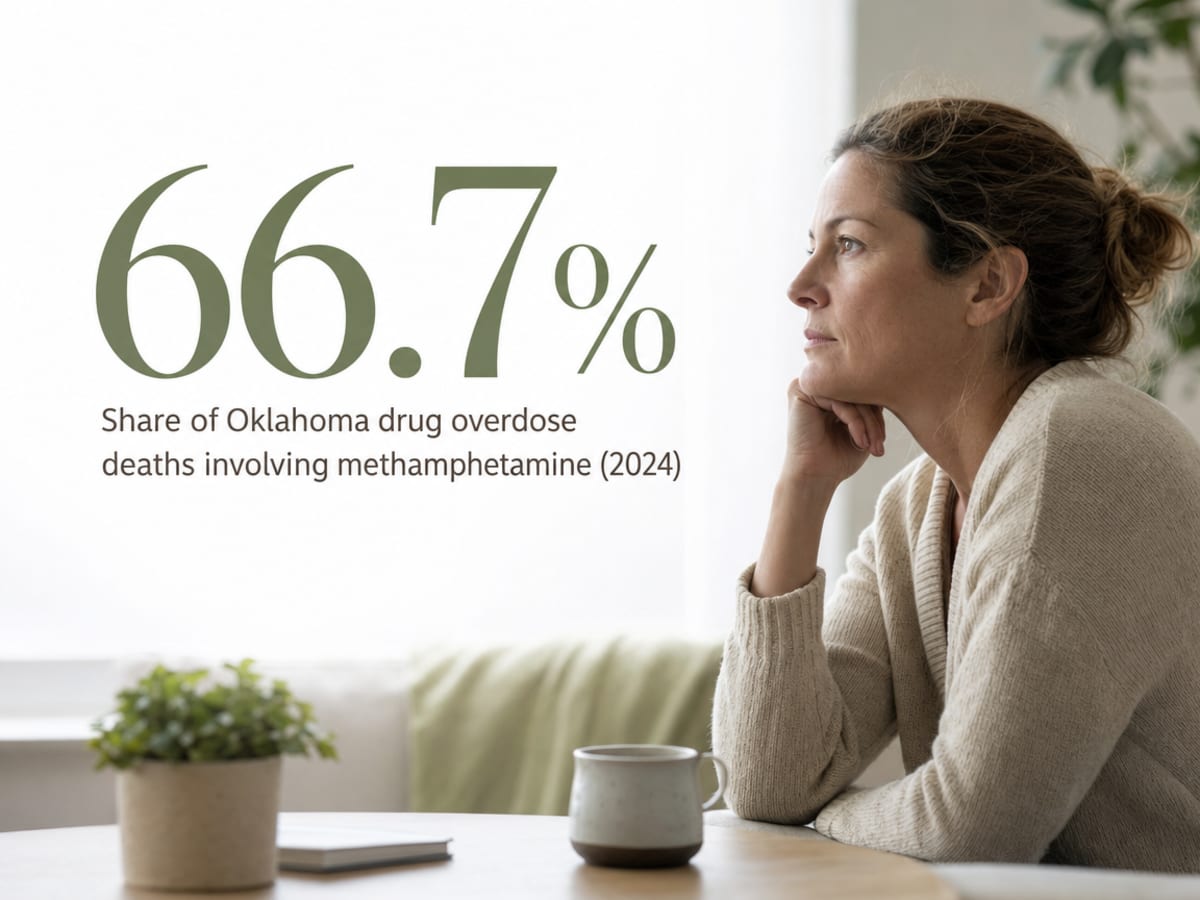
While raw overdose numbers might seem lower in rural counties compared to urban centers, the impact is disproportionately severe due to smaller populations and fewer resources. A small number of deaths in a town of 4,000 constitutes a crisis. The statewide trend for fentanyl-involved overdose deaths highlights this escalating danger: from 127 deaths in 2020 to 730 in 2023. Although 2024 saw a decrease to 487, this figure remains nearly four times the 2020 baseline, indicating that while treatment access is improving, the threat is still significant.2
This decline is not an invitation to delay treatment; rather, it underscores the urgency of seeking help while effective interventions are available. The illicit drug supply is constantly changing and becoming more potent. Assuming a substance is stable, an individual is stable, or that help is readily available in rural Oklahoma is a dangerous gamble.

Defining Medically Supervised Detox in Oklahoma
State Certification and Medical Oversight
The term “medically supervised detox” can be misleading. In Oklahoma, specific standards ensure the quality and safety of such programs. It is crucial to verify that any facility offering alcohol and drug treatment is certified by the Oklahoma Department of Mental Health and Substance Abuse Services (ODMHSAS). For residential care, national accreditation is also required for SoonerCare reimbursement.1 These certifications are not mere formalities; they are legal requirements that enable a program to safely manage individuals through the critical stages of withdrawal.
Oklahoma’s Medicaid framework mandates that withdrawal management outside a hospital setting must be directed by a licensed physician, with 24/7 supervision and continuous registered nurse monitoring for individuals withdrawing from alcohol or other drugs.3 This means a doctor oversees the treatment plan, and nurses are present around the clock to monitor vital signs and respond to emergencies, such as blood pressure spikes in the middle of the night.
Distinguishing Legitimate Detox Programs from Inadequate Facilities
Before committing to any facility, it is essential to ask detailed questions. A legitimate detox program will readily provide its ODMHSAS certification status, identify the physician directing care, explain nurse staffing levels, and describe protocols for managing seizures, benzodiazepine tapers, or initiating buprenorphine for fentanyl-dependent patients. These standards are outlined in ODMHSAS Chapter 18, which governs all certified SUD treatment facilities in the state.5 Programs that meet these standards will be transparent about their practices.
The Reality of Traveling for Care: Is it Feasible?
Comparing Travel Burden for Different Treatment Types
It might seem counterintuitive, but for detox, the closest option isn’t always the least burdensome. A 2025 study on travel for substance use treatment found that in rural areas, outpatient programs and opioid treatment programs often involve significantly longer travel times and higher costs than a single residential treatment stay.14 This means that repeated trips for weekly counseling, daily methadone dosing, or bi-monthly buprenorphine visits can accumulate more travel time and expense than one extended stay at a residential detox facility.
Consider the perspective of someone living in Cherokee, Beckham, or Choctaw County. One trip to Oklahoma City for detox, followed by one trip home after stabilization, can be less taxing than dozens of round trips to a local methadone clinic or an outpatient program requiring multiple weekly visits. The single, longer journey often represents a smaller overall burden on resources and the individual seeking help.
Why Rural Residents Seek Out-of-Network Care
Many rural Oklahomans already travel for specialized medical care, and substance use treatment is no exception. Rural residents with substance use disorders are more likely to seek out-of-network care than their urban counterparts, primarily because in-network options within a reasonable distance are limited or nonexistent.10 Research on opioid use disorder in rural areas confirms that accessibility issues—such as costs, insurance coverage, clinic hours, and transportation—are major barriers to treatment, not a lack of desire for help.11
Traveling to Oklahoma City for medically supervised detox is not an unusual choice or an admission of failure by one’s community. It mirrors the pattern rural patients follow to access cardiologists, cancer specialists, and NICUs. The principle is simple: you travel to where the necessary care exists, then return home.
Logistics Checklist for Planning the Trip
Practical Preparations for Travel and Absence
Selecting a reliable driver is paramount. This individual should be sober, calm, and prepared for the potential challenges of withdrawal during the journey. They should be supportive and avoid discouraging the person seeking treatment. Pack lightly, including identification, insurance card, a detailed list of all medications (prescribed and unprescribed) with dosages and last taken times, comfortable clothing for 3-7 days, and a phone charger. Valuables should be left at home. Always inquire about prohibited items beforehand to avoid repacking at the facility.
When informing an employer, a simple statement like, “I have a medical issue that requires inpatient treatment for about a week,” is sufficient. You are not obligated to disclose a diagnosis. The Family and Medical Leave Act (FMLA) may protect your job if you meet eligibility requirements, and HR departments typically handle such requests discreetly.
Arranging Support for Dependents and Pets
Addressing childcare, pet care, and other family responsibilities requires direct communication. Identify one trusted person and clearly state your needs: “I’m going to Oklahoma City for medical treatment for about a week. I need help with the kids from Tuesday to the following Monday.” Specific requests are often met with more willingness than vague ones. Prepare a written schedule for school pickups, doctor’s numbers, and medication instructions for children. For pets, ensure ample food and provide a vet’s contact information. Rural communities often demonstrate strong support in these situations.
It is also important to consider the emotional impact on family members left behind. Provide them with the facility’s main number and commit to regular communication. Keeping this promise helps alleviate their anxiety.
Navigating Insurance Verification
Contact the detox facility directly for insurance verification, rather than your insurance company. Certified programs offer free benefit checks and are adept at navigating insurance complexities. This call typically takes about 15 minutes. Have your member ID, group number, policyholder’s date of birth, and information about the substances involved ready. If you have SoonerCare, mention it, as Oklahoma Medicaid covers detox and residential SUD services for eligible members, with the facility handling prior authorization.4
Ask four key questions:
- What will my out-of-pocket cost be?
- Is prior authorization needed, and will the facility handle it?
- When can I be admitted?
- What happens if my insurance denies part of the stay?
Document the answers and the name of the person you spoke with. Clear answers during this call are indicative of a transparent and reliable program.
Understanding the Cost and Coverage of Detox
Financial concerns are often a primary barrier to seeking treatment. However, medically supervised detox is a covered benefit for most Oklahomans, and options exist even for those without insurance. SoonerCare covers detox and residential substance use treatment for eligible members, requiring prior authorization which the facility manages.4 Authorization for withdrawal management is typically expedited due to its clinical urgency.
For individuals with commercial insurance (e.g., Blue Cross, Aetna, Cigna, UnitedHealthcare), a certified Oklahoma detox program will conduct a free benefits check. This provides details on deductibles, coinsurance, and estimated out-of-pocket costs for an inpatient stay. Always request this information in writing.
It’s crucial to consider the cost of not seeking treatment. An emergency room visit for withdrawal stabilization is not free and does not address the underlying issue. Multiple ER visits can quickly accumulate costs comparable to a covered detox stay, without providing lasting solutions. Additionally, lost wages due to untreated withdrawal and the significant risk of overdose from a contaminated drug supply represent substantial, often hidden, costs. The financial burden of inaction is often far greater than the cost of effective treatment.
For those without full insurance coverage, inquire about sliding-scale rates, payment plans, and single-case agreements. Certified programs are mandated by ODMHSAS to serve individuals and should not turn them away due to financial constraints. Be proactive in asking about all available options.
The Critical Role of Post-Detox Care
The 14-Day Linkage Window and Recovery Navigators
Detox is merely the first step; the period immediately following is crucial for long-term recovery. Research indicates that individuals who transition into follow-up treatment within 14 days of completing detox are significantly less likely to be readmitted. Missing this critical window drastically increases the risk of relapse.8
Recovery support navigators play a vital role in bridging this gap. These professionals specialize in guiding individuals from detox to the next stage of treatment. Studies show that while overall continuity of care averages 42%, patients paired with a navigator achieve a 45% continuity rate and are significantly more likely to attend follow-up appointments.7 Care coordination is a frequently cited barrier for post-detox patients, and navigators are designed to overcome this challenge.9
Ensuring a Smooth Transition: The Warm Handoff
A “warm handoff” means that upon leaving detox, you have a confirmed appointment, a reserved bed, or a filled buprenorphine prescription with a scheduled follow-up, rather than just a list of phone numbers. The subsequent step varies by individual: some transition to 30-90 day residential treatment, others return home for intensive outpatient programs (IOP) locally or via telehealth, and some begin Medication-Assisted Treatment (MAT) with a dedicated prescriber.
Renewal Springs is part of a broader Pathways network precisely to facilitate this seamless transition, ensuring that the next steps are arranged before discharge. When considering a detox program, inquire about their handoff process: Who schedules the next appointment? Who confirms attendance? This distinction highlights the difference between a temporary intervention and a comprehensive path to recovery.
Overcoming Stigma: The Call for Help
In close-knit rural communities, the fear of judgment can be a powerful deterrent to seeking help. However, contacting a detox facility in Oklahoma City is a private matter. You are not obligated to disclose details to neighbors or employers. Only a trusted driver, a childcare provider, and the facility in a different area code need to know. While small towns may notice an absence, life quickly resumes its course.
The shame associated with addiction often perpetuates the cycle, encouraging delays and rationalizations. Meanwhile, the drug supply becomes more dangerous, and the individual’s health deteriorates. Making the initial call does not commit you to anything beyond a conversation. Use this opportunity to ask about transportation, insurance coverage, and the post-detox continuum of care, including how the Pathways network facilitates ongoing support. If the answers provide a clear and viable plan, you will know you’ve found the right path. If not, continue your search.
The physical distance to Oklahoma City may seem daunting, but the emotional distance between deciding to seek help and making that first call is often shorter than it feels. Take that step today.
Talk Through Travel or Admission Questions Now
Connect directly for help planning your safe, supported arrival from rural Oklahoma.
Frequently Asked Questions
Is it safe to detox at home if I live too far from a facility?
For alcohol and benzodiazepines, home detox is highly dangerous due to risks of seizures, severe blood pressure changes, and delirium tremens, all requiring medical supervision. While opioid withdrawal is rarely fatal, the intense discomfort often leads to relapse, which is particularly hazardous given today’s fentanyl-laced drug supply. The logistical challenge of distance should be addressed, not used as a reason to attempt unsupervised detox.
Will SoonerCare cover detox in Oklahoma City if I live in a rural county?
Yes, SoonerCare covers detox and residential substance use services for eligible members across all Oklahoma counties. Prior authorization is required, but the facility will submit this request on your behalf.4 Contact the detox program with your member ID; they can verify benefits and typically expedite authorization.
How long does medically supervised detox usually take?
Most detox stays range from three to seven days, depending on the substance and individual medical history. Alcohol and short-acting opioids often have quicker withdrawal periods. Benzodiazepines and long-acting opioids may require longer tapers for safety. The admitting physician will create a personalized plan based on the substance, duration of use, and the patient’s response during the initial 24 hours.
What should I tell my employer without risking my job?
You are not required to disclose your diagnosis to your employer. A statement such as, “I have a medical issue that requires inpatient treatment for about a week,” is sufficient. If you have been employed for at least a year, the Family and Medical Leave Act (FMLA) may protect your position for up to 12 unpaid weeks. HR departments are accustomed to handling such requests confidentially. The facility can assist with FMLA paperwork.
What happens right after detox ends, and how do I get home?
A reputable program will arrange your next steps before discharge, whether it’s residential treatment, intensive outpatient care, telehealth counseling, or MAT with a designated prescriber. Entering follow-up treatment within 14 days significantly reduces the likelihood of readmission.8 For the return journey, the person who drove you can pick you up, or the facility can help coordinate transportation. Discuss these arrangements prior to admission.
How do I know a detox program is legitimate and not just a holding room?
Inquire about the facility’s ODMHSAS certification status; legitimate Oklahoma programs will readily provide this information.1 Ask about the supervising physician, overnight nursing staff, and protocols for managing benzo tapers or safely initiating buprenorphine. State regulations mandate 24/7 supervision and RN monitoring under a licensed physician for withdrawal management outside a hospital setting.3 Vague answers or pressure to commit before insurance verification are warning signs.
References
- Provider Certification – Oklahoma.gov. https://oklahoma.gov/odmhsas/policy/provider-certification.html
- Data – Oklahoma.gov. https://oklahoma.gov/health/health-education/injury-prevention-service/drug-overdose/data.html
- Oklahoma State Plan Amendment (SPA) 25-0014. https://www.medicaid.gov/medicaid/spa/downloads/OK-25-0014.pdf
- Mental Health and Substance Abuse Services – Oklahoma.gov. https://oklahoma.gov/ohca/individuals/programs/mental-health-and-substance-abuse-services.html
- CHAPTER 18. STANDARDS AND CRITERIA FOR SUBSTANCE …. https://oklahoma.gov/content/dam/ok/en/odmhsas/documents/policy/provider-certification/administrative-rules/2021/Chapter%2018%20Final%20effective%209-15-21.pdf
- County Population Totals and Components of Change. https://www.census.gov/data/tables/time-series/demo/popest/2020s-counties-total.html
- Impact of recovery support navigators on continuity of care after detoxification. https://pubmed.ncbi.nlm.nih.gov/32199540/
- A Performance Measure for Continuity of Care After Detoxification. https://pmc.ncbi.nlm.nih.gov/articles/PMC4096006/
- Barriers to accessing treatment for substance use after …. https://pmc.ncbi.nlm.nih.gov/articles/PMC10084712/
- Rural–urban differences in out‐of‐network treatment initiation …. https://pmc.ncbi.nlm.nih.gov/articles/PMC11366955/
- Barriers in Office-Based Opioid Treatment in Rural United States. https://pmc.ncbi.nlm.nih.gov/articles/PMC11633845/
- Improving Rural Access to Opioid Treatment Programs – PMC – NIH. https://pmc.ncbi.nlm.nih.gov/articles/PMC9019866/
- Barriers to accessing medications for opioid use disorder among rural individuals – PubMed. https://pubmed.ncbi.nlm.nih.gov/40252371/
- Estimation and Comparison of Travel Burden to Outpatient, Opioid …. https://pubmed.ncbi.nlm.nih.gov/41194519/