
Key Takeaways
- Opioid withdrawal in Oklahoma City is treated most safely with FDA-approved medications like buprenorphine, methadone, and naltrexone under medical supervision rather than abrupt cessation 4.
- Timing matters when starting MAT: buprenorphine requires early withdrawal signs to avoid precipitated withdrawal, while naltrexone needs a 7–14 day opioid-free period 13, 14.
- Oklahoma covers MAT through SoonerCare and enforces facility standards via ODMHSAS certification, SAMHSA registration, and CARF or Joint Commission accreditation 11, 15.
- Before choosing a program, compare 24/7 medical supervision, monitoring technology, specialized tracks for veterans or gender-specific care, insurance verification, and post-detox transition planning 1.
Understanding Opioid Withdrawal and the Role of Medical Care
The experience of opioid withdrawal can be intensely physical, marked by restlessness, yawning, cold sweats, goosebumps, gastrointestinal distress, and anxiety. These symptoms are not a sign of weakness but a physiological response to opioid dependence. National clinical guidelines advocate for medication-assisted withdrawal over abrupt cessation of opioids, highlighting the importance of medical intervention 4. FDA-approved medications, administered under medical supervision, can alleviate the severe physical symptoms and cravings, allowing the body to stabilize 2.
Medication-assisted opioid detox programs, such as those offered by Renewal Springs, aim to provide a supportive and medically sound environment. The goal is to make the initial phase of recovery manageable and humane, rather than an isolated struggle.
How Medication-Assisted Treatment (MAT) Transforms Withdrawal
The Core Principles of MAT During Detox
Medication-Assisted Treatment (MAT) is a medically supervised approach that utilizes FDA-approved medications to treat opioid withdrawal and dependence. It is not a simple fix but a tailored medical response, adjusting to an individual’s specific physiological reactions. The World Health Organization identifies methadone and buprenorphine for both withdrawal management and long-term maintenance, alongside alpha-2 adrenergic agonists for symptom reduction, and naltrexone for relapse prevention 2. Federal policy also supports medication for opioid withdrawal as the recommended approach over abrupt cessation 4.
A supervised MAT program reduces the intensity of physical withdrawal symptoms like sweating, cramping, rapid pulse, and cravings. This allows the nervous system to calm, creating a more stable foundation for recovery. Crucially, MAT during detox integrates counseling and behavioral support, aligning with evidence-based recommendations for comprehensive care, as practiced at Renewal Springs.
Key FDA-Approved Medications for Opioid Use Disorder
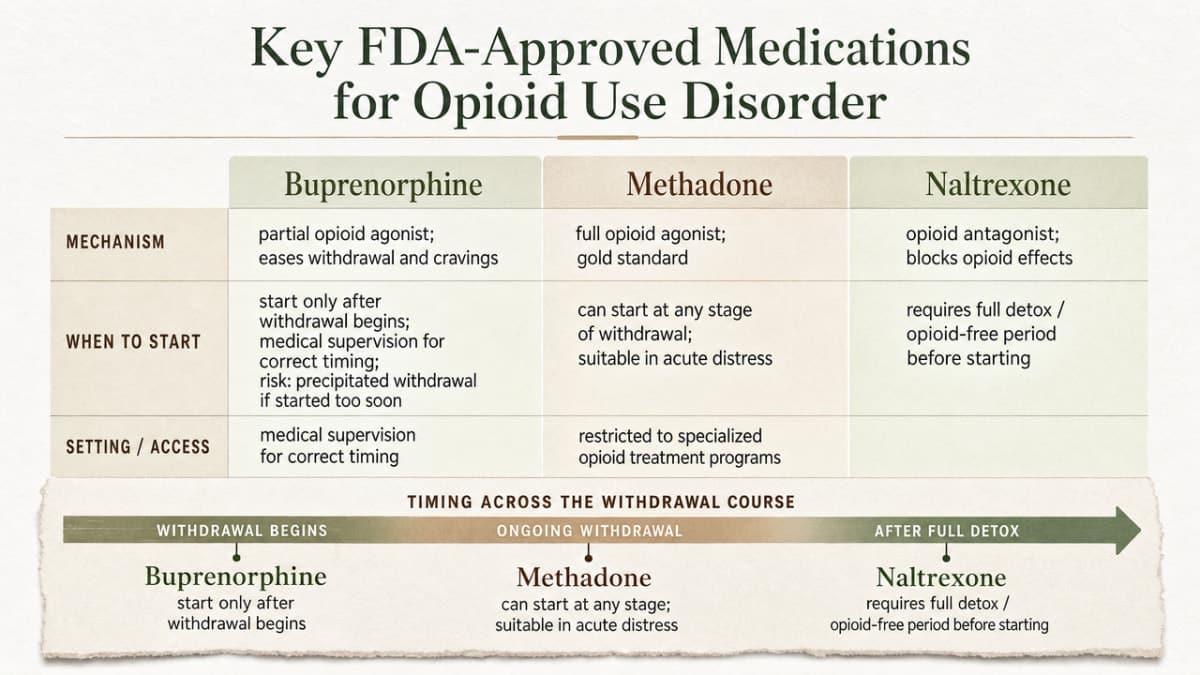
The primary medications in MAT for opioid use disorder are buprenorphine, methadone, and naltrexone, each with distinct mechanisms and applications. The timing of their administration is critical for patient safety and efficacy.
- Buprenorphine acts as a partial opioid agonist, binding to opioid receptors to alleviate withdrawal and cravings without inducing a full euphoric effect. It must be initiated only after a patient shows signs of withdrawal to prevent precipitated withdrawal, a condition that intensifies symptoms 13. Medical supervision ensures correct timing.
- Methadone is a full opioid agonist, considered a gold standard in opioid use disorder treatment 14. It can be started at any stage of withdrawal, making it suitable for individuals in acute distress. However, its administration is restricted to specialized opioid treatment programs due to regulatory requirements 14.
- Naltrexone is an opioid antagonist that blocks opioid receptors, preventing opioids from producing their effects. It does not relieve withdrawal symptoms but is used for relapse prevention. Naltrexone requires an opioid-free period of 7 to 14 days before initiation to avoid precipitated withdrawal 14.
The expertise of a medical team is vital in determining the appropriate medication and timing, preventing adverse reactions, and adjusting treatment based on individual needs. Renewal Springs’ intake clinicians assess each patient’s history and current usage to recommend the most suitable treatment path.
Supportive Medications for Symptom Management
Beyond the primary MAT medications, a range of non-opioid medications are used to manage specific withdrawal symptoms. Alpha-2 adrenergic agonists, such as clonidine and lofexidine, are crucial in calming the overactive nervous system, which contributes to symptoms like rapid heart rate, sweating, anxiety, and restless legs 3. The World Health Organization includes these in its recommended pharmacological approach to opioid withdrawal 2.
Clinical teams can also administer medications for other symptoms not fully addressed by MAT alone, such as anti-nausea drugs for gastrointestinal issues, pain relievers for muscle aches, and sleep aids. This comprehensive approach ensures that withdrawal is treated holistically, with continuous monitoring and adjustment of medications as needed, mirroring the care provided for any acute medical condition.
The Medically Supervised Detox Process in Oklahoma City
Initial Assessment and Stabilization
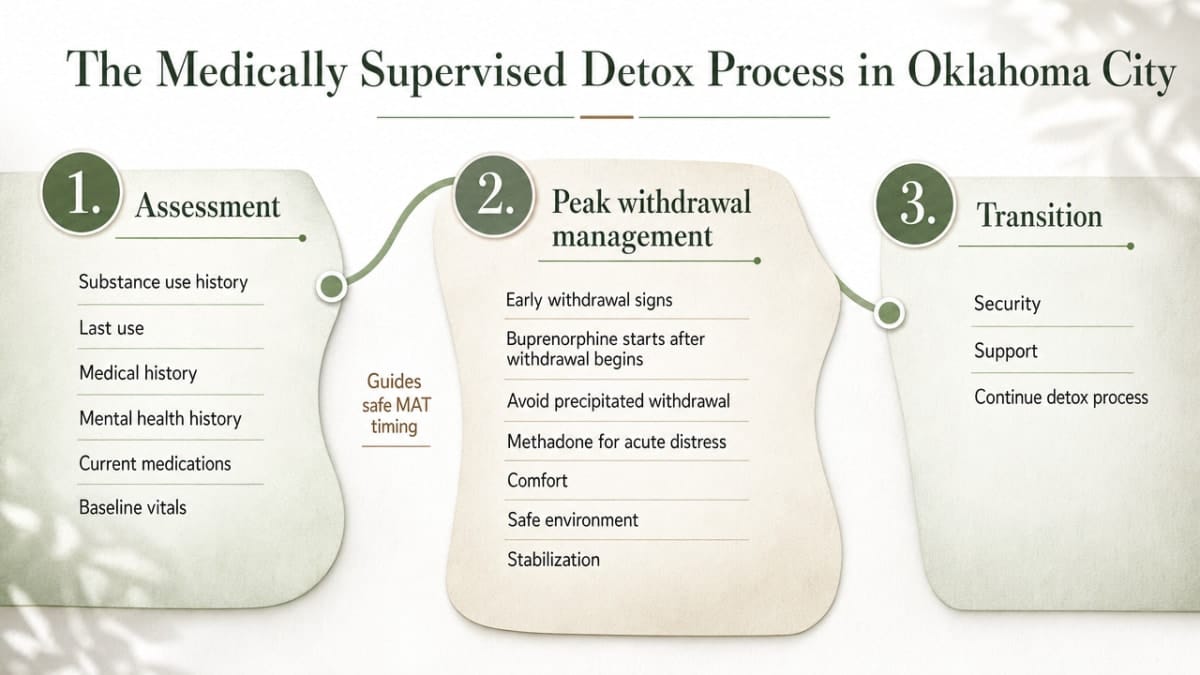
Upon admission to a medically supervised detox program, the first step is a thorough medical assessment. This includes gathering information on substance use history, last use, medical and mental health history, and current medications. Vitals are checked to establish a baseline. This comprehensive intake informs critical decisions, such as the safe timing for introducing MAT medications. For instance, buprenorphine is initiated only when early signs of withdrawal are present to avoid precipitated withdrawal 13, while methadone can be used for individuals in acute distress 14.
During these initial hours, the focus is on stabilizing the patient, ensuring comfort, and providing a safe environment. This allows individuals to begin the detox process with a sense of security and support.
Managing Peak Withdrawal with Continuous Monitoring
The most challenging phase of opioid withdrawal, typically occurring between 36 and 72 hours after the last dose for short-acting opioids, involves intense physical symptoms. During this period, continuous medical supervision is paramount. Buprenorphine is introduced once early withdrawal signs appear, adhering to SAMHSA’s protocol to prevent precipitated withdrawal 13. Alternatively, methadone may be used if it is a more suitable option 14. Alpha-2 adrenergic agonists like clonidine or lofexidine are also administered to manage autonomic symptoms such as rapid heart rate, sweating, and hypertension, as recommended by the WHO 2.
At Renewal Springs, continuous monitoring is enhanced by wearable biotech from Huml Health, which tracks heart rate, sleep quality, and stress signals in real-time. This technology provides clinicians with immediate data, enabling prompt adjustments to care and ensuring patient safety, even during off-hours.
Transitioning Beyond Detox
This may involve continuing buprenorphine or methadone as maintenance treatment, which has been shown to reduce illicit opioid use and improve retention in care 5. Other pathways include transitioning to naltrexone after the required opioid-free period 14, or engaging in residential or outpatient treatment focusing on behavioral and emotional aspects of recovery. Renewal Springs ensures a seamless transition with a detailed discharge plan, outlining ongoing medication, follow-up appointments, and support systems to prevent gaps in care.
Oklahoma’s Regulatory Framework for MAT
SoonerCare Coverage for MAT
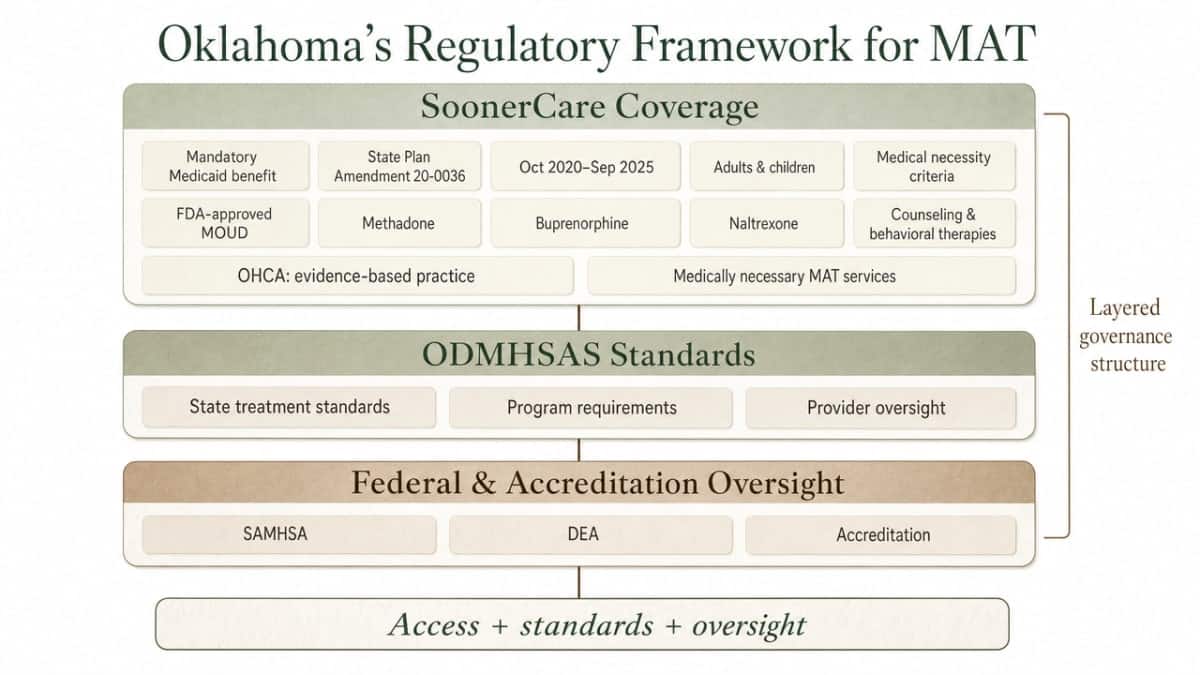
In Oklahoma, Medication-Assisted Treatment (MAT) is a mandatory benefit under the state’s Medicaid program, SoonerCare. This ensures that individuals who qualify for SoonerCare have access to essential MAT services without financial barriers. Oklahoma’s State Plan Amendment 20-0036, effective from October 2020 through September 2025, explicitly states that MAT services are covered for adults and children meeting medical necessity criteria 11. This coverage includes FDA-approved medications for opioid use disorder—methadone, buprenorphine, and naltrexone—along with associated counseling and behavioral therapies 11.
The Oklahoma Health Care Authority further reinforces this by defining MAT as an evidence-based practice and confirming coverage for medically necessary MAT services, including methadone treatment, for eligible individuals with opioid use disorder 10. This regulatory support ensures that financial concerns do not impede access to life-saving treatment.
State Standards for MAT Programs
Oklahoma maintains stringent standards for facilities providing medication-assisted opioid treatment to ensure patient safety and quality of care. The Oklahoma Department of Mental Health and Substance Abuse Services (ODMHSAS) outlines these requirements in Chapter 70, which covers certification, clinical protocols, and safety expectations for programs offering opioid withdrawal management, short-term withdrawal, and long-term maintenance with methadone and buprenorphine 12.
Additionally, Oklahoma Administrative Code § 450:70-4-5 mandates that opioid treatment programs must hold current SAMHSA certification to dispense opioid medications and be registered under the federal Controlled Substances Act 15. Accreditation from recognized bodies like CARF or The Joint Commission further ensures adherence to high standards of care 15. These regulations provide a layer of oversight, ensuring that medically supervised detox programs operate with accountability and patient well-being as a priority.
Renewal Springs’ Approach to Medically Supervised Detox
24/7 Medical Supervision and Advanced Monitoring
Renewal Springs provides round-the-clock medical supervision, recognizing that withdrawal symptoms can intensify at any time. Licensed medical professionals are on-site 24/7 to monitor patients and respond to their needs. This continuous care is augmented by wearable biotech from Huml Health, which tracks vital signs such as heart rate, sleep quality, and stress signals in real-time. This data allows the clinical team to proactively adjust supportive medications, provide immediate assistance, and ensure patient comfort based on their physiological responses, rather than relying solely on scheduled check-ins.
This advanced monitoring is particularly crucial during opioid withdrawal, which can place significant stress on the cardiovascular system. The ability to continuously track and respond to changes in a patient’s condition ensures a safer and more effective detox experience.
Specialized Care for Veterans and Gender-Specific Needs
Renewal Springs offers specialized care tracks to address the unique needs of different patient populations. A veteran-specific track acknowledges the distinct experiences and potential co-occurring conditions, such as combat exposure or chronic pain, that may contribute to opioid dependency. This tailored approach ensures that veterans receive care that is sensitive to their background.
Similarly, gender-specific detox programs for men and women are available. These programs recognize that physical, emotional, and social factors influencing withdrawal and recovery can differ between genders. Providing separate environments fosters a sense of safety and allows for more open communication, enhancing the overall effectiveness of treatment.
Accessible Intake and Insurance Verification
Renewal Springs aims to remove barriers to treatment by offering free insurance verification. The intake team can confirm coverage with most major insurance providers while prospective patients are on the phone. While having an insurance card, a timeline of substance use, and a list of current prescriptions can be helpful, these are not prerequisites for making the initial call. The primary goal of the intake conversation is to assess the individual’s situation and determine if medically assisted opioid detox is appropriate for their current needs.
Taking the First Step: A Clinical Conversation
Deciding to seek help for opioid withdrawal can be overwhelming, and individuals often feel pressured to have all the answers before reaching out. However, the intake process at Renewal Springs is designed to alleviate this burden. You do not need to determine which specific MAT medication is right for you, how long treatment will last, or how to navigate insurance or personal explanations.
The initial call is a clinical conversation where a compassionate team member listens to your situation and helps assess whether medically assisted opioid detox in Oklahoma City aligns with your current needs. This conversation is also available for family members seeking information on behalf of a loved one. The most crucial step is making the call; the subsequent steps are guided by professionals dedicated to supporting your recovery journey.
Talk Now About Medication-Assisted Opioid Detox Options
Get clear answers on safe, supervised opioid withdrawal with medication-assisted treatment right away.
Frequently Asked Questions
Is medication-assisted opioid detox safe?
Yes, when conducted under medical supervision. National clinical guidelines endorse medication-assisted withdrawal over abrupt cessation of opioids 4, utilizing FDA-approved medications 2. Renewal Springs ensures safety with 24/7 on-site medical professionals and real-time wearable monitoring of vitals.
How long does medically supervised opioid detox usually take?
The duration varies based on the type and duration of opioid use, and individual physiological responses. Acute withdrawal from short-acting opioids typically peaks within a few days and subsides over approximately a week, while long-acting opioids may require a longer detox period. An intake clinician will provide a more precise estimate based on your specific circumstances.
Will I be trading one drug for another if I take buprenorphine or methadone?
This concern is common. Buprenorphine and methadone are prescribed, monitored medications that effectively reduce illicit opioid use and improve treatment retention 5. They alleviate withdrawal symptoms and cravings without producing the euphoric effects of illicit opioids. This approach is recognized as a medical treatment for a chronic condition, not a substitution of one addiction for another.
Does insurance cover MAT detox in Oklahoma City?
Most insurance plans, including SoonerCare (Oklahoma’s Medicaid program), typically cover MAT. Renewal Springs accepts most major insurance providers and offers free benefits verification. You can call to have your coverage checked during the initial conversation.
What if I’m still using fentanyl or heroin right now — can I still call?
Yes, please call immediately. You do not need to be sober or have stopped using to initiate contact. Providing information about your current usage and last dose helps the clinical team plan a safe and effective treatment strategy, as the timing of certain MAT medications depends on this information 13.
What happens after detox is over?
Detox is the initial phase of recovery. Post-detox plans may include continuing MAT for maintenance, transitioning to naltrexone after the appropriate opioid-free period 14, or engaging in residential or outpatient treatment. Renewal Springs develops a comprehensive discharge plan to ensure a smooth transition and continued support.
References
- Management of opioid use disorders: a national clinical practice guideline. https://pmc.ncbi.nlm.nih.gov/articles/PMC5837873/
- Guidelines for the Psychosocially Assisted Pharmacological Treatment of Opioid Dependence (WHO). https://www.ncbi.nlm.nih.gov/books/NBK143185/pdf/Bookshelf_NBK143185.pdf
- New directions in the treatment of opioid withdrawal. https://pmc.ncbi.nlm.nih.gov/articles/PMC7385662/
- Review of Medication-Assisted Treatment Guidelines and Measures for Opioid and Alcohol Use. https://aspe.hhs.gov/reports/review-medication-assisted-treatment-guidelines-measures-opioid-alcohol-use-0
- Pharmacological and Behavioral Treatment of Opioid Use Disorder. https://pmc.ncbi.nlm.nih.gov/articles/PMC9175946/
- Prescribing Guidelines for the Treatment of Opioid Dependence. https://www.ncbi.nlm.nih.gov/books/NBK143167/
- CDC Guideline for Prescribing Opioids for Chronic Pain — United States, 2016. https://www.cdc.gov/mmwr/volumes/65/rr/rr6501e1.htm
- 2018 Oklahoma Drug Overdose Death Report. https://www.oag.ok.gov/sites/g/files/gmc586/f/documents/2020/05/2018-oklahoma-drug-overdose-death-report.pdf
- TIP 63: Medications for Opioid Use Disorder (Full PDF). https://store.samhsa.gov/sites/default/files/SAMHSA_Digital_Download/PEP21-02-01-002.pdf
- 317:30-5-241.7. Medication-assisted treatment (MAT) services for eligible individuals with opioid use disorder (OUD). https://oklahoma.gov/ohca/policies-and-rules/xpolicy/medical-providers-fee-for-service/individual-providers-and-specialties/outpatient-behavioral-health-services/medication-assisted-treatment-services-for-eligible-individuals-with-opioid-use-disorder.html
- Oklahoma State Plan Amendment (SPA) 20-0036. https://www.medicaid.gov/Medicaid/spa/downloads/OK-20-0036.pdf
- Chapter 70. Standards and Criteria for Opioid Treatment Programs. https://oklahoma.gov/content/dam/ok/en/odmhsas/documents/policy/provider-certification/administrative-rules/2025/PC–Chapter-70_9_15_2025.pdf
- TIP 63: Medications for Opioid Use Disorder. https://library.samhsa.gov/sites/default/files/pep21-02-01-002.pdf
- A Comparison of Medication-Assisted Treatment Options for Opioid Use Disorder. https://pmc.ncbi.nlm.nih.gov/articles/PMC11805484/
- Okla. Admin. Code § 450:70-4-5 – Service support and enhancement. https://www.law.cornell.edu/regulations/oklahoma/OAC-450-70-4-5
- Medication Assisted Treatment for Opioid Use Disorder (Federal Bureau of Prisons Clinical Guidance). https://www.bop.gov/resources/pdfs/opioid_use_disorder_cg.pdf