Key Takeaways
- Cannabis withdrawal is a DSM-5 diagnosis affecting roughly half of regular users, with symptoms peaking between days three and six and driving most solo quit attempts to collapse 8.
- No FDA-approved medication exists for cannabis withdrawal, so supervised detox centers on sleep support, symptom monitoring, and structure rather than a pharmacological fix 9.
- Oklahoma City residents face a stark treatment gap, with only 163 of every 1,000 people needing substance use care actually receiving it, making persistence through multiple calls often necessary 6.
- Before choosing a program, compare cannabis-specific admission experience, sleep protocols, insurance verification speed, after-hours access, and whether outpatient counseling using motivational interviewing, CBT, or contingency management is scheduled before discharge 2.
If Day Four Wrecked You, That’s the Science
You made it two days. Maybe three. Then somewhere around day four, the sleep disappeared, the irritability got loud, your appetite vanished, and the anxiety felt like a fist under your ribs. You lit up again, and you told yourself you were weak.
You weren’t weak. You hit the peak.
Cannabis withdrawal has a clock. Symptoms tend to show up within the first 24 to 48 hours after your last use, intensify hardest between days two and six, and then start to loosen their grip 1. If your prior attempt cratered in that window, you didn’t fail a character test. You collided with a documented clinical syndrome at exactly the hour the research says it hits hardest.
That reframe matters, because it changes the question. The question isn’t whether you can white-knuckle your way past a wall your nervous system built. The question is whether you have support in place during the specific 72-hour stretch where solo attempts almost always fall apart.
This guide walks you through what cannabis withdrawal actually looks like, why the day-four collapse is predictable, what supervised detox in Oklahoma City does (and honestly doesn’t do), and what comes after the physical symptoms fade. No cheerleading. No moralizing. Just the picture you needed the last time you tried.
Yes, Cannabis Withdrawal Is Real
What the DSM-5 and the Research Actually Say
Cannabis withdrawal has been in the DSM-5 as a formal diagnosis since 2013. That’s not a footnote. That’s the same diagnostic manual clinicians use for every other substance use disorder, and it lists cannabis withdrawal with its own criteria and course.
Here’s the number that tends to land: a meta-analysis of DSM-5 cannabis withdrawal syndrome found that roughly half of regular or dependent cannabis users experience it, with even higher rates in inpatient samples 8. Not a fringe minority. Not people who were secretly using something else. About one in two, among the group you probably belong to if you’re reading this.
The symptom cluster is remarkably consistent across the clinical literature. The six that show up most often are:
- anxiety
- irritability
- anger or aggression
- disturbed sleep and vivid dreams
- depressed mood
- appetite loss 1
Read that list again. If you tried to quit and got hammered by three or four of those in the same week, you weren’t imagining it, and you weren’t uniquely fragile. You were experiencing the exact syndrome the research describes.
The clinical significance piece matters too. Cannabis withdrawal isn’t just uncomfortable in a vague way. It’s been documented to cause functional impairment for a meaningful subset of people, meaning it interferes with work, relationships, and daily routine while it’s active 10. That’s the part your friends who quit easily don’t understand.
Why ‘It’s Just Weed’ Misses the Point
You’ve probably heard some version of it. Maybe you’ve said it yourself. Weed isn’t like alcohol. Weed isn’t like opioids. Weed is the safe one. Weed doesn’t have withdrawal.
That framing made more sense twenty years ago, when the average product was weaker and daily use was less common. It makes less sense now, and it doesn’t help you when you’re the person waking up at 3 a.m. drenched in sweat from a dream so vivid it felt like a memory.
The cultural conversation about cannabis and the clinical conversation about cannabis are two different conversations. Culturally, marijuana is legal in more states every year, joked about, and often positioned as harmless. Clinically, cannabis use disorder is a recognized diagnosis with recognized withdrawal, and it drives real treatment demand 2. Both can be true. A substance can be legal, culturally accepted, and still produce dependence in daily users.
The point isn’t to convince you cannabis is dangerous in some general sense. It’s to give you permission to stop grading your own experience against a cultural script that doesn’t match the science. If your body has been telling you something is happening, your body is right.
The Withdrawal Timeline: Hour by Hour, Day by Day
Onset, Peak, and Resolution
Here’s the shape of the thing you were fighting.
The first 24 to 48 hours after your last use are usually the quiet stretch. You might feel a little off, a little wired, a little hungry in weird ways. Some people describe it as low-grade static rather than a storm. That’s the onset window, and it’s when your nervous system starts registering that the input it’s been receiving daily has stopped 1.
Then days two through six arrive. This is the peak, and it’s the stretch that matters most for anyone with a history of failed attempts. Sleep breaks down first for most people. You lie flat and your brain won’t switch off, or you fall asleep and the dreams are so vivid and strange that waking up feels like coming out of a movie. Irritability climbs. Anger shows up over small things. Appetite drops off. Anxiety sits in your chest like it has a lease 1. StatPearls puts the peak intensity around day three specifically, with most of the acute course resolving by two weeks 2.
By the end of week one and into week two, the sharpest edges usually dull. You start eating again. Sleep begins to come back in pieces, even if it isn’t restored yet.
Here’s the part the timeline charts often skip: if you’ve been a heavy daily user for years, some symptoms, particularly sleep disturbance, low mood, and cravings, can drag out to three weeks or longer 1. That’s not you failing to bounce back. That’s a longer taper on your neurochemistry catching up.
Why Solo Attempts Collapse at Day 3 to Day 6
Look at that timeline again and lay your last attempt over it. When did you cave? For most people who quit alone, the answer clusters in the same 72-hour band, because that’s when the biology is loudest and your resources are lowest.
Think about what those days actually look like from the inside. You’ve slept badly for three nights running. You’re snapping at people you love. You can’t eat. Anxiety is doing laps in your chest. And you know, from experience, that one hit will turn all of it off within about ten minutes.
Supervised detox exists specifically for this window. The value isn’t that someone rescues you from a medical emergency. The value is that you’re not alone in a dark bedroom at 3 a.m. on day four, doing math on whether it’s worth it.
What Supervised Detox Actually Does (And Doesn’t Do)
Why Medication Isn’t the Centerpiece
Here’s something you should hear straight, especially if you’ve watched someone go through opioid or alcohol detox and pictured something similar for yourself.
There is no FDA-approved medication for cannabis withdrawal. None. The systematic reviews of everything that’s been tried, cannabinoid agonists, antidepressants, anticonvulsants, sleep aids, all come to the same conclusion: no pharmacological treatment has enough evidence to be considered first-line for cannabis use disorder or withdrawal 9. StatPearls says the same thing in plainer language, that supportive care is the primary therapy and no medications are approved for the condition 2.
That might sound discouraging. It shouldn’t. It just means the model for cannabis detox is different from what you’ve seen on TV.
A supervised program can still use medication tactically, something short-term for sleep when the insomnia is grinding you down, something for acute anxiety spikes, something for nausea or headache if those show up. Those are targeted comfort measures, not a cure that runs in the background. The clinicians are treating the symptom in front of them for a few days, not addressing the underlying withdrawal itself.
Knowing this in advance protects you from a specific disappointment. Nobody is going to hand you a pill on day one that makes days three through five disappear. What they’re going to do is make sure you’re not enduring those days alone.
Sleep, Symptom Monitoring, and Structure
If medication isn’t the centerpiece, what is? Three things, mostly. Sleep, monitoring, and structure.
Sleep is the one that ends most solo attempts. You lie awake for three nights, the vivid dreams start on night four, and by day five your judgment is shot. A supervised setting takes sleep seriously as a clinical target, not an afterthought. That means a dark, quiet room, a schedule that supports a real bedtime, sometimes a short-term sleep aid, and staff who understand that a bad night at hour 72 isn’t a personality flaw. It’s the symptom the literature warned about 1.
Monitoring matters for a different reason. Cannabis withdrawal is generally not medically dangerous, and that’s worth saying plainly. But when you’re detoxing, your vitals, your sleep, your mood, and your anxiety are useful data. Trained staff watch for the anxiety spikes, the appetite crash that goes too far, the depressed mood that needs a check-in. If a co-occurring issue is hiding underneath your cannabis use, and for a lot of daily users something is, this is where it surfaces.
Structure carries you when your own executive function is offline. Meals at set times. Groups at set times. Someone to talk to at 2 a.m. A room you didn’t fill with reminders of use. Your bedroom, on day four, is a place where you already know exactly where you kept your stash. A detox room isn’t.
None of this is dramatic. That’s the point. What supervision buys you isn’t rescue. It’s the quiet infrastructure that makes finishing the week possible 10.
A Realistic Look at a Supervised Detox Week
Here’s roughly what a week can look like, so you’re not walking in blind.
- Day one is intake. You’ll answer questions about your use history, other substances, medical history, mental health, and what your prior quit attempts looked like. A physical exam. Bloodwork. A conversation about goals. You might feel oddly fine physically, because the onset window hasn’t hit yet 1. Some people feel a low hum of anxiety just from being somewhere new. Both are normal.
- Day two is when the shape starts to change. Sleep gets worse. Appetite drops. Irritability climbs. You’re still functional. You meet with clinical staff, settle into the schedule, and start baseline monitoring.
- Days three through five are the peak. This is the stretch you already know from experience. Sleep may be broken and dream-heavy. Anxiety sits high. You may feel a physical restlessness that’s hard to describe, like your skin doesn’t fit right. Cravings show up in waves. What’s different this time is that you’re not making decisions at 3 a.m. by yourself. Staff check on you. Short-term sleep support may be available. Group sessions give you something to do with the hours. The waves pass because someone is there while they pass 10.
- By day six or seven, most people notice the first real break. Sleep isn’t fixed, but a stretch of three or four hours feels like a gift. You eat a full meal. The anxiety loosens. Cravings still come, but they don’t own the whole day.
- By the end of week one and into week two, the acute course begins to resolve for most people 2. If you’re a long-term heavy user, expect some symptoms, mainly sleep and mood, to linger. That’s the tail, and it’s what the next phase of care is designed for.
The Oklahoma City Context
The Local Treatment Gap
If finding help in Oklahoma has felt harder than it should, that’s not in your head.
The 2023 National Survey on Drug Use and Health puts numbers on it. For every 1,000 Oklahoma residents, an estimated 679 are classified as needing substance use treatment. Only 163 per 1,000 actually receive it 6. That’s roughly a four-to-one gap between the people who could use help and the people who get it.
Sit with that for a second. If you’ve called around looking for a bed and hit voicemail after voicemail, if the intake line quoted you a wait, if the first place you tried didn’t handle cannabis specifically, that experience is the gap made personal. It’s not a signal that your problem isn’t serious enough. It’s a signal that the local system is stretched, and access is uneven.
What that means practically for you: don’t take the first ‘we can’t help right now’ as the whole answer. Medically supervised detox for cannabis in the Oklahoma City metro exists, but you may need to make more than one call to reach it. Insurance verification, admissions timing, and program fit all vary. The people who make it into care are often the ones who kept dialing after the first no, not the ones with a special profile.
The gap is a systems problem. Getting through it is a persistence problem. Both can be true, and neither one is about your worth as a person trying to quit.
When Family Exposure and Early-Onset Use Enter the Picture
One more piece of the local picture, and it matters if you started young or if there are kids in your house watching you try to quit.
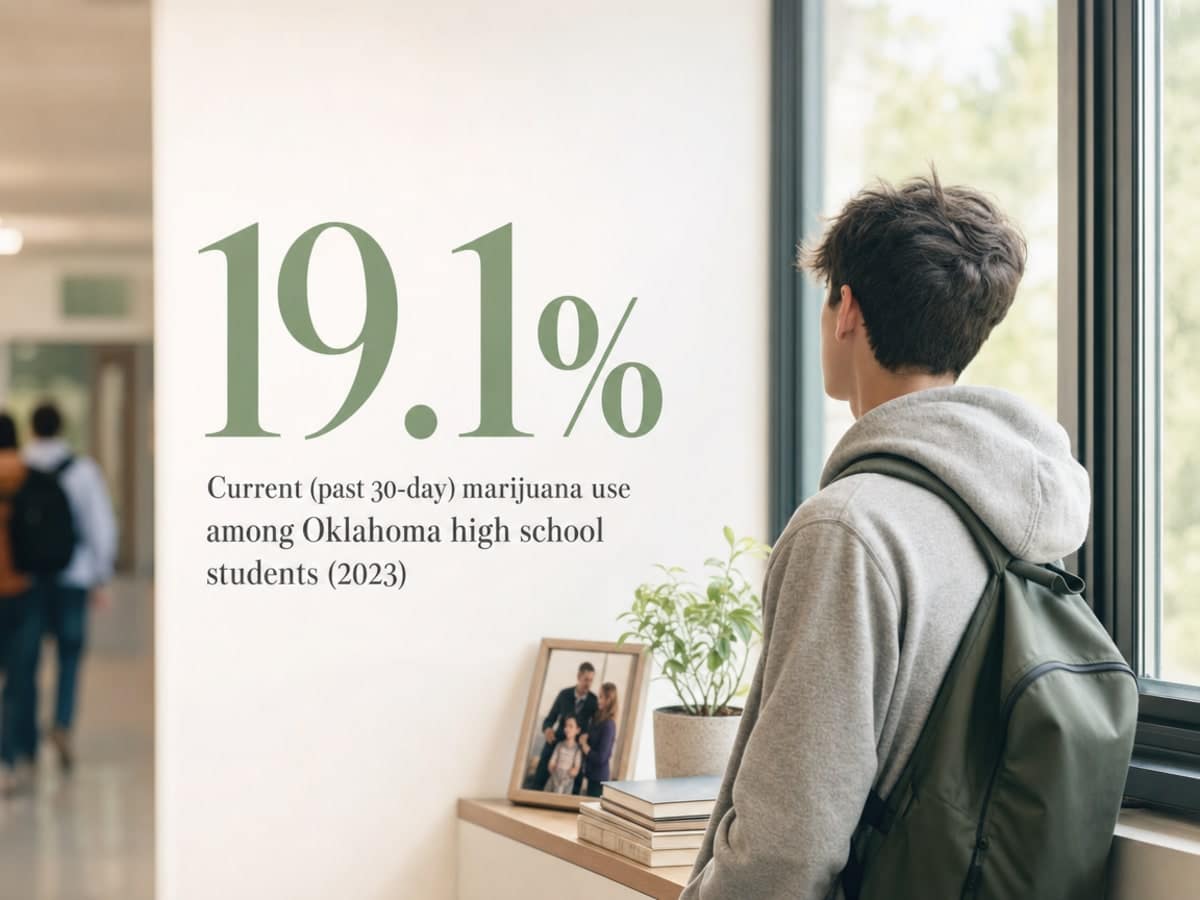
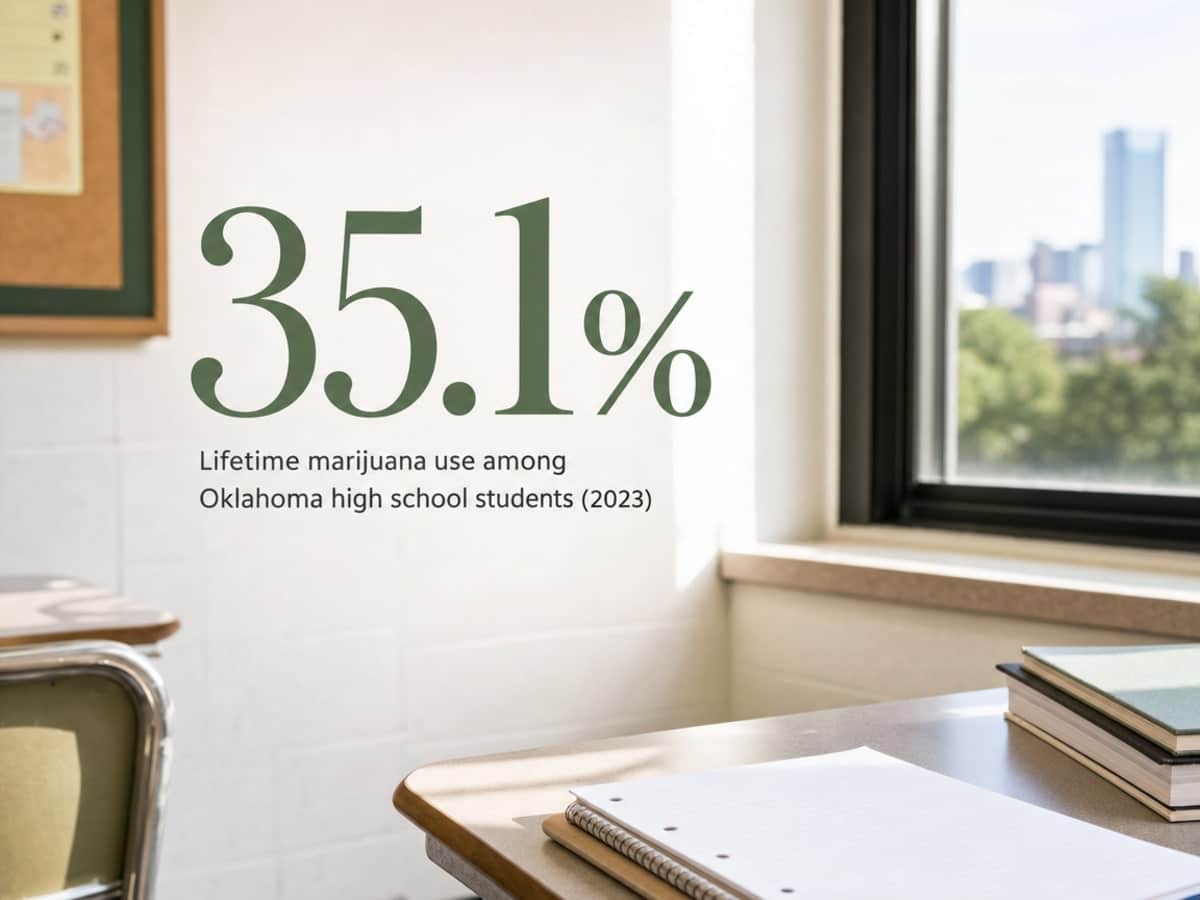
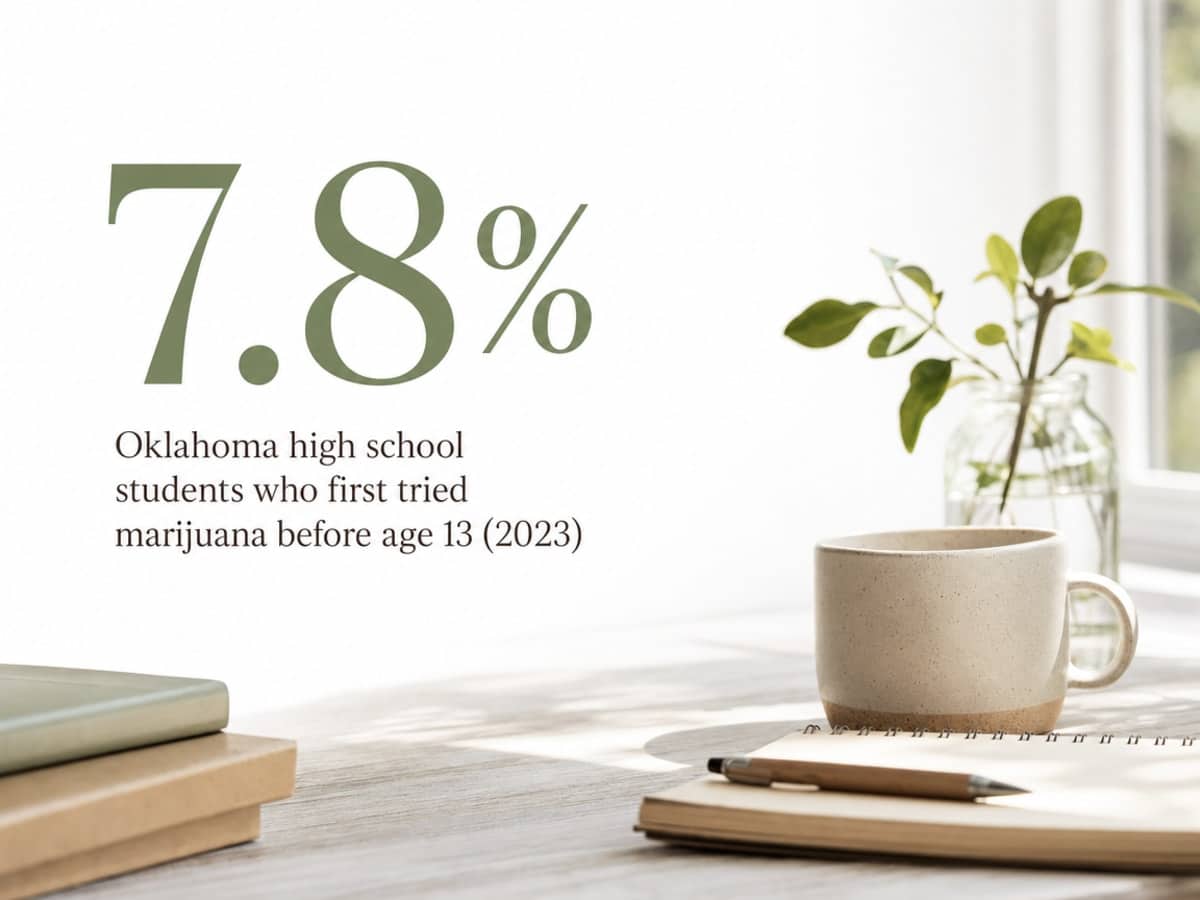
Oklahoma’s 2023 Youth Risk Behavior Survey found that:
- 35.1% of public high school students have used marijuana at some point
- 19.1% used in the past 30 days
- 7.8% first tried it before age 13 7
Cannabis is around, and it started early for a lot of Oklahomans.
If you were part of that early-onset group yourself, your relationship with the drug has been longer and more embedded than most of the cultural conversation acknowledges. That often means a steeper withdrawal course and a longer tail, which is exactly what a supervised program is built to hold.
And if you’re a parent working through this, the household piece is real. Kids notice. What they’re most likely to remember isn’t a lecture. It’s the week you got help and came back different. That’s the version of this story worth aiming at.
After Detox: Where the Real Work Starts
The Warm Handoff to Behavioral Care
Detox ends the acute physical piece. It doesn’t end the habit that took years to build.
The stretch right after discharge is when a lot of people quietly slip. You feel physically better. Sleep is coming back. The intensity has dropped enough that your brain starts telling you maybe it wasn’t that bad, maybe you can handle a little, maybe the whole thing was overkill. That voice is loudest in the first two weeks out, which is exactly when many acute symptoms are still resolving and cravings still come in waves 2.
A good detox program doesn’t hand you a discharge sheet and wish you luck. It sets up what clinicians call a warm handoff, meaning your next appointment with a therapist or outpatient program is already on the calendar before you walk out. NIDA’s clinician guidance is direct on this point: after assessment and cessation support, the standard move is a referral to counseling or treatment for the underlying use disorder and any co-occurring issues that may have been feeding it 3.
Ask about the handoff before you admit. Who does the program refer to? Is the first outpatient session scheduled during your stay, or after? What happens if you relapse in week two? The answers tell you whether you’re entering a system or a single stop.
Motivational Interviewing, CBT, and Contingency Management
Three names come up over and over in the cannabis treatment literature, and they’re worth knowing before someone in an intake meeting rattles them off at you.
- Motivational interviewing
- It’s a conversation style, not a lecture. A trained clinician helps you talk through your own reasons for changing, without arguing you into anything. It’s the approach federal guidance points to specifically for engaging people with problematic cannabis use 3.
- Cognitive behavioral therapy (CBT)
- It’s structured work on the patterns that keep use going, the trigger, the thought, the reach for the vape, the relief, the loop. SAMHSA’s treatment manual for adults with marijuana dependence combines motivational strategies with cognitive-behavioral tools in a brief, structured protocol you can actually finish 4.
- Contingency management
- It’s a reward system for verified negative drug screens, and StatPearls lists it alongside motivational interviewing and CBT as first-line psychosocial care for cannabis use disorder 2. It sounds mechanical. It works because it makes the invisible progress visible.
None of these are magic. Together, they’re the closest thing the field has to a standard of care, and they’re what fills the space where a medication would be for other substances.
Choosing a Local Program Without Guessing
You don’t need a rating site. You need five questions that separate a real cannabis-capable program from one that will treat you like an afterthought.
- Do you specifically admit for cannabis? Some Oklahoma City programs are built around alcohol and opioid detox and will take a cannabis case as a courtesy. That’s not the same as knowing what day four looks like. Ask directly.
- How do you handle sleep? A program that shrugs at sleep is a program that hasn’t read the peak-symptom literature. You want a clear answer about sleep environment, schedule, and short-term support options 1.
- What’s the aftercare handoff? You want an outpatient appointment on the calendar before discharge, using motivational interviewing, CBT, or contingency management as the framework 2.
- What does insurance verification look like, and how fast? A stretched local system means slow answers cost you days you don’t have.
- Who answers the phone at 2 a.m.? Renewal Springs Detox and other supervised programs in the metro should give you a real human, not a queue.
Talk to Someone Who Understands Marijuana Withdrawal
Connect for real-time support navigating safe, medically supervised marijuana detox in Oklahoma City.
Frequently Asked Questions
Is marijuana withdrawal actually dangerous?
Not in the way alcohol or benzodiazepine withdrawal can be. Cannabis withdrawal generally isn’t medically life-threatening, and that’s worth saying plainly. What it is, is distressing enough to derail most solo attempts, with anxiety, sleep loss, and irritability driving people back to use before the peak passes 10. Supervision keeps you comfortable and monitored, not resuscitated.
How long does marijuana detox take?
The acute course usually runs one to two weeks. Symptoms tend to onset within 24 hours, peak around day three, and resolve by roughly two weeks for most people 2. If you’ve been a heavy daily user for years, expect a longer tail. Sleep, mood, and cravings can linger for three weeks or more before your baseline returns.
Do I really need supervised detox if there’s no medication for cannabis withdrawal?
The lack of an FDA-approved medication is exactly why supervision matters more than you’d think 9. There’s no pill that shortcuts day four. What supervised care provides is the infrastructure most people can’t build for themselves at 3 a.m.: a sleep-supportive environment, targeted comfort measures, staff who recognize symptom patterns, and a scheduled handoff to counseling before you leave.
Why did I fail every time I tried to quit on my own?
Because you were fighting a documented syndrome without support during its loudest hours. Cannabis withdrawal is distressing enough on its own to drive continued use, and that pattern shows up in the clinical literature, not just your kitchen at midnight 10. Solo attempts collapse in the day three to day six window because that’s when biology peaks and resources bottom out.
What happens after I finish detox in Oklahoma City?
Detox handles the acute physical piece. What comes next is behavioral care, ideally with an outpatient appointment already on the calendar before discharge. Federal guidance points to motivational interviewing, cognitive behavioral therapy, and contingency management as first-line psychosocial treatments for cannabis use disorder 2. Ask your program who they refer to and when your first session is scheduled.
Will insurance cover marijuana detox in Oklahoma?
Most major commercial plans and Medicaid cover medically supervised detox for cannabis use disorder when it meets clinical criteria, though coverage terms vary by plan and level of care. Call the program you’re considering and ask them to run a free benefits verification before you commit. That gives you a real answer, not a guess.
References
- Clinical management of cannabis withdrawal. https://pubmed.ncbi.nlm.nih.gov/34791767/
- Cannabis Use Disorder. https://www.ncbi.nlm.nih.gov/books/NBK538131/
- Cannabis. https://nida.nih.gov/marijuana-0
- Brief Counseling for Marijuana Dependence: A Manual for Treating Adults. https://library.samhsa.gov/product/brief-counseling-marijuana-dependence-manual-treating-adults/sma15-4211
- Behavioral Health Barometer: Oklahoma, Volume 6. https://www.samhsa.gov/data/sites/default/files/reports/rpt32853/Oklahoma-BH-Barometer_Volume6.pdf
- 2023 National Survey on Drug Use and Health: Oklahoma State Tables. https://www.samhsa.gov/data/sites/default/files/reports/rpt56188/2023-nsduh-sae-state-tables_0/2023-nsduh-sae-state-tabs-oklahoma.pdf
- Marijuana Use – Oklahoma Youth Risk Behavior Survey 2023 Fact Sheet. https://oklahoma.gov/content/dam/ok/en/health/health2/aem-documents/family-health/maternal-and-child-health/child-adolescent-health/yrbs/2023/YRBS%20Marijuana%20-%20MCH%20-%20Fact%20Sheet%20-%208.5×11%20-%20English.pdf
- Prevalence of DSM-5 Cannabis Withdrawal Syndrome in Cannabis Users: A Meta-analysis. https://pubmed.ncbi.nlm.nih.gov/27469209/
- Pharmacological Treatments for Cannabis Use Disorder and Withdrawal: A Systematic Review. https://pubmed.ncbi.nlm.nih.gov/29537738/
- Cannabis Withdrawal: A Review of the Clinical Significance. https://www.ncbi.nlm.nih.gov/pmc/articles/PMC4821885/