Key Takeaways
- Oklahoma City detox facilities operate 24/7 through Christmas Eve, Christmas Day, and New Year’s, with clinicians and SAMHSA’s national helpline answering calls at any hour 12.
- Alcohol and benzodiazepine withdrawal can trigger seizures and delirium, and Oklahoma’s fentanyl overdose deaths climbed from 127 in 2020 to 730 in 2023, raising the stakes of waiting 1, 3, 6.
- A planned detox admission reserves a bed and staff for you, while a December emergency department visit competes with the same acute volume that produced over 12,000 Oklahoma overdose events in 2024 9.
- Before deciding, weigh your physical dependence, your recovery environment at home, and whether a home taper can safely match the monitoring standards described in the ASAM Criteria and 2025 benzodiazepine guideline 3, 11.
The Bargain You’re Making With Yourself Tonight
You’re doing the math again. Two weeks until New Year’s. One work party, one dinner at your sister’s, one drive back from Edmond where nobody has to know anything is wrong. If you can just hold the line until January 2nd, you tell yourself, you’ll call somewhere then. You’ll do it right. You’ll do it when it won’t wreck anyone else’s holiday.
You already know this bargain. You’ve made it before — maybe last Thanksgiving, maybe the birthday in October. And you’re not stupid. You’re exhausted. There’s a difference.
Here’s what’s true, and we’ll say it once so the rest of this piece can be useful to you: the plan to white-knuckle two more weeks is not a neutral plan. It has a cost, and the cost isn’t paid in willpower. If you’re physically dependent on alcohol, opioids, or benzodiazepines, your body is running a clock that doesn’t check the calendar. Withdrawal from any of those three can turn medical in a hurry, and the holiday version of your life — more drinking around you, more stress, fewer open clinics, a family that keeps handing you a glass — is a harder place to ride it out than a room with a nurse in it.
This article isn’t going to tell you the holidays can be magical again. It’s going to tell you what happens if you pick up the phone tonight in Oklahoma City, what the doctors watch for, and why waiting until January is the version that asks more of you, not less. Someone answers at 9 p.m. on December 23rd 12. That part is not a metaphor.
What Withdrawal Doesn’t Know About the Calendar
Alcohol: Why Holiday Drinking Makes an Existing Dependence More Dangerous
You already know how the week goes. The office party has an open bar. Your uncle refills your glass without asking. There’s a bottle on the counter at every stop between now and January 2nd, and every one of them is going to make it harder — not easier — to hold a line you’ve been trying to hold for months.
If you’re drinking every day right now, or drinking to keep the shakes off in the morning, your body has adapted. That adaptation is what withdrawal is. When the alcohol level drops, your nervous system rebounds hard: tremor, sweating, racing heart, nausea, and — in the more serious cases — seizures or delirium tremens. Clinicians treat alcohol withdrawal as a real medical event, not a rough couple of days. The 2020 ASAM guideline was written specifically for adults hospitalized with alcohol withdrawal syndrome of any severity, because “any severity” can turn into a hospital admission fast 1. In inpatient settings, benzodiazepines are first-line therapy precisely because they prevent the seizures and delirium that untreated withdrawal can produce 2.
Here’s the trap the holidays set for you. You keep drinking to avoid the shakes, but you drink more than usual because it’s around you more than usual — which raises your baseline, which makes the eventual stop harder, not softer. And if you do try to stop cold in a hotel room after Christmas Eve dinner, you’re doing it without anyone watching for the symptoms that need medication.
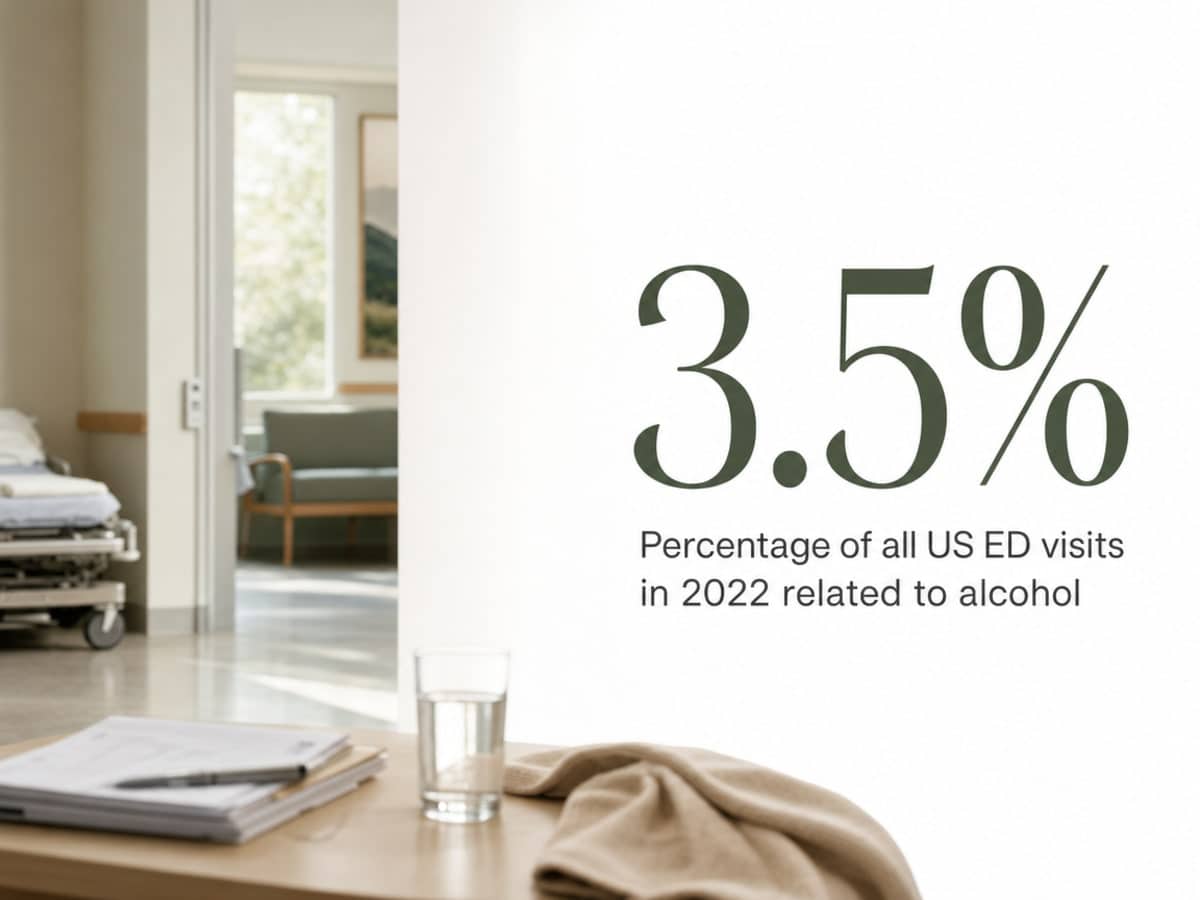
The scale of what acute alcohol harm looks like nationally isn’t a soft number. In 2022, alcohol contributed to more than 4.2 million emergency department visits — about 3.5% of all ED visits in the country 5. The holidays don’t invent that risk. They concentrate it.
Opioids and Fentanyl: Why Local Risk Has Changed Since Your Last Attempt
If you’ve tried to quit before and gone back to using — a week later, six months later — you already know the shape of that first day back. What you might not know is that the supply you’d be returning to in December 2024 is not the supply you left behind in 2019.
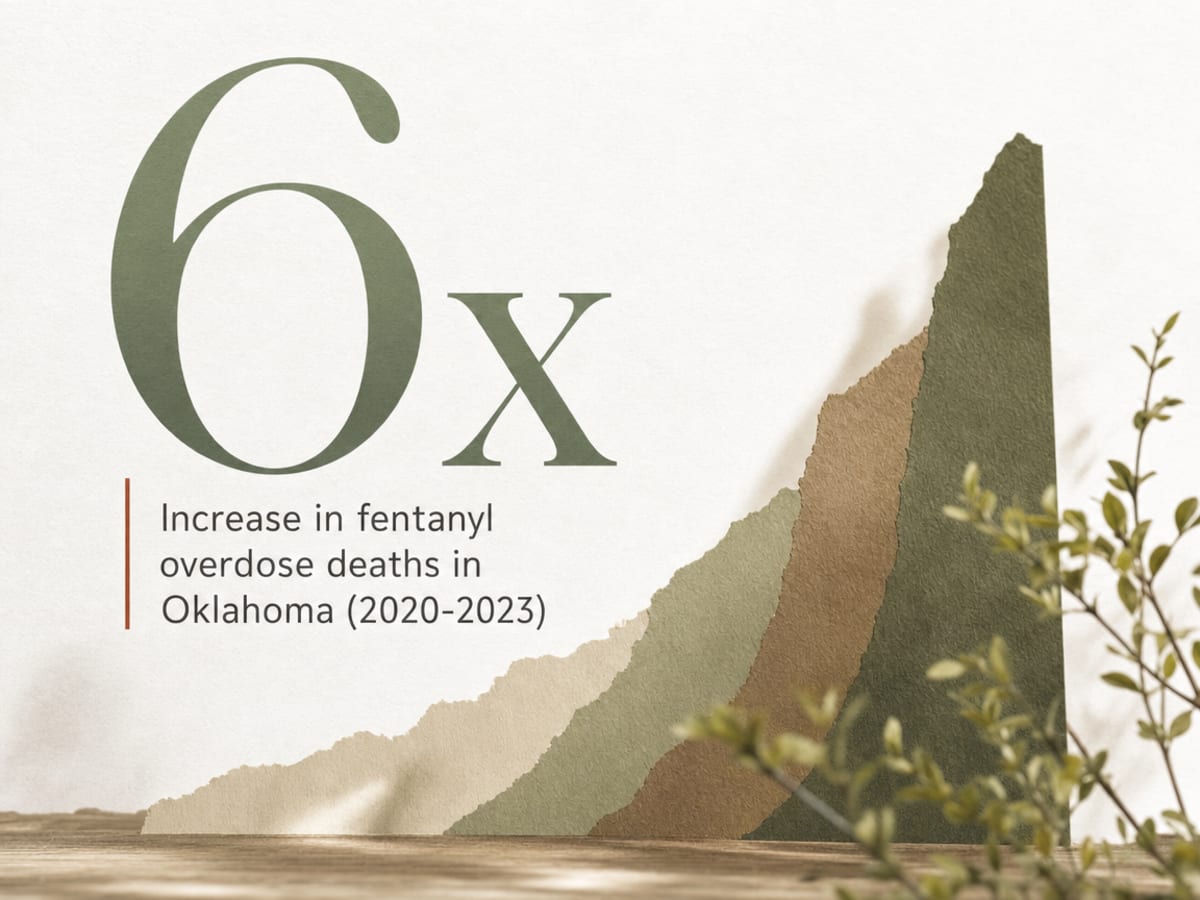
Fentanyl has changed what a return-to-use event actually is. In Oklahoma, fentanyl overdose deaths rose from 127 in 2020 to 730 in 2023 — a nearly six-fold increase in three years 6. That’s not a national trend borrowed and pasted onto your state. That’s your state. It means the pill someone hands you at a party, the powder you buy from a number you’ve used for years, the “same as last time” — none of that is the same as last time. Your tolerance dropped over the holiday week you tried to white-knuckle. The supply got stronger. Those two facts meeting in the same body is how people die in bathrooms while their family sings carols in the next room.
Opioid withdrawal itself is not what usually kills people. It’s brutal — bone pain, vomiting, sleeplessness, the kind of anxiety that makes the walls breathe — but it’s rarely fatal on its own. The danger is what happens after. You get through 48 hours, you feel worse than you can stand, and you use again at the dose you used to use. That dose, in the current fentanyl market, is a different dose than it was.
Medically supervised detox exists partly to interrupt that specific loop. It manages the physical symptoms with medication so you’re not chasing relief on your own, and it doesn’t discharge you into the same night with the same phone in your hand. The ASAM Criteria — the standard framework used to decide who needs supervised withdrawal — accounts for exactly this: withdrawal risk, biomedical conditions, and, importantly, your recovery environment 11. A holiday house with active use in it counts as an environment.
Benzodiazepines: Why a Home Taper Is the Wrong Plan for December
If you’re taking Xanax, Klonopin, Valium, or Ativan every day — prescribed or not — the plan to “just cut back over the holidays” is the version of this article we most need you to hear us on.
Benzodiazepine withdrawal is not like the movies. It doesn’t peak in a day and pass. It can drag out over weeks, and the two things clinicians watch hardest for are seizures and delirium — the same complications that make alcohol withdrawal medically serious 3. A do-it-yourself taper, especially one you’re trying to run while also managing family dinners, travel, poor sleep, and the emotional load of the season, is a taper without a safety net.
The 2025 joint benzodiazepine tapering guideline is careful about this. It acknowledges that most people can taper as outpatients under a prescriber’s care, but it names the conditions under which inpatient or medically managed residential care is indicated: severe acute withdrawal, seizure risk, or an environment that can’t support the taper safely 3. December, for a lot of people reading this, is that environment.
The System Is Already Full Before New Year’s
One of the quieter lies the “wait until January” plan tells you is that the hospitals and clinics will be less busy then. That the calendar will exhale. That whatever is happening in your body can wait for a slower week, and you’ll walk into a treatment system that has more time for you.
That’s not the system you’re waiting for. That system doesn’t exist.
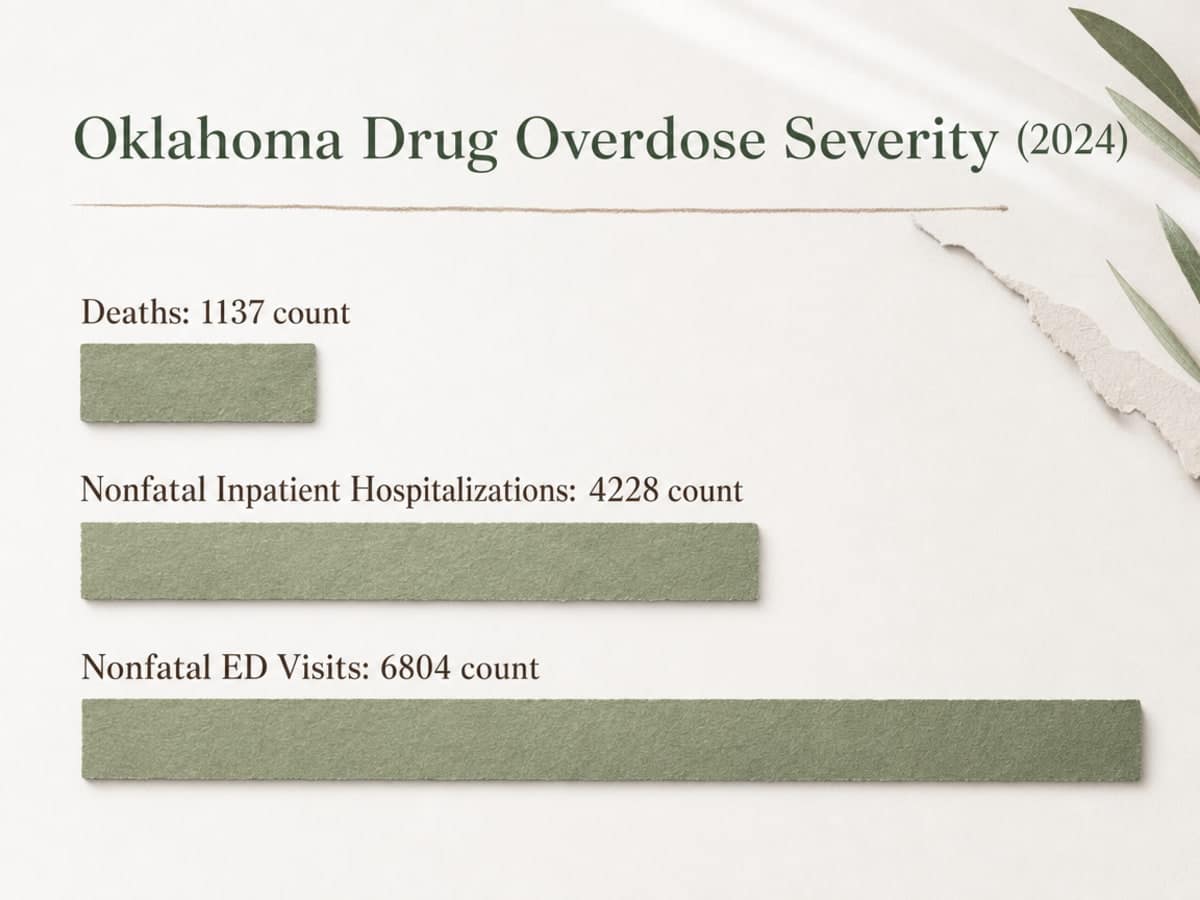
In 2024, Oklahoma recorded 1,137 drug overdose deaths, 4,228 nonfatal inpatient hospitalizations, and 6,804 nonfatal emergency department visits related to drug overdose 9. Add those together and you’re looking at more than 12,000 acute overdose events in a single year in one state — roughly one every 45 minutes, day and night, holiday or not. The bar chart doesn’t dip for Thanksgiving. The ED doesn’t get quiet the week between Christmas and New Year’s. Whatever picture you have in your head of a calmer, cleaner January admission is a picture the data doesn’t support.
What that means for you, specifically, is this. If you delay and something goes wrong at 2 a.m. on December 28th — a seizure during an alcohol taper you tried to run yourself, an overdose after a return-to-use event, a benzo withdrawal that turns delirious — you’re not entering a rested system. You’re entering the same system that’s carrying all of that volume, through the same doors, staffed by the same people who’ve been working since Halloween.
A planned admission into a 24/7 detox facility is a different door than an ambulance bay. It’s scheduled, it’s expected, and the bed is held for you. The clinicians know your name before you arrive. You are not the emergency that interrupts their shift; you are the reason they came to work. Waiting until January doesn’t move you to a quieter room. It moves you to a louder one, on worse terms, after your body has done another two weeks of work it didn’t need to do.
The ‘Don’t Ruin Christmas’ Conversation
What Your Family Is Actually Asking For
When your mother says “just get through Christmas,” she is not making a medical recommendation. She is asking for one more day of the family looking the way it looked in a photograph from 2015. That’s a real thing to want, and it’s worth naming that her request comes from love. It also comes from not knowing what your body is doing at 4 a.m. when everyone else is asleep.
Here is the translation you can offer her, if you have the energy for it. “Waiting until January” doesn’t mean you’re steady until January. It means you’re keeping something hidden until January. The dinners, the drives, the smile at the door — all of it costs you something she can’t see. The version of you that shows up on Christmas morning after two more weeks of holding on is not the version she thinks she’s protecting. It’s a more tired version. A more scared version. Possibly a version who is one bad night away from an ambulance.
What she is actually asking for is presence. The most honest way to give her that is to be somewhere safe while your body resets, and to come back to the table in February able to sit in the chair without doing math under the tablecloth. That is a harder gift to wrap. It is also the one that lasts.
Isolation, Self-Harm, and the Quiet Half of Oklahoma County’s Numbers
There is a part of this we have not said out loud yet, and we should. The holidays are not just physically riskier because there’s more alcohol at the party. They are riskier because of what happens when you close the door of your apartment after the party and it is very quiet.
The Oklahoma County data tells this story in a way most people don’t hear about. Between 2018 and 2022, of the nonfatal drug overdose hospitalizations in Oklahoma County, 48% were unintentional and 49% were classified as self-harm 8. Read that again. Almost half of the people who ended up in a hospital bed after an overdose in your county did not get there by accident. That is not a small footnote. That is half of the picture, and it is the half that the phrase “holiday overdose” almost never means when people say it out loud.
If part of what you are carrying right now is the thought that the family would be lighter without you at the table — we are not going to pretend we didn’t hear that. You are not the only person in Oklahoma City thinking it this week. And you do not have to solve it alone at 2 a.m. SAMHSA’s national helpline is staffed 24 hours a day, every day of the year, including Christmas Eve, Christmas Day, and New Year’s 12. A local detox line will pick up too. The people who answer are not surprised by the call. They were expecting it.
What Happens If You Call at 9 p.m. on December 23rd
The First Phone Call and the ASAM Assessment
You do not need a script. You do not need to have your insurance card in your hand. You do not need to have decided anything except that you are willing to talk to a person for the next fifteen minutes. That is the entire prerequisite for the first call.
What happens on the other end is a conversation, not an interrogation. Someone asks what you have been using, how much, and how recently. They ask when your last drink or last dose was, because that is the clock that matters for withdrawal. They ask if you have had a seizure before, if you are pregnant, if you take heart or blood pressure medication, if there is anyone home with you tonight. None of that is scored against you. It is the assessment clinicians use to decide what level of care you actually need.
That framework is not improvised. The ASAM Criteria is the standard set of guidelines used across addiction treatment to decide who needs medically supervised withdrawal, who can taper as an outpatient, and who needs a higher level of care — based on withdrawal risk, medical conditions, mental health, readiness, and your recovery environment 11. “Your recovery environment” is the polite clinical term for the house you are calling from tonight.
By the end of the call you have a plan, a bed availability answer, and a time. You have not committed to anything you cannot back out of. You have gathered information a scared person at 9 p.m. cannot gather alone.
The First 24 Hours Inside a 24/7 Oklahoma City Detox
You arrive. Someone shows you where to put your bag. A nurse takes your vitals — blood pressure, pulse, temperature — and asks the same intake questions again, because the person who admits you is not the person who took the phone call, and both of them want to hear it from you directly. That is a good thing. It means two clinicians are now paying attention to your body.
The first medication decisions get made quickly. If you are in alcohol withdrawal, the standard of care is symptom-triggered benzodiazepine dosing — the nurse checks you at regular intervals, scores your symptoms, and medicates when the numbers say to, which is how hospital protocols prevent the seizures and delirium that untreated withdrawal can produce 2. If you are in opioid withdrawal, buprenorphine or comfort medications get started on a timeline that matches your last use. If you are tapering off a benzodiazepine, someone else is now holding that schedule for you, and holding it under the monitoring the 2025 joint guideline recommends for anyone at seizure risk 3.
You sleep, probably badly, in a bed that is not yours. Somebody checks on you at 2 a.m. and again at 4 a.m. That is not a violation of your privacy. That is a nurse doing the job of watching for the symptoms your body has been trying to warn you about for months.
By morning, the shape of the next week is clearer. Medications, meals, a schedule, a room that is quiet, and a phone number your family can call to know you are alive. That is what the first 24 hours actually look like. Not a locked door. A held one.
Detox vs. the Emergency Department: Why the Door You Choose Matters
Here is a question worth answering directly, because a lot of people reading this have already thought about it: why not just go to the ED tonight?
You can. If you are actively seizing, if you have chest pain, if you have taken something and you are not sure what it was, the emergency department is the correct door. That is what it is built for. But if what you have is a physical dependence and a decision, the ED is not designed to finish the work. It is designed to stabilize you and hand you off. Discharge from a hospital withdrawal admission is meant to be deferred until symptoms have resolved and a linkage to ongoing treatment exists 2 — and in a busy December ED, that linkage is what tends to break.
A dedicated detox facility is a different structure. It is set up for the four-to-seven-day arc of withdrawal, not the four-hour arc of stabilization. It has a bed reserved for you before you arrive, staff who expect you, and a plan for what happens on day five when the acute part is over and the question becomes what comes next.
Two doors, two jobs. The ED handles the emergency. A detox handles the withdrawal. If you have a choice tonight — and most people reading this do — the second door is the one that gets you to February.
A Straight Answer to ‘Should I Wait Until January?’
No. And we say that gently, because we know the question is not really about January. The question is whether you can survive two more weeks of the version of your life you are living right now. Some part of you already knows the answer to that, or you would not be reading this at whatever hour it is.
Here is the straight version. If you are physically dependent on alcohol or a benzodiazepine, waiting means running a withdrawal clock in a house without a nurse in it — and the two complications clinicians watch hardest for, seizures and delirium, do not care what date it is 1, 3. If you are using opioids, waiting means two more weeks of a fentanyl supply that is not the supply you learned your tolerance on. If what is keeping you home is the fear of ruining someone’s holiday, the version of you that arrives at the table in February — rested, medicated through the hard part, actually present — is the version they have been missing for longer than they have said out loud.
The phone gets answered tonight. It gets answered on Christmas Eve. It gets answered at 3 a.m. on New Year’s Day 12. You do not have to be sure. You have to be willing to talk for fifteen minutes. That is the whole first step.
Connect Now for Real Human Support—Even Today
Speak directly with someone who understands and can help you take the next step, right when you need it.
Frequently Asked Questions
Is it safe to wait until after New Year’s to start detox?
Not if you’re physically dependent on alcohol or a benzodiazepine. Both withdrawal syndromes can produce seizures and delirium, which is why hospital protocols use symptom-triggered benzodiazepine dosing and monitored settings 1, 2. For opioids, waiting means your tolerance drops while the fentanyl supply doesn’t — a return-to-use event at your old dose is the higher-risk scenario, not detoxing sooner.
Are detox centers in Oklahoma City actually open on Christmas Eve and Christmas Day?
Yes. Medical detox facilities run 24 hours a day, seven days a week, every day of the year. Nurses staff overnight shifts on December 24th and 25th the same way they do on a Tuesday in March. Beds are admitted on holidays. SAMHSA’s national helpline is also available 24/7, 365 days a year, including Christmas Eve, Christmas Day, and New Year’s Day 12.
What happens if I call a detox facility late at night or on a holiday?
A person answers. They ask what you’ve been using, how much, and when you last used — the clock that matters for withdrawal. They ask about seizures, medications, and who’s with you tonight. That intake is how clinicians decide the level of care you actually need, using the ASAM Criteria framework 11. By the end of the call, you have a bed availability answer and a time. Nothing is locked in.
Can I just taper off alcohol or benzodiazepines at home over the holidays?
Please don’t try this alone. The 2025 joint benzodiazepine tapering guideline names seizures and delirium as the serious adverse events clinicians watch for, and it points to inpatient or medically managed residential care when withdrawal is severe or the environment can’t safely support a taper 3. Alcohol withdrawal follows the same danger pattern 1. A holiday week — poor sleep, travel, family stress — is that unsafe environment for most people.
Should I go to the emergency department instead of a detox center?
Go to the ED if you’re actively seizing, having chest pain, or if you’ve taken something and don’t know what it was. That’s what the ED is built for. But a hospital admission is designed to stabilize you and hand you off — discharge is meant to wait until symptoms resolve with a linkage to ongoing treatment, and that linkage tends to break in a busy December ED 2. A detox handles the full withdrawal arc.
How do I tell my family I’m leaving for detox during the holidays?
Keep it short and true. Something like: “My body isn’t safe to wait. I’m going somewhere with medical staff for about a week, and I’ll call you.” You don’t owe a full clinical explanation on Christmas Eve. What your family wants is you at the table in February — rested, present, actually there. Leaving now is how that version of you shows up. The people who love you will understand more than you think.
References
- 2020 American Society of Addiction Medicine Clinical Practice Guideline on Alcohol Withdrawal Management. https://pubmed.ncbi.nlm.nih.gov/34910619/
- Alcohol Withdrawal in Hospitalized Patients. https://www.ncbi.nlm.nih.gov/books/NBK555603/
- Joint Clinical Practice Guideline on Benzodiazepine Tapering. https://pmc.ncbi.nlm.nih.gov/articles/PMC12463801/
- Alcohol Facts and Statistics. https://www.niaaa.nih.gov/alcohols-effects-health/alcohol-topics/alcohol-facts-and-statistics
- Alcohol-Related Emergencies and Deaths in the United States. https://www.niaaa.nih.gov/alcohols-effects-health/alcohol-topics-z/alcohol-facts-and-statistics/alcohol-related-emergencies-and-deaths-united-states
- Drug Overdose Data – Oklahoma State Department of Health. https://oklahoma.gov/health/health-education/injury-prevention-service/drug-overdose/data.html
- Drug Overdose Deaths, 2019–2023 (State Fact Sheet) – Oklahoma. https://oklahoma.gov/content/dam/ok/en/health/health2/aem-documents/prevention-and-preparedness/injury-prevention/drug-overdose/2025%20State%20Drug%20OD%20-%20IPS%20-%20Fact%20Sheet.pdf
- Drug Overdose County Fact Sheet – Oklahoma County. https://oklahoma.gov/content/dam/ok/en/health/health2/aem-documents/prevention-and-preparedness/injury-prevention/drug-overdose/county-fact-sheets/Drug%20Overdose%20County%20Fact%20Sheet%20-%20Oklahoma.pdf
- Drug Overdose Data Graphs and Maps – Oklahoma. https://oklahoma.gov/content/dam/ok/en/health/health2/aem-documents/prevention-and-preparedness/injury-prevention/drug-overdose/Drug%20Overdose%20Data%20Graphs%20and%20Maps.pdf
- NSDUH Behavioral Health Barometer: Oklahoma, Volume 8. https://www.samhsa.gov/data/report/nsduh-behavioral-health-barometer-oklahoma-volume-8
- ASAM Criteria for Patients with Addiction and Co-occurring Conditions. https://www.samhsa.gov/resource/ebp/asam-criteria-patients-addiction-co-occurring-conditions
- National Helpline for Mental Health, Drug, Alcohol Issues. https://www.samhsa.gov/find-help/helplines/national-helpline