
Key Takeaways
- Renewal Springs in Oklahoma City provides 24/7 medically supervised detox with MAT and Huml Health wearable monitoring, treating the household as part of the picture rather than an afterthought.
- A family systems lens is a way of seeing, not a named therapy product delivered during detox; ongoing family counseling typically belongs to the treatment setting that follows stabilization.
- During the first 24 to 72 hours, families help most by stepping back, handling outside logistics, and avoiding old conflicts, since pressure during early recovery raises relapse risk 2.
- Before choosing a detox, compare how each facility handles family communication, trauma-informed intake, track options for veterans or gender-specific care, and how discharge planning hands off to continued treatment.
When One Person Detoxes, the Whole Household Feels It
If you’re reading this at 2 a.m. in an Oklahoma City kitchen, phone in one hand and coffee going cold in the other, take a breath. You are not the first person in this city to feel like the whole house is holding its breath waiting for one person to be okay.
Opioid dependence rarely stays neatly inside one body. It reshapes bedtimes, grocery runs, holiday plans, and the tone of every text message. By the time someone is ready for medically supervised detox, the people around them are usually running on empty too.
That’s why a family systems lens matters here. Families are systems in which each part is connected to every other part, and a change in one part shifts the whole 11. When one person steps into withdrawal with medical support, everyone else in the household gets pulled into a new rhythm too, whether they planned for it or not.
This piece walks you through what that actually looks like inside a 24/7 medical detox setting in Oklahoma City, what family involvement can and cannot do during a short stabilization stay, and how to ask Renewal Springs about it without pressuring your loved one.
What a Family Systems Lens Actually Means
The Household as a System, Not a Setting
Think of your family less like a group of individuals sharing an address and more like a wind chime. Bump one piece and every other piece moves too, whether or not anyone meant for it to.
That’s the plain-language version of what clinicians call a family systems view. Families are systems in which each part is related to all the others, and a change in one part affects the whole system 11. Your loved one’s opioid use didn’t happen in a sealed room. It grew inside real routines, real bills, real bedtimes, and real Sunday dinners in Oklahoma City.
When family members shift how they think about and respond to substance use, the whole system shifts with them 1. That doesn’t mean anyone caused this. It means you have more influence over the climate at home than you probably feel like you do right now.
Picture the people in your household as connected circles: the person entering detox, a partner, a parent, maybe a sibling, maybe a teenager, maybe a young child watching more than anyone realizes. Draw arrows between them. Each arrow is a text, a look across the kitchen, a slammed door, a quiet ride home. Change one arrow and the shape of the whole picture changes.
That’s the setting family systems care starts from.
Roles, Loops, and Walking on Eggshells
Every family under long-term stress starts sorting itself into roles. You might not have chosen yours on purpose.
Maybe you became the one who checks the pill bottle. The one who calls out sick to work to cover for someone. The one who keeps the kids in the other room. The one who stopped asking questions because asking never went well. The one who pretends everything is fine at church on Sunday.
These roles aren’t character flaws. They’re a family’s honest attempt to keep the ship from sinking. Communication patterns settle into loops too: a text goes unanswered, worry spikes, someone confronts, someone withdraws, someone else smooths it over, and the cycle resets.
Living inside that loop is what people mean when they say they’re walking on eggshells. You’re tracking mood, breath, footsteps, the sound of the front door. You’re exhausted before the day even starts.
A family systems lens takes those roles and loops seriously instead of dismissing them. Family counseling in substance use care focuses on how the family influences one member’s behavior and how the family can respond differently 1. That reframe matters. It means the goal isn’t to blame anyone. The goal is to give everyone room to step out of a role that stopped serving them a long time ago.
Why This Is a Lens, Not a Product
Here’s where honesty matters more than marketing.
Family systems thinking is a way of seeing, not a boxed program you sign up for. At Renewal Springs, it shapes how staff talk with your loved one about home, how they include you in conversations that are safe and appropriate during a short medical stay, and how they hand off information for the next step of care. It is not being sold to you as a named therapy product delivered on-site.
What you get here is a philosophy that treats your household as part of the picture from the first phone call forward. Ask about it directly, and you’ll get a straight answer about what that looks like in practice.

What Detox at Renewal Springs Looks Like in Oklahoma City
The Medical Piece: 24/7 Supervision and MAT
Before family involvement means anything, the person in withdrawal needs to be medically safe. That’s the first job.
Renewal Springs is a medical detox facility in Oklahoma City with licensed clinical staff on-site around the clock. Opioid withdrawal from heroin, fentanyl, or prescription painkillers is not something to ride out on a couch at home. Blood pressure spikes, dehydration, vomiting, insomnia, and cravings that feel like a freight train are all part of the picture. Being watched by trained eyes matters.
Medication-assisted treatment, or MAT, is a core part of how that watching turns into relief. MAT uses FDA-approved medications to soften withdrawal symptoms and stabilize brain chemistry so the body has room to reset. Alongside medication, Renewal Springs uses Huml Health wearable monitoring to track vital signs, sleep, and stress in real time. That means a nurse doesn’t have to wait for someone to walk to a desk to say they feel awful. The data shows up first.
For families, this is the part you don’t have to carry. Blood pressure, heart rate, sleep patterns, medication timing, safety checks in the middle of the night — that’s the clinical team’s job now, not yours.
Trauma-Informed Care Sets the Tone for Families
Trauma is often part of the story that got someone to this point. It’s also often part of what the family is carrying into the front door.
Trauma-informed care is a set of principles that shape how staff speak, ask questions, share information, and set expectations — with both the patient and the people who love them. The four pillars most often used are safety, trust, collaboration, and empowerment, with a fifth working rule underneath: don’t retraumatize anyone in the process of trying to help them 4. That framework isn’t decorative. It changes what a phone call at 9 p.m. sounds like when a worried spouse is asking how their partner is doing.
Here’s what those pillars look like in practice at a detox facility.
- Safety
- The physical environment is calm, private, and predictable, and it also means emotional safety in how family updates are handled.
- Trust
- Staff explain what they can and cannot share, and they do what they said they’d do.
- Collaboration
- The patient’s voice shapes what family members hear and when.
- Empowerment
- Neither the patient nor the family leaves the conversation feeling smaller than they walked in.
Screening for trauma isn’t delayed until someone is fully stabilized either. Best practice is to ask, gently and early, using validated tools, so the care plan takes trauma into account from the start 3. For families, that’s a signal you’re dealing with a team that expects hard stories and knows how to hold them without flinching.
Tracks for Veterans, Men, Women, and Private Care
Not every household walks in with the same story, and not every patient needs the same room.
Renewal Springs offers separate tracks for veterans, gender-specific care for men and women, and private or luxury options for people who need a quieter, more contained setting. Each track shifts what family involvement looks like in small but real ways.
A veteran may want a spouse looped in on discharge planning but not on every clinical detail. A woman in a men-and-women mixed household may need family conversations that respect childcare logistics back home. A man in a gender-specific setting may find it easier to be honest about what family stress is actually driving use. Private care can give families a calmer setting for a first in-person conversation once the acute withdrawal window has passed.
Ask which track fits your loved one, and ask how family communication is handled inside that specific track. The answers should be concrete, not vague.
What Family Members Can and Cannot Do During a Short Detox Stay
The First 24 to 72 Hours: Stabilization Comes First
The opening days of opioid detox are physical. Very physical.
Your loved one’s body is coming down off a substance it had learned to expect. Muscles ache. Sleep breaks apart. The gut rebels. Anxiety climbs, then drops, then climbs again. Medication-assisted treatment softens the worst of it, and 24/7 monitoring catches problems before they escalate. That is the work happening on the clock right now.
During this window, the most helpful thing a family can do is often the hardest: step back and let the medical team do the medical part.
That doesn’t mean disappear. It means resist the urge to text every hour, to show up unannounced, to relitigate last month’s fight over voicemail. Your loved one is not in a place to process any of that yet. Their nervous system is doing triage.
Expect a first check-in from staff, not a full clinical report. Expect updates that are honest but limited by what your loved one has agreed to share. Expect to feel useless for a couple of days, and know that sitting with that feeling instead of acting on it is, itself, a form of help.
Rest if you can. The next stretch will ask more of you.
Concrete Roles for Loved Ones
Once the acute window eases, there are real things you can do that matter. Small, unglamorous, and worth more than they look.
- Handle the outside world. Call the employer with the agreed-upon script. Pay the electric bill. Feed the dog. Take the kids to school and answer their questions honestly at their age level. Removing background stress from your loved one’s return list is a gift they may not thank you for out loud, but they will feel it.
- Prepare a calmer landing. If they’re coming home after detox, walk through the house with fresh eyes. Old pill bottles in the medicine cabinet. Alcohol at the back of a cabinet. The friend whose texts show up at 11 p.m. Not everything has to change at once, but some things should not be the first sight after discharge.
- Say yes to the family conversations staff invite you into, when they invite you. Family involvement during treatment is linked to better engagement, better retention, and better outcomes, while conflict and pressure to use go the other direction 2. Coming in warm, curious, and willing to listen more than talk is the shape of involvement that actually helps.
- Take care of your own body too. Eat a real meal. Sleep when you can. You are part of the system that has to keep functioning 11.
What Families Are Asked to Hold Back On
Some things wait. Not forever, but for now.
- Hold off on the big talk. The one about the money that disappeared, the lie at Thanksgiving, the night in the ER. Those conversations belong in a therapy room later, with a counselor who can hold both of you steady. Bringing them into detox often backfires, because pressure and conflict during early recovery raise relapse risk instead of resolving anything 2.
- Hold off on promises you’re not sure you can keep. Don’t pledge that everything will be different, that no one will bring it up again, that the past is erased. Your loved one has heard versions of this before, and so have you. Small, kept commitments build more trust than large, shaky ones.
- Hold off on managing their recovery for them. You cannot detox on someone else’s behalf. What you can do is stay steady, stay honest, and stay in your own lane while the clinical team stays in theirs. That boundary is not coldness. It is respect for a process that has to belong to the person going through it.
What the Research Says About Family Involvement
Engagement, Retention, and Relapse Risk
You don’t have to take anyone’s word for it that family involvement matters. The research has been steady on this for a while now.
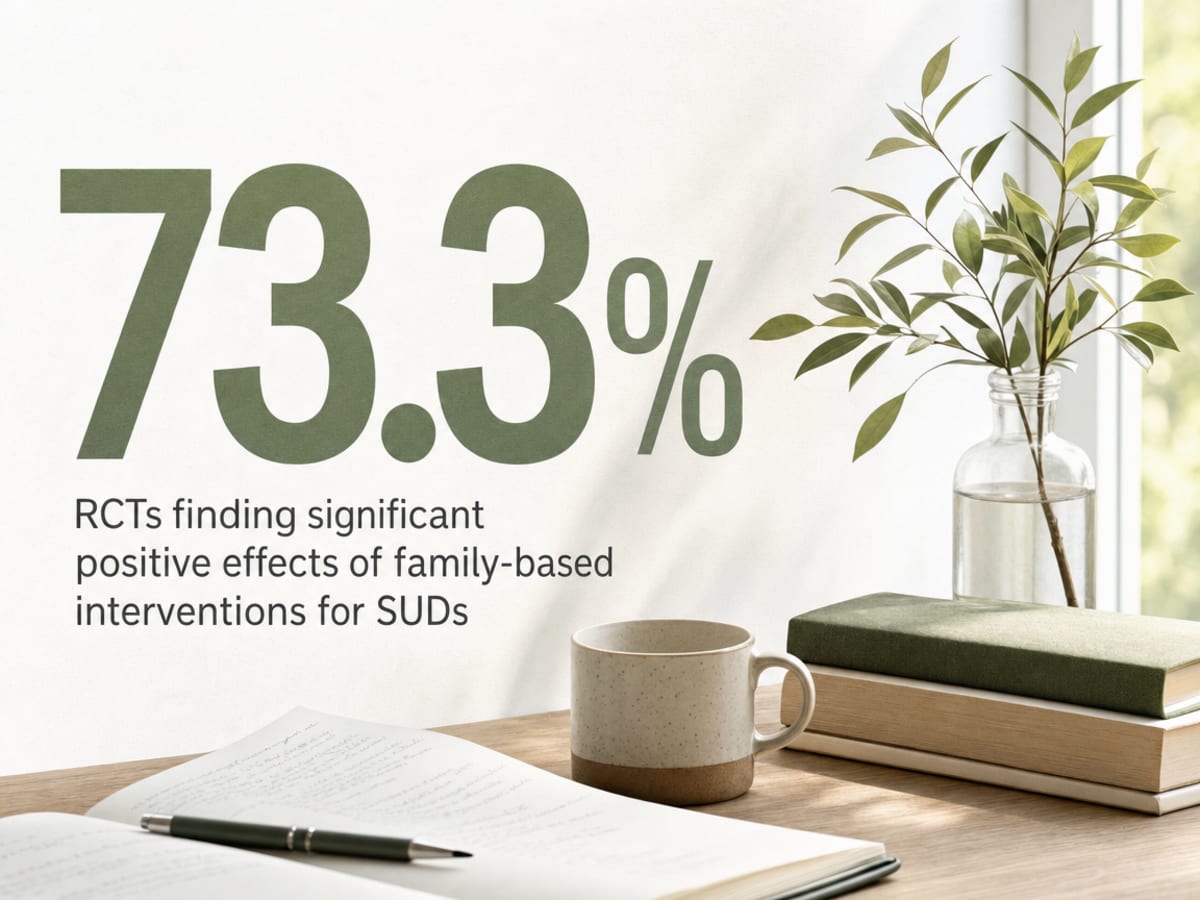
A 2026 systematic review of randomized controlled trials found that 11 of 15 studies, or 73.3%, showed significant positive effects from family-based interventions for substance use disorders 6. That review pulled from 3,864 records to land on those 15 trials, and it looked across mixed SUD populations, not opioid detox specifically. Worth naming out loud: those numbers describe treatment settings broader than a short medical detox stay, so read them as directional support, not a promise about any one stay in Oklahoma City.
The pattern underneath the numbers is what matters for your family. Family involvement is linked to better engagement in treatment, better retention once someone is in it, and better long-term outcomes. Positive family support tracks with longer stretches of abstinence. Conflict and pressure to use track the other way and raise relapse risk 2.
Put simply: how your household shows up during and after detox is not a neutral variable. It’s part of the picture.
Where the Evidence Is Strong and Where It Isn’t
Honest read: the evidence is strongest for family-based treatment reducing substance use and improving how a family functions together over time 5. It’s also solid for young adults, an age group that sits awkwardly between adolescent and adult models of care. A review of 41 studies found family interventions were tied to less substance use and better family functioning in emerging adulthood 7. If you’re an Oklahoma City parent of an adult child in an opioid crisis, that finding is worth holding on to.
Where the evidence thins out is in short medical detox specifically. Most of the research studies weeks or months of family-inclusive treatment, not a three-to-seven-day stabilization stay. So the honest framing is this: family involvement is well-supported as part of the longer arc of recovery, and detox is the doorway into that arc.
What happens in that doorway still matters. It sets tone, expectations, and communication patterns that either open the next door or make it heavier to push.
Planning for After Detox: Handoff to Continued Care
The Discharge Conversation Families Should Expect
Discharge from medical detox is not a finish line. It’s a handoff.
Somewhere in the last 24 to 48 hours of your loved one’s stay, a discharge conversation will take shape. It usually covers the next level of care — residential treatment, an intensive outpatient program, standard outpatient counseling — along with medication continuation if MAT is part of the plan, follow-up appointments, and a safety plan for the first week home.
Ask to be included in the parts your loved one has agreed to share. Bring a notebook. Ask what medications they’re leaving with, who prescribes the next refill, and what number to call if withdrawal symptoms flare again after discharge. Ask what warning signs the clinical team wants you watching for, and what would count as a reason to call back.
Then ask the question most families forget: what’s the plan for family involvement in the next setting? Family involvement is linked to better engagement and retention once someone moves into ongoing treatment 2. The place to build that in is now, before your loved one walks out the front door, not three weeks from now when things are already fraying.
Small Household Changes That Actually Hold
Big resolutions rarely survive the first hard week. Small changes do.
Pick two or three things you can actually keep. A shared calendar for appointments. A standing Sunday dinner where no one brings up the past. A rule about phones at bedtime. A quiet agreement that the medicine cabinet stays locked and only one person holds the key. None of these fix anything by themselves. Together, they change the arrows between people in the household, and when family members change how they respond, the whole system shifts with them 1.
Keep one thing just for you too. A walk after work. A weekly call with a friend who knew you before all of this. A therapist of your own if you can swing it. You are part of the system that has to keep functioning, and family-based support is tied to less substance use and better family functioning over time when it’s steady rather than heroic 5.
Getting through this week counts. So does the one after that.
Talking to Renewal Springs About Family Involvement
If you’re the family member making the first call, you don’t need a script. You need a few honest questions and permission to ask them.
Try these. How is family communication handled during a typical detox stay? What can staff share with me, and what will they need my loved one’s permission for? Are there specific times of day that work best for check-ins? What does the discharge conversation look like, and can I be part of it if my loved one agrees?
Then ask the softer question: how do you help families who are worn out and unsure how to help without hovering? The answer you get will tell you a lot about the tone of care behind the phone line.
You don’t have to have this figured out before you call. Getting through today counts. Ask Renewal Springs how family involvement actually works, and let the next step be smaller than it feels right now.
Talk with Someone Who Understands Family Dynamics
Get clear answers about involving family in your detox and recovery process.
Frequently Asked Questions
Does Renewal Springs offer family systems therapy as a named treatment?
Not as a named clinical product. Family systems thinking shapes how staff talk with your loved one about home, how they include you in appropriate conversations, and how they plan the handoff to the next level of care. Ongoing family therapy usually belongs to the treatment setting that comes after medical detox 2.
Can my family visit me during detox at Renewal Springs in Oklahoma City?
Visitation depends on where your loved one is in the withdrawal process and what they’ve agreed to share. The first 24 to 72 hours are focused on medical stabilization, so contact is usually limited. Call the facility directly to ask about current visitation windows, phone check-ins, and what family members can plan for.
What should family members do in the first 24 to 72 hours of detox?
Step back and let the medical team do the medical part. Resist texting every hour or bringing up old fights. Handle the outside world instead: employer calls, bills, kids, pets. Eat something. Sleep if you can. Pressure and conflict during early recovery raise relapse risk, so a calm, patient presence helps most right now 2.
Does family involvement actually improve detox and recovery outcomes?
The research points that way. Family-based treatment is tied to reduced substance use and better family functioning over time 5, and supportive family involvement is linked to better engagement and retention in care 2. Most of that evidence covers longer treatment rather than a short detox stay, so detox is the doorway into that arc.
What if our family relationships are tense or unsafe right now?
That’s important information to share early. Trauma-informed care puts safety first for both patient and family, and it avoids retraumatizing anyone in the process of helping 4. Tell intake staff what feels unsafe. They can adjust who’s contacted, what’s shared, and when. You don’t have to force closeness that isn’t ready yet.
How do we ask about family involvement without pressuring our loved one?
Ask questions of the staff, not demands of your loved one. Say something like, “I want to support you however you’re comfortable — can we ask the team what that could look like?” When family members change how they respond, the whole system shifts with them 1. Curiosity lands softer than instructions.
References
- Chapter 3—Family Counseling Approaches. https://www.ncbi.nlm.nih.gov/books/NBK571088/
- THE IMPORTANCE OF FAMILY THERAPY Advisory 39. https://library.samhsa.gov/sites/default/files/pep20-02-02-016.pdf
- Trauma-Informed Care in Behavioral Health Services. https://library.samhsa.gov/sites/default/files/sma15-4420.pdf
- TIP 57 Trauma-Informed Care in Behavioral Health Services. https://library.samhsa.gov/sites/default/files/sma14-4816.pdf
- Effects of family therapy for substance abuse: A systematic review of recent research. https://pubmed.ncbi.nlm.nih.gov/36564902/
- Efficacy of Family-based Interventions in Addressing Substance Use Disorders: A Systematic Review on Randomized Controlled Trials. https://pubmed.ncbi.nlm.nih.gov/41970367/
- Family Intervention Models for Young Adults with Substance Abuse: A Systematic Review. https://pubmed.ncbi.nlm.nih.gov/39564277/
- Family-Based Interventions to Prevent Substance Use: Economic Evaluations and Cost-Effectiveness Considerations. https://pubmed.ncbi.nlm.nih.gov/40252864/
- The Effectiveness of Family Interventions in Preventing and Reducing Adolescent Illicit Drug Use. https://pubmed.ncbi.nlm.nih.gov/25998971/
- Family therapy for drug abuse: review and updates 2003-2010. https://pubmed.ncbi.nlm.nih.gov/22283381/
- Chapter 1—Substance Use Disorder Treatment. https://www.ncbi.nlm.nih.gov/books/NBK571084/