
Key Takeaways
- Confronting a drinking relative at the Thanksgiving table rarely works and often escalates; serious conversations belong in sober, stable moments, not during active intoxication 2.
- Decide specific exit triggers in writing before the holiday, settle the car-keys plan on Tuesday, and think honestly about whether the kids should be in the room.
- Heavy daily drinkers often cannot simply skip Thanksgiving without risking painful or dangerous withdrawal, which is a medical issue requiring supervised detox rather than willpower 3, 4.
- Know the alcohol-poisoning signs and call 911 for any single one—unresponsiveness, vomiting, seizures, slow or paused breathing, or bluish skin—without waiting for things to worsen 25.
The Relative You’re Already Bracing For
You know exactly who this article is about. It might be your father, who starts strong at noon and is slurring by the time the rolls come out. It might be your sister, who gets mean after the third glass and picks a fight with your spouse every single year. It might be your father-in-law, who insists he’s fine to drive home at 9 p.m. with your nephew in the back seat. You’ve already run the scene in your head a dozen times this week, and you’re reading this because you don’t want to run it again on Thursday.
So let’s be plain. You cannot fix a drinking problem at the Thanksgiving table. Trying to confront, reason with, or embarrass someone into sobriety while they are actively drinking almost always makes the night worse — and the research backs that up 1, 2. What you can do, in the days you have left before the turkey comes out, is get specific: decide what you’ll tolerate, protect the kids and the car keys, learn the difference between drunk and medically in trouble, and have one real phone number ready for the moment things either fall apart or finally crack open.
That’s what the rest of this is for.
Before Wednesday: The Pre-Thanksgiving Checklist That Actually Matters
Decide What You Will and Will Not Tolerate — In Writing, To Yourself
Open a notes app. Write three lines:
- The behavior that makes you leave.
- The behavior that makes the kids leave.
- The behavior that makes you call 911.
Then write the time by which you’ll be out the door if any of those happen.
This is not a boundary conversation with your relative. They are not going to read it. It’s a decision you make while you are calm, in your own kitchen, so that at 7:45 p.m. on Thursday — when your mother is on her fourth glass and your husband is giving you the look across the table — you are not improvising. You are following the plan you already made.
Be specific. ‘If she slurs at the kids again, we leave’ is useful. ‘If things get bad, we’ll see’ is not. The reason this matters is that your tolerance drifts upward in real time. You’ve been managing this person’s drinking for years. Your baseline for ‘bad’ is already too high. The written line resets it to what you’d tell a friend to accept, not what you’ve trained yourself to swallow.
The Car Keys Conversation You Have Before Anyone Is Drinking
Have the ride conversation on Tuesday. Not Thursday at 4 p.m. when the first beer is already open, and absolutely not at 9 p.m. when your brother-in-law is patting his pocket for the fob and insisting he’s ‘barely had anything.’
CDC reports that 13,524 people died in alcohol-impaired motor-vehicle crashes in 2022 — about 32% of all traffic-related deaths that year 8. That is the number behind the rule: a drinking relative does not drive home from your Thanksgiving. Not with your niece in the car seat. Not three blocks. Not ‘just to the hotel.’
So on Tuesday, pick one of three plans and tell them which one you’re using:
- A rideshare you’ll pay for.
- A guest room at your house with the air mattress already made up.
- A sober family member designated as the driver who isn’t drinking at all that day — not ‘pacing themselves,’ not drinking at all.
If they refuse all three ahead of time, you have your answer about how Thursday is going to go, and you can adjust whether you host, whether you attend, or whether their invitation is contingent on handing you the keys at the door. The keys on your kitchen counter are not a negotiation at 9 p.m. They are a condition of the day, agreed to while everyone is sober. If the keys come out of their pocket anyway, call a rideshare yourself, pay for it, and put the fob in a drawer. You can apologize for being pushy later. You cannot un-crash a car.
Should the Kids Come This Year
This is the question you’ve probably been avoiding because the answer feels like a betrayal of your parent or sibling. Ask it anyway.
A 2025 systematic review and meta-analysis of longitudinal studies found that caregiver alcohol-related diagnoses were associated with a 2.32 times higher odds of child-maltreatment incidence compared to caregivers without such diagnoses, and a 1.92 odds ratio for recurrence 13. That is studying diagnosed alcohol problems over time, not a single holiday — but it tells you something you already feel in your gut. Children in rooms with heavily drinking adults are not in a neutral environment. A separate review found domestic abuse was often attributed to alcohol misuse, and that children exposed to it carried emotional damage and strained family bonds 12.
So think through it specifically. If your kids are old enough to remember Grandpa yelling at Grandma over the mashed potatoes, they are old enough for that memory to shape how they feel about Thanksgiving for the next twenty years. If they’re younger, they will absorb the tension in the room even if they can’t name it.
Options that are not all-or-nothing:
- Come for the meal, leave before dessert when the drinking escalates.
- Have the kids at a cousin’s house for a parallel dinner, and you stop by solo.
- Host your own small Thanksgiving on Friday with the people you actually want in the room.
None of these are you abandoning your family. They are you refusing to use your children as emotional cover for an adult’s drinking.
Why You Can’t Fix This at the Dinner Table
The Intervention-Over-Turkey Myth
Somewhere between the second glass of wine and the pumpkin pie, you may feel the urge to finally say it. Everyone’s there. Your sister will back you up. Mom is already crying. This is the moment, right?
It isn’t. NIAAA guidance is explicit on this: a serious conversation about someone’s drinking should wait until the person is sober and stable, and should not happen while they are in crisis or actively intoxicated 2. The reasons are practical, not theoretical. A drunk person cannot track a nuanced conversation, cannot remember what was agreed, and is far more likely to escalate — into shouting, tears, threats, or leaving in the car you just told them not to drive.
The TV-style intervention, where the family circles up over turkey and the drinker has a breakthrough, is a script. In real living rooms, it ends with slammed doors, kids crying in the hallway, and a family member who now has a new grievance to drink about. You will not out-logic active intoxication. You will not shame it into submission. The dinner table is the worst room in the house for this conversation.
What Actually Moves People Toward Treatment
Here is the approach with the strongest family-side evidence. It’s called Community Reinforcement and Family Training, or CRAFT. NIAAA describes it as a way for concerned family members to encourage positive behavior and treatment engagement without confrontation 1. Instead of ambushing the drinker, you learn how to reinforce sober moments, step back from behaviors that shield them from the consequences of drinking, communicate without escalating, and take care of yourself in the process.
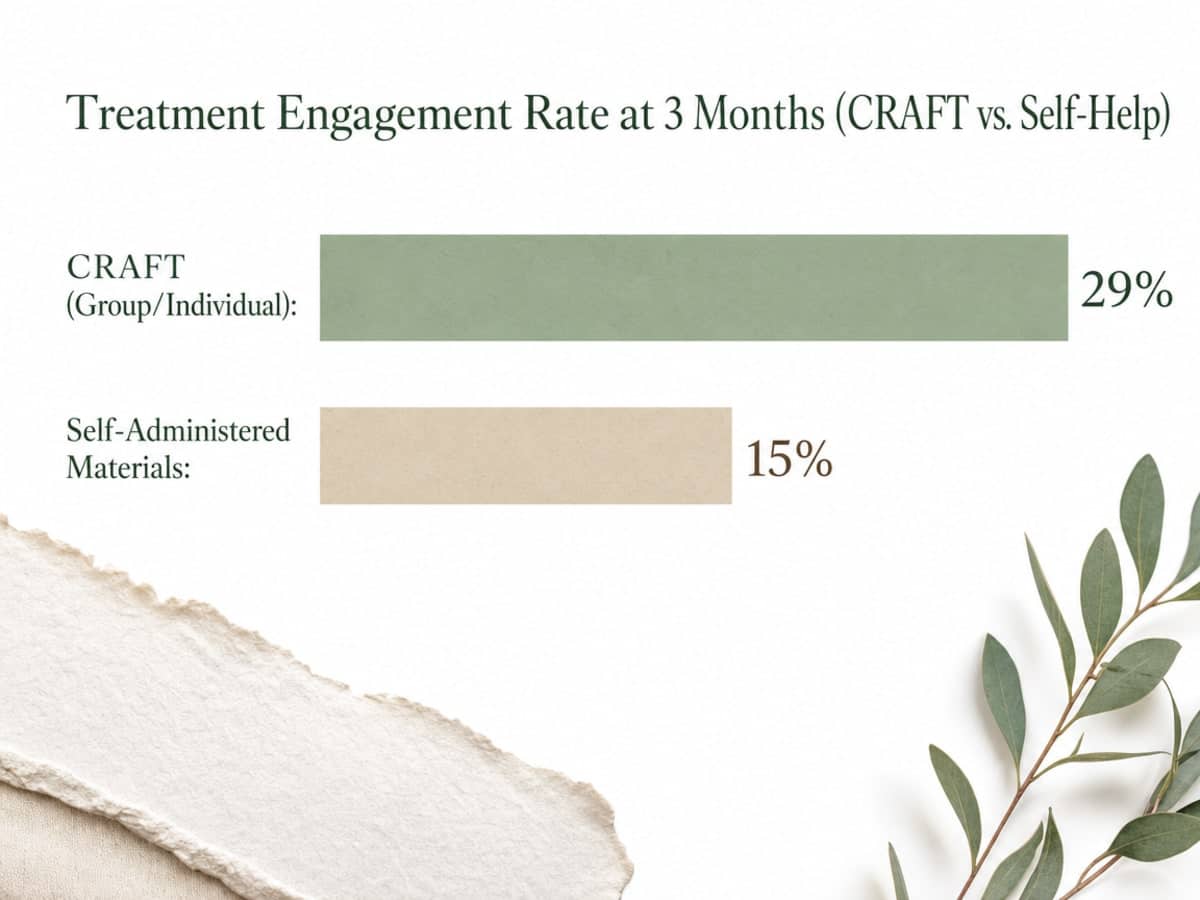
In a 2022 cluster-randomized trial of concerned significant others whose loved ones were reluctant to seek treatment, 29% of participants receiving group or individual CRAFT reported that the drinker had entered treatment at three months — compared with 15% among those given self-administered materials 9. The gap was not statistically significant in that specific trial, and the sample was families of reluctant drinkers tracked over three months, not the general population. But the direction matters: structured family support roughly doubled the share of drinkers who got into care, and it did so without a single Thanksgiving-table showdown.
A peer-reviewed review of family-focused approaches lays out the broader toolkit — CRAFT, the 5-Step Method, family counseling, motivational interviewing, and safety planning — and notes that these methods address the behaviors that quietly protect the drinker from consequences, strengthen your own well-being, and support eventual treatment engagement 11. None of them happen on Thursday night. All of them are the kind of thing you call about on Tuesday morning. If you’re in Oklahoma City, that’s what a conversation with the Renewal Springs team is for: not to drag your relative anywhere, but to figure out your part of the plan before the plates are even on the table.
What to Say — and When — If You Say Anything At All
If you have the chance to talk to your relative before Thursday — a phone call on Sunday, a coffee on Wednesday — this is the window NIAAA points to: a sober, safe moment, with you calm and prepared 2. Not the car ride to the grocery store. Not the hour before guests arrive.
Keep it short, specific, and about you. ‘Last Thanksgiving you yelled at Grace and she asked me later if Grandpa was mad at her. I love you, and I’m not willing to put her through that again. If drinking is part of Thursday, we’re going to leave by 7.’ That’s three sentences. It names the behavior, names your limit, and names the action. It does not diagnose, lecture, or beg.
If you cannot have that talk in advance — because they live far away, because they’ll refuse, because the last attempt ended badly — then say nothing substantive at the table. Save it. Address the behavior in the moment with the action you already decided on in your notes app: the kids go to the other room, you leave at 7, the keys stay in the drawer. The real conversation happens later, when they are sober, probably hungover, and sometimes — not always, but sometimes — ready to hear something they weren’t ready to hear before.
The One-Night Binger vs. The Dependent Drinker
Why Your Relative Probably Can’t Just ‘Take Thanksgiving Off’
You’ve probably said it, or thought it: ‘Can’t they just skip the drinking for one day?’ If your relative is a true binger — someone who drinks hard at family events and holidays but goes days or weeks between — then yes, in theory, they can. The harder truth is the one most families don’t want to look at: if your relative has been drinking heavily most days for months or years, their body is not in a position to just stop on Wednesday night so Thursday goes smoothly.
So when your dad promises he’ll be dry for Thanksgiving and then shows up with a flask, that may not be weakness or spite. It may be his body telling him it needs alcohol to avoid getting physically sick. That is not an excuse for what happens at the table. It is a reason to stop expecting willpower to solve a medical problem — and to call the Renewal Springs team in Oklahoma City before the holiday to ask whether a supervised detox is what Thursday actually calls for.
Signs the Drinking Isn’t Just a Holiday Problem Anymore
Pay attention to what happens on the days around Thanksgiving, not just the dinner itself. A one-night binger has a bad night, feels wrecked Friday, and is more or less themselves by Saturday. A physically dependent drinker looks different in ways that are easy to miss if you only see them at holidays.
Watch for:
- A morning drink to steady shaking hands.
- Sweating or anxiety when they go a few hours without alcohol.
- A tolerance so high that six drinks barely register.
- Hiding bottles in the car or guest-room closet.
- Missed work the week before, not just the day after.
- A spouse who quietly manages everyone’s expectations about ‘how he gets.’
CDC defines binge drinking as four drinks for women or five for men on one occasion 21. If your relative clears that most weeks — not just at holidays — you are no longer looking at a Thanksgiving problem. You are looking at a pattern that may meet criteria for alcohol use disorder, and one that benefits from an assessment by someone who does this for a living, not by family members trading theories in the group chat 5. A phone call to a detox team on Monday is cheaper, calmer, and safer than figuring it out in your driveway on Thursday night.
When It’s a Medical Emergency, Not Just a Bad Night
Here is the part families get wrong most often, usually because they are trying to be kind. Someone drinks too much, slumps on the couch, and everyone agrees to let them sleep it off. Sometimes that is fine. Sometimes it is how a person dies in your guest room.
While you wait for paramedics, roll them onto their side, keep their airway clear, and stay with them. Tell the dispatcher exactly what they drank, how much, over how long, and whether they took anything else — prescription painkillers, benzodiazepines, or any opioid dramatically raises the risk of a fatal overdose when combined with alcohol 22. Paramedics are not there to judge your family. They are there so your mother wakes up on Friday.
The embarrassment of a 911 call passes. The alternative does not.
If They Say They’re Ready: The Oklahoma City Call
Sometimes it happens. Not at the table, but later — in the kitchen while you’re rinsing plates, in a text message on Friday morning, in a quiet moment on the back porch when they look at you and say some version of ‘I know. I need help.’
Do not let that moment pass while you Google. Have the number already in your phone.
If your relative has been drinking heavily for months or years, the right next step is almost never ‘start fresh on Monday’ at home. NIAAA is explicit that abruptly stopping after prolonged heavy drinking can produce a withdrawal process that is painful and sometimes life-threatening, and that a medically supported plan is often required 4. That is what the Renewal Springs team in Oklahoma City does — 24/7 medically supervised detox, with licensed clinicians who can assess whether your relative needs inpatient care, what medications are appropriate, and how to transition into continued treatment after detox. Call before Thursday if you can. If the moment comes on Friday, call then. Readiness is a window, not a door that stays open.
After the Plates Are Cleared: Your Turn
By Friday morning, you will be exhausted in a way that has nothing to do with the cooking. If the day went badly, you will be replaying it. If it went better than expected, you will be bracing for the next one. Either way, your own care is not optional.
SAMHSA puts it plainly: family support can help a loved one enter and stay in treatment, but families themselves often need support groups, counseling, or family therapy, and there is no one-size-fits-all answer 24. You are allowed to love your relative and still refuse to be their manager. Those are not opposing positions.
So this weekend, do three concrete things:
- Talk to one person outside the family — a therapist, a pastor, a friend who has lived this — and say out loud what actually happened.
- Write down what you want different next year, while the memory is sharp.
- If there is a sober-and-stable window on Saturday or Sunday, use it for the conversation you did not have at the table 2. Short. Specific. About you.
Call Before the Holiday, Not From the Driveway
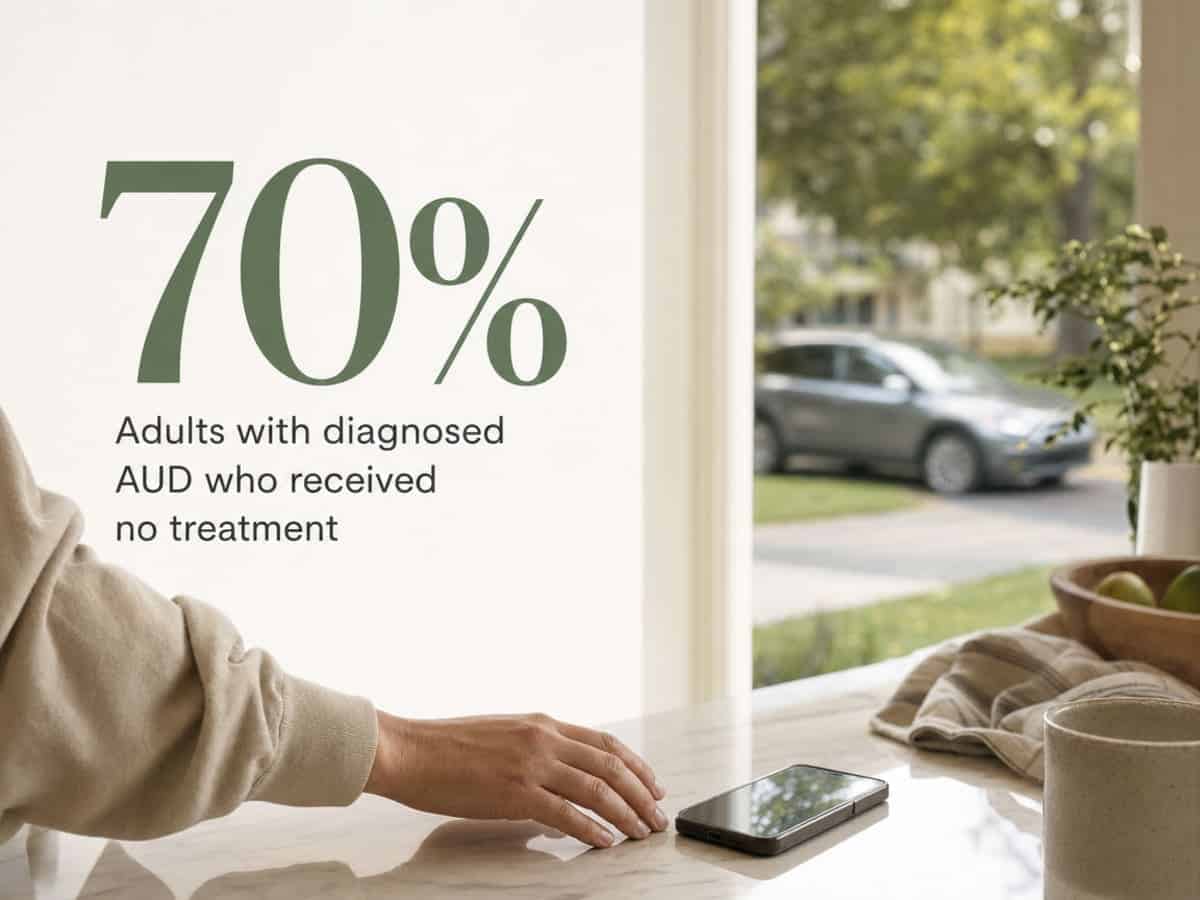
Here is the quiet fact that should shape your week: among adults diagnosed with alcohol use disorder in a 2024 analysis of nearly 19,000 patients, roughly 70% received no treatment at all 16. Not because the problem wasn’t there. Because the phone call never happened — or happened too late, from a parking lot, during a crisis, when nobody had a plan.
You can be the call that changes that for your family. Not by dragging anyone anywhere. By having a real number ready for the moment it’s needed. The Renewal Springs team in Oklahoma City does 24/7 medically supervised detox, and a Tuesday conversation about your relative — what they drink, how often, what you’re worried about on Thursday — is a far better use of fifteen minutes than scrolling for options at 9 p.m. from your driveway.
Call this week. Program the number into your phone. Then go cook.
Need support before or after Thanksgiving dinner?
Talk with someone who understands urgent family drinking stress this holiday—no pressure, just real help.
Frequently Asked Questions
Should I just skip Thanksgiving if I know my relative will get drunk?
Skipping is a legitimate option, not a failure. If past gatherings have ended in fights, impaired driving, or kids in tears, you are allowed to host a smaller dinner on Friday with people you actually want in the room. You can also attend briefly, eat, and leave before the drinking escalates. Protecting your peace is not abandoning your family.
How do I keep my kids safe without making a scene?
Decide in advance what triggers an exit, and tell your partner the plan before you walk in. Keep coats and car seats near the door. If the drinking turns loud or mean, move the kids to another room first, then leave quietly. You do not owe anyone a speech. A calm, early exit protects children better than a confrontation ever will 12.
What do I do if they insist on driving home drunk?
Take the keys, call a rideshare, and pay for it yourself. If they refuse, call a sober family member to drive them, or call the non-emergency police line before they get behind the wheel. In 2022, 13,524 people died in alcohol-impaired crashes 8. Being the person who ruined the night is better than being the person who let them drive.
How can I tell if they’ve passed out or if it’s actually alcohol poisoning?
Call 911 if you cannot wake them, if they are vomiting while unresponsive, if they have a seizure, if their breathing drops below eight breaths per minute or pauses for ten seconds or longer, or if their skin is clammy or bluish 25. You do not need all these signs. One is enough. Roll them on their side while you wait.
Can my relative just stop drinking for the holiday to avoid a scene?
A one-night binger can. Someone who drinks heavily most days usually cannot stop safely on their own. NIAAA reports that up to half of people with alcohol use disorder experience withdrawal when they stop, and abrupt cessation after prolonged heavy drinking can be life-threatening 3, 4. That is a medical issue, not a willpower issue, and it needs a supervised plan.
When should I call Renewal Springs — before or after Thanksgiving?
Before, if you can. A Monday or Tuesday call with the Oklahoma City detox team lets you ask about your relative’s drinking pattern, understand whether detox is appropriate, and have a real number ready for Thursday night or Friday morning. If the moment of readiness comes after dinner instead, call then. Readiness is a window, and most people with AUD never get care 16.
References
- Frequently Asked Questions: Searching for Alcohol Treatment. https://alcoholtreatment.niaaa.nih.gov/FAQs-searching-alcohol-treatment
- Starting The Conversation. https://alcoholtreatment.niaaa.nih.gov/support-through-the-process/starting-the-conversation
- Alcohol Use Disorder: From Risk to Diagnosis to Recovery. https://www.niaaa.nih.gov/health-professionals-communities/core-resource-on-alcohol/alcohol-use-disorder-risk-diagnosis-recovery
- Treatment for Alcohol Problems: Finding and Getting Help. https://www.niaaa.nih.gov/publications/brochures-and-fact-sheets/treatment-alcohol-problems-finding-and-getting-help
- Screen and Assess: Use Quick, Effective Methods. https://www.niaaa.nih.gov/health-professionals-communities/core-resource-on-alcohol/screen-and-assess-use-quick-effective-methods
- Data on Excessive Alcohol Use. https://www.cdc.gov/alcohol/excessive-drinking-data/index.html
- Deaths from Excessive Alcohol Use — United States, 2016–2021. https://www.cdc.gov/mmwr/volumes/73/wr/mm7308a1.htm
- Impaired Driving Facts. https://www.cdc.gov/impaired-driving/facts/index.html
- Primary Outcome from a cluster-randomized trial of three formats for delivering Community Reinforcement and Family Training (CRAFT) to the significant others of problem drinkers. https://pubmed.ncbi.nlm.nih.gov/35538465/
- Efficacy of an Internet-Based Community Reinforcement and Family Training Program to Increase Treatment Engagement for AUD and to Improve Psychiatric Health for CSOs: A Randomized Controlled Trial. https://pubmed.ncbi.nlm.nih.gov/31912156/
- The Role of the Family in Alcohol Use Disorder Recovery for Adults. https://pmc.ncbi.nlm.nih.gov/articles/PMC8104924/
- The Impact of Parental Alcohol Misuse on Children: A Systematic Review. https://pubmed.ncbi.nlm.nih.gov/40538294/
- The association of parental or caregiver alcohol use with child maltreatment: A systematic review and meta-analysis of longitudinal studies. https://pubmed.ncbi.nlm.nih.gov/40302038/
- Association Between Substance Use and the Perpetration of Family Violence in Industrialized Countries: A Systematic Review. https://pubmed.ncbi.nlm.nih.gov/26296740/
- Gaps and barriers in drug and alcohol treatment following Affordable Care Act implementation. https://pubmed.ncbi.nlm.nih.gov/36644223/
- Disparities in Treatment for Alcohol Use Disorder. https://pubmed.ncbi.nlm.nih.gov/39482947/
- Helping Patients Who Drink Too Much: A CLINICIAN’S GUIDE. https://www.niaaa.nih.gov/sites/default/files/publications/Guide_Factsheet_2005_English.pdf
- SAMHSA Releases Annual National Survey on Drug Use and Health. https://www.samhsa.gov/newsroom/press-announcements/20250728/samhsa-releases-annual-national-survey-on-drug-use-and-health
- Alcohol Use Disorder (AUD) in the United States: Age Groups and Demographic Characteristics. https://www.niaaa.nih.gov/alcohols-effects-health/alcohol-topics/alcohol-facts-and-statistics/alcohol-use-disorder-aud-united-states-age-groups-and-demographic-characteristics
- Alcohol Treatment in the United States. https://www.niaaa.nih.gov/alcohols-effects-health/alcohol-topics-z/alcohol-facts-and-statistics/alcohol-treatment-united-states
- Facts About Excessive Drinking | Drink Less Campaign | CDC. https://www.cdc.gov/drink-less-be-your-best/facts-about-excessive-drinking/index.html
- Alcohol Use and Your Health – CDC. https://www.cdc.gov/alcohol/about-alcohol-use/index.html
- VA/DoD Clinical Practice Guideline for the Management of Substance Use Disorders. https://www.healthquality.va.gov/HEALTHQUALITY/guidelines/MH/sud/VA-DoD-SUD-CPG_Final_for-508_v3.pdf
- Helping Families Cope with Mental Health and Substance Use Problems. https://www.samhsa.gov/mental-health/children-and-families/coping-resources
- Understanding the Dangers of Alcohol Overdose. https://www.niaaa.nih.gov/publications/brochures-and-fact-sheets/understanding-dangers-of-alcohol-overdose