
Key Takeaways
- Renewal Springs Detox in Oklahoma City provides 24/7 medically supervised withdrawal management for alcohol, opioids, benzodiazepines, stimulants, and more, with licensed staff on-site around the clock.
- Alcohol and benzodiazepine withdrawal can trigger seizures, and opioid detox without medication raises overdose death risk, so the treatment setting should match clinical severity 3, 5.
- Oklahoma care operates under ASAM 3.7 and OHCA standards, with SoonerCare requiring prior authorization and an initial five-day detox window based on medical necessity 12, 13.
- Compare facilities on medical supervision level, MAT availability for opioids, discharge planning into continuing care, and insurance verification, since post-detox follow-up sharply reduces mortality 7.
What to Do Right Now If You Need Detox in Oklahoma City
If you’re reading this at 2 a.m. with shaking hands, or you’re a spouse watching someone you love sweat through the sheets again, here is the short version: Renewal Springs Detox in Oklahoma City offers 24/7 medically supervised withdrawal management for alcohol, opioids (including fentanyl), benzodiazepines, stimulants, kratom, and more. Licensed medical staff are on-site around the clock. Most major insurance plans are accepted, and benefits verification is free and takes a single phone call.
You do not have to figure out the whole recovery plan tonight. You only have to make one call.
A few things worth knowing before you dial. Stopping heavy alcohol or benzodiazepine use suddenly can trigger seizures and other life-threatening symptoms, which is why medical supervision matters 5. For opioid dependence, federal clinical guidance is clear that detox alone is not recommended; medication-assisted treatment with buprenorphine, methadone, or naltrexone significantly lowers the risk of overdose and death 3. A real detox facility treats withdrawal as a medical event, not a willpower test.
What happens when you call Renewal Springs: someone picks up, listens, asks about the substance and the last use, verifies your insurance while you’re on the line, and walks you through intake. If you’re calling for a family member, you can do most of this on their behalf.
You can also cross-check any Oklahoma facility, including this one, through SAMHSA’s FindTreatment.gov locator or the 24-hour National Helpline 17. That’s your right, and it’s a good instinct.
Picking up the phone is the hard part. The rest of this guide walks through what comes next.
What Medical Detox Actually Means in Oklahoma
ASAM 3.7 and the Oklahoma Standard of Care
The phrase “medical detox” gets used loosely. In Oklahoma, it has a specific meaning, and knowing the difference protects you.
The Oklahoma Department of Mental Health and Substance Abuse Services sets standards for withdrawal management across several levels, from social detoxification (basic supportive care, limited medical involvement) up through medical monitoring and medical management, where licensed clinicians actively treat withdrawal to prevent complications 1. A facility that calls itself a detox center is not automatically operating at the higher clinical levels. You have every right to ask which one applies to you.
When withdrawal risk climbs, the standard shifts to what the American Society of Addiction Medicine calls Level 3.7, medically monitored intensive inpatient withdrawal management. Oklahoma rules describe this level as a 24-hour inpatient service with nursing care around the clock, physician supervision, and medications available on-site, with a physician, advanced practice registered nurse, or physician assistant involved in care 2. That staffing picture is what you want sitting between you and a seizure, a dangerous blood pressure spike, or a dehydration crisis at 3 a.m.
Renewal Springs Detox in Oklahoma City is built around that 24/7 medically supervised model. Licensed medical professionals are on-site through the night, not on-call from a parking lot across town. Vital signs are tracked continuously, and the facility uses wearable monitoring from Huml Health to follow heart rate, sleep, and stress markers in real time, so staff see shifts before you have to describe them.
The point is simple. Treatment intensity should match clinical risk, not a brochure.
Why Supervision Matters: Alcohol, Benzos, Opioids, Stimulants
Not every substance causes the same kind of withdrawal, and not every withdrawal threatens your life in the same way. But every one of them is easier to get through with trained people in the room.
Alcohol is the one most people underestimate. After prolonged heavy drinking, suddenly stopping can trigger seizures and other potentially life-threatening symptoms, which is why NIAAA explicitly warns against going it alone and notes that clinicians can prescribe medications to make the process safer 5. Severity ranges widely, from symptoms that can be managed in an outpatient setting to withdrawal that requires intensive inpatient care, and only a clinical assessment can tell you where you fall 4. If you have been drinking heavily for months or years, a medical team is not optional backup. It is the plan.
Benzodiazepines, Xanax, Klonopin, Ativan, Valium, carry similar seizure risk when stopped abruptly, especially after long-term use. The taper has to be managed. That is a doctor’s job.
Opioids rarely kill you during withdrawal itself, but the days right after are a different story. Tolerance drops fast, and a return to a previous dose, especially in an era dominated by fentanyl, can be fatal. The CDC is direct about this: detoxification without medication for opioid use disorder is not recommended, because it raises the risk of resumed use, overdose, and overdose death 3.
Stimulants, meth and cocaine, produce a different crash, heavy fatigue, deep depression, intense cravings, sometimes suicidal thinking. The medical risk is lower, but the psychological risk is real, and supervised care matters.
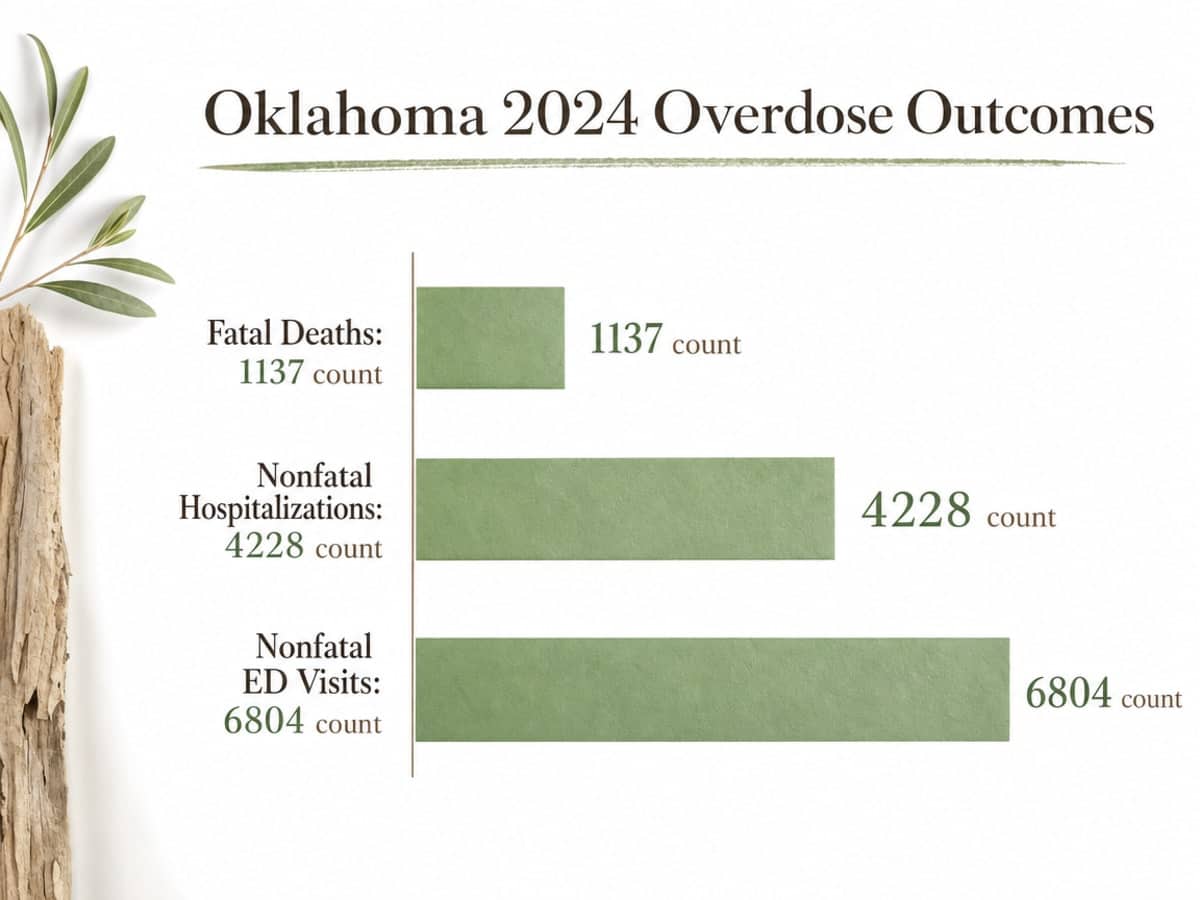
The Oklahoma context is sobering. In 2024, the state recorded 1,137 fatal overdose deaths, 4,228 nonfatal hospitalizations, and 6,804 nonfatal emergency department visits tied to overdose 9. Each of those nonfatal numbers is a person who could have been standing in an intake room instead of an ED. That is the window Renewal Springs exists to catch.
The First 24 Hours: Intake, Assessment, and Stabilization
The first day sets the tone for everything that follows. Here is what to expect when you walk through the door at Renewal Springs Detox, or when a family member brings you in.
Intake starts with a clinical conversation, not paperwork. A nurse or clinician asks what you have been using, how much, and when you last used. They ask about past withdrawals, seizures, heart conditions, mental health history, and any medications you take. Nothing you say here is used against you. The point is to build a picture accurate enough to keep you safe through the next 72 hours.
From there, the team runs a medical assessment. Vital signs, blood pressure, heart rate, temperature, hydration status, and a focused physical exam. For alcohol or benzodiazepine dependence, clinicians look specifically for signs that suggest seizure risk, since abrupt cessation after prolonged use can produce life-threatening withdrawal 5. For opioid dependence, they assess withdrawal severity and discuss whether medication-assisted treatment with buprenorphine, methadone, or naltrexone fits your case, since detox without medication raises the risk of resumed use and overdose 3.
Once you are admitted, continuous monitoring begins. Nursing is on the unit 24 hours a day, with physician oversight, consistent with the medically monitored intensive inpatient standard Oklahoma rules describe for higher-acuity withdrawal 2. Renewal Springs layers in wearable monitoring from Huml Health, which tracks heart rate, sleep, and stress markers in real time. That means a nurse often sees your numbers moving before you feel the shift yourself, and medication, fluids, or a bedside check can happen earlier.
Stabilization is not glamorous. It looks like a quiet room, clean sheets, electrolytes, scheduled medications, and someone who comes in every few hours to ask how you are doing and mean it. You will likely sleep hard. You may not eat much the first day. Both are normal.
By the end of the first 24 hours, two things should be in motion: your acute symptoms should be under medical control, and the team should be talking with you about what comes next, because that handoff is what makes detox count.
Medication-Assisted Treatment When It Fits Your Case
Opioids: Buprenorphine, Methadone, Naltrexone, and the Fentanyl Reality
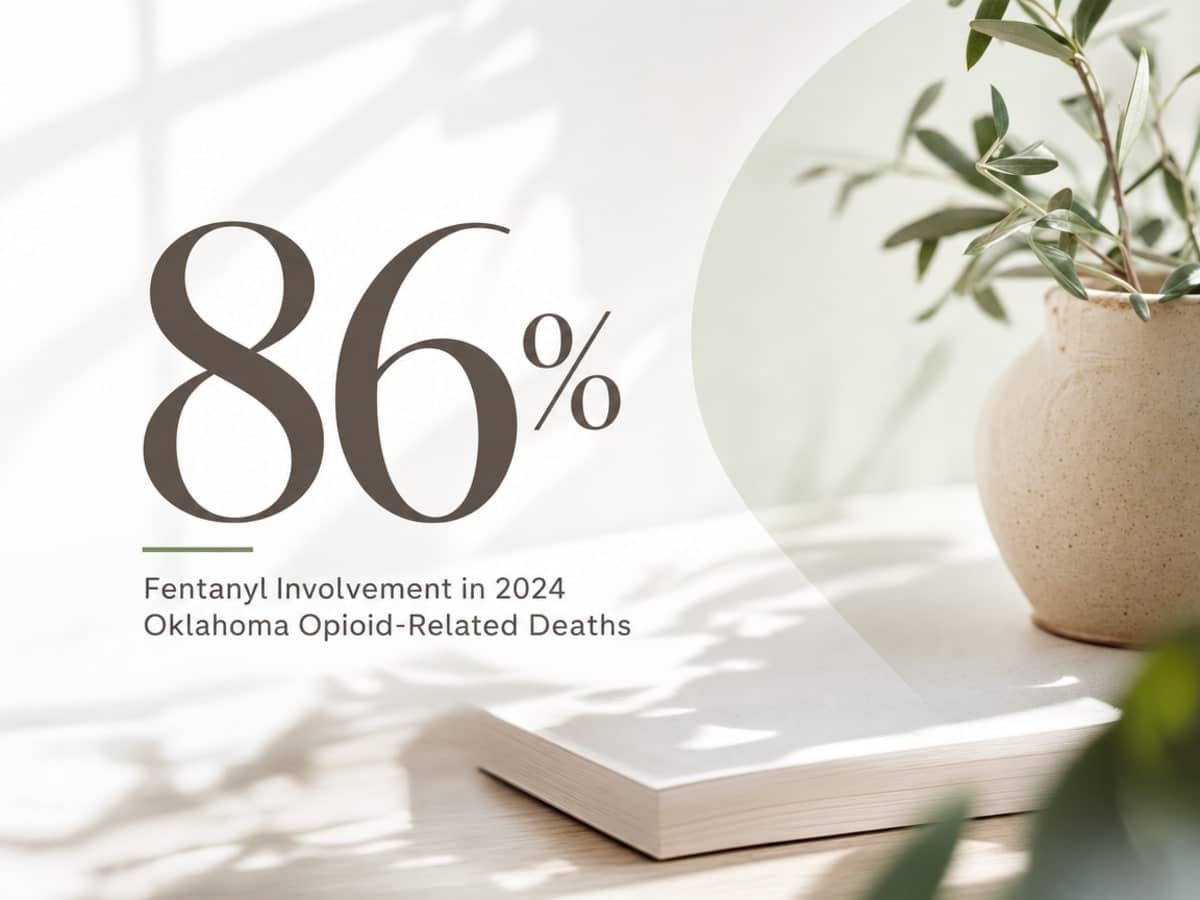
If you are dependent on opioids, the single most important thing to know about detox in 2024 is that the drug supply is not what it was. In Oklahoma, fentanyl was involved in roughly 10% of opioid-related overdose deaths in 2020. By 2024, that share had climbed to 86% 9. Nearly every opioid overdose death in the state now involves a synthetic opioid dozens of times more potent than heroin, often mixed into pills or powders without warning.
Three FDA-approved medications are available: buprenorphine, methadone, and naltrexone. The CDC identifies all three as effective and associates medication treatment with reduced overdose and mortality risk 3. Which one fits depends on your history, your health, your preferences, and what is available locally.
At Renewal Springs, the medical team talks through these options with you during intake rather than deciding for you. Buprenorphine is commonly started during withdrawal to blunt symptoms and reduce cravings. Naltrexone requires a longer opioid-free window before induction. Methadone is dispensed through federally regulated opioid treatment programs and may be the right handoff for some patients.
Naloxone education is part of discharge for you and the people closest to you 3. In a fentanyl era, that is not pessimism. It is practical love.
Alcohol, Benzodiazepines, and Stimulant Protocols
Alcohol and benzodiazepine withdrawal share a quiet, serious problem: both can produce seizures, and in the worst cases, both can kill. That is why the medication piece of detox matters just as much here as it does for opioids, even though the drugs and the goals are different.
For alcohol, the protocol usually starts with a long-acting benzodiazepine, dosed on a schedule or by symptom-triggered assessment, to keep the nervous system from overshooting as it recalibrates. Fluids, thiamine, folate, and other vitamins go in alongside, because heavy drinkers are often depleted in ways that make withdrawal harder. NIAAA notes that clinicians can prescribe medications to make the withdrawal process safer, and that severity ranges from outpatient-manageable to needing intensive inpatient care 5, 4. Your assessment at intake decides which end of that range you are on. Once you are through acute withdrawal, FDA-approved medications like naltrexone, acamprosate, and disulfiram can be part of the plan to help you stay off alcohol after discharge 5.
Benzodiazepine dependence is handled differently. Instead of stopping Xanax, Klonopin, Ativan, or Valium cold, the medical team typically switches you to a longer-acting benzodiazepine and tapers the dose down over days, sometimes longer, depending on how long and how much you have been taking. The taper is slow for a reason. Rushing it invites the exact seizure risk you came in to avoid.
Stimulant withdrawal, meth or cocaine, does not have an FDA-approved medication the way opioids and alcohol do. Care centers on sleep, hydration, nutrition, and watching closely for the depression and suicidal thinking that can crest in the first several days. The 24-hour nursing presence Oklahoma rules describe for intensive inpatient withdrawal management is exactly what that watch requires 2.
What Happens After Detox Is the Whole Point
Here is the hard truth most detox websites tiptoe around: finishing withdrawal is not the finish line. It is the first clean handoff. What happens in the days and weeks after you walk out the door decides whether this stay was a turning point or a repeat.
The data on this is uncomfortable and worth sitting with. A peer-reviewed study of patients who completed inpatient medically managed opioid withdrawal tracked what happened over the next 12 months. Only 41% received medication for opioid use disorder, and only 35% received residential treatment 7. The rest left detox with nothing underneath them. When researchers compared mortality against the group that received no follow-up care, the adjusted hazard ratios told the story plainly: 0.33 for people on MOUD, 0.63 for people in residential treatment, and 0.11 for people who had both 7. Translated: continuing care after opioid detox is associated with a dramatic reduction in death.
That is why Renewal Springs treats discharge planning as part of the medical work, not an afterthought handled at checkout. SAMHSA’s continuity-of-care measure, used across Medicaid programs, tracks whether a patient receives a substance-use treatment service, including pharmacotherapy, within 7 or 14 days of discharge from medically managed withdrawal 6. That window is tight for a reason. The days right after detox are when cravings sharpen and tolerance has dropped, and when a warm handoff, an actual appointment on an actual calendar, matters more than a stack of brochures.
Patients themselves have been clear about what gets in the way. A qualitative study of people leaving medically managed withdrawal named the barriers directly:
- lack of continuity of care
- limited detox and residential beds
- unstable housing
- too few treatment choices 8
The participants’ own suggested fixes included:
- detox-based case managers
- low-barrier access to MOUD
- housing support
- being part of their own treatment decisions 8
A good facility hears that list and builds around it.
At Renewal Springs, that looks like a few concrete things while you are still on the unit: a conversation about whether residential, partial hospitalization, intensive outpatient, or MOUD-centered outpatient care fits your situation; coordination with providers who have an open bed or an open panel; and, when opioids are involved, a plan for continuing buprenorphine, methadone, or naltrexone rather than a quiet taper off medication that works. Naloxone and overdose-prevention education go home with you and the people closest to you 3.
You are not expected to map all of this out yourself. Deciding to detox is enough weight for one week. The team’s job is to make sure the next step is already set when you reach it.
Insurance, Parity Rights, and the Free Verification Call
What MHPAEA Actually Entitles You To
If you have ever been told your plan “doesn’t really cover rehab,” it is worth knowing what the law actually says before you accept that answer.
The Mental Health Parity and Addiction Equity Act requires that most group health plans and insurers apply financial requirements and treatment limitations for substance use disorder benefits that are no more restrictive than the predominant requirements applied to substantially all medical and surgical benefits 15. In plain terms: your plan cannot slap tighter copays, visit caps, or prior-authorization hoops on detox than it does on a comparable medical hospitalization. Federal enforcement actions have secured comparable access for roughly 7.6 million participants across more than 72,000 plans, which gives you a sense of how often plans fall short on their own 15.
The 2024 MHPAEA final rules strengthened this further, tightening the standards for nonquantitative treatment limitations, requiring comparative analyses, and adding meaningful-benefit and outcomes-data requirements that generally apply to group plans for plan years beginning on or after January 1, 2025, with additional provisions phasing in during 2026 16.
None of this guarantees a yes on the first call. Plans still deny claims, and litigation has affected enforcement of some provisions 16. What it does mean is that you have real ground to stand on, and a good admissions team knows exactly how to document medical necessity when they verify your benefits.
Oklahoma Medicaid, Prior Authorization, and the Five-Day Window
If you’re on SoonerCare or thinking about applying, the mechanics work a little differently, and they’re worth understanding before you walk in.
Oklahoma Health Care Authority policy requires that residential substance use disorder providers hold an approved OHCA provider agreement, and that covered residential services be prior authorized. Without that prior authorization, payment is not authorized 12. That is why the first phone call matters so much. The admissions team needs to confirm eligibility, document the clinical picture, and submit for authorization before the clock starts, not after.
For chemical-dependency detoxification specifically, the OHCA inpatient provider manual describes an initial maximum of five days as allowable based on medical necessity 13. Hear that number carefully. It is not a promise of a five-day stay, and it is not a cap that forces you out the door on day six. It is the initial authorization window, after which continued stay depends on documented clinical need. If your withdrawal is still active, your team requests more days. If you’re ready for the next level of care sooner, you move sooner.
Oklahoma also operates a Medicaid demonstration waiver, the IMD Waiver, which provides coverage and reimbursement for specified services, including residential SUD treatment and inpatient treatment for eligible adults with SUD ages 21–64 and certain individuals under 21 14. Eligibility and covered services under the waiver are narrower than a blanket “Medicaid covers everything,” so verification is still the step that matters.
You do not have to decode any of this yourself. The verification call at Renewal Springs is free, it happens while you’re on the line, and the answer you get back is specific to your plan.
Making the Call: What to Say and What to Expect
You do not need a script. If your hands are shaking or your voice cracks, the person on the other end has heard it before and will walk with you.
A few things help the call move faster. Have the name of the substance and roughly when it was last used. Have your insurance card nearby if you have one, or your SoonerCare ID. If you’re calling for someone else, that’s fine too; admissions teams work with spouses, parents, and adult children every day. You will be asked about recent withdrawals, seizures, major medical conditions, and current medications. Short answers are enough. Anything you don’t know can be filled in at intake.
While you’re on the line, the Renewal Springs team can verify your benefits at no cost, confirm bed availability, and talk through transportation. If Medicaid is involved, they begin the prior authorization work that OHCA policy requires before admission 12. If you’d like a second opinion before you commit, SAMHSA’s FindTreatment.gov and the 24-hour National Helpline are there for you 17.
One call. That’s the whole ask tonight.
Talk to Someone Who Truly Understands Detox
Get real answers about safe, medically supervised detox in Oklahoma City right when you need them most.
Frequently Asked Questions
Is medical detox in Oklahoma City covered by insurance?
Most major commercial plans cover medical detox, and federal parity law requires that financial and treatment limits for substance use benefits be no more restrictive than those for comparable medical care 15. SoonerCare covers residential and inpatient detox for eligible members, with prior authorization and medical necessity required 12. Renewal Springs verifies your specific benefits by phone at no cost.
How long does detox usually take?
Most people stabilize over three to seven days, though it depends on the substance, how long you’ve used, your medical history, and how your body responds. For SoonerCare, the OHCA inpatient manual describes an initial maximum of five days of chemical-dependency detox authorization based on medical necessity, with additional days possible when clinically documented 13. Your clinical team adjusts the plan day by day, not by brochure.
What’s the difference between detox and rehab?
Detox manages the medical side of withdrawal, keeping you safe while your body clears the substance. Rehab, residential treatment, partial hospitalization, intensive outpatient, or outpatient care with medication, is what builds recovery after. Federal clinical guidance is explicit that detox alone is not recommended for opioid use disorder, because the risk of resumed use and overdose rises without ongoing medication treatment 3. Detox opens the door; rehab is the room.
Can I detox from alcohol or benzodiazepines at home?
Please don’t guess at this one. After prolonged heavy drinking, sudden cessation can trigger a potentially life-threatening withdrawal process, including seizures, which is why NIAAA says clinicians should prescribe medications to make it safer 5. Severity ranges from outpatient-manageable to needing intensive inpatient care, and only a clinical assessment can tell you which 4. Benzodiazepines carry the same seizure risk and need a medically supervised taper. Call before you stop.
Will I be offered medication during detox?
Yes, when it fits your case. For opioid dependence, the CDC identifies buprenorphine, methadone, and naltrexone as FDA-approved medications associated with reduced overdose and mortality risk 3. Alcohol withdrawal is typically managed with scheduled or symptom-triggered benzodiazepines plus fluids and vitamins 5. Benzodiazepine dependence is handled with a longer-acting taper. Stimulant withdrawal has no FDA-approved medication; care focuses on sleep, nutrition, and close monitoring for depression.
What happens when I call Renewal Springs?
Someone picks up and listens. They’ll ask about the substance, last use, medical history, and insurance, then verify your benefits while you’re on the line. If a bed is available and intake makes sense, they’ll walk you through logistics, including transportation. If SoonerCare is involved, they begin prior authorization work before admission, as OHCA policy requires 12. One call. That’s all tonight asks of you.
References
- CHAPTER 18. STANDARDS AND CRITERIA FOR …. https://oklahoma.gov/content/dam/ok/en/odmhsas/documents/policy/provider-certification/administrative-rules/2025/PC–Chapter-18_9-1-25.pdf
- Chapter 24_PERM 2025. https://oklahoma.gov/content/dam/ok/en/odmhsas/documents/policy/provider-certification/proposed-rules/2025/PC–Chapter-24_PERM_2025.pdf
- Opioid Use Disorder: Treating | Overdose Prevention | CDC. https://www.cdc.gov/overdose-prevention/hcp/clinical-care/opioid-use-disorder-treating.html
- Alcohol Use Disorder: From Risk to Diagnosis to Recovery. https://www.niaaa.nih.gov/health-professionals-communities/core-resource-on-alcohol/alcohol-use-disorder-risk-diagnosis-recovery
- Treatment for Alcohol Problems: Finding and Getting Help. https://www.niaaa.nih.gov/publications/brochures-and-fact-sheets/treatment-alcohol-problems-finding-and-getting-help
- Continuity of Care After Medically Managed Withdrawal from Alcohol and/or Drugs (NQF 3312): Technical Specifications and Resource Manual. https://www.samhsa.gov/sites/default/files/cbe-3312-technical-specifications-manual.pdf
- Association between mortality rates and medication and residential treatment after inpatient medically managed opioid withdrawal. https://pmc.ncbi.nlm.nih.gov/articles/PMC7854020/
- Barriers to accessing treatment for substance use after medically managed withdrawal. https://pmc.ncbi.nlm.nih.gov/articles/PMC10084712/
- Data – Oklahoma.gov. https://oklahoma.gov/health/health-education/injury-prevention-service/drug-overdose/data.html
- Drug Overdose Data Dashboard – Oklahoma.gov. https://oklahoma.gov/health/health-education/injury-prevention-service/drug-overdose/data/drug-overdose-data-dashboard.html
- Transit. https://www.okc.gov/Infrastructure-Development/Current-Infrastructure-Projects/MAPS-4/Projects/Transit
- SECTION 95.50. Residential substance use disorder (SUD). https://oklahoma.gov/ohca/policies-and-rules/xpolicy/medical-providers-fee-for-service/individual-providers-and-specialties/inpatient-psychiatric-services/residential-substance-use-disorder-reimbursement1.html
- Inpatient Provider Manual. https://oklahoma.gov/content/dam/ok/en/okhca/docs/providers/types/behavioral-health/OHCA%20BH%20Provider%20Manual.pdf
- IMD Waiver – Oklahoma.gov. https://oklahoma.gov/ohca/policies-and-rules/plans-and-waivers/imd-waiver.html
- 2024 MHPAEA Report to Congress. https://www.dol.gov/sites/dolgov/files/ebsa/laws-and-regulations/laws/mental-health-parity/report-to-congress-2024.pdf
- New Mental Health and Substance Use Disorder Parity Rules. https://www.dol.gov/agencies/ebsa/laws-and-regulations/laws/mental-health-parity/new-mhpaea-rules-what-they-mean-for-plans-and-issuers
- Treatment Locators: Mental Health, Drug, Alcohol Issues. https://www.samhsa.gov/find-help/locators