
Key Takeaways
- Alcohol withdrawal is a physical medical event driven by GABA rebound, with seizures possible in up to 15% of cases and delirium tremens arriving 48 to 72 hours after the last drink 5, 4.
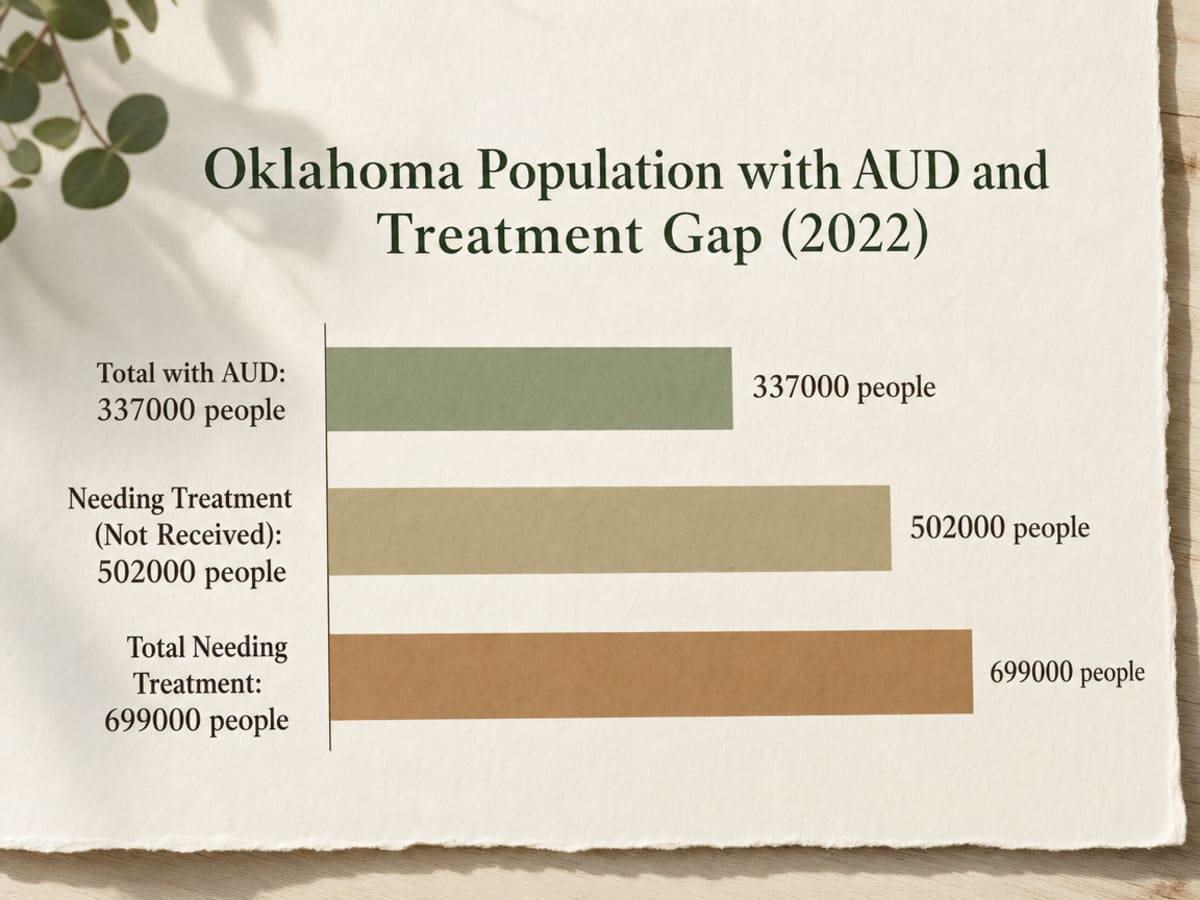
- Oklahoma had roughly 337,000 adults meeting criteria for alcohol use disorder in 2022, and about 502,000 people needing substance use treatment went without it 12— the isolation around this decision is far more common than most people realize.
- Oklahoma’s non-medical withdrawal management under § 450:18-5-14 is limited to people with no apparent medical symptoms and checks vitals only every six hours 14, so heavy daily drinkers or anyone with prior seizures, DTs, or co-occurring conditions need physician-led medical detox.
- If shakes start before noon, symptoms are already showing, or a loved one seems confused, calling before withdrawal progresses matters more than having the right words — a first phone conversation is what triage exists for.
Why Alcohol Withdrawal Is a Medical Event, Not a Test of Willpower
If you’re reading this at 2 a.m., or after another morning of shaky hands and promises to yourself, you’re already doing the hardest part. You’re looking.
Here’s something most people are never told plainly: for anyone who has been drinking heavily every day for weeks or months, stopping suddenly isn’t just uncomfortable. It’s a physical event your body has to survive. Alcohol changes how your brain regulates itself. When you take it away, the brain rebounds — sometimes gently, sometimes violently. Seizures happen in up to 15% of withdrawal cases, and delirium tremens shows up in a smaller but very real slice of people, usually two to four days after the last drink 5, 9.
That’s not a scare tactic. That’s the reason medical detox exists as its own level of care.
Willpower isn’t the variable here. You could be the most disciplined person in your family and still have a seizure on your bathroom floor on day two, because the chemistry that’s happening below your conscious mind doesn’t care how badly you want to quit. The National Institute on Alcohol Abuse and Alcoholism is direct about this — people with alcohol use disorder“may need medically supervised detoxification,”and withdrawal can involve severe symptoms that require medical attention 15.
So if you’ve been carrying shame about not being able to “just stop,” set it down for a minute. What you’re facing has a name, a timeline, and a treatment protocol. The rest of this guide walks through what’s actually happening inside your body, what a medical detox in Oklahoma looks like from the inside, and how to tell whether it’s time to pick up the phone.
What Happens in Your Body When You Stop Drinking
The GABA Rebound: Why Alcohol Is Different From Other Substances
Here’s the part that helps a lot of people finally stop blaming themselves.
Alcohol works by boosting a calming chemical in your brain called GABA and quieting a stimulating one called glutamate. When you drink heavily for a long stretch, your brain adapts. It dials down its own GABA production and turns up glutamate to keep the balance. It’s your body trying to stay level while you keep pouring in a sedative.
Then you stop drinking, and the sedative is gone — but the adaptations are still there. Now you have too little calming signal and too much stimulating signal, all at once. That’s the rebound. It’s why your hands shake, your heart races, and your nervous system feels like it’s shouting.
This is also why alcohol withdrawal can be more medically dangerous than withdrawal from many other substances. Sudden cessation in someone with significant alcohol dependence can trigger a tonic-clonic seizure without warning 6. Your brain isn’t punishing you. It’s overcorrecting.
The Withdrawal Timeline, Hour by Hour
Knowing roughly what happens when can take some of the fear out of the room. It also helps you or the person you love know when something is off-track and needs immediate attention.
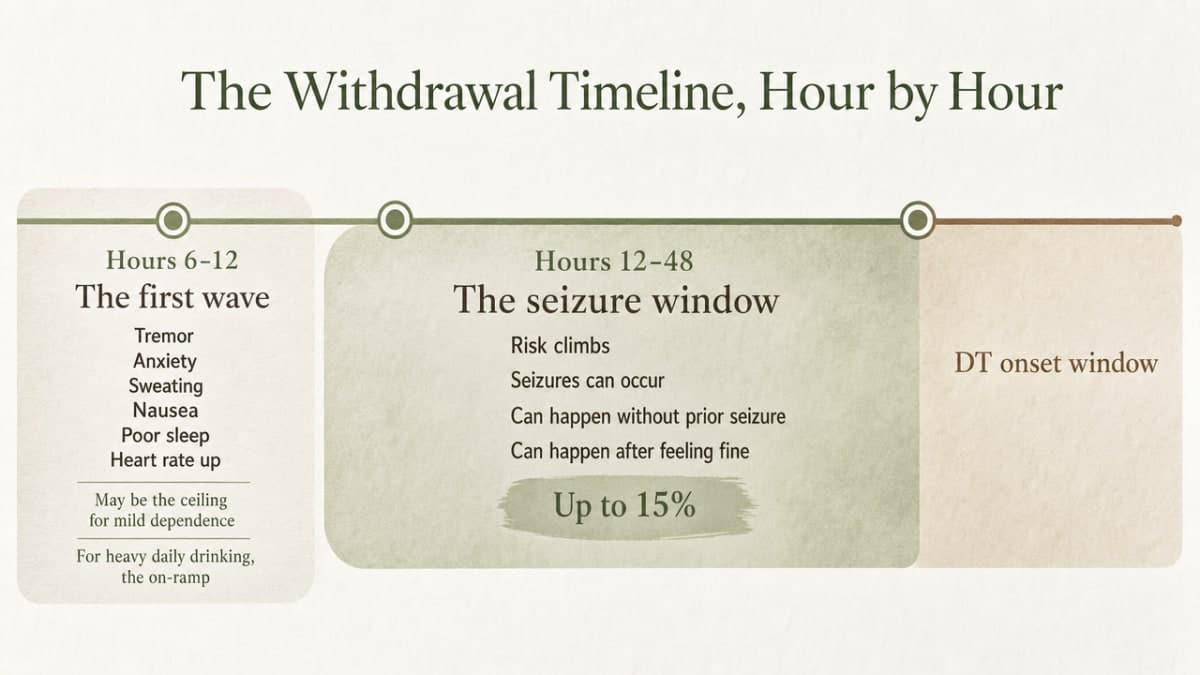
Hours 6 to 12: The first wave. Symptoms usually begin within about six hours of your last drink. Hands tremor. Anxiety builds. You sweat, feel nauseous, sleep poorly, and your heart rate ticks up. For someone with mild dependence, this may be the ceiling. For someone drinking heavily every day, it’s the on-ramp.
Hours 12 to 48: The seizure window. This is when the risk climbs. Alcohol withdrawal seizures typically show up in the first 12 to 48 hours after the last drink 4. Recent reviews report seizures in up to 15% of patients going through withdrawal 5. They can happen in someone who has never had one before. They can happen in someone who felt fine an hour earlier.
Hours 48 to 72: Delirium tremens onset. DTs usually start 48 to 72 hours after drinking stops 4. This is severe confusion, hallucinations, extreme agitation, racing heart, and dangerous swings in blood pressure and temperature. DTs occur in under 5% of people withdrawing from alcohol 4— uncommon, but the reason continuous medical monitoring exists.
72+ hours: Stabilization for most. For many people, the storm starts to break by day three or four. Sleep begins to return in fragments. The tremor eases. Some symptoms — irritability, poor sleep, low mood — can linger for weeks, but the acute medical danger is largely behind you.
If you’re a family member reading this and doing quick math on when someone had their last drink, that’s the right instinct. The hours between roughly 12 and 72 after the last drink are the window where medical eyes matter most. If you’re in that window and unsure, that’s the moment to call, not later.
When Withdrawal Turns Dangerous: Seizures and Delirium Tremens
It’s worth being honest about what the worst version of this looks like, because the difference between treated and untreated withdrawal is enormous — and it’s the entire reason medical detox exists as a level of care.
Seizures happen in up to 15% of alcohol withdrawal cases 5. Delirium tremens occurs in fewer than 5% of people going through withdrawal 4. Those numbers may sound small until you’re the one holding a phone in a bathroom at 3 a.m., trying to decide whether to drive to the ER.
What makes DTs dangerous isn’t just the confusion or the hallucinations. It’s what comes with them — dangerous heart rhythms, respiratory depression, aspiration pneumonitis, and progression to respiratory failure if left unaddressed 7. This is why a facility handling alcohol detox needs continuous vital-sign monitoring and a medical team ready to intervene, not just staff checking in occasionally.
You don’t have to guess in advance whether you’re one of the people who will progress. Nobody can predict that with certainty 6. What you can do is make sure the setting you’re in is prepared for the possibility. That’s the whole point. Medical detox isn’t about assuming the worst will happen. It’s about being ready if it does — so you or the person you love isn’t alone with it.
How Common This Is in Oklahoma — and Why That Matters for You
If shame is part of what’s kept you from making the call, the numbers might help loosen its grip.
In 2022, roughly 337,000 Oklahomans aged 12 and older met the clinical criteria for alcohol use disorder. That same year, about 699,000 people in the state were classified as needing substance use treatment, and 502,000 of them did not receive it 12. Half a million neighbors, coworkers, and family members carrying something similar to what you’re carrying — and most of them not getting help.
That gap isn’t a character flaw spread across a state. It’s a signal about how hard it is to take this step, how expensive the wrong assumptions have been, and how few people know that medically supervised detox is even an option separate from a hospital emergency room.
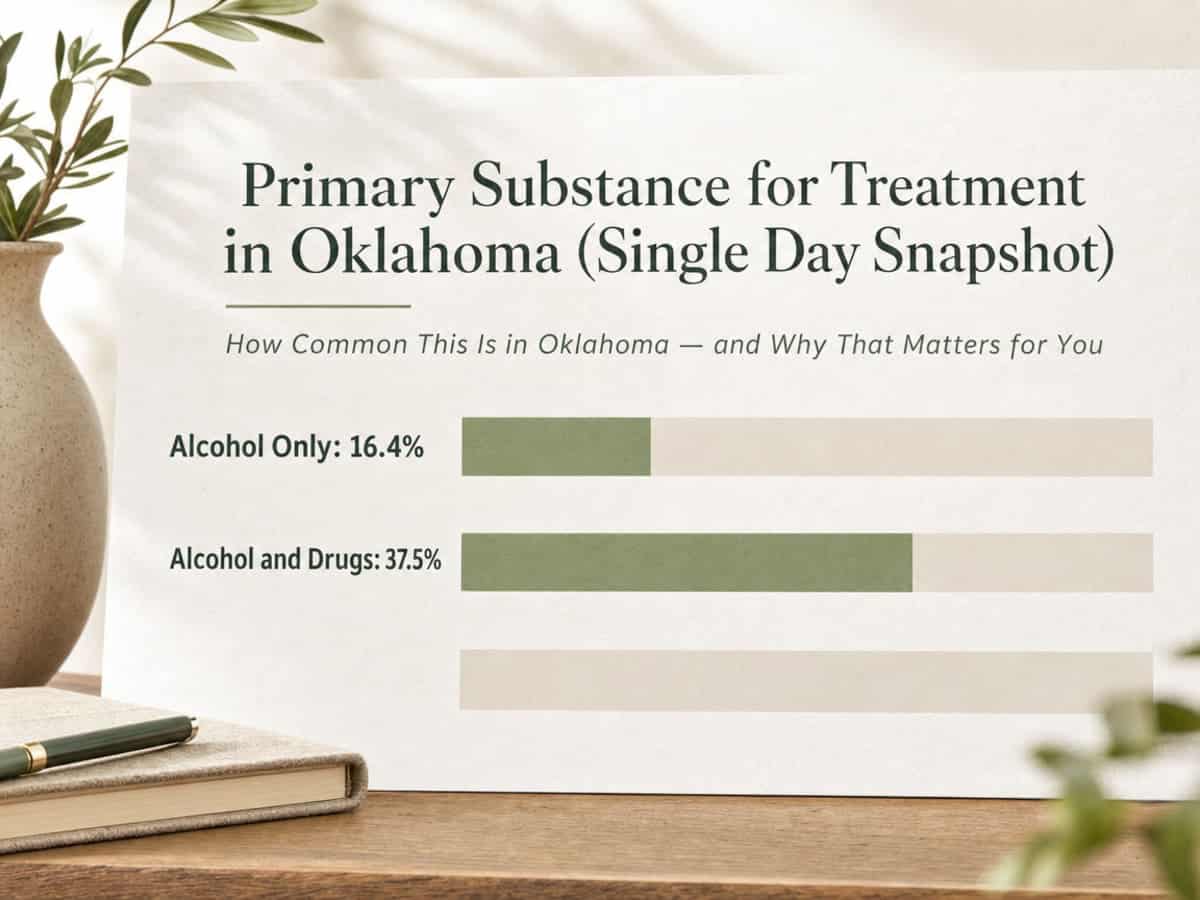
A snapshot from an earlier SAMHSA report gives some texture to who is actually walking through treatment doors in Oklahoma. On a single day in 2017, 16.4% of people enrolled in substance use treatment in the state were there for alcohol alone, and another 37.5% were there for alcohol combined with other drugs 11. Add those together and more than half of everyone in treatment on that day was working on their relationship with alcohol.
You are not the exception. You are not the only person in your zip code who has typed some version of this search into a phone at an hour when nobody should be awake. The rarity isn’t the problem. The distance between recognizing it and calling someone is the problem — and that distance is exactly what a first phone call is designed to close.
Non-Medical vs. Medically Supervised Detox in Oklahoma
What Oklahoma Allows Under § 450:18-5-14
Oklahoma actually spells out, in its administrative code, what a non-medical withdrawal management program has to look like. It’s a useful thing to know, because it tells you what a program is required to do and what it isn’t equipped to handle.
Under Okla. Admin. Code § 450:18-5-14, non-medical withdrawal management is available for people withdrawing from alcohol who present with no apparent medical symptoms. Facilities providing this level of care have to document vital signs and intake at least every six hours, and staff have to be trained to recognize the physical signs of withdrawal and follow emergency procedures 14.
Read that carefully. Every six hours. Trained to recognize signs and call for help.
That’s a real service, and it’s the right fit for someone whose dependence is on the milder end and who has been medically screened as low risk. But it isn’t a medical detox. There isn’t a physician at the bedside adjusting medication as symptoms shift. There isn’t continuous vital-sign monitoring catching the heart rate climb at hour 14 that signals something more serious is coming. The code is honest about what non-medical withdrawal management is designed for — people“withdrawing from alcohol who present with no apparent medical symptoms”14. Which means the moment symptoms show up in a meaningful way, that setting is no longer the right one.
When You Need a Medical Detox Instead
So how do you tell which one you or your loved one needs?
If any of the following are true, the honest answer is a medically supervised detox:
- you’ve been drinking heavily every day for weeks or months,
- you’ve had a withdrawal seizure or delirium tremens in the past,
- you’ve tried to stop before and it went badly,
- you’re already showing symptoms like tremor or a racing heart, or
- you have other medical conditions layered on top — heart disease, liver disease, diabetes, a psychiatric diagnosis, or you’re on other medications that interact with withdrawal.
Benzodiazepines are the cornerstone of alcohol withdrawal treatment, and they prevent the complications non-medical settings aren’t equipped to manage 3, 10. You cannot get benzodiazepine treatment titrated to your symptoms in a program that isn’t medical. That’s the whole line between the two levels of care.
Medical detox means a physician-led team, 24/7 nursing, continuous vital-sign monitoring, and the ability to give the right medication at the right dose the moment your body needs it. Renewal Springs uses wearable biotech from Huml Health to track heart rate, sleep, and stress in real time — so a change at 3 a.m. shows up on a monitor, not in the morning notes.
If you’re not sure which side of the line you’re on, don’t guess alone. Call and describe what’s happening. That conversation is what triage exists for.
What Actually Happens Inside a Medical Detox
Intake, Assessment, and the First Few Hours
The front door of a medical detox is usually the least scary part. Someone answers the phone. Someone helps you or your loved one get there. And then the clinical work starts before the fear does.
Intake is a conversation and an exam. A nurse or physician asks about how much you’ve been drinking, for how long, when your last drink was, and what happened the last time you tried to stop. They ask about other medications, other diagnoses, past seizures, past episodes of confusion. They check blood pressure, heart rate, temperature, and pulse oximetry. They use structured tools to grade how severe your withdrawal is right now and how severe it’s likely to get.
This matters because the same person can look fine at hour eight and be in serious trouble at hour twenty. Standardized assessment scales help the team stay ahead of that curve instead of chasing it 10. If your history includes a prior withdrawal seizure, heavy daily drinking, or significant medical conditions, you’re triaged into closer monitoring from the start.
By the end of intake, there’s a plan on paper. Not a template — a plan built around your body, your history, and where you are on the timeline.
Medication-Assisted Treatment: What the Medicine Is Doing
The medicine has a job, and it helps to know what it is.
Benzodiazepines are the cornerstone of alcohol withdrawal treatment. They’re used across every major clinical guideline as first-line therapy because they do what your brain has stopped doing on its own — quiet the overactive nervous system that’s rebounding after you stopped drinking 3, 10. They’re the reason seizures don’t happen when they might have. They’re the reason DTs are caught early or prevented entirely.
Dosing isn’t a one-size regimen. Most modern protocols use symptom-triggered dosing — the medical team assesses your symptoms on a schedule, and medication is given when the numbers say your body needs it. That’s very different from swallowing the same pill every four hours whether you need it or not. It’s tailored, and it changes as you change.
Alongside the benzodiazepines, supportive care is doing quiet work in the background. IV fluids replace what you’ve lost. Electrolytes get corrected. Thiamine and other vitamins go in because heavy drinking depletes them, and low thiamine is its own emergency 9. Nausea meds, sleep support, and blood pressure medications get added as needed.
None of this is optional theater. It’s the difference between surviving withdrawal and being safely brought through it.
Continuous Monitoring and What Comfort Looks Like
Here’s what monitoring actually looks like when it’s done well, and why it matters at 3 a.m. more than at 3 p.m.
Your heart rate can climb before you feel it. Your blood pressure can spike while you’re trying to sleep. A rising temperature can be the first sign that something is shifting toward severe withdrawal. In a program with continuous monitoring, those changes register on a screen the medical team is watching — not in a chart that gets read at the next six-hour check. Renewal Springs uses wearable technology from Huml Health that tracks heart rate, sleep, and stress in real time, so a nurse doesn’t have to wake you to know how you’re doing.
That’s the medical piece. The comfort piece is just as intentional. Private rooms. Beds you can actually sleep in. Food when you can eat it. Quiet when noise makes everything worse. Someone to sit with you at the hour of night when the anxiety gets loudest.
Medical detox isn’t a hospital ward, and it isn’t a wellness retreat. It’s a setting built for one specific job — keeping you safe while your body resets — and giving you enough dignity along the way that you might actually stay to finish it.
How to Tell If It’s Time to Call — and What to Say
You don’t have to be certain. Certainty is not the price of admission for a phone call.
Here are the honest signals that it’s time to pick up the phone today, not next week:
- you’ve been drinking every day and the shakes start before noon.
- you’ve tried to stop before and ended up in an ER, or should have.
- you’re already sweating, your heart is running fast, or you feel that low hum of dread that means the last drink is wearing off.
- your loved one is confused in a way that isn’t like them.
- you’re afraid, and the fear is specific, not vague.
If any of that is true, the setting matters. Withdrawal seizures can arrive without warning in someone with significant alcohol dependence 6, which is why the call happens before symptoms get worse, not after.
When you dial, you don’t need a script. Say what’s true. “My husband has been drinking a fifth a day for six months and he’s trying to stop.” “I’ve been drinking heavily for a year and I’m scared of what happens if I quit.” “My mom is shaking and I don’t know what to do.”
That’s enough. The person on the other end will take it from there.
After the First 72 Hours: What Detox Leads To
Detox is the beginning, not the finish line. And that’s actually good news, because the reason to get through withdrawal safely is so you have a body and a brain intact enough to do the work that comes next.
Once the acute medical danger has passed, most people are still tender. Sleep is uneven. Cravings surface. Old feelings that alcohol was covering up start showing up on time. This is why detox and what follows it need to be planned as one continuous handoff — not two separate decisions made a week apart.
A good medical detox does that planning while you’re still there. Renewal Springs prepares each person for a specific next step before discharge, whether that’s residential treatment, an outpatient program, or a return home with structured recovery support in place. The NIAAA is clear that medically supervised withdrawal is a first step, with ongoing treatment as the piece that turns it into real change 15.
You don’t have to know today what month three looks like. You have to get safely through this week.
Talking to Renewal Springs About the Next Step
If you’ve read this far, you already know more than most people ever do before they make the call. That’s not nothing. That’s the work of the last twenty minutes paying off.
When you’re ready, you can call Renewal Springs and simply ask about the alcohol detox process. No commitment. No forms to fill out first. The people on the phone talk to worried spouses, adult kids, and people making the call for themselves all day long. Ask what a typical intake looks like. Ask about the medical team, the 24/7 monitoring, and how they handle the seizure and DT risk window. Ask how insurance verification works — it’s free, and they can usually tell you what’s covered before you commit to anything.
You don’t have to have your story organized. You just have to dial.
Talk to a Detox Nurse Right Now
Get personal answers about safe alcohol detox from a caring professional today.
Frequently Asked Questions
Is it safe to quit drinking on my own at home?
If you’ve been drinking lightly or only occasionally, cutting back at home is usually fine. If you’ve been drinking heavily every day for weeks or months, it isn’t. Withdrawal seizures can arrive without warning in people with significant alcohol dependence 6, and the NIAAA is clear that people with alcohol use disorder may need medically supervised detoxification 15. When in doubt, call before you stop.
How long does alcohol detox take?
The acute medical phase is usually three to five days. Symptoms tend to begin within about six hours of the last drink, peak somewhere in the 12 to 72 hour window, and start easing after that 4. Some people stabilize sooner, some need a bit longer if withdrawal is severe. Sleep issues and mood swings can linger for weeks, but the medically dangerous part is short.
What are the signs that someone needs medical detox instead of non-medical withdrawal management?
Oklahoma’s non-medical withdrawal management level is designed for people withdrawing from alcohol who show no apparent medical symptoms 14. If you or your loved one drinks heavily daily, has had a prior withdrawal seizure or delirium tremens, has other medical or psychiatric conditions, takes interacting medications, or is already showing tremor, sweating, or a racing heart, that’s medical detox territory. When you call, describe what’s happening honestly and let the clinical team triage.
Will insurance cover alcohol detox in Oklahoma?
Most major insurance plans cover medical detox as a health service, but specifics vary by plan and deductible. Renewal Springs offers free benefits verification, which means someone on their team can check your coverage before you commit to anything and tell you what’s likely covered, what isn’t, and what your out-of-pocket cost could look like. You don’t need to have your insurance card memorized to make the first call.
What medications are used during alcohol detox?
Benzodiazepines are first-line therapy and the cornerstone of alcohol withdrawal treatment 3, 10. They quiet the nervous system rebound that drives seizures and delirium tremens. Most modern programs use symptom-triggered dosing, so the amount matches what your body actually needs. Supportive care runs alongside — IV fluids, electrolyte correction, thiamine and other vitamins, plus medications for nausea, sleep, and blood pressure as symptoms shift 9.
What happens after detox is over?
Detox is the first step, not the whole treatment. The NIAAA describes medically supervised withdrawal as an initial phase, with ongoing care as the part that produces lasting change 15. Most people move into residential treatment, an outpatient program, or a structured recovery plan at home. A good detox facility builds that handoff before you leave, so you’re not standing on day four wondering what to do next.
References
- Alcohol Withdrawal Syndrome – StatPearls – NCBI Bookshelf. https://www.ncbi.nlm.nih.gov/books/NBK441882/
- Complications of Alcohol Withdrawal. https://pmc.ncbi.nlm.nih.gov/articles/PMC6761825/
- Alcohol Withdrawal in Hospitalized Patients. https://www.ncbi.nlm.nih.gov/books/NBK604324/
- Acute Alcohol Withdrawal. https://www.ncbi.nlm.nih.gov/books/NBK65581/
- Alcohol Withdrawal. https://pubmed.ncbi.nlm.nih.gov/39926251/
- Delirium Tremens: A Review of Clinical Studies. https://pmc.ncbi.nlm.nih.gov/articles/PMC11069634/
- Delirium Tremens – StatPearls – NCBI Bookshelf. https://www.ncbi.nlm.nih.gov/books/NBK482134/
- Alcohol Withdrawal with Delirium Tremens. https://pmc.ncbi.nlm.nih.gov/articles/PMC10414982/
- Treatment of Alcohol Withdrawal. https://pmc.ncbi.nlm.nih.gov/articles/PMC6761817/
- Identification and Management of Alcohol Withdrawal Syndrome. https://pmc.ncbi.nlm.nih.gov/articles/PMC4978420/
- Behavioral Health Barometer: Oklahoma, Volume 5. https://www.samhsa.gov/data/sites/default/files/cbhsq-reports/Oklahoma-BH-BarometerVolume5.pdf
- OKLAHOMA – National Survey on Drug Use and Health, 2022 State Tables. https://www.samhsa.gov/data/sites/default/files/reports/rpt44486/2022-nsduh-sae-state-tables/NSDUHsaeOklahoma2022.pdf
- National Survey of Substance Abuse Treatment Services (N-SSATS): Oklahoma, 2019. https://www.samhsa.gov/data/sites/default/files/quick_statistics/state_profiles/NSSATS-OK19.pdf
- Okla. Admin. Code § 450:18-5-14 – Non-medical withdrawal management. https://www.law.cornell.edu/regulations/oklahoma/OAC-450-18-5-14
- Understanding Alcohol Use Disorder. https://www.niaaa.nih.gov/publications/brochures-and-fact-sheets/understanding-alcohol-use-disorder