
Key Takeaways
- Oklahoma rules expect discharge planning to begin at admission, with the first outpatient appointment scheduled and follow-up support offered within one week of leaving detox 1, 14.
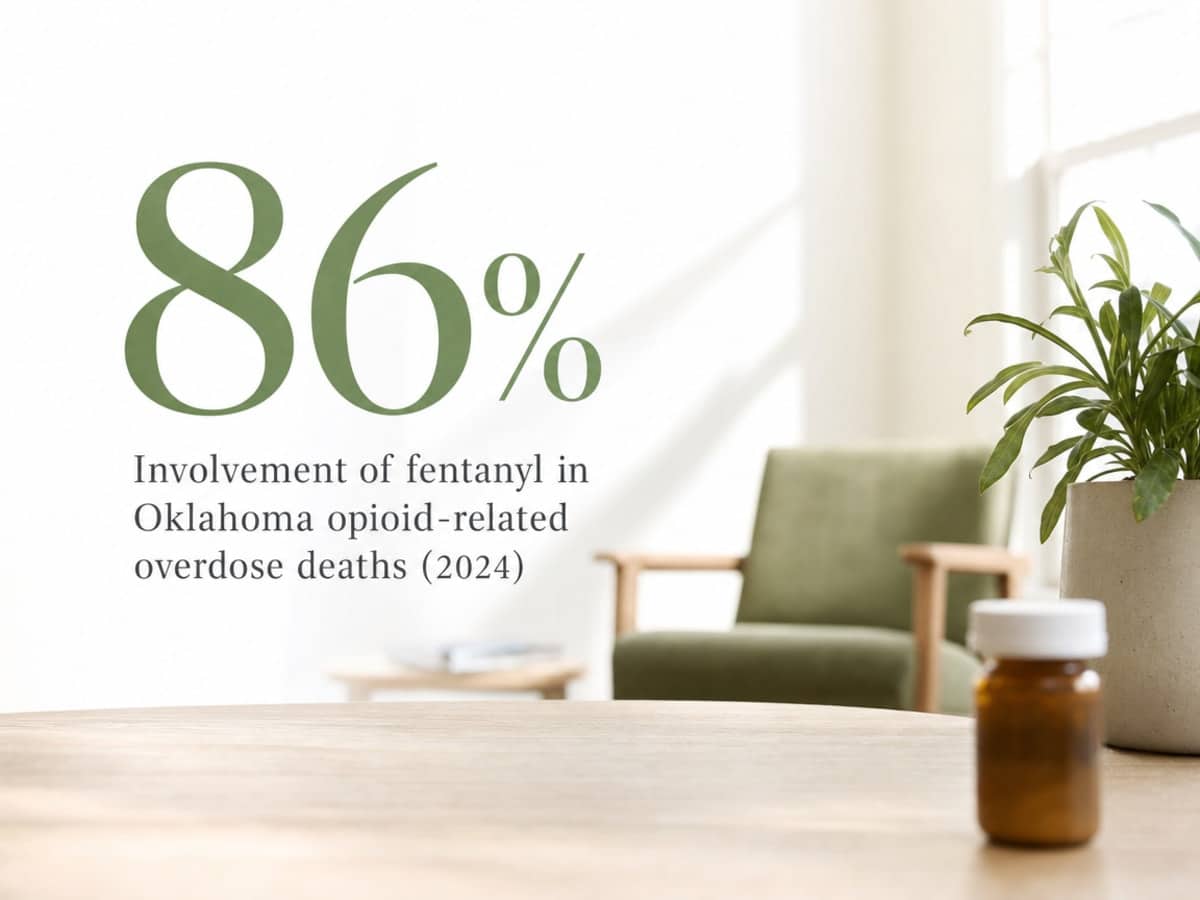
- The first 30 days carry outsized overdose risk in Oklahoma, where fentanyl was involved in 86% of opioid-related overdose deaths in 2024 3.
- A durable plan rests on five pillars: medication continuity, a scheduled counseling appointment, peer or alumni connection, safe housing, and a named person owning the week-one check-in.
- Before choosing a facility, ask admissions specifically how handoffs work, who prescribes MAT after discharge, and whether a housing subsidy referral will be made prior to discharge 2, 9.
The Two Weeks After Discharge Often Decide Everything
Finishing detox is real progress. If you or someone you love just made it through withdrawal, or is about to, that step took courage most people never have to summon. Give yourself credit for it.
And then, gently, get ready for what comes next. The days right after discharge can feel wide open in a way that’s scary — the structure of medical supervision drops away, and suddenly you’re standing in your own kitchen with a to-do list nobody wrote down. That’s the window where a lot of Oklahoma families lose ground. Detox by itself, without follow-up care, usually leads back to use 6. Not because you failed. Because detox was never designed to be the whole treatment.
This guide walks you through what aftercare actually looks like in Oklahoma — the state rules that shape your discharge plan, the five pieces of a plan that holds, and honest questions to ask admissions before you sign anything. Including, up front, where Renewal Springs Detox stands on alumni support today.
Why Detox Alone Is Not the Finish Line
What the Research Actually Says About Post-Detox Risk
Here’s the hard truth, said plainly: detox by itself, without follow-up treatment, generally leads back to drug use 6. That’s not a scare tactic. It’s the consensus from decades of addiction science. Your body clears the substance, your withdrawal symptoms fade, but the brain changes, the cravings, and the life circumstances that drove use don’t reset with a hospital discharge.
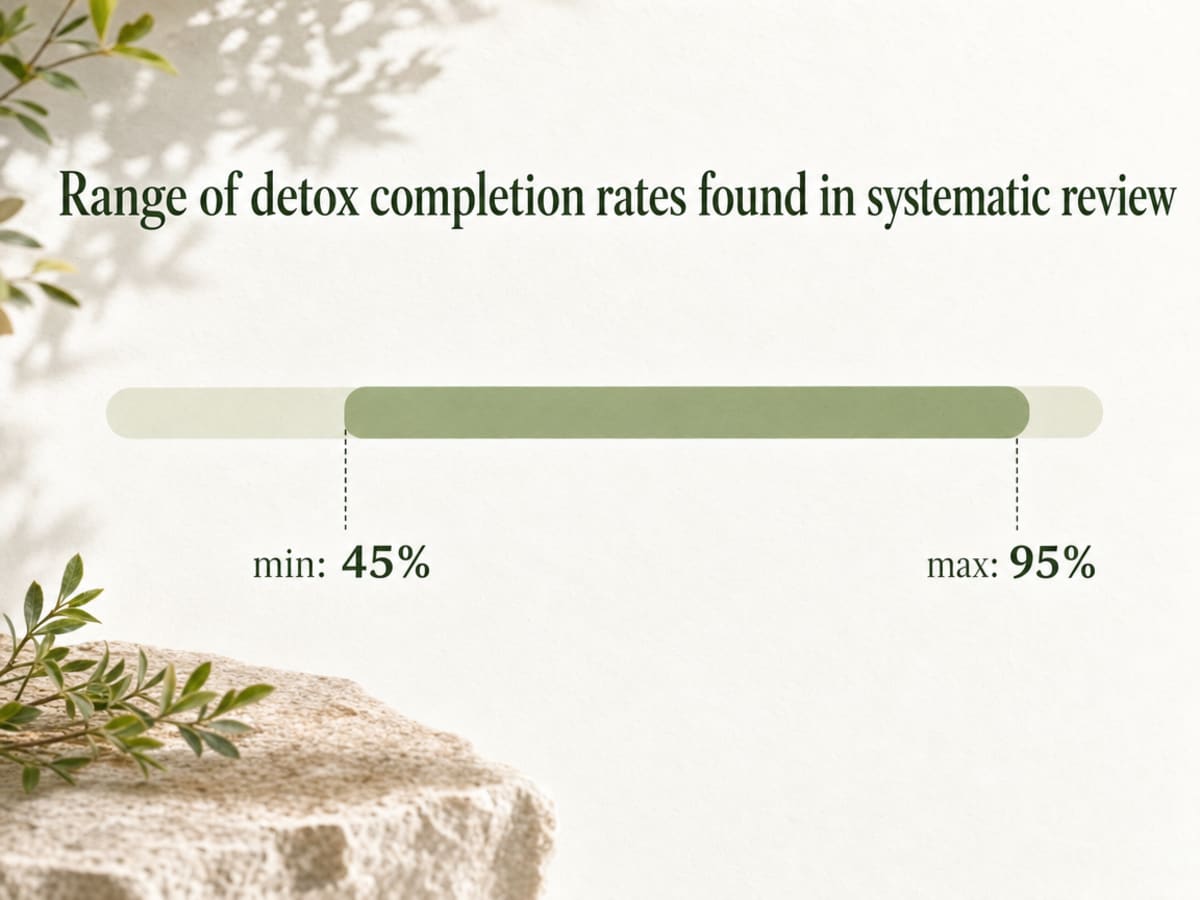
A systematic review of what actually helps people bridge the gap between detox and ongoing care found that completion of detox itself ranges from 45% to 95% across programs — and the share of people who actually move on to further treatment or a mutual-help group after detox ranges from 14% to 92% 8. That’s an enormous spread. It tells you the program you leave from, and the plan you leave with, matter as much as the willpower you carry out the door.
So if you’re worried that finishing detox isn’t enough, you’re not being pessimistic. You’re being accurate. And that awareness is exactly what makes the next 30 days go differently.
The First 30 Days: Oklahoma’s High-Risk Window
The weeks right after detox are the most fragile stretch of recovery. Your tolerance has dropped. The old routines, people, and places haven’t. In Oklahoma, that mix is meeting a drug supply that’s more dangerous than it was five years ago.
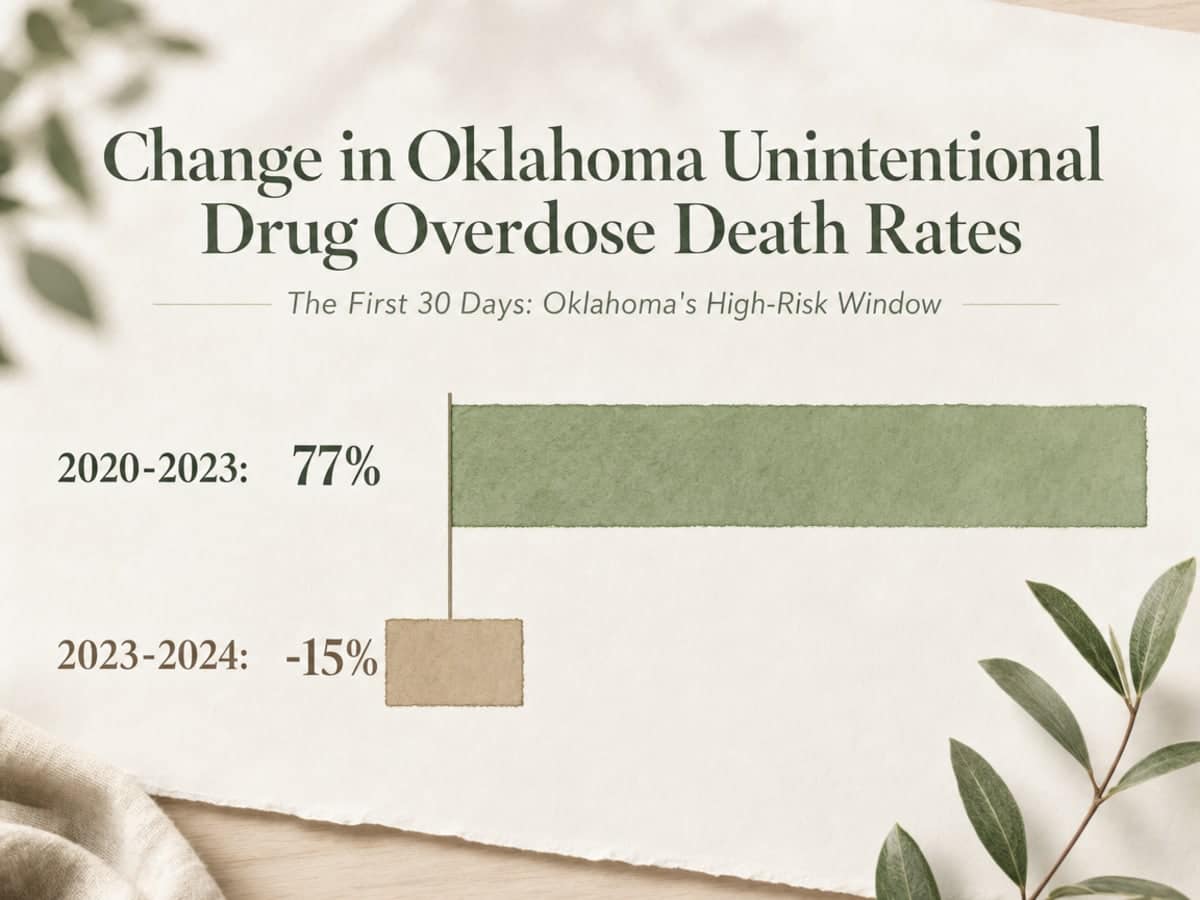
State data tells the story. Unintentional drug overdose death rates in Oklahoma climbed 77% from 2020 to 2023, then eased down 15% from 2023 to 2024 as harm-reduction and treatment access started to catch up 3. That recent dip is real progress, and it matters. But the bigger picture hasn’t changed: fentanyl was involved in 86% of opioid-related overdose deaths in Oklahoma in 2024 3. Almost nine out of ten. The pills and powders on the street today are not the ones your loved one may have started with.
Why does that matter for aftercare? Because if someone leaves detox with lowered tolerance and uses again — even once, even a smaller amount than before — the odds of an overdose are meaningfully higher than they were before treatment. That’s the physiology. It’s not a moral failing, and it’s not rare.
What Oklahoma Rules Say Your Detox Owes You Before You Walk Out
Discharge Planning Starts at Admission, Not Discharge
Here’s something most families don’t know until they’re in it: in Oklahoma, discharge planning is supposed to start the day your loved one is admitted — not the morning they’re going home. State rules define discharge planning as “the process, begun at admission, of determining ongoing post-treatment and recovery needs” 1. That language isn’t decorative. It means the clock on your aftercare plan starts ticking on day one.
What that looks like in practice: a transition or discharge plan should identify continuing-care needs, name specific referrals, and address medications, counseling, and recovery supports 1. Older versions of the same Oklahoma rule used almost identical language, so this isn’t a new expectation — it’s been the standard for years 15. And when the person leaving detox has other needs stacked on top, the state’s cross-system rules say the written plan should also address housing, income, social support, and ongoing community-based treatment 17.
So if you’re four days into detox and nobody has mentioned what happens next, that’s a fair thing to ask about. You’re not being pushy. You’re asking the facility to do what Oklahoma already expects them to do. A simple question works:“Can we sit down and go over the written discharge plan — what’s on it so far, and what’s still missing?”
The First-Week Appointment Rule
Oklahoma goes a step further than most people realize. State Medicaid rule language says follow-up case management and other supportive services should be offered no later than one week after discharge, and appointments should be scheduled before your loved one leaves residential or inpatient care 14. In plain English: the first outpatient appointment isn’t something you’re supposed to figure out from a printed list on the way to the car. It should already be on the calendar, with a date, a time, and a phone number, before discharge paperwork is signed.
That matters because the gap between “here’s a referral, good luck” and “you have an appointment Thursday at 10 with Dr. Nguyen” is where a lot of recoveries quietly fall apart. If admissions can’t tell you who owns that first-week appointment — the case manager, the discharge coordinator, a peer support specialist — that’s information worth having before you commit.
You can ask directly:“Will there be a scheduled appointment with a continuing-care provider on the calendar before we walk out the door?”The answer should be yes.
Passive Referral vs. Active Handoff: The Question to Ask Every Facility
There’s a phrase worth learning before you talk to any Oklahoma detox: handoff quality. It sounds like industry jargon, but it describes something you can feel the difference of in real life. A passive referral is a printed list of phone numbers and a “good luck.” An active handoff is someone at the facility physically walking your loved one into the next appointment, or at minimum calling ahead, confirming the intake, and staying involved until the connection sticks.
One randomized study of inpatient-to-outpatient transitions put numbers on that difference. Aftercare intake completion was 76% when staff used an escort-plus-incentive approach — literally accompanying patients to their first appointment and providing a small incentive — compared with 44% for incentive alone and just 24% for standard referral 9. This was one study, focused on a specific inpatient-to-outpatient handoff, not a universal rule. But the size of the gap is hard to ignore. When people were walked in, three out of four showed up. When they were handed a list, three out of four didn’t.
You don’t need to memorize the study. You just need one question ready when you call admissions: “What kind of handoff do you actually do?” Listen for specifics. Do they schedule the first outpatient appointment before discharge? Does a case manager or peer support specialist call the receiving provider? Does anyone follow up in the first week to make sure the appointment happened? If the answer sounds like “we give them a list of resources,” you now know what that means for the odds.
Handoff quality is one of the few things about aftercare you can evaluate before you even walk in the door. Use it.
The Five Pillars of a Real Aftercare Plan
Pillar 1: Medication Continuity for Opioid and Alcohol Recovery
If your loved one is coming off opioids, medication is not optional — it’s the single most protective piece of the plan. Buprenorphine, methadone, and naltrexone reduce overdose deaths and cravings, and they’re the standard of care for opioid use disorder 7. Yet fewer than 1 in 5 people with opioid use disorder actually receive them 7. That gap is where a lot of Oklahoma stories go sideways after detox.
Here’s what continuity looks like in practice. Before discharge, someone should confirm three things: which medication your loved one will be on, who is prescribing it after they leave, and how they’ll get their first refill without a break in dosing. A one-day gap in buprenorphine or methadone can bring cravings roaring back at exactly the moment tolerance is at its lowest.
For alcohol recovery, naltrexone and acamprosate can also reduce cravings and support abstinence — worth asking about if that’s the substance you’re leaving behind. Telehealth prescribing has made buprenorphine easier to continue than it used to be 7. If admissions can name the prescriber and the pharmacy before you walk out, that’s a good sign. If they can’t, ask them to.
Pillar 2: A Counseling or Continuing-Care Appointment Already on the Calendar
Detox stabilizes the body. Counseling and continuing care work on everything the body was numbing. That first outpatient appointment — with a therapist, an intensive outpatient program, or a case manager — should be on the calendar before discharge, not on a list of numbers to call later. Oklahoma rule language backs this up: appointments should be scheduled prior to leaving residential or inpatient care, and follow-up support offered within one week 14.
Evidence on continuing care is honest but real. Regular follow-up, including telephone check-ins, shows the most consistent benefit for alcohol use disorder, with more mixed results across drug use disorders 10. That doesn’t mean skip it. It means the appointment matters more than the format — showing up is the variable that changes outcomes.
Pillar 3: Peer Support and Alumni Connection
Recovery is lonely work if you try to do it alone. Peer support — people who have been where your loved one is and stayed there — is one of the few things that reliably helps the first few months feel survivable. Oklahoma’s SUD standards recognize peer recovery support services as part of the treatment ecosystem, not a side offering 1.
What that looks like on the ground: an alumni network from a treatment facility, a peer support specialist who checks in by phone, a mutual-help group like AA, NA, SMART Recovery, or a faith-based group. SAMHSA points people toward peer and community support groups, the National Helpline, and 988 as free, ongoing anchors 4.
Renewal Springs Detox does not run its own in-house alumni program at this time. What we can say honestly is that many discharges connect to a sister facility’s alumni network and to Oklahoma’s broader peer-support ecosystem. If alumni connection matters to you — and it should — ask admissions directly:“What alumni or peer network will my loved one be introduced to before they leave?”A real answer, with names and next steps, is what you’re listening for.
Pillar 4: A Place to Sleep That Supports Recovery
Where someone sleeps the first night after detox shapes almost everything else. Going home to a house where use is still happening, or to no house at all, undoes a lot of what detox just built. Oklahoma’s cross-system rules recognize this — discharge planning is supposed to address housing as part of the written plan, not treat it as your problem to figure out later 17.
Recovery housing is one option worth understanding. SAMHSA describes recovery houses as substance-free living environments centered on peer support and connection to services 12. A 2025 systematic review found the level of evidence for recovery housing to be moderate — helpful for many, though not uniform across every subgroup studied 11. That’s an honest read: it’s not magic, but it’s a stabilizer that lets the other four pillars actually work.
Oklahoma also runs specific supports through ODMHSAS, including Intensive Outreach and Navigation, Safe Haven, Permanent Supported Housing, and a Discharge Planning Housing Subsidy Program that provides time-limited help with rent, utilities, and deposits 2. The subsidy program has a catch worth knowing: the referral has to be made by the discharging facility before discharge 2. If housing is shaky, this is a conversation to have with the case manager on day two, not day of discharge.
Pillar 5: A First-Week Follow-Up That Someone Actually Owns
The last pillar is the one most plans forget: someone whose job it is to check in during week one. Not a wellness poster, not a phone list — a named person. Oklahoma expects follow-up case management and other supportive services to be offered no later than one week after discharge 14. That’s the standard.
Before you leave, ask who owns that check-in. A case manager, a peer support specialist, a discharge coordinator — someone with a name, a phone number, and a date when they’ll call. If those five pillars are on the plan and one person is watching to make sure each one lands, you’ve built something that can hold. That’s what a real aftercare plan looks like 1.
Where Renewal Springs Stands on Alumni and Aftercare
Here’s the honest version, because you deserve it before you commit to anything: Renewal Springs Detox does not currently run its own in-house alumni program. No alumni app, no monthly alumni events on our calendar, no dedicated alumni coordinator on staff. If another facility promises those things, ask them to show you the specifics — a real alumni program is more than a logo on a website.
What we do offer is a warm handoff into Oklahoma’s continuing-care ecosystem. Many of our discharges connect to a sister facility’s alumni network, and every discharge plan is built to meet the state’s expectations for specific referrals, scheduled first-week appointments, and linkage to peer, counseling, medication, and housing supports 1, 14. That means when your loved one walks out, they walk out with names, phone numbers, and calendar dates — not a resource sheet.
The best thing you can do is call admissions and ask directly:“What do aftercare connections actually look like for someone in my situation?”A straight answer to that question tells you more about a facility than any brochure ever will.
Who Pays for What: SoonerCare, Insurance, and Housing Subsidies
Money is the quiet part of aftercare planning, and it’s often what makes a good plan fall apart. Here’s the short version for Oklahoma.
If your loved one has SoonerCare, Oklahoma’s Medicaid, behavioral-health benefits include inpatient acute care, crisis stabilization, and medical detoxification — plus the outpatient counseling and case-management services most aftercare plans rely on 16. That means the counseling appointment, the MAT prescriber visit, and the case manager checking in during week one are typically covered. Ask the discharge planner to confirm which SoonerCare providers are in-network before you leave.
Private insurance varies more, but most plans cover medical detox, outpatient counseling, and MAT. Renewal Springs Detox works with most major insurers and offers free benefits verification — a phone call before admission tells you what’s covered and what isn’t.
For housing, Oklahoma’s Discharge Planning Housing Subsidy Program provides time-limited help with rent, utilities, and deposits, but the referral has to be made by the discharging facility before discharge 2. Ask about it early, not late.
Questions to Ask Admissions at Any Oklahoma Detox
Before your loved one is admitted anywhere — Renewal Springs or any other Oklahoma facility — a ten-minute phone call with admissions can tell you almost everything you need to know about the aftercare plan you’ll actually receive. Here’s a short script that works.
Ask these, in order:
- “When does discharge planning start, and can we see the written plan before discharge day?” State rules expect it to begin at admission 1.
- “Will a first outpatient appointment be scheduled — with a date, time, and provider — before we walk out?” 14
- “What kind of handoff do you do? Does someone call ahead, escort, or follow up in week one?”
- “If opioids are involved, who will prescribe MAT after discharge, and how will the first refill happen without a gap?” 7
- “What alumni or peer network will my loved one be introduced to? Is it in-house, or a partner network?”
- “If housing is unstable, will you make the referral for the Discharge Planning Housing Subsidy before discharge?” 2
- “Who owns the week-one check-in — by name?”
If the answers are specific, you’re in good hands. If they’re vague, keep asking. You have the right to.
If Your Plan Falls Apart: Backstops That Work
Sometimes the plan holds. Sometimes it doesn’t. A missed appointment, a lost prescription, a hard weekend, a relapse — these happen, and they don’t mean recovery is over. They mean it’s time to use the backstops.
Save these numbers in your phone before discharge day. SAMHSA’s National Helpline is free, confidential, and available 24/7 in English and Spanish at 1-800-662-HELP (4357) — it connects you to local treatment and recovery support fast 5. For a mental health or overdose crisis, call or text 988. SAMHSA’s RecoverMe also points to peer and community groups when you need a person to talk to who has been there 4.
If a relapse happens, call your MAT prescriber the same day — a gap in medication is the risk, not the slip. And if you don’t know who to call, call Renewal Springs admissions. We’ll help you figure out the next step.
Talk with a team member about next steps
Connect for real answers about aftercare and available alumni support options in Oklahoma.
Frequently Asked Questions
Does Renewal Springs have its own alumni program?
Not at this time. Renewal Springs Detox does not run an in-house alumni program, alumni events, or a dedicated alumni coordinator. What we do offer is a warm handoff — many discharges connect to a sister facility’s alumni network and to Oklahoma’s broader peer-support ecosystem 1. Call admissions and ask what those connections look like for your specific situation.
What does aftercare actually include after detox in Oklahoma?
Five pieces, ideally lined up before discharge: medication continuity (especially MAT for opioids or alcohol), a scheduled counseling or continuing-care appointment, peer or alumni connection, stable housing, and a named person responsible for a first-week check-in 1, 14. Detox alone, without these follow-ups, usually leads back to use 6. The plan is what carries recovery through the first 30 days.
Will SoonerCare pay for continuing care after detox?
In most cases, yes. Oklahoma Medicaid’s behavioral-health benefits include inpatient acute care, crisis stabilization, and medical detoxification, along with the outpatient counseling and case-management services aftercare plans depend on 16. Before discharge, ask the case manager to confirm which SoonerCare providers are in-network for MAT, therapy, and follow-up so there’s no billing surprise in week one.
What should I ask a detox facility about their discharge handoff?
Ask what kind of handoff they actually do. Do they schedule the first outpatient appointment before discharge? Does someone call ahead to the receiving provider? Who follows up in week one, by name? Passive referral produces very different outcomes than active handoff 9. Oklahoma rules also expect appointments scheduled before discharge and support offered within one week 14.
What happens if my loved one has nowhere safe to go after detox?
Say so early, not on discharge day. Oklahoma’s Discharge Planning Housing Subsidy Program provides time-limited help with rent, utilities, and deposits, but the referral has to come from the discharging facility before discharge 2. Recovery housing is another option — substance-free environments centered on peer support, with moderate evidence of benefit 11, 12. Ask admissions on day two.
What do we do if the aftercare plan falls apart in the first week?
Use the backstops. Call SAMHSA’s National Helpline at 1-800-662-HELP (4357) — free, confidential, 24/7 in English and Spanish — for fast linkage to treatment and recovery support 5. For a mental health or overdose crisis, call or text 988 4. If a slip happens, call the MAT prescriber the same day. A gap in medication is the real risk.
References
- CHAPTER 18 – Oklahoma.gov. https://oklahoma.gov/content/dam/ok/en/odmhsas/documents/policy/provider-certification/administrative-rules/2023/PC–Chapter-18-Final-effective-9-15-23.pdf
- Housing – Oklahoma.gov. https://oklahoma.gov/odmhsas/recovery/housing.html
- Data – Oklahoma.gov. https://oklahoma.gov/health/health-education/injury-prevention-service/drug-overdose/data.html
- RecoverMe: My Recovery, My Journey | SAMHSA. https://www.samhsa.gov/substance-use/recovery/recoverme
- National Helpline for Mental Health, Drug, Alcohol Issues. https://www.samhsa.gov/find-help/helplines/national-helpline
- Treatment and Recovery | National Institute on Drug Abuse. https://nida.nih.gov/publications/drugs-brains-behavior-science-addiction/treatment-recovery
- Medications for Opioid Use Disorder | National Institute on Drug Abuse. https://nida.nih.gov/research-topics/medications-opioid-use-disorder
- Patient and program factors that bridge the detoxification-treatment gap: a systematic review of evidence-based strategies. https://pubmed.ncbi.nlm.nih.gov/25530425/
- Methods for enhancing transition of substance dependent patients from inpatient to outpatient treatment. https://pubmed.ncbi.nlm.nih.gov/11137278/
- Impact of Continuing Care on Recovery From Substance Use Disorders: A Review of the Literature. https://pmc.ncbi.nlm.nih.gov/articles/PMC7813220/
- Recovery housing for substance use disorder. https://pubmed.ncbi.nlm.nih.gov/40115346/
- Best Practices for Recovery Housing. https://library.samhsa.gov/product/best-practices-recovery-housing/pep23-10-00-002
- Housing Supports Recovery and Well-Being: Definitions and Shared Values. https://library.samhsa.gov/sites/default/files/housing-supports-pep24-08-007.pdf
- [PDF] Chapter 24_2022 PERM – Oklahoma. https://oklahoma.gov/content/dam/ok/en/odmhsas/documents/policy/provider-certification/proposed-rules/2022/Chapter%2024_2022%20PERM.pdf
- CHAPTER 18. STANDARDS AND CRITERIA FOR SUBSTANCE …. https://oklahoma.gov/content/dam/ok/en/odmhsas/documents/policy/provider-certification/administrative-rules/2021/Chapter%2018%20Final%20effective%209-15-21.pdf
- Behavioral Health and Substance Abuse Services. https://oklahoma.gov/ohca/individuals/mysoonercare/soonercare-benefits/behavioral-health-and-substance-abuse-services.html
- State-operated psychiatric inpatient unit treatment functions. https://www.law.cornell.edu/regulations/oklahoma/OAC-450-30-9-8