
Key Takeaways
- Medical detox is a short, supervised stay measured in days, not a long disappearance, designed to safely manage withdrawal and hand off to next-step care 12.
- Oklahoma City parents have family-aware options, including SoonerCare-covered detox with prior authorization, Family Treatment Court pathways, and recovery housing built for parents with children 5, 6, 7.
- Before deciding, compare what your insurance or SoonerCare actually covers, what withdrawal support the facility provides, and what step-down care exists after detox ends.
- State certification under Chapter 18 sets clinical staffing, withdrawal management, and emergency standards, so a certified Oklahoma facility operates under regulated medical protocols rather than improvisation 4.
The 2 a.m. Thought Every Parent Has Before Making This Call
It’s late. The kids are finally asleep. You’re on your phone in the bathroom or the parked car or the hallway outside their room, and you’re searching things you promised yourself you’d never have to search. Detox. Withdrawal. What happens to my kids if I go.
Say the thought out loud, even if only to yourself: How can I possibly leave them?
That question isn’t a sign you’re a bad parent. It’s the opposite. Bad parents don’t lie awake at 2 a.m. running the math on school pickup, work shifts, and how many days their body can keep doing this. You do. That’s already parenting.
Here’s what nobody tells you when you’re staring at a search bar at midnight: the guilt you feel about stepping away for a few days of medical detox is the same instinct that’s kept your kids fed, clothed, and driven to school through some of the hardest months of your life. It’s real. It matters. And it’s also, right now, the thing making you wait.
Medical detox isn’t a month-long disappearance. It isn’t a courtroom. It’s a short, medically supervised stay designed to get you through withdrawal safely and hand you off to what comes next 12. Days, not seasons.
Before you close this tab, keep reading. The next few sections are the answers to the questions you haven’t said out loud yet.
Why Waiting Feels Safer Than It Actually Is
Waiting has a logic to it. You know your kids. You know their teachers, their lunch orders, the specific way your youngest needs the hallway light left on. Nobody else has that map in their head. So the calculation feels obvious: hold it together a little longer, get through the school year, wait until summer, wait until things calm down at work.
Here’s the part that’s hard to sit with. The thing you’re protecting them from — a few days of you not being physically there — is smaller than the thing you’re not protecting them from by staying in it.
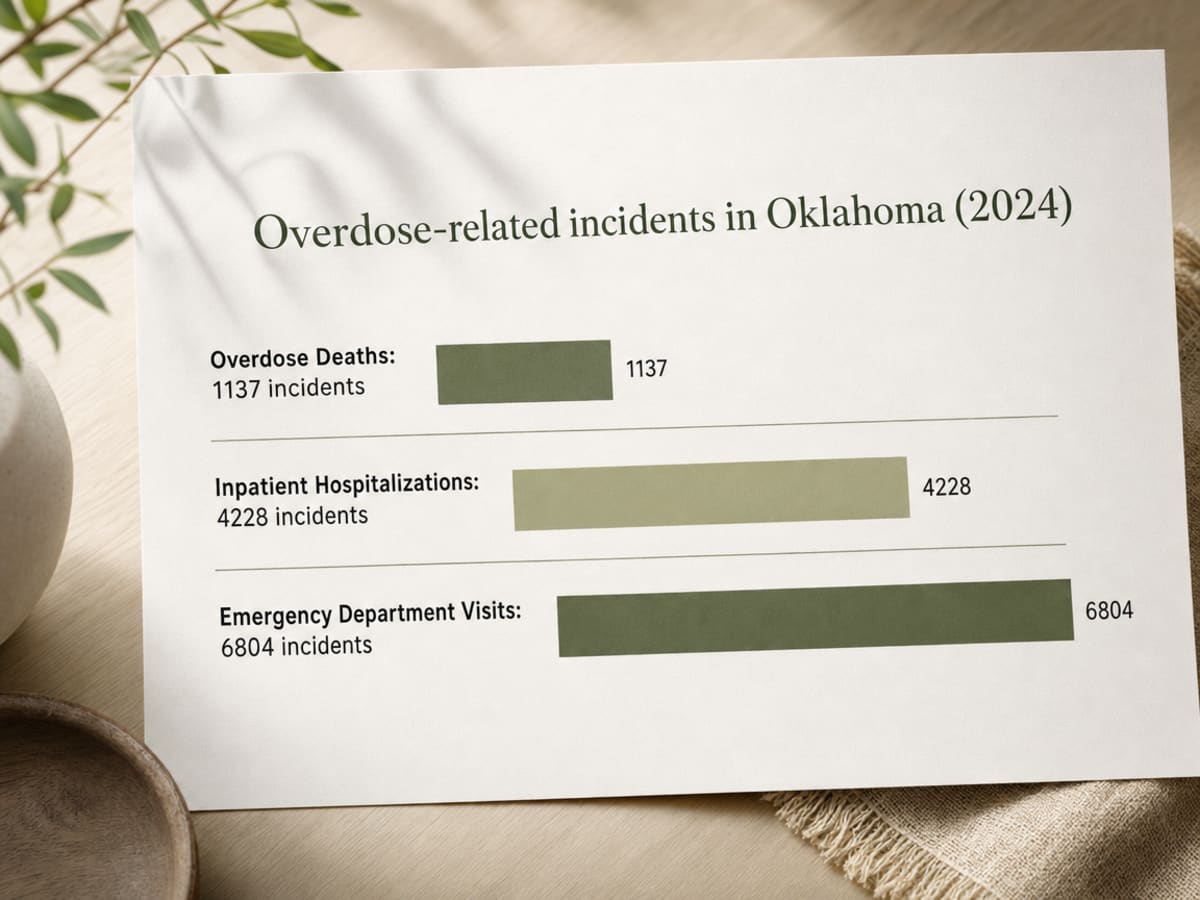
Look at what Oklahoma actually carried in a single year. In 2024, the state recorded 1,137 overdose deaths, 4,228 inpatient hospitalizations, and 6,804 emergency department visits tied to overdose 3. Every one of those hospital visits and ED trips is a parent, a sibling, a coworker who was also trying to time it right. Who was also waiting for a better week.
You are not being dramatic. You are looking at real numbers.
The reason waiting feels safer is because the risk of leaving for a few days is visible — you can picture the empty chair at breakfast — and the risk of staying in active dependence is invisible until it isn’t. Withdrawal without medical supervision gets harder, not easier, the longer dependence goes on. Tolerance shifts. Supply shifts. The margin for one bad night gets thinner.
Medical detox is short. It’s measured in days. The thing you’re afraid will disrupt your family is actually the thing designed to keep you in it.
You don’t have to decide anything yet. Just let that reframe sit for a minute before you keep reading.
The Direction Is Bending: What Oklahoma’s Numbers Actually Say
Take a breath. There’s another number worth sitting with.
In 2023, fentanyl killed 730 people in Oklahoma. In 2024, that number dropped to 487 1. That’s still 487 too many. But it’s also 243 fewer families walking into the worst phone call of their lives. The direction is bending.
Nobody is going to hand you a headline about this. It’s a small state-level trend, and it doesn’t undo what came before. What it does say, quietly, is that the treatment infrastructure Oklahoma has been building — the certified detox beds, the family programs, the covered benefits — is starting to reach people who used to fall through. People who probably sat where you’re sitting right now, phone in hand, running the same math about their kids.
You aren’t stepping into a broken system. You’re stepping into one that’s already saving lives that, two years ago, it wasn’t. That doesn’t make the decision easier. It just means the decision isn’t happening in a vacuum.
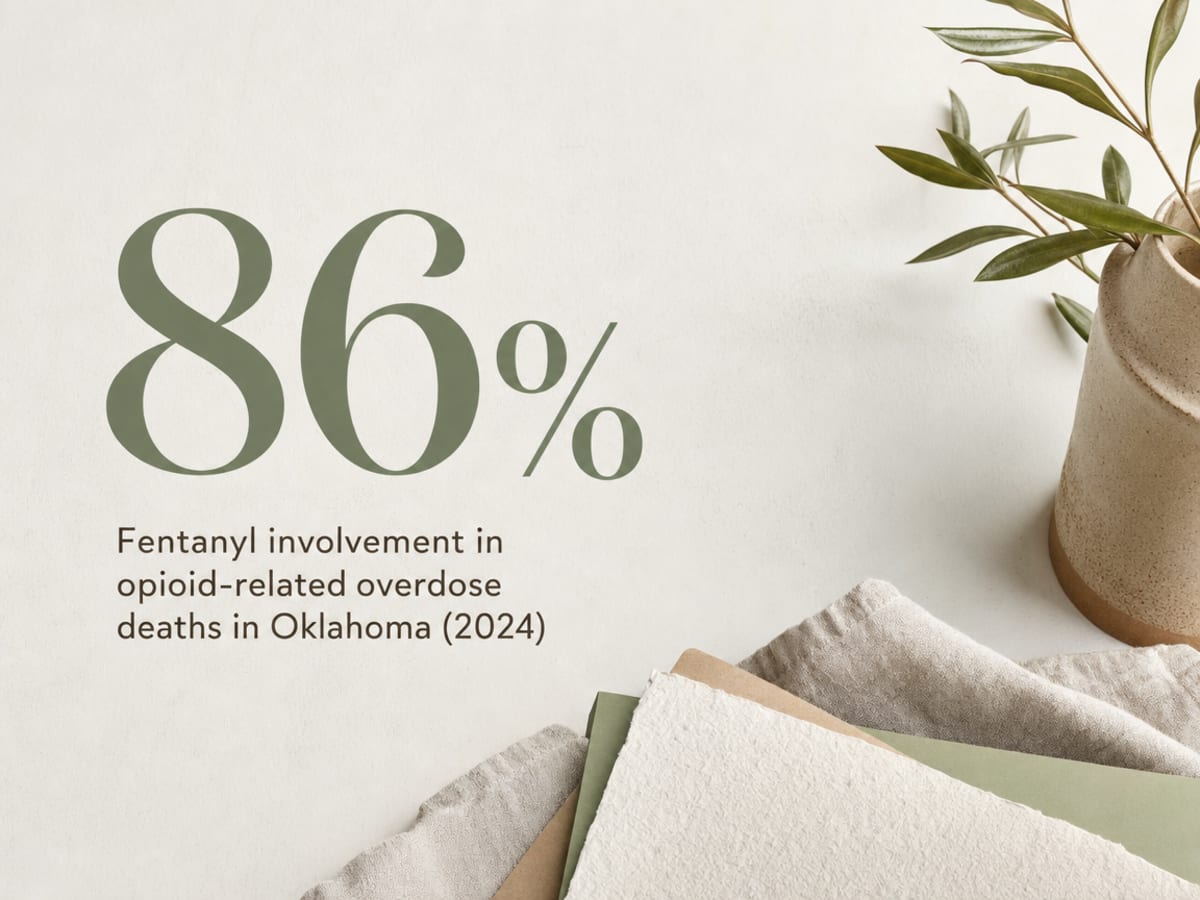
The story the numbers tell isn’t just about how bad it got. It’s about the fact that when parents make the call, something on the other end is working. Fentanyl is still in 86% of the state’s opioid overdose deaths 1— that risk hasn’t disappeared. But more people are getting through the door than were getting through it before.
You could be one of them. That’s not a slogan. It’s what the data says.
What Medical Detox Actually Is (and What It Isn’t)
You’ve probably heard the word “detox” used a hundred different ways. Juice cleanses. Weekend resets. Whatever your cousin’s friend did that one time. So let’s be clear about what medical detox actually means when a clinician says it.
Medical detox is a short, supervised stay where a licensed team helps your body get through withdrawal safely. Federal clinician guidance describes it as three overlapping pieces:
- Evaluation of what you’re withdrawing from and what else is going on medically
- Stabilization so your symptoms don’t spiral
- Preparing you for what comes after 12
That third piece matters. Detox is not the finish line. It’s the doorway.
Here’s what it isn’t. It isn’t rehab. It isn’t therapy for months. It isn’t a facility taking your phone and disappearing you from your life. It isn’t a punishment, and it isn’t a test of willpower — the whole point of doing it medically is that willpower isn’t supposed to be the thing keeping you safe from a seizure or a heart rate that won’t come down.
Alcohol and benzodiazepine withdrawal can be medically dangerous without supervision. Opioid withdrawal isn’t usually fatal, but it’s brutal enough that most people relapse trying to do it alone — and after a period without use, tolerance drops fast, which is where the overdose risk sharpens. Medication-assisted protocols exist specifically to soften that arc.
So when you picture medical detox, picture a hospital-adjacent short stay with people whose job is to keep you comfortable and safe. Then picture the conversation on the last day about what happens next. Both are part of it.
The First 72 Hours, From a Parent’s Point of View
You’ve probably tried to picture this part and gotten stuck. So let’s walk through it slowly, from the point of view of someone who still has a car seat in the back of the car.
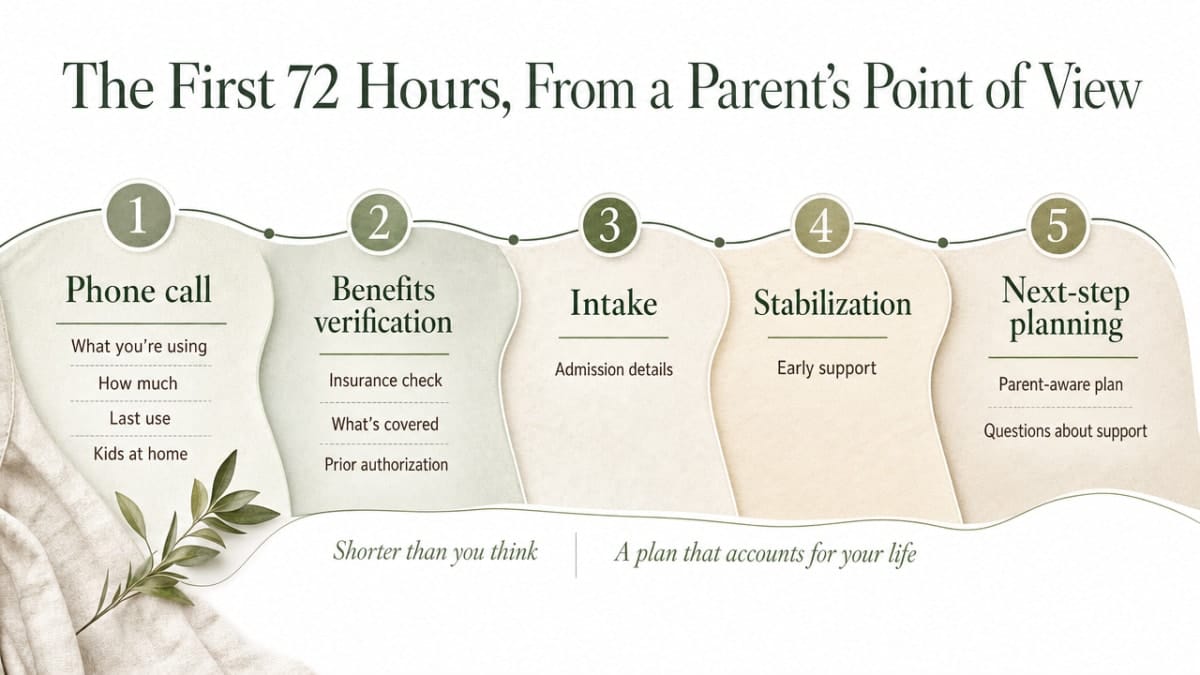
The phone call. It’s shorter than you think. Someone answers. They ask what you’re using and how much, when you last used, and whether you have kids at home. That last question isn’t a trap. It’s how the team starts building a plan that actually accounts for your life. You can ask about how the facility supports parents through this specific decision — that’s a fair question, and you should ask it out loud.
Benefits verification. Before you commit to anything, the intake team usually runs your insurance to tell you what’s covered and what isn’t. In Oklahoma, SoonerCare covers detox with prior authorization, and most major insurance plans include it too 5. You don’t sign paperwork based on a guess. You get the numbers first.
Intake. A bag, a ride, an arrival. A medical evaluation happens early — vitals, history, what you’re withdrawing from, what other health things are going on. This is the evaluation phase clinicians describe in federal detox guidance: figure out exactly what your body is dealing with before deciding on medications and monitoring 12.
Stabilization. The next stretch is the part people fear most and, in a medical setting, is the most managed. Withdrawal symptoms get treated as they come. Sleep, hydration, medication-assisted protocols where appropriate. You are not white-knuckling this alone at 3 a.m. on a bathroom floor. Staff are there in shifts, on purpose.
The conversation about what’s next. Somewhere in those days, usually as you start feeling like a person again, someone sits down with you about the handoff. Residential treatment, outpatient, recovery housing, therapy — whatever the shape of your next step is. Federal guidance calls this fostering readiness for and entry into treatment, and it’s built into detox on purpose so you don’t walk out the door without a plan 12.
Somewhere in there, you’ll also think about your kids. You’ll wonder how they’re doing. That thought doesn’t mean you shouldn’t be there. It means you’re still the same parent you were when you walked in — just one who’s finally sleeping.
SoonerCare, Insurance, and the Cost You’re Bracing For
Money is the fear that sits underneath the other fears. You’ve probably already run some version of this math: if a detox stay costs what you think it costs, you can’t do it. Groceries, rent, the car payment, the kids’ shoes. The number in your head is probably wrong in the direction you don’t expect.
If you’re on SoonerCare — Oklahoma’s Medicaid — detox is a covered benefit. So is residential substance use disorder treatment. Both require prior authorization, which is a paperwork step the facility handles with the state, not something you do alone at the kitchen table 5. You don’t need to know the codes. You need to know it’s covered.
If you have employer insurance, most major plans cover medical detox too. What varies is your specific deductible, copay, and in-network status. That’s why intake teams run benefits verification before you commit to anything. You get an actual number, in writing, before you pack a bag.
A few things worth saying plainly. Verification is free. Asking is free. Finding out what your plan covers does not obligate you to check in. It does not go on a record your employer sees. It’s a phone call.
If you’re uninsured or between plans, ask anyway. Oklahoma’s treatment system has more pathways than the sticker price on a website suggests, including state-supported options for parents specifically 6.
The cost you’re bracing for might not be the cost you actually face. Find out before you decide.
Oklahoma’s Rules Are on Your Side (Even If It Doesn’t Feel That Way)
When you’re the one about to make the call, it can feel like you’re stepping into the unknown. It isn’t unknown. Oklahoma has a set of written rules about how detox facilities have to operate, and those rules exist because people like you needed them to.
State administrative code — Chapter 18, if you ever want to look it up — sets certification standards for substance use treatment facilities in Oklahoma. That includes clinical staffing, withdrawal management procedures, and how emergencies get handled 4. A certified facility isn’t allowed to wing it. There’s a paper trail, an inspection process, and a bar to clear.
Beyond the clinical side, the state also runs services aimed specifically at people who are pregnant or parenting through substance use. ODMHSAS operates Adult and Family Services and Family Treatment Court pathways designed around keeping families together, not pulling them apart 6. That isn’t a marketing line. That’s a program category with a phone number.
What that means for you, sitting there tonight: the system you’re afraid of is actually the system built to hold you. Regulated, family-aware, and already used to parents walking through the door.
The rules aren’t the enemy. They’re the reason it’s safe to go.
Talking to Your Kids Without Scripts You Don’t Have Yet
Here’s the part you’ve been rehearsing in your head and abandoning halfway through. What do you say to them? What words are age-appropriate for a six-year-old, a ten-year-old, a teenager who already suspects?
You don’t have to know before you call. That’s not a cop-out. That’s the actual answer.
Kids of parents with substance use disorders have been studied and written about for decades, and the guidance is more forgiving than you’d expect. SAMHSA’s family booklet exists specifically because these conversations are hard and because children’s questions deserve real answers, not silence 11. You are not the first parent to sit across from your kid and try to find the right sentence. There are frameworks, and there are people whose job is to help you find yours.
What the intake team can help you think through, in general terms: what your kids already know, what feels honest at their age, and how to explain a short medical stay in language that doesn’t scare them. The spirit of it is warm — staff will help you figure out how and when to talk to your kids and how to stay connected in ways that fit your family. The specifics get worked out with you, not handed to you as a script.
SAMHSA also runs a family resources line for the people around you — grandparents, co-parents, older kids who might need somewhere to ask their own questions 10. You aren’t the only person in this house who gets support.
You don’t need the perfect words tonight. You need one honest sentence when the time comes. That’s it.
Who’s Watching the Kids: The Logistics Nobody Wants to Say Out Loud
This is the part where you stop scrolling and start making a list in your head. Who picks them up from school. Who knows the after-school snack rule. Who can sleep on the couch for a few nights without turning it into a family meeting.
Start with the people who already know. A co-parent, even a complicated one. A sister. Your mom. The friend whose kid has been on your couch a hundred times. You don’t have to explain the whole story to get the help — “I have a medical thing this week, can you take the kids” is a complete sentence. People say yes to that more often than the version of them in your head.
Write down the practical stuff before you call:
- School names and pickup times
- The pediatrician
- Medications and dosages
- The password to the tablet
Put it on paper so whoever steps in isn’t texting you at 7 a.m. during the hardest morning of your week.
If your list is short, say so on the intake call. Oklahoma has state-level services built specifically around people who are pregnant or parenting, including family-oriented pathways through ODMHSAS 6. There are also family-oriented recovery housing options in Oklahoma City for what comes after — units built for parents with kids, not against them 7. The team on the phone works with these realities every day. You are not the first parent to say, “I don’t know who watches them.”
Make the list. Then make the call.
After Detox: Where Parents in Oklahoma City Actually Go Next
Detox is a doorway, not a destination. Federal clinician guidance is direct about this: the last piece of a good detox stay is fostering readiness for and entry into treatment 12. Meaning, before you leave, someone should be sitting with you about what comes next — and that next step should already have a name.
For parents in Oklahoma City, the options are more parent-shaped than most people realize. Residential treatment is one path, and yes, it’s longer than detox. But it’s also not the only path. Intensive outpatient programs let you sleep at home. Standard outpatient therapy fits around school pickup. Medication-assisted treatment can continue long after the detox stay ends, managed through a clinic visit, not a residency.
If home isn’t stable yet, Oklahoma has recovery housing built specifically around families. ODMHSAS lists family-oriented recovery-based housing in Oklahoma City with units for women with children, men with children, and families with children — apartments, not dorms, with on-site support 7. That’s a real answer to the question, “But where do we go after?”
The state also runs Adult and Family Services pathways designed around people who are parenting through substance use, including Family Treatment Court routes that prioritize keeping families together 6. Ask the intake team which of these fits your situation. They talk to these programs every week.
You don’t have to pick your whole next year tonight. You just have to know the next step exists, and that someone will help you find it before you walk back out the door.
If You’re Not Ready to Call a Facility Yet
Maybe tonight isn’t the night. Maybe you just needed to read this far and know it’s real. That counts.
If picking up the phone and saying the name of a detox facility feels like too much, there’s a softer first step. SAMHSA runs a national helpline at 1-800-662-HELP. It’s free, confidential, and answered around the clock, every day of the year 9. You don’t have to give your last name. You don’t have to commit to anything. You can ask what’s out there for parents in Oklahoma City and hang up.
SAMHSA also has resources built for the people around you — a co-parent, a sister, your own mother — who might be trying to figure out how to help. Families can call the same line or text a ZIP code to 435748 to find local options 10. You are not the only person in your house who’s allowed to ask.
When you’re ready to ask specifically how Renewal Springs supports parents through this decision, that call is here too. No script required. Just the question you’ve already been asking yourself.
Talk to Someone Who Understands Parenting and Detox
Get caring answers about balancing detox with your responsibilities as a parent.
Frequently Asked Questions
Will going to detox put my custody at risk?
Seeking medical care for a health condition is not, on its own, a reason to lose custody. Oklahoma has state-level pathways built specifically for people parenting through substance use, including Family Treatment Court routes designed around keeping families together, not pulling them apart 6. If you have a specific legal situation, ask the intake team — they talk to these programs every week and can point you toward the right conversation.
How long will I actually be away from my kids?
Medical detox is measured in days, not months. The exact length depends on what you’re withdrawing from and how your body responds, but the goal is stabilization and then a warm handoff to whatever comes next 12. Some parents step down to outpatient care and sleep at home. Others transition to residential treatment or family-oriented recovery housing 7. Ask on the intake call — they’ll give you a realistic window for your situation.
Does SoonerCare cover detox in Oklahoma City?
Yes. SoonerCare covers detox and residential substance use disorder services, subject to prior authorization 5. Prior authorization is a paperwork step the facility handles with the state — not something you fill out at your kitchen table. Most major commercial insurance plans cover medical detox too, though your specific deductible and copay vary. Benefits verification is free and doesn’t obligate you to anything. Ask for the number in writing before you commit.
Can I stay in contact with my children during detox?
Family connection matters, and the team will help you think through how and when to talk to your kids in ways that fit your family. Specific contact rhythms get worked out with you during intake, not handed to you as a rigid script. SAMHSA also publishes family resources you can share with whoever is caring for your kids during your stay 10, 11. Ask about parent support when you call — that’s a fair question.
What if I’m not ready to call a treatment facility yet?
That’s okay. There’s a softer first step. SAMHSA runs a national helpline at 1-800-662-HELP, free and confidential, answered 24 hours a day, every day of the year 9. You don’t have to give your last name. You can ask what’s available for parents in Oklahoma City and hang up. Families around you can also text a ZIP code to 435748 for local options 10. Small step. No commitment. Still counts.
Is medical detox safe, and how is it regulated in Oklahoma?
Medical detox is a supervised clinical service, not a gamble. Oklahoma’s Chapter 18 administrative rules set certification standards for substance use treatment facilities, covering clinical staffing, withdrawal management, and emergency procedures 4. A certified facility isn’t allowed to wing it — there’s a paper trail and an inspection process. That’s the whole point of doing withdrawal medically instead of alone: trained people, real protocols, and a plan for whatever your body throws at them.
References
- Data – Oklahoma.gov. https://oklahoma.gov/health/health-education/injury-prevention-service/drug-overdose/data.html
- Drug Overdose Data Dashboard – Oklahoma.gov. https://oklahoma.gov/health/health-education/injury-prevention-service/drug-overdose/data/drug-overdose-data-dashboard.html
- PowerPoint Presentation. https://oklahoma.gov/content/dam/ok/en/health/health2/aem-documents/prevention-and-preparedness/injury-prevention/drug-overdose/Drug%20Overdose%20Data%20Graphs%20and%20Maps.pdf
- CHAPTER 18. STANDARDS AND CRITERIA FOR SUBSTANCE RELATED AND ADDICTIVE DISORDER TREATMENT SERVICES. https://oklahoma.gov/content/dam/ok/en/odmhsas/documents/policy/provider-certification/administrative-rules/2021/Chapter%2018%20Final%20effective%209-15-21.pdf
- Mental Health and Substance Abuse Services – Oklahoma.gov. https://www.oklahoma.gov/ohca/individuals/programs/mental-health-and-substance-abuse-services.html
- Adult and Family Services – Oklahoma.gov. https://oklahoma.gov/odmhsas/treatment/adult-family-treatment-services.html
- Recovery-Based Housing – Oklahoma.gov. https://www.oklahoma.gov/odmhsas/recovery/housing/recovery-based-housing.html
- Ward Map – City of OKC. https://www.okc.gov/Government/Administration/Ward-Map
- National Helpline for Mental Health, Drug, Alcohol Issues. https://www.samhsa.gov/find-help/helplines/national-helpline
- Helping Families Cope with Mental Health and Substance …. https://www.samhsa.gov/mental-health/children-and-families/coping-resources
- What Is Substance Abuse Treatment? A Booklet for Families. https://library.samhsa.gov/product/what-substance-abuse-treatment-booklet-families/sma14-4126
- Quick Guide For Clinicians Based on TIP 45—Detoxification and Substance Abuse Treatment. https://nida.nih.gov/sites/default/files/samhsa_detoxification_and_substance_abuse_treatment.pdf