
Key Takeaways
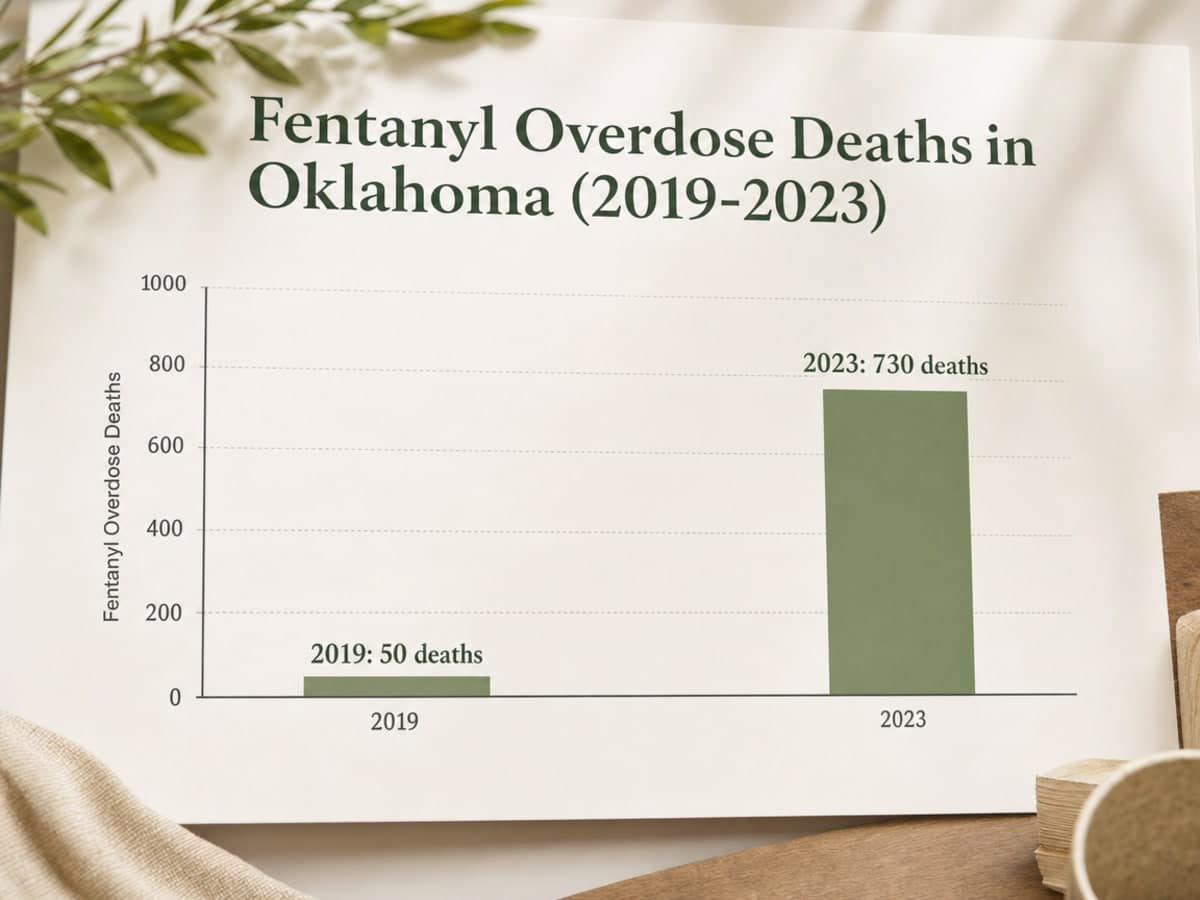
- Oklahoma saw fentanyl overdose deaths climb from 50 in 2019 to 730 in 2023 before declining to 487 in 2024, reshaping how withdrawal hits young adults 3, 6.
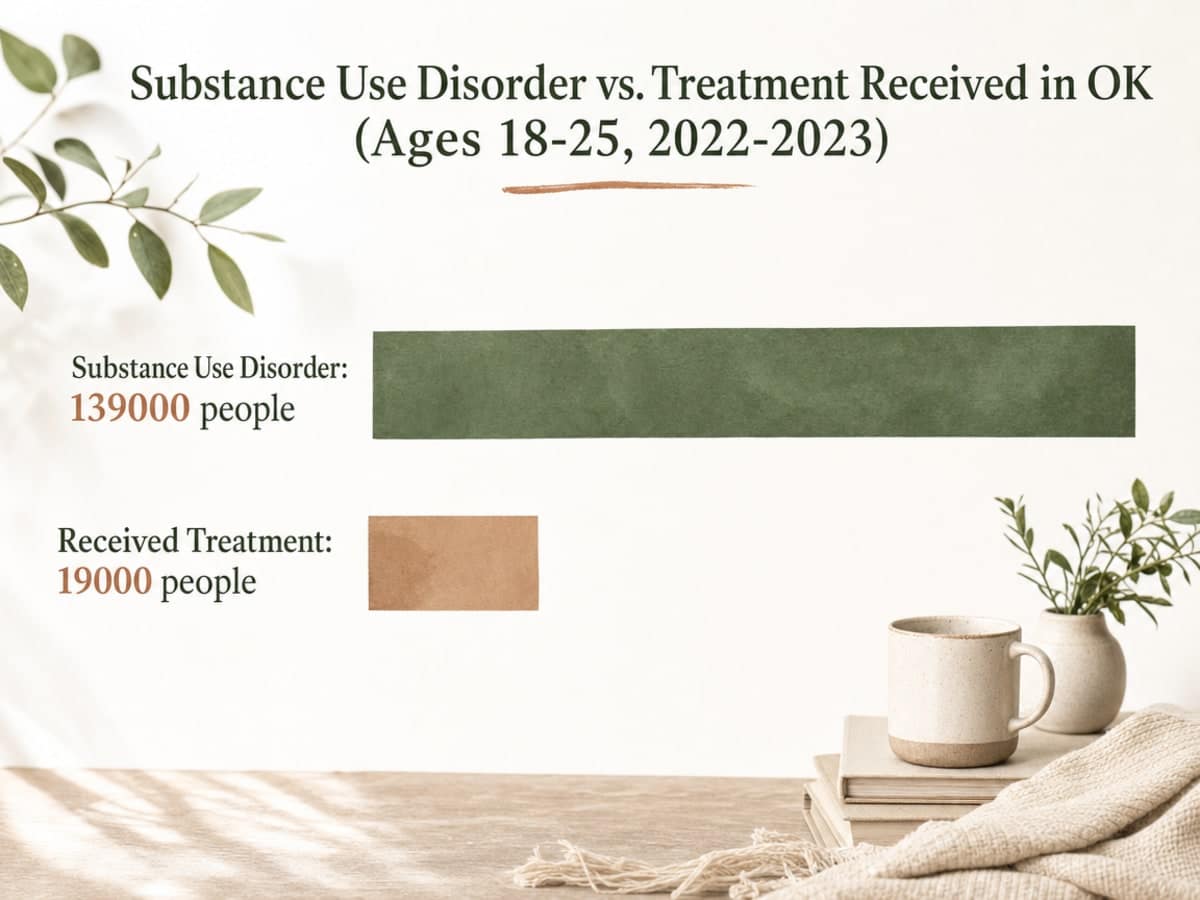
- Roughly 139,000 Oklahomans aged 18–25 met criteria for a substance use disorder in 2022–2023, but only about 19,000 received any treatment 4.
- Choosing a program means weighing accredited medical supervision, person-centered care, phone and privacy policies, and whether the setting fits the substance and personal history involved.
- SoonerCare covers detox with prior authorization, and most private plans cover it under parity rules, so a benefits verification call clarifies costs before admission 1.
What the First 24 Hours of Detox Actually Look Like
Here is what nobody tells you about walking into a medical detox: the first person you meet is usually a nurse, not a lecture. You sit down. Someone asks what you’ve been using, how much, when you last used, whether you’ve had a seizure before, whether you’re pregnant, whether you take anything for anxiety or ADHD. It is a health intake, not a confession.
Within the first hour or two, a licensed provider builds a plan for your specific withdrawal. If you’ve been using fentanyl, that plan likely includes medication to stop the muscle aches, the sweats, the crawling-out-of-your-skin feeling before it peaks. If you’ve been drinking heavily or taking benzos like Xanax or Klonopin, the priority is preventing seizures, which is why cold-turkey attempts at home can be genuinely dangerous. You’re not toughing this out alone in a chair.
Then you go to a room. In a person-centered program, that room looks more like a quiet bedroom than a hospital ward, and your vitals are monitored around the clock, sometimes through wearable devices that track heart rate, sleep, and stress so the team catches trouble before you feel it. You can sleep. You can eat when you can stomach it. You can shower.
The first 24 hours are mostly about two things: getting your body stable and letting your nervous system understand it is safe. You are not signing a 90-day contract. You are not being marched into a group circle to share your story. You are being kept alive and comfortable while the worst of the physical withdrawal passes, so that on day two or three, you have a clear enough head to decide what you want next.
Why Oklahoma Young Adults Are Reaching Out Right Now
You are not alone in the hesitation you feel before making a call. In 2022–2023, an annual average of roughly 139,000 Oklahomans aged 18–25 met the criteria for a substance use disorder, while only about 19,000 in that same age group reported receiving any substance use treatment 4. That is not a story about weakness. That is a story about a huge cohort of young people staring at the same phone you are staring at, wondering if reaching out will make things better or worse.
Something has shifted, though. The reason more young adults in Oklahoma are picking up the phone right now is not one big thing—it is a stack of small ones. A friend who took a pill from a group chat and did not wake up. An ER visit after a night that was supposed to be nothing. A parent who found something in a backpack and did not yell, just sat down. A job that is starting to slip. A body that no longer feels like the same body.
The pandemic years pulled a lot of 18–25-year-olds into heavier use, and the drugs on the street—especially anything sold as a pressed pill—got more dangerous while nobody was watching. Fentanyl is now mixed into supplies that used to feel predictable, which means the person you were six months ago is not the person your tolerance can handle today. Withdrawal hits harder. Cravings feel more physical. The gap between using and not using feels wider than it used to.
What is encouraging, if you can hold onto it: reaching out is the part most people freeze on, and you are already past the freeze. Researching a medically supervised detox in Oklahoma City or anywhere else in the state does not commit you to a bed, a schedule, or a program. It commits you to a conversation. The 120,000-person gap between young adults who could use support and those getting it is not a gap of desire—it is a gap of information, timing, and one first call. You are inside that gap right now, and you are moving.
The Substances Sending Young Adults to Detox in This State
Fentanyl and the Pill Problem
If you are between 18 and 25 and you have ever bought a pill that was not handed to you by a pharmacist, you already know the ground has moved. Xanax that is not Xanax. Percocet that is not Percocet. Adderall that is not Adderall. What used to be a predictable pressed pill is now a coin flip, and the reason is fentanyl.
Oklahoma’s numbers make the shift almost impossible to look away from. Fentanyl overdose deaths in the state climbed from 50 in 2019 to a peak of 730 in 2023, then declined to 487 in 2024 3, 6. That is more than a fourteen-fold increase over four years, followed by a partial pullback that still leaves the death count roughly ten times what it was before the pandemic.
What that means for your body, if you have been using opioids in any form, is that your dependence built faster and hits harder than the same use pattern would have a few years ago. Fentanyl is short-acting and potent, so withdrawal tends to come on quickly and feel more intense than the older-generation opioids people used to describe. Bone aches. Sweating and shivering at the same time. Restless legs at 3 a.m. A stomach that refuses to keep anything down.
None of that is a character flaw. It is pharmacology. Medically supervised opioid detox uses medications like buprenorphine, along with support meds for nausea, anxiety, and sleep, to soften that peak so you are not white-knuckling it in a bedroom at your parents’ house wondering if you will make it to morning. You do not have to.
Alcohol, Benzos, and Stimulants: The Less-Discussed Detoxes
Fentanyl gets the headlines, but it is not the only reason young adults in Oklahoma end up needing a medical detox bed. In fact, when SAMHSA looked at 2023 treatment admissions in the state, amphetamines and marijuana showed up as common primary substances for the youngest clients, and 18–25-year-olds accounted for roughly 11.9% of all admissions 11.
A few realities worth naming, because they get skipped a lot:
Alcohol. If you have been drinking heavily every day for months—not just weekends, but the kind of drinking where your hands shake before the first one—stopping suddenly on your own can trigger seizures. This is one of the withdrawals that is genuinely more dangerous than the substance itself in the short term. Medical detox uses tapering benzodiazepines and monitoring to keep that from happening.
Benzos. Xanax, Klonopin, Ativan, Valium. If you have been taking them daily, even at a prescribed dose, your brain adapts, and stopping cold turkey carries the same seizure risk as alcohol. This detox is slower on purpose—often a careful taper over several days with vitals watched closely.
Stimulants. Meth, cocaine, and misused Adderall do not produce the same life-threatening physical withdrawal as opioids or benzos, but the crash is real: exhaustion so deep you cannot move, a mood floor that feels bottomless, and cravings that come in waves. A supervised setting matters here because that first week is when a lot of people quietly go back, alone, because they cannot tell anyone how bad it feels.
You are not weak for needing help through any of these. You are dealing with chemistry.
What Medical Detox Is—and What It Is Not
Detox is a short, medically supervised window—usually three to seven days—where a licensed team helps your body safely stop depending on a substance. That is the whole job. It is not rehab. It is not therapy. It is not a 30-day program with morning affirmations. It is the medical piece that comes first, so the rest of your life has a chance to catch up.
Here is what detox is: 24/7 monitoring by nurses and clinicians, medication to soften withdrawal symptoms, hydration and nutrition support, and a quiet space where your nervous system can reset. In accredited Oklahoma programs, that includes CARF-accredited detoxification for alcohol and other drugs, delivered by licensed providers under state oversight 10. SAMHSA guidance for this age group calls for developmentally appropriate, trauma-informed, non-stigmatizing care—meaning nobody should be talking down to you or treating you like a case number 9.
Here is what detox is not: a lockdown. A jail. A place where your phone gets taken and your family gets called without your permission. A commitment to anything beyond the days you are there. You are an adult. If you are 18 or older, you consent to your own care, and you can ask questions about every medication, every policy, every next step.
Detox is also not a cure. Your body will be stable at the end of the week, but the cravings, the sleep, the mood—those take longer. That is why good programs spend day three or four talking with you about what happens after you leave, not pretending detox alone is the finish line. It is the door, not the room.
The Fears That Keep Young Adults from Calling
Losing Your Job, Your Apartment, or Your Phone
The scariest part of picking up the phone often has nothing to do with withdrawal. It is the math running in the background. If you miss five days of shifts, does your manager replace you? If rent is due next week, who covers it? If your roommate finds out where you went, do you have somewhere to come back to?
These fears are real, and they deserve straight answers instead of pep talks. Federal law protects most workers who take short medical leave for a health condition, and a medical detox stay qualifies as medical care. If you have been at a job for at least a year at a company with 50 or more employees, the Family and Medical Leave Act generally protects your position for up to 12 weeks. Many smaller employers offer similar informal accommodations, especially when a doctor documents the stay as inpatient medical treatment. Your employer does not receive a diagnosis. They receive a note.
Being Judged, Being Locked In, Being Preached At
The image most people carry into that first phone call comes from a movie their aunt watched in 1998. Fluorescent lights. A stranger in scrubs writing on a clipboard. A group circle where you have to say the word “addict” out loud before anyone will help you. If that is what you are picturing, no wonder your thumb hovers over the call button.
Here is what current federal guidance actually asks providers to deliver for your age group: developmentally appropriate, trauma-informed, non-stigmatizing services that treat young adults with respect and involve family only when it helps 9. That is the standard, not the exception. You should not be preached at. You should not hear the word “junkie” from anyone wearing an ID badge. You should not be told your use is a moral problem.
You are also not locked in. Detox is voluntary medical care. If you are 18 or older, you consent to admission and you can leave, though the medical team will talk with you about the risks of leaving mid-withdrawal because that is their job. A quiet private room, a nurse who knocks before entering, and a clinician who asks what you want out of this week—that is what person-centered care looks like in practice. If the first program you call does not sound like that, call another one. You are allowed to be picky about who watches over you.
How Payment Works: SoonerCare, Private Insurance, and Verification
The money question is usually the second one people ask, right after “is this going to hurt.” Here is the honest version for Oklahoma.
If you have SoonerCare (Oklahoma’s Medicaid), detox and residential substance use disorder services are listed as covered benefits with prior authorization for children under 21, non-expansion adults, and expansion adults 1. Translation: the state Medicaid program will pay for a medically supervised withdrawal stay, and the program you call handles the authorization paperwork on their end. You do not sit on hold with a state office. If you are not sure whether you qualify for SoonerCare, the intake team at most accredited detox facilities will walk you through eligibility before you commit to anything.
If you have private insurance through a parent’s plan, an employer, or the marketplace, most major carriers cover medical detox as a health benefit, because withdrawal from opioids, alcohol, and benzos is a medical event, not a lifestyle choice. Behavioral health parity laws require insurers to treat substance use care roughly the same way they treat other medical care. What varies is your deductible, your co-insurance, and which facilities are in-network. That is what a free benefits verification call is actually for: someone reads your policy, tells you what you owe, and you decide from there.
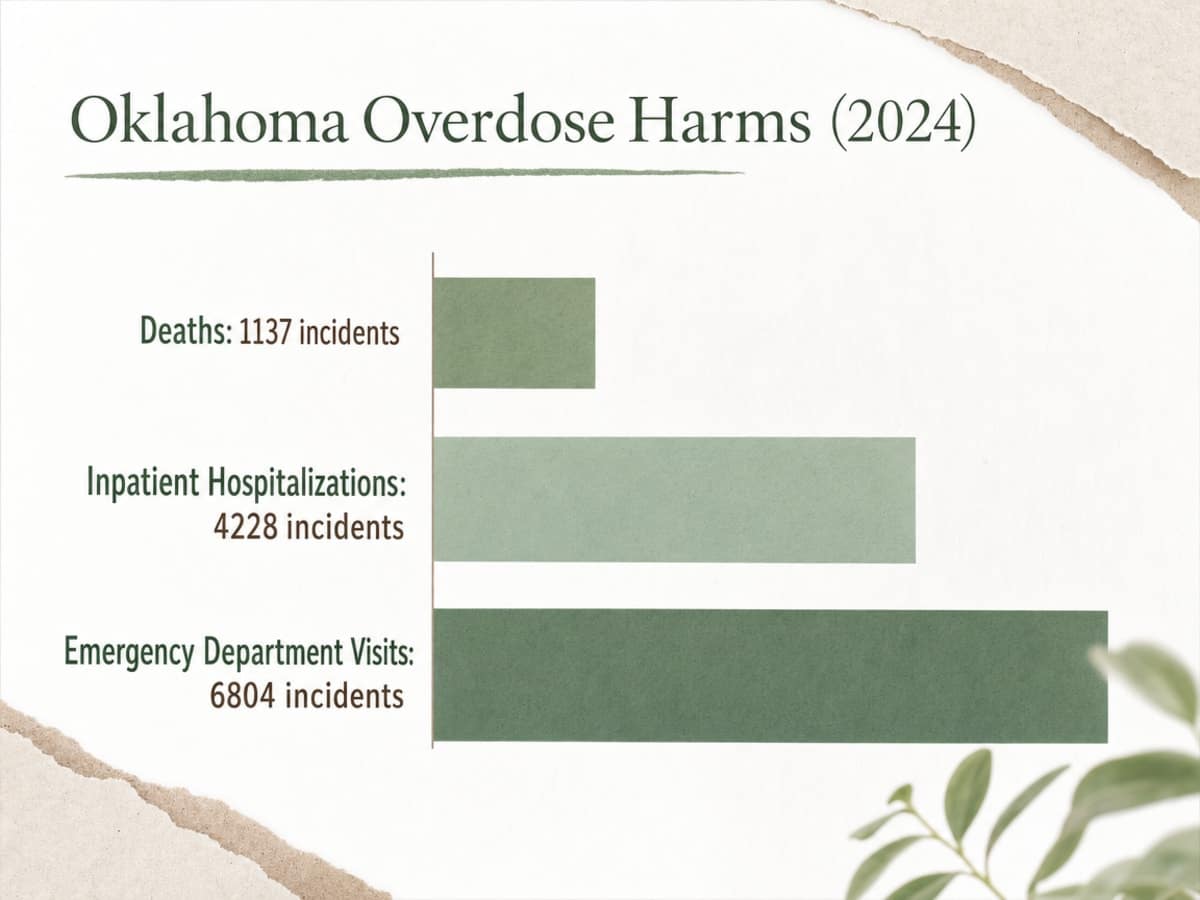
The stakes behind that phone call are not abstract. In 2024, Oklahoma recorded 1,137 drug overdose deaths, 4,228 inpatient hospitalizations, and 6,804 emergency department visits tied to overdoses 6. Every one of those ED visits was a near-miss—a family that got a second chance to make the coverage call before something worse. You can make it before the ambulance ride.
What a Person-Centered Program Looks Like for This Age Group
Person-centered is one of those phrases that has been used until it means almost nothing, so here is a working definition for an 18–25-year-old: the program treats you like the person you actually are on the day you arrive, not the person a treatment brochure imagines. That shows up in small things and big ones.
Small: a private room with a door that closes. Bedding that does not feel like a summer camp cot. Food you can actually eat when your appetite comes back. A nurse who asks whether you sleep better with the lights fully off or a lamp on. Wearable monitoring that tracks your vitals and sleep in the background, so the medical team can adjust your medications without waking you every two hours for a blood pressure cuff.
Big: a plan built around your specific substance, your specific history, and your specific life outside the building. If you are a veteran, a track that understands service-connected trauma. If you would feel safer detoxing around people of the same gender, a men’s or women’s program that makes that possible. If you need privacy because of your job or your family, a program that respects that without treating it as a red flag. SAMHSA’s guidance for this age group specifically calls for developmentally appropriate, trauma-informed, culturally responsive services and thoughtful family involvement rather than one-size-fits-all care 9.
What you should hear on that first call: someone asking what you want the week to look like, not reciting a schedule. That is what person-centered sounds like out loud. Renewal Springs Detox in Oklahoma City was built around this idea—a non-institutional setting where the medical care is serious and the environment is not. If the first program you speak with does not sound like that, keep dialing. You are picking who watches over you at your most vulnerable. That is a decision you get to make.
After Detox: The First 30 Days Without a Detox Bed
Discharge day is quieter than you expect. Your body is stable. Your sleep is still messed up. Your appetite is back but weird. And now you go home, or to a step-down program, and the real question starts: how do you keep the ground you just took?
The honest answer is that the first 30 days after detox are their own kind of hard. Cravings do not disappear when the physical withdrawal ends. Sleep can stay uneven for weeks. Your mood may swing further than it used to. This is your brain rebuilding, not a sign that detox “did not work.”
What tends to help: a next step already booked before you leave the bed. That might be a residential program, an intensive outpatient schedule a few days a week, ongoing medication for opioid use disorder like buprenorphine, or regular check-ins with a therapist and prescriber. SAMHSA guidance for your age group specifically recommends continuing developmentally appropriate, trauma-informed care past the acute withdrawal window rather than treating detox as the finish line 9. A good detox team maps that with you on day three or four, so discharge is not a cliff.
One week at a time. That counts.
If You’re a Parent, Partner, or Sibling Reading This on Their Behalf
This part is for you. The young adult in your life may not be ready to make the call themselves, and you are trying to figure out what you can do without pushing them further away. That instinct to research first is a good one.
A few things worth knowing up front. If they are 18 or older, they are the one who consents to medical care. You cannot check them in against their will. What you can do is gather information, verify their insurance benefits ahead of time, and have a real answer ready the moment they say yes. Most accredited detox programs in Oklahoma will speak with a family member on a general basis—coverage, what admission looks like, whether there is a bed available—without needing your young adult to be on the line first. That is legal, and it saves the frantic hour of hold music later.
SAMHSA’s guidance for this age group specifically names family involvement as helpful when it is welcomed and thoughtful, not when it is a surprise or an ambush 9. Translation: an intervention-style confrontation tends to backfire with 18–25-year-olds. What tends to work better is a quiet conversation where you say you have already looked into it, you know their insurance covers it, and you will drive them there whenever they are ready. No ultimatum. No timeline you enforce.
You are also allowed to be scared and tired. Loving someone through this is heavy, and doing your own research at 11 p.m. counts as showing up. When they are ready, be the person who already has the phone number saved.
Talk to Someone Who Understands Right Now
Connect instantly for support, answers, or help starting your detox journey in Oklahoma.
Frequently Asked Questions
How long does medical detox usually take for a young adult?
Most medically supervised detox stays run three to seven days, depending on the substance and how your body responds. Opioid and alcohol withdrawal often peak between days two and four, then ease. Benzodiazepine tapers can stretch a bit longer for safety. Your care team adjusts the timeline to you, not the other way around.
Will SoonerCare or my private insurance cover detox in Oklahoma?
SoonerCare lists detox and residential substance use services as covered benefits with prior authorization for children under 21, non-expansion adults, and expansion adults 1. Most private plans cover medical detox as a health benefit under behavioral health parity rules. A free benefits verification call tells you what your specific plan pays and what you would owe out of pocket.
Can I lose my job or apartment if I go to detox?
For most workers, the Family and Medical Leave Act protects your position for up to 12 weeks of medical leave, and a detox stay counts as inpatient medical care. Your employer receives a note, not a diagnosis. Rent still has to be paid, but a short medical stay does not legally justify eviction. Ask the intake team to help you plan the paperwork.
Is detox the same as rehab, and do I have to commit to a longer program?
They are different. Detox is the short medical window that safely gets your body off a substance. Rehab is the longer therapy and skill-building work that can follow. You do not have to commit to anything past detox when you check in. Most teams talk with you mid-stay about options, but the choice about what comes next stays with you.
What if my adult child refuses to go—can I still call on their behalf?
Yes. You can call an accredited detox program, verify insurance, ask about bed availability, and understand the admission process without your young adult on the line. You cannot consent for them once they are 18, but you can have everything ready. SAMHSA guidance for this age group supports thoughtful family involvement over surprise confrontations 9. Be the person with the number saved.
Is withdrawal from fentanyl, benzos, or alcohol actually dangerous without medical help?
Yes, and this is not a scare tactic. Alcohol and benzodiazepine withdrawal can cause seizures when stopped suddenly after heavy daily use. Fentanyl withdrawal is not usually fatal, but it is intense enough that many people return to use just to make it stop, and today’s supply carries real overdose risk. Medical supervision keeps you safer and more comfortable through the peak.
References
- Mental Health and Substance Abuse Services. https://oklahoma.gov/ohca/individuals/programs/mental-health-and-substance-abuse-services.html
- Drug Overdose Data. https://oklahoma.gov/health/health-education/injury-prevention-service/drug-overdose/data.html
- Drug Overdose Deaths, 2019–2023 – Oklahoma. https://oklahoma.gov/content/dam/ok/en/health/health2/aem-documents/prevention-and-preparedness/injury-prevention/drug-overdose/2025%20State%20Drug%20OD%20-%20IPS%20-%20Fact%20Sheet.pdf
- OKLAHOMA – 2022 and 2023 National Survey on Drug Use and Health State Estimates. https://www.samhsa.gov/data/sites/default/files/reports/rpt56188/2023-nsduh-sae-state-tables_0/2023-nsduh-sae-state-tabs-oklahoma.pdf
- Behavioral Health Barometer: Oklahoma, Volume 5. https://www.samhsa.gov/data/sites/default/files/cbhsq-reports/Oklahoma-BH-BarometerVolume5.pdf
- Drug Overdose Data Graphs and Maps – Oklahoma, 2015–2024. https://oklahoma.gov/content/dam/ok/en/health/health2/aem-documents/prevention-and-preparedness/injury-prevention/drug-overdose/Drug%20Overdose%20Data%20Graphs%20and%20Maps.pdf
- Drug Overdose Data Dashboard. https://oklahoma.gov/health/health-education/injury-prevention-service/drug-overdose/data/drug-overdose-data-dashboard.html
- Changes in Drug Overdose Mortality and Selected Characteristics, 2022–2023. https://www.cdc.gov/nchs/data/hestat/drug-overdose/drug-overdose-2022-2023.htm
- Substance Use Disorder Treatment Resources for Youth and Families. https://www.samhsa.gov/substance-use/treatment/youth-and-families
- Oklahoma Department of Rehabilitation Services – Behavioral Health and Substance Abuse Provider Guide (selected entries). https://okdrs.gov/guide/05_12
- 2023 TEDS-A Oklahoma | CBHSQ Data. https://www.samhsa.gov/data/node/51076