
Key Takeaways
- Fentanyl withdrawal is a predictable medical reaction to opioid dependence, marked by cravings, sweating, dilated pupils, muscle and bone pain, vomiting, diarrhea, insomnia, and intense anxiety.
- Symptoms begin 8 to 24 hours after the last dose, peak during days one to three, and ease by day ten, but fentanyl can stay detectable around 7.2 days on average 5.
- Dehydration, strained underlying conditions, and precipitated withdrawal from early buprenorphine are the real hazards — 36.5% of people dosed within 24 hours of fentanyl use had severe withdrawal 6.
- Tolerance drops within days, so relapse at a prior dose can be fatal, which is why CDC advises against detox without ongoing medication for opioid use disorder 1, 2.
The symptoms you’re trying to identify right now
If you landed here at 3 a.m. with your skin crawling, or sitting next to someone who can’t stop shivering under two blankets, you need the list first. Not the backstory. Not the statistics. The list.
Fentanyl withdrawal usually shows up as some mix of the following, often starting mild and getting worse over hours:
- Intense cravings for fentanyl, almost impossible to ignore
- Anxiety, irritability, or a sense of panic that comes in waves
- Restlessness — you can’t sit still, you can’t lie still either
- Sweating, often alongside hot and cold flashes
- Runny nose, watery eyes, repeated yawning
- Muscle aches and deep bone pain, especially in the legs and back
- Tremor or shakiness in the hands
- Stomach cramps, nausea, vomiting
- Diarrhea, sometimes severe enough to cause dehydration
- Trouble sleeping, or sleep that comes in short broken pieces
- Fast heartbeat, higher blood pressure
- Dilated pupils (the opposite of the pinpoint pupils that come with opioid use)
If several of these are happening right now, you are almost certainly looking at opioid withdrawal, not a stomach bug and not the flu. Your body built a tolerance to fentanyl, and now it is reacting to the absence of it 1.
Here is what matters to hear: this is a predictable medical event. Not weakness. Not a character flaw. Your nervous system is doing exactly what a dependent nervous system does when a strong opioid leaves it. That’s awful to live through, and it is also something clinicians see every day and know how to treat.
The next sections walk through how long this lasts, why fentanyl behaves differently from other opioids, and the warning signs that mean you need to call 911 instead of waiting it out.
A realistic timeline: hours, days, and weeks
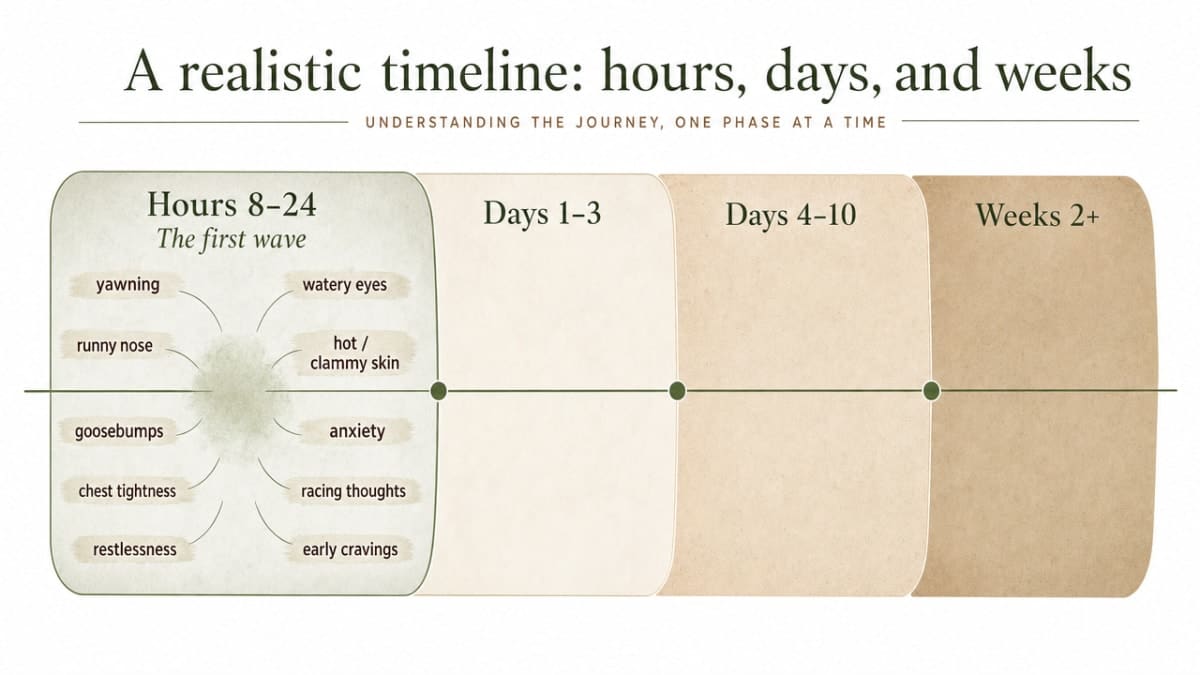
Hours 8 to 24: the first wave
The first signs usually creep in somewhere between 8 and 24 hours after your last dose, though with fentanyl the window can be unpredictable depending on how much you used, how often, and how it was taken.
You might notice it starting as something small. A yawn you can’t stifle. Eyes that water for no reason. A runny nose that makes you reach for a tissue every few minutes. Your skin starts to feel strange — too hot, then clammy, then goosebumps that come in waves.
Then the anxiety shows up. A tight, pressing feeling in your chest. Thoughts speeding up. A low hum of dread that you can’t talk yourself out of. You may feel edgy and unable to sit still, standing up, lying down, standing up again.
Cravings arrive early and loud. Your body knows exactly what would make all of this stop, and it will tell you so, over and over.
This is the stage where many people decide to use again just to make the noise quit. That decision is not a moral failure. It is what a dependent nervous system does under pressure 1. Knowing the wave is coming is the first piece of information that helps you handle it differently this time.
Days 1 to 3: the peak
Days one through three are the hardest. There is no way to sugarcoat this part, and you deserve to hear it straight so you can prepare.
Physically, this is when the stomach turns on you. Nausea, vomiting, and diarrhea often arrive together, sometimes in cycles that leave you exhausted on the bathroom floor. Muscle aches settle into your legs, lower back, and shoulders in a way that feels like you ran a marathon while being hit by a car. Your bones ache. Your skin crawls. Sleep breaks apart into 20-minute pieces, if it comes at all.
Your heart rate stays elevated. Blood pressure runs higher than normal. You sweat through sheets, then shiver so hard your teeth chatter. Pupils stay dilated. Any sensory input — a light, a sound, a smell — feels amplified.
Emotionally, this is often the lowest point. Depression, hopelessness, and intrusive thoughts are common. You may cry without warning, or feel a flat gray nothing. Both are normal in this window.
You are not broken. You are at the hardest part of a predictable curve.
Days 4 to 10: the long tail of acute withdrawal
Here is something most articles about opioid withdrawal get wrong when they lump fentanyl in with heroin or prescription pills: fentanyl’s tail runs longer than people expect.
In a study of 150 inpatients being treated for opioid use disorder, those who tested positive for fentanyl at admission remained fentanyl-positive for an average of 7.2 days — well past the window where you would expect a short-acting opioid to clear. Higher body mass index was linked to even longer detection and higher self-reported withdrawal scores, suggesting that fentanyl can store in fatty tissue and release back into circulation slowly 5.
What that means for you, in plain language: the worst of the vomiting and acute pain usually eases somewhere around day four or five, but you should not expect to feel like yourself. Not yet.
During days four through ten, you may notice:
- Deep fatigue that sleep does not fix
- Lingering muscle soreness, especially after any activity
- Appetite that comes and goes
- Loose stools or stomach sensitivity that keeps returning
- Mood swings — flashes of relief, then waves of sadness or irritability
- Cravings that quiet down and then surge back without warning
- Sleep that improves in pieces, with vivid dreams or restless legs
This is the stretch where a lot of people underestimate what their body is still doing. You might feel well enough to go back to work or push through a difficult task, and then crash hard the next day. That is not laziness. That is a nervous system still rebalancing while residual fentanyl continues to clear 5.
Treat this week the way you would treat the week after a bad surgery. Rest, fluids, small meals, gentle movement if you can. You are still healing.
Weeks 2 and beyond: post-acute symptoms
Past the two-week mark, the physical symptoms mostly fade. What tends to linger is less visible and, for many people, more frustrating to deal with.
Sleep is often the last thing to come back. You may fall asleep fine and then wake at 3 a.m. staring at the ceiling. Energy stays uneven — one day you feel almost normal, the next you can barely get off the couch. Mood can swing in ways that feel disproportionate to what is happening around you. Cravings do not vanish; they just show up less often, usually triggered by a place, a person, a song, a smell.
Clinicians sometimes call this post-acute withdrawal. It can last weeks to months, and it is one of the main reasons that detoxification alone — without ongoing medication for opioid use disorder — is not recommended 1, 2. Your body cleared the drug. Your brain is still rewiring the reward and stress systems that fentanyl rearranged.
You are not going backward. This is the slow part of healing, and it responds to time, support, and continuing care — not willpower alone.
Why fentanyl withdrawal behaves differently from other opioid withdrawals
If you’ve been through heroin or prescription opioid withdrawal before, you may be expecting the same experience. It won’t be exactly the same. Fentanyl changes the rules in two ways that matter for how you plan the next few days.
First, fentanyl lingers in the body longer than most people — including a lot of clinicians, until recently — expected. It is highly fat-soluble, which means it tucks into fatty tissue and leaches back into your bloodstream slowly over days. That’s why withdrawal from fentanyl can feel like it keeps coming back in waves after you thought the worst was over, and why your body may still register low levels of the drug days after your last use 5.
Second, this slow release collides hard with how buprenorphine works. Buprenorphine is one of the main medications used to treat opioid use disorder, and it is excellent at easing withdrawal — but only when it is started at the right moment. If you take buprenorphine while fentanyl is still bound to your opioid receptors, buprenorphine can knock the fentanyl off and slam you into sudden, severe withdrawal. That’s called precipitated withdrawal, and it feels like the worst hours of regular withdrawal compressed into about 30 minutes.
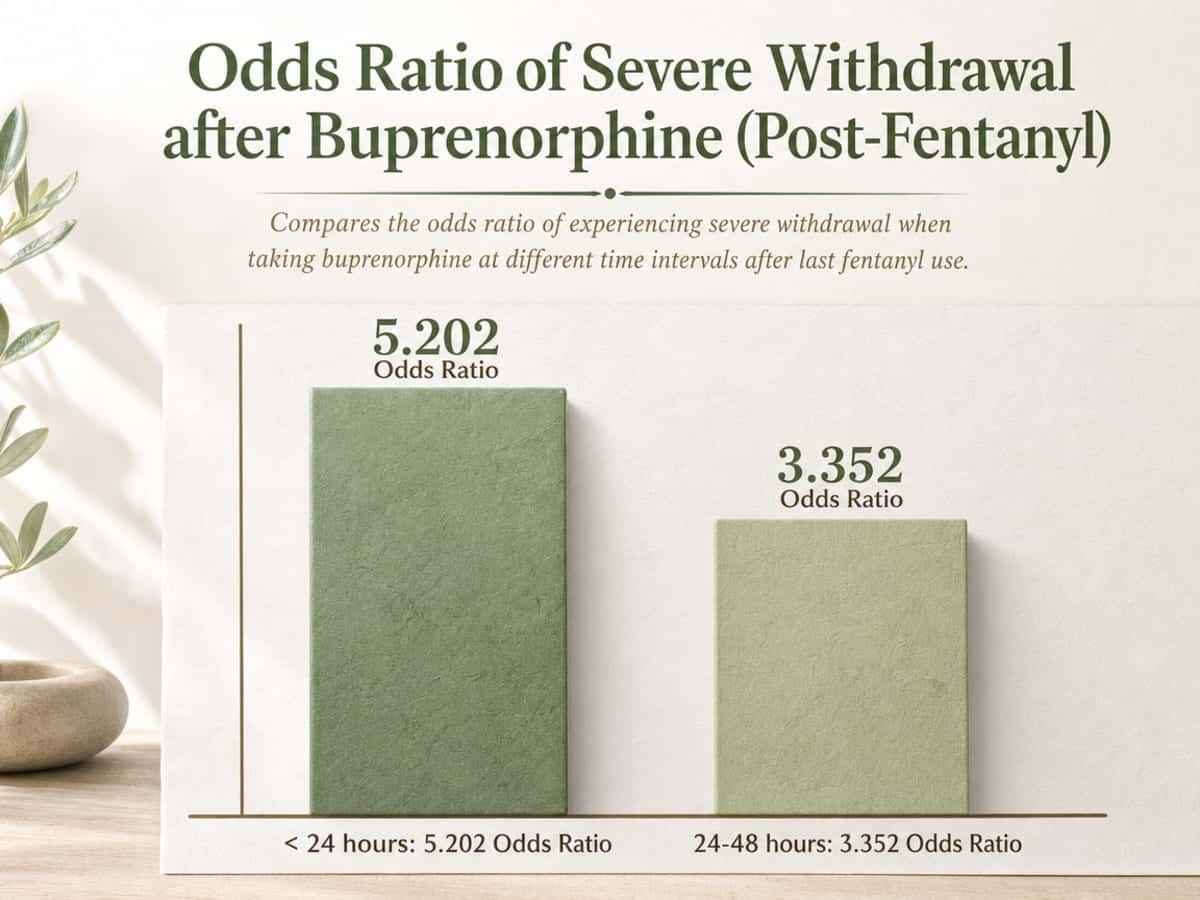
How often does this happen? In a study of 1,679 people entering treatment across 49 U.S. treatment centers, 36.5% of those who took buprenorphine within 24 hours of their last fentanyl use reported severe withdrawal — compared with 15% of people who received methadone in the same window 6. That’s not a small difference, and it’s the clearest sign that fentanyl has changed what used to be a routine induction.
None of this means buprenorphine is off the table. It is still one of the most effective medications for opioid use disorder, and clinicians have developed modified induction protocols — longer waiting periods, lower starting doses, higher withdrawal-score thresholds before the first dose — specifically for people coming off fentanyl 12. It just means that timing, setting, and medical judgment matter more than they used to.
The practical takeaway: starting medication at home based on a timer and a guess is riskier with fentanyl than it was with older opioids. Being somewhere a clinician can watch what your body is actually doing — and adjust the plan in real time — is the piece that protects you from turning a hard day into a much worse one.
Withdrawal signs vs. overdose warning signs: do not confuse them
This is the most important section in the article, so read it twice if you need to.
Withdrawal and overdose can happen in the same house, sometimes the same day, sometimes to the same person. They can look similar from across a room if you’ve never seen either one. But they need completely different responses, and getting that wrong can cost a life.
Withdrawal signs — your body reacting to the absence of fentanyl:
- Awake, often painfully so
- Dilated pupils (large and black)
- Sweating, shivering, goosebumps
- Runny nose, watery eyes, yawning
- Vomiting, diarrhea, stomach cramps
- Muscle and bone aches
- Agitation, anxiety, restlessness
- Fast heartbeat, elevated blood pressure
A person in withdrawal is miserable, but they are responsive. They can talk to you, even if what they say is desperate. They are breathing normally or breathing fast.
Overdose warning signs — your body being shut down by too much fentanyl:
- Will not wake up, even to a loud voice or a hard sternal rub
- Slow, shallow, or stopped breathing
- Choking, gurgling, or snoring-like sounds
- Blue, gray, or purple lips or fingernails
- Pinpoint pupils (tiny, like a pencil tip)
- Limp body, cold or clammy skin
The quick rule: dilated pupils, awake and sweating is withdrawal. Pinpoint pupils, unresponsive and barely breathing is overdose. If you are unsure, treat it as overdose. Naloxone will not hurt someone who is only in withdrawal — it will just make withdrawal worse for a short time. It can save the life of someone who is overdosing.
Is fentanyl withdrawal dangerous on its own?
Here is the honest answer: fentanyl withdrawal, by itself, rarely kills a healthy adult. The usual direct cause of death from opioid withdrawal is not the withdrawal syndrome itself. That truth sits next to another one, though — the situation around fentanyl withdrawal carries real medical risk, and pretending otherwise does not help you.
The risks that actually hurt people during fentanyl withdrawal are these:
- Dehydration and electrolyte loss. When vomiting and diarrhea run for two or three days straight, your body can lose enough fluid and potassium to disrupt your heart rhythm. This becomes more dangerous if you already have heart disease, kidney disease, or an eating disorder.
- Underlying conditions getting worse. The spike in blood pressure and heart rate that comes with withdrawal can strain a heart that was already struggling. Uncontrolled diabetes, pregnancy, and serious mental health conditions all get harder to manage when you cannot keep food, fluids, or medication down.
- Relapse driven by unbearable symptoms. Most people who try to quit fentanyl alone use again within days — not because they lack discipline, but because the symptoms genuinely are that hard. The CDC specifically does not recommend detoxification without ongoing medication for opioid use disorder, because the risks of resuming use, overdosing, and dying go up when withdrawal is handled as a stand-alone event 1, 2.
- Overdose after your tolerance drops. This is the one most people do not see coming, and it deserves its own section further down.
So the real answer is not “fentanyl withdrawal is safe” or “fentanyl withdrawal will kill you.” It is this: the withdrawal itself is survivable, and the things that surround it are what medical supervision is designed to catch before they become dangerous.
What medical supervision actually does
When people picture medical detox, they often imagine something sterile and punishing — bright lights, restraints, a hospital gown. The reality is quieter and more practical. Medical supervision during fentanyl withdrawal is mostly about three things: making you less miserable, catching problems early, and getting the timing right on medication that can shorten the whole experience.
The symptom relief piece is the part you feel first. Clinicians can give you medication for nausea, for diarrhea, for muscle cramps, for the anxiety that makes your skin feel too tight. IV fluids replace what you lose when you cannot keep water down. Something to help you sleep, even in short pieces, so your nervous system gets a break. Your blood pressure and heart rate get checked often enough to notice if either climbs into dangerous territory. None of this cures withdrawal. It just takes the sharpest edges off so your body can do the work of clearing the drug without wrecking itself in the process.
The second piece is where the fentanyl-specific judgment matters. Starting buprenorphine too early sends you into precipitated withdrawal; starting methadone has its own timing considerations; naltrexone requires a longer opioid-free window before it is safe to begin 2, 4. A clinician watches your symptoms, uses a withdrawal score, and decides when your body is actually ready — rather than when a timer says you should be 12.
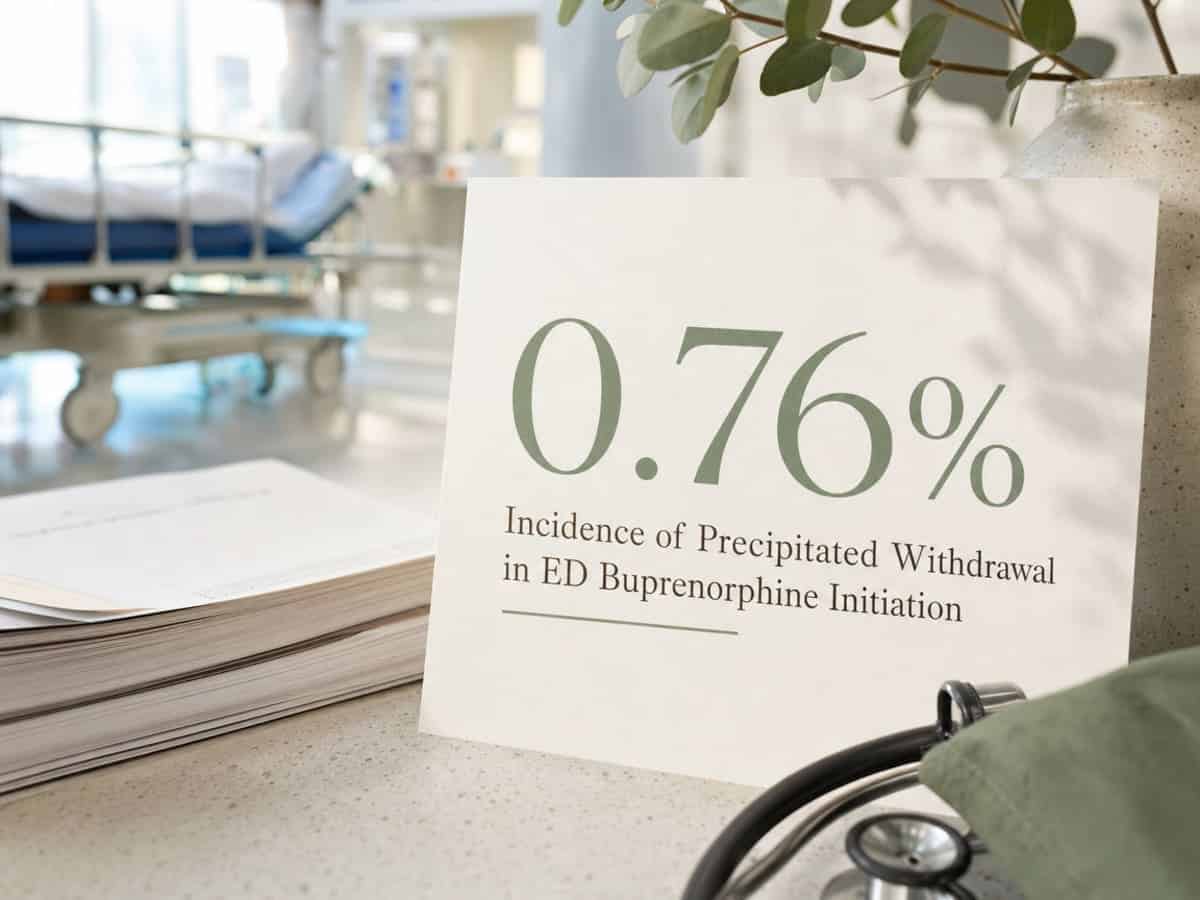
Setting changes outcomes more than most people realize. In a multisite emergency department trial of 1,200 patients starting buprenorphine during the fentanyl era, precipitated withdrawal occurred in just 0.76% of cases. In a hospital-based cohort of 123 patients with confirmed fentanyl use, the rate was 16.3% 7, 8. Same medication, very different results — because patient selection, timing, and clinical protocol all shift the odds.
The third piece is what happens after the acute days end. CDC specifically recommends against detoxification as a stand-alone event, because the risk of resuming use and overdosing goes up when withdrawal is handled in isolation 1, 2. Good supervision links you to what comes next — a prescriber, a counselor, a plan — before you walk out the door. That handoff is often what separates a hard week that stuck from a hard week you had to repeat.
After withdrawal: the overdose risk nobody talks about
Here is the part that gets left out of most articles about fentanyl withdrawal, and it is the part most likely to kill someone: your tolerance drops fast once you stop using, and the dose that felt normal two weeks ago can stop your breathing today.
Think about what tolerance actually is. Your body adapted to large amounts of fentanyl by changing how your opioid receptors respond. Those adaptations start reversing within days of your last dose. By the time you make it through the acute week, the amount your body can safely handle is a fraction of what it used to be. You feel the same person, maybe thinner and tireder, but inside your receptors have reset.
If you use again at your old dose — after a weekend, after a three-day detox attempt, after a stretch in jail, after a hospital stay — the risk of a fatal overdose is high. Not theoretical. High.
The illicit supply makes this worse. In 2024, illegally manufactured fentanyls were detected in 65.1% of the 53,336 overdose deaths tracked across 43 jurisdictions 10. And the supply is getting more potent, not less — CDC reported carfentanil detections in overdose deaths climbing from 29 in the first half of 2023 to 238 in the first half of 2024 11. You cannot look at a bag or a pill and know what is in it.
This is why clinicians will not let you leave detox without naloxone in your hand and a plan for the next week. It is why the CDC recommends against treating detoxification as a stand-alone event — relapse happens, and when it does, the overdose risk after tolerance drops is the thing medication for opioid use disorder is specifically designed to reduce 1, 2. You deserve to know this before you make a decision about what comes next.
If you’re in Oklahoma City and ready for help
You’ve read this far, which means part of you already knows what the next step looks like — you’re just trying to work up the nerve to take it. That’s okay. The nerve comes easier when you’re not doing the hardest part alone.
Renewal Springs Detox is in Oklahoma City, and the whole facility is built around the days you’ve just been reading about. 24/7 medical staff. Medication to take the edge off the nausea, the muscle pain, the sleeplessness. IV fluids if you can’t keep anything down. Clinicians who know how fentanyl behaves differently than older opioids and who time buprenorphine, methadone, or naltrexone induction based on what your body is actually doing — not a stopwatch 2, 4. When the acute days end, you leave with naloxone in hand and a plan for what comes next, because detox alone is not what the evidence supports 1.
If the symptoms you’re feeling right now sound severe — if you can’t keep fluids down, if your heart is pounding, if you’re scared of what you’ll do to make it stop — call. One phone call. You don’t have to have a plan yet. That’s what the people on the other end of the line are for.
Talk to Someone Who Understands Fentanyl Withdrawal
Get answers and real support for fentanyl withdrawal symptoms right when you need it.
Frequently Asked Questions
How long do fentanyl withdrawal symptoms usually last?
Acute symptoms typically start 8 to 24 hours after your last dose, peak between days one and three, and ease over days four to ten. Fentanyl can stay detectable in your body for about 7.2 days on average, longer with higher body weight 5. Post-acute symptoms — sleep trouble, mood swings, cravings — can linger for weeks or months.
Can you die from fentanyl withdrawal?
Fentanyl withdrawal rarely kills a healthy adult directly, but the situation around it can. Dehydration from vomiting and diarrhea, strain on existing heart or kidney conditions, and overdose after your tolerance drops are the real dangers. CDC specifically advises against detoxification without ongoing medication for opioid use disorder because the risks of resuming use, overdose, and death go up when withdrawal is treated as a stand-alone event 1, 2.
Why can’t I just start buprenorphine right after my last fentanyl use?
Buprenorphine can knock fentanyl off your opioid receptors and trigger sudden, severe precipitated withdrawal. In a study of 1,679 people entering treatment, 36.5% who took buprenorphine within 24 hours of fentanyl use reported severe withdrawal, compared with 15% who received methadone in that window 6. Clinicians use modified induction protocols — longer waits, lower starting doses, higher withdrawal-score thresholds — specifically for people coming off fentanyl 12.
What’s the difference between fentanyl withdrawal and a fentanyl overdose?
Withdrawal: awake, dilated pupils, sweating, vomiting, agitation, breathing normally or fast. Overdose: cannot be woken, slow or stopped breathing, choking or gurgling sounds, blue or gray lips, pinpoint pupils, limp body 9. If someone is unresponsive and barely breathing, call 911 and give naloxone if you have it. Naloxone will not harm someone who is only in withdrawal — it can save someone who is overdosing.
Is it safe to go through fentanyl withdrawal at home?
Some people do it, but it carries real risks. Dehydration can get dangerous fast when vomiting and diarrhea last for days. Starting buprenorphine on your own after fentanyl use can trigger severe precipitated withdrawal. And after a few drug-free days, your tolerance drops — a relapse at your old dose can be fatal. CDC advises against detoxification without medical support and linkage to ongoing treatment for opioid use disorder 1, 2.
What should I do if a loved one is going through fentanyl withdrawal?
Stay with them. Keep water and electrolyte drinks within reach. Watch for signs that need emergency care: inability to keep fluids down for more than a day, chest pain, confusion, or any overdose warning signs if they use again — unresponsive, slow breathing, blue lips, pinpoint pupils 9. Keep naloxone in the house. Help them connect with a medical detox program, because withdrawal alone is not what the evidence supports 1, 2.
References
- CDC Clinical Practice Guideline for Prescribing Opioids for Pain — United States, 2022. https://www.cdc.gov/mmwr/volumes/71/rr/rr7103a1.htm
- Opioid Use Disorder: Treating. https://www.cdc.gov/overdose-prevention/hcp/clinical-care/opioid-use-disorder-treating.html
- Treatment Options for Substance Use Disorder. https://www.samhsa.gov/substance-use/treatment/options
- TIP 63: Medications for Opioid Use Disorder. https://library.samhsa.gov/product/tip-63-medications-opioid-use-disorder/pep21-02-01-002
- Fentanyl withdrawal: Understanding symptom severity and exploring the role of body mass index on withdrawal symptoms and clearance. https://pmc.ncbi.nlm.nih.gov/articles/PMC9992259/
- Evidence of Buprenorphine-precipitated Withdrawal in Persons Who Use Fentanyl. https://pmc.ncbi.nlm.nih.gov/articles/PMC9124721/
- Incidence of Precipitated Withdrawal During a Multisite Emergency Department–Initiated Buprenorphine Clinical Trial in the Era of Fentanyl. https://pmc.ncbi.nlm.nih.gov/articles/PMC10064247/
- Buprenorphine-Precipitated Withdrawal Among Hospitalized Patients Using Fentanyl. https://pmc.ncbi.nlm.nih.gov/articles/PMC11437388/
- Preventing Opioid Overdose. https://www.cdc.gov/overdose-prevention/prevention/index.html
- SUDORS Dashboard: Fatal Drug Overdose Data – Accessible Version. https://www.cdc.gov/overdose-prevention/data-research/facts-stats/sudors-dashboard-fatal-overdose-data-accessible.html
- Detection of Illegally Manufactured Fentanyls and Carfentanil in Drug Overdose Deaths — United States, 2021–2024. https://www.cdc.gov/mmwr/volumes/73/wr/mm7348a2.htm
- Medication Assisted Treatment for Opioid Use Disorder. https://www.bop.gov/resources/pdfs/opioid_use_disorder_cg.pdf