Key Takeaways
- Withdrawal fear reflects a nervous system in genuine crisis at hour 36, not weak willpower, and unmedicated dopesick peaks between hour 36 and 72 before physical symptoms ease.
- FDA-approved medications—buprenorphine, methadone, and lofexidine—soften the peak of withdrawal, with methadone and buprenorphine named first-line treatment for opioid use disorder in the 2024 clinical practice guideline 14.
- Precipitated withdrawal risk with fentanyl exposure ranges from under 1% to over 16% across studies 8, 10; supervised low-dose induction with protocol adherence dropped rates to 3% 9.
- Detox is Day 1, not the finish line—CDC states detoxification without ongoing medication for opioid use disorder is not recommended 5, so plan a warm handoff to continued maintenance care.
The fear that keeps you using is not a character flaw
If you’ve put off calling anyone because you’re scared of getting sick, read this first: that fear is not weakness. It is your body remembering what the last withdrawal felt like and refusing to sign up for another round. That is a survival response, not a moral failure.
You already know the shape of it. The restless legs that won’t stop moving. The sweats and chills swapping places every ten minutes. The stomach that turns on you. The bone-deep ache that makes lying still feel like punishment and standing up feel worse. Sleep disappears. Anxiety shows up in its place. And underneath all of it, a voice that keeps whispering that one more bag would make it stop.
People who have never been dopesick love to talk about willpower. You know better. You know that at hour 36, willpower has almost nothing to do with it. Your nervous system is in open revolt, and “just push through” is advice from someone who has never felt their skin crawl for three days straight.
Here’s what has actually changed: medical detox is built for exactly this problem. FDA-approved medications like buprenorphine, methadone, and lofexidine were developed to shorten and soften the worst of withdrawal, and the 2024 national clinical practice guideline now names methadone and buprenorphine as preferred first-line treatments for opioid use disorder 14. The pain you are bracing for is real. It is also treatable. Reading this page is already a step, and the next one gets easier when you are not doing it alone.
What withdrawal actually feels like — and what medical detox changes
The dopesick timeline your body is bracing for
Unmedicated heroin withdrawal usually starts 8 to 12 hours after your last dose. The first signs are the ones you know by heart: yawning that won’t stop, a runny nose, watery eyes, goosebumps, and that specific brand of anxiety that feels like your skin is trying to leave your body.
By hour 24, you’re in the thick of it. Muscles cramp. Your back aches like you’ve been beaten. The stomach cramps arrive, and then the diarrhea and vomiting take turns making sure you can’t keep water down. Your heart races. Your blood pressure climbs. You can’t sit still and you can’t lie down. Sleep is a memory.
Somewhere between hour 36 and hour 72, the symptoms hit their peak. This is the window where most people who try to quit at home give up — not because they’re weak, but because the body is genuinely in crisis, and the only thing that has ever reliably fixed it is another dose. If you’ve been using fentanyl-adulterated heroin, this timeline can feel even worse, because fentanyl leaves your system faster and hits harder on the way out.
After day three, the sharpest physical symptoms usually start to fade. But the exhaustion, the low mood, the cravings, and the trouble sleeping can drag on for weeks. That long tail is the part the internet doesn’t warn you about, and it’s a big reason why detox alone almost never sticks. Knowing the shape of the timeline isn’t meant to scare you. It’s meant to show you exactly what medical detox is designed to soften.
What medications actually do to that timeline
Here’s the shift medical detox makes: instead of your nervous system running the show, medication takes the sharpest edges off. You don’t stop being sick entirely — anyone who promises that is lying to you — but the difference between medicated and unmedicated withdrawal is the difference between a storm you’re sheltered from and a storm you’re standing in.
Four FDA-approved medications do most of the work, and each one has a different job 6.
- Buprenorphine
- is usually the first tool. It’s a partial opioid that binds to the same receptors heroin does, which means it quiets cravings and pulls the physical symptoms down within hours — but it doesn’t produce the same high or the same dangerous breathing suppression 7. When it’s timed right, it can turn hour 24 from unbearable into something you can actually sit through.
- Methadone
- is a full opioid used in licensed treatment programs. It’s longer-acting and steadier than heroin, so it holds withdrawal and cravings off for a full day at a time. The 2024 national clinical practice guideline names methadone and buprenorphine as preferred first-line treatments for opioid use disorder 14, and for people who’ve been using heavily for a long time, methadone is often the more comfortable landing.
- Lofexidine
- is not an opioid. It’s approved specifically to treat the acute physical symptoms of opioid withdrawal 6— the racing heart, the sweating, the muscle aches, the anxiety — by calming the part of your nervous system that goes into overdrive when opioids leave. It’s often used alongside other medications, especially in the first few days when the physical symptoms are worst.
- Naltrexone
- works differently. It doesn’t help with active withdrawal. Instead, once you’re through detox and fully opioid-free, it blocks opioid receptors so that if you use again, you won’t feel it. It’s a relapse-prevention tool for the weeks and months after detox, not a comfort tool during it.
None of these medications erase what you’re going through. What they do is turn the peak of withdrawal into something a human body can survive without begging for a bag to make it stop. That is the whole point. The pain gets managed, the cravings get quieter, and the 72-hour window that has beaten you before becomes something you can actually walk through — with people watching your vitals, adjusting doses, and staying up with you when you can’t sleep.
The precipitated withdrawal question, answered with real numbers
What Reddit gets partly right, and what the 2024 data shows
If you’ve spent any time on Reddit or in group chats, you’ve heard the horror stories: someone took their first dose of buprenorphine too early, and instead of feeling better, they went straight into the worst withdrawal of their life. That’s precipitated withdrawal, and it is real. It happens when buprenorphine kicks a full opioid off your receptors before your body has cleared enough of the drug, and the crash is fast and brutal.
What the horror stories usually leave out is how often this actually happens in supervised settings — and how much the numbers have improved as clinicians learned to work around fentanyl. The 2024 evidence tells a fuller story than the scariest thread you’ve read.
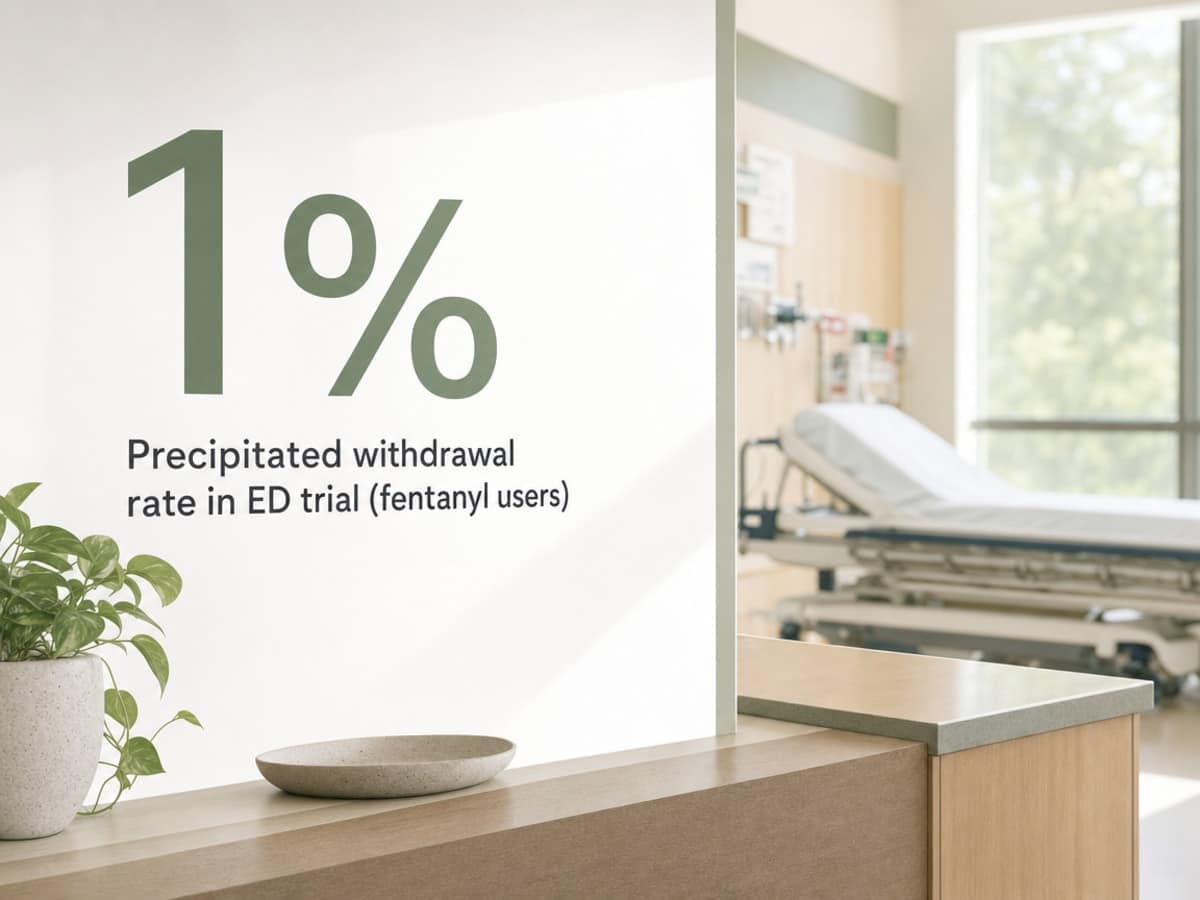
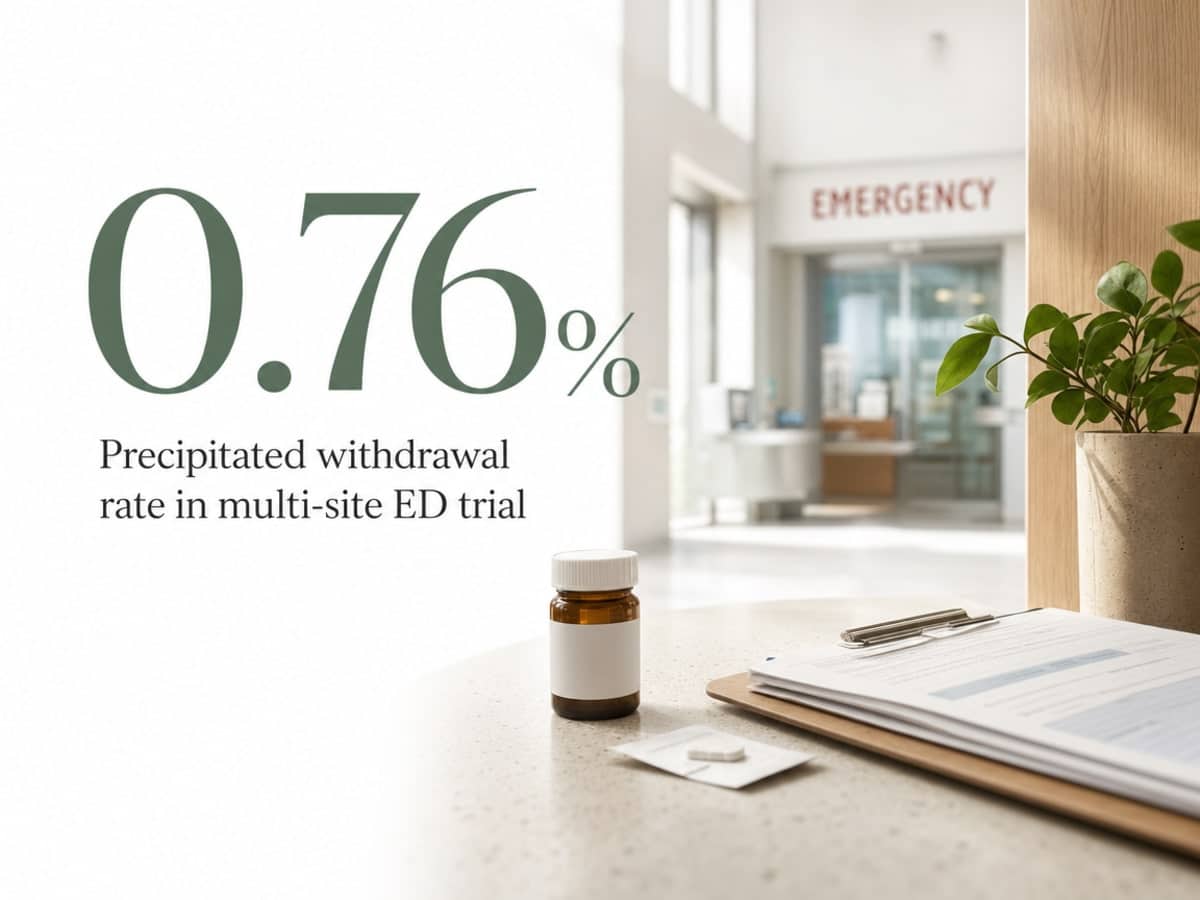
In a multi-site emergency department trial of 1,200 people, precipitated withdrawal occurred in just 0.76% of participants overall, and in about 1% of the participants who had been using fentanyl 8. That is nine people out of twelve hundred. In a separate urban ED study of patients with fentanyl use, the rate was 2.6% 15. Both of those settings had staff who could see the whole picture — how long since your last use, how you were scoring on the withdrawal scale, and whether a lower starting dose made more sense.
Now the honest counterweight: a 2024 cohort study of hospitalized patients using fentanyl found precipitated withdrawal in 11.5% overall, and 16.3% among people with confirmed fentanyl in their urine 10. That is not rare. It is roughly one in six. The difference between that study and the ED trial is not that one is right and the other wrong. It is that setting, protocol, timing, and how much fentanyl is still in your system all matter — and the researchers themselves flagged higher urine fentanyl concentrations as one of the strongest predictors.
What you should take from this: precipitated withdrawal is a real risk, especially if you’ve been using fentanyl-adulterated heroin, and the range of outcomes reported in modern studies runs from under 1% to over 16% depending on where and how buprenorphine is started. A supervised detox is not immune to it. But a supervised detox is where someone is watching, someone can slow the induction down, and someone has the tools to treat it if it starts. That is a very different situation than swallowing a strip at home because a friend said it worked for them.
Why supervision changes the math
When researchers pooled results across a systematic review of 4,497 people, the rate of precipitated withdrawal ran anywhere from 0% all the way up to 13.2% depending on the study 13. That is an enormous spread for what is supposedly the same event. So what actually moves you from the high end of that range to the low end?
Most of it comes down to two things: how the medication is started, and who is watching while it happens.
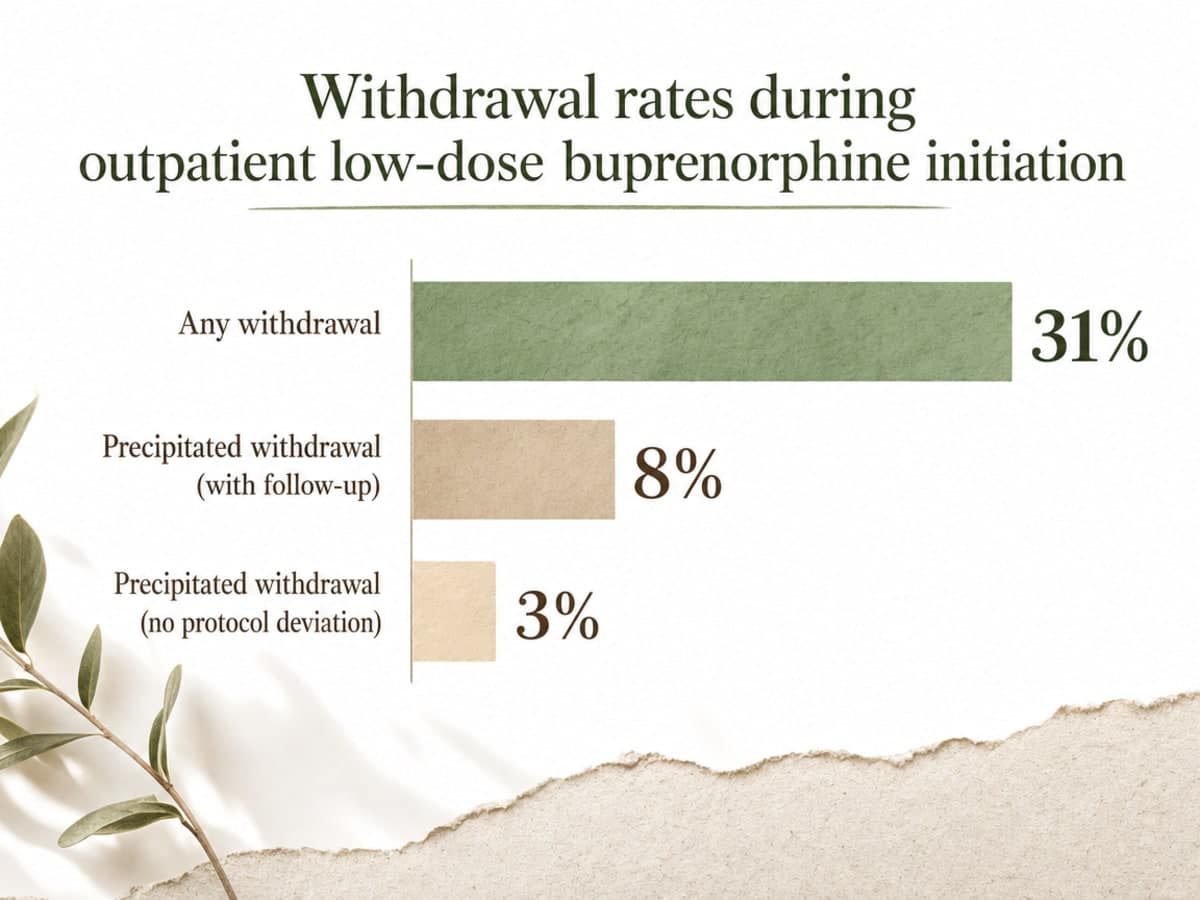
A 2024 outpatient cohort study of low-dose buprenorphine initiation in people who use fentanyl found that 31% experienced some withdrawal during the process, but only 3% experienced precipitated withdrawal when the protocol was followed without deviation 9. When the protocol was deviated from, that number climbed to 8%. In plain language: doing it right, with someone who knows what they’re doing, drops your risk by more than half.
That is what a supervised detox setting buys you. Not a guarantee, but a stacked deck. Someone is asking the right questions about your last use before the first dose goes in. Someone is scoring your withdrawal on a scale — the same one used in the studies — instead of guessing. Someone can slow the pace down, split doses smaller, or hold longer if your numbers say wait. And if precipitated withdrawal starts anyway, someone has fluids, comfort medications, and the ability to intervene inside minutes instead of you white-knuckling it on a bathroom floor.
The review that pooled those 4,497 cases also noted that newer studies from supervised settings keep landing at the lower end of the range 13. That is not because fentanyl got easier. It is because clinicians got smarter about starting doses, timing, and letting the person in front of them tell the pace. You bring the honest answers about what you’ve been using and when. The medical team brings a plan that respects that. That’s how the math bends in your favor.
What the first 72 hours in medical detox actually looks like
You walk in tired. That’s the first thing most people notice about themselves. Not brave, not resolved — just tired of the loop. What happens next is designed to lower the temperature on everything you’re carrying.
Hours 0 to 6: intake and honest questions. A nurse or provider sits down with you and asks what you’ve been using, how much, when the last dose was, and whether fentanyl has been in the mix. There are no gotcha questions here. Every answer you give shapes the medication plan, and the more honest you are, the safer the induction gets. Vitals get checked. Blood work usually goes out. You get a bed, water, something to eat if you can keep it down, and a quiet room instead of a waiting room.
Hours 6 to 24: the medication window opens. Staff use a withdrawal scoring scale — the same one referenced in the research — to decide when you’re ready for the first dose. If buprenorphine is the plan, they wait until your symptoms have climbed high enough that the medication will help instead of hurt. Methadone can start sooner in a licensed program. Lofexidine, approved specifically for the acute physical symptoms of opioid withdrawal 6, often gets added to soften the racing heart, sweating, and muscle aches while the primary medication finds its footing. If you’ve been using fentanyl, a slower, lower starting dose is common — this is exactly the low-dose strategy that showed only 3% precipitated withdrawal when the protocol was followed without deviation 9.
Hours 24 to 48: the peak, softened. This is the window that has broken you before. In detox, it’s still uncomfortable — nobody is going to pretend otherwise — but the sharpest edges get filed down. Doses get adjusted based on how you’re scoring. Anti-nausea medication, sleep support, muscle relaxants, and fluids are on the menu, not extras you have to beg for. Someone checks on you at intervals, and at a facility using continuous vitals monitoring, your heart rate and oxygen are being watched even when you’re asleep.
Hours 48 to 72: the tide starts to turn. Physical symptoms begin easing. You’ll probably eat a real meal. You might sleep for more than two hours in a row. The cravings don’t disappear, but they stop running the whole room. This is when the conversation shifts from surviving the next hour to what happens next — because the 2024 national clinical practice guideline names methadone and buprenorphine as first-line treatment for opioid use disorder 14, and staying on medication after detox is what protects the work you just did.
You will not feel great at hour 72. You will feel like someone who came through something hard with help. That is the goal.
Quitting cold turkey at home: the honest tradeoffs
Nobody wants to be told what to do when they’re already exhausted. So here’s the tradeoff laid out plainly, and you can decide.
Quitting at home is free. It’s private. Nobody has to know. You don’t have to explain yourself to a stranger, hand over your phone, or answer questions about the last two years. For a lot of people, that privacy is the whole reason they try it that way. Those are real reasons, and they deserve to be named instead of dismissed.
Here’s what home usually cannot give you. Nobody is scoring your withdrawal or checking your vitals at hour 30 when your heart is racing and you can’t tell if it’s panic or something worse. There’s no lofexidine to take the edge off the physical symptoms 6. There’s no buprenorphine timed to your last use — and if you try to dose yourself off a friend’s supply, you’re guessing at exactly the window that makes precipitated withdrawal more likely 11. Most of all, there’s a bag or a number in your phone about ten feet away, and at hour 48 your nervous system will make an extremely persuasive case for using it.
Detox is Day 1, not the finish line
Here is the part nobody wants to say out loud, so it gets said here: getting through withdrawal is not the same as being done. Detox is Day 1. It is the doorway into treatment, not the treatment itself. And if you walk back out the same door you came in, with a body that has lost its tolerance and none of the medication that made the last 72 hours survivable, you are in more danger than you were before you started. CDC states it plainly — detoxification on its own, without ongoing medication for opioid use disorder, is not recommended 5.
That is not meant to take the win away from you. Walking through those three days is a real thing. It just means the protection you built inside detox has to come with you when you leave.
What that usually looks like: staying on buprenorphine or methadone after the acute withdrawal window closes. The 2024 national clinical practice guideline names both as first-line treatment for opioid use disorder 14, and a peer-reviewed review of fentanyl-era care concluded that maintenance treatment continues to outperform detoxification without continued management 12. Translation — the medication that took the edge off during detox is the same medication that keeps cravings quiet next week, next month, and the month after that. Some people stay on it for a year. Some for longer. There is no medal for stopping early.
For others, once they are fully off opioids and stable, naltrexone becomes an option to block the receptors so that if a bad night happens, using does not have the effect it used to 6. Different tool, different job, same goal — keeping you alive long enough for the rest of your life to catch up.
None of this is a lecture. It is a heads-up. When you pick up the phone, ask what happens on day four, and day fourteen, and day forty. A detox that hands you a discharge paper and wishes you luck is not the plan you deserve. A detox that walks you into the next thing — a prescriber, a residential bed, an outpatient program, a warm handoff — is.
What to ask before you pick up the phone
You do not need a script to call a detox line, but a short list in front of you helps when your head is loud. Write these down or open a note on your phone. If the person on the other end cannot answer them clearly, that tells you something too.
What medications do you use, and when do you start them? A good answer names buprenorphine, methadone, or lofexidine and explains how they time the first dose to your last use. Vague answers about “comfort medications” are not enough — the specifics are what protect you from precipitated withdrawal 11.
How do you handle fentanyl exposure specifically? If they do not mention low-dose or slower induction strategies for people who have been using fentanyl-adulterated heroin, keep asking. This is where the 3% versus 8% difference lives 9.
Who is watching me overnight? Ask about staffing ratios, vitals checks, and whether monitoring is continuous. Hour 30 is not the time to find out the answer.
What happens on day four? This is the most important question in the whole call. CDC is clear that detox without ongoing medication treatment is not recommended 5. You want a warm handoff — a prescriber, a bed, an outpatient program — not a discharge paper and a wave.
Will you verify my insurance before I commit to anything? Benefits verification should be free and should happen before you make a decision. If it doesn’t, call somewhere else.
Talk to Someone Who Understands Withdrawal Fears
Get real answers and immediate support for safe heroin detox—no judgment, just help when you need it most.
Frequently Asked Questions
How long does heroin withdrawal actually last in medical detox?
The sharpest physical symptoms usually run about 72 hours, with the peak landing somewhere between hour 36 and hour 48. Medical detox does not shorten that biological clock much — what it changes is how survivable those hours feel. Fatigue, low mood, and sleep trouble can linger for weeks, which is one reason the 2024 clinical practice guideline recommends staying on medication like buprenorphine or methadone after the acute window closes 14.
Will I get precipitated withdrawal if I’ve been using fentanyl-adulterated heroin?
Probably not, but the risk is real and depends heavily on setting. A multi-site ED trial saw precipitated withdrawal in about 1% of fentanyl users 8, while a hospitalized-patient cohort saw it in 16.3% of people with confirmed fentanyl use 10. What moves you toward the low end: honest answers about your last use, a slower low-dose induction, and staff who score your withdrawal before dosing instead of guessing.
What’s the difference between buprenorphine, methadone, and lofexidine?
Buprenorphine is a partial opioid that quiets cravings and pulls physical symptoms down without the same high 7. Methadone is a full opioid used in licensed programs — steadier and longer-acting, often better for heavier long-term use. Lofexidine is not an opioid at all; it’s approved specifically for the acute physical symptoms of withdrawal — the racing heart, sweating, muscle aches — and often runs alongside the primary medication in the first few days 6.
Is it safer to quit cold turkey at home or go to a medical detox?
Medical detox is safer. At home, nobody is checking your vitals at hour 30, there’s no lofexidine to soften the physical symptoms 6, and the supply that ended you up here is usually within reach at hour 48. CDC is direct: detoxification alone, without ongoing medication for opioid use disorder, is not recommended 5. Home is private and free, but the tradeoff is high — especially with tolerance loss after a few clean days.
Does insurance cover medical heroin detox?
Most major insurance plans cover medically supervised detox as a medical necessity, and reputable facilities will verify your benefits for free before you commit to anything. Ask specifically what your plan covers for inpatient detox, medication-assisted treatment, and the step-down care that follows — residential, outpatient, or a prescriber for ongoing buprenorphine or methadone. If a facility can’t tell you what your coverage looks like in writing before admission, that’s a signal to call somewhere else.
What happens after detox ends?
The plan matters more than the discharge date. Most people continue on buprenorphine or methadone — both named first-line treatment for opioid use disorder in the 2024 clinical practice guideline 14— because a peer-reviewed review of fentanyl-era care found maintenance treatment consistently outperforms detoxification alone 12. That might mean a residential program, an outpatient prescriber, or naltrexone once you’re fully opioid-free 6. A good detox hands you off warmly, not with a discharge paper and a wave.
References
- 42 CFR Part 8 Final Rule. https://www.samhsa.gov/substance-use/treatment/opioid-treatment-program/42-cfr-part-8
- Statutes, Regulations, and Guidelines. https://www.samhsa.gov/substance-use/treatment/statutes-regulations-guidelines
- Federal Guidelines for Opioid Treatment Programs (2024). https://library.samhsa.gov/product/federal-guidelines-opioid-treatment-programs-2024/pep24-02-011
- Federal Register/Vol. 89, No. 23/Friday, February 2, 2024. https://www.govinfo.gov/content/pkg/FR-2024-02-02/pdf/2024-01693.pdf
- Opioid Use Disorder: Treating | Overdose Prevention. https://www.cdc.gov/overdose-prevention/hcp/clinical-care/opioid-use-disorder-treating.html
- Medications for Opioid Use Disorder. https://nida.nih.gov/research-topics/medications-opioid-use-disorder
- What are the treatments for heroin use disorder?. https://nida.nih.gov/publications/research-reports/heroin/what-are-treatments-heroin-use-disorder
- Buprenorphine initiation in the ER found safe and effective for individuals with opioid use disorder who use fentanyl. https://nih.gov/news-events/news-releases/buprenorphine-initiation-er-found-safe-effective-individuals-opioid-use-disorder-who-use-fentanyl
- Withdrawal during outpatient low dose buprenorphine initiation in people who use fentanyl: a retrospective cohort study. https://pubmed.ncbi.nlm.nih.gov/38594721/
- Buprenorphine-Precipitated Withdrawal Among Hospitalized Patients Using Fentanyl. https://pubmed.ncbi.nlm.nih.gov/39331392/
- Evidence of Buprenorphine-precipitated Withdrawal in Persons Who Use Fentanyl. https://pubmed.ncbi.nlm.nih.gov/34816821/
- Managing Opioid Withdrawal Symptoms During the Fentanyl Crisis: A Review. https://pubmed.ncbi.nlm.nih.gov/38623317/
- Commentary on Gregory et al: Fear of precipitated opioid withdrawal…. https://pmc.ncbi.nlm.nih.gov/articles/PMC11645183/
- Management of opioid use disorder: 2024 update to the national clinical practice guideline. https://pubmed.ncbi.nlm.nih.gov/39532476/
- Buprenorphine initiation and rates of associated precipitated withdrawal in patients with fentanyl use in an urban emergency department. https://pubmed.ncbi.nlm.nih.gov/39626454/
- U.S. Overdose Deaths Decrease Almost 27% in 2024. https://www.cdc.gov/nchs/pressroom/releases/20250514.html
- Drug Overdose Deaths in the United States, 2023–2024. https://www.cdc.gov/nchs/products/databriefs/db549.htm
- Understanding the Opioid Overdose Epidemic. https://www.cdc.gov/overdose-prevention/about/understanding-the-opioid-overdose-epidemic.html