
Key Takeaways
- Self-pay medical detox has no single sticker price, with daily rates spanning from a few hundred dollars at nonprofits to over a thousand at private residential facilities, driven by length of stay and clinical complexity.
- Four factors explain most quote differences: withdrawal severity and supervision level, length of stay combined with for-profit versus nonprofit ownership, medications used, and whether labs and ancillary services are bundled or itemized.
- Uninsured rarely means out of options in Oklahoma, where SoonerCare, ODMHSAS liability waivers, CCBHCs, and VA pathways can reduce the detox bill significantly or to zero for those who qualify.
- Request a written good-faith estimate with line items separated, and ask every facility about sliding scales, payment plans, and coverage screening before accepting any self-pay number as final.
The Honest Price Range for Self-Pay Detox
You’re asking the right question before you call, and that’s smart. Here’s the truthful answer most detox websites won’t give you up front: there is no single sticker price. Self-pay medical detox in the United States generally runs anywhere from a few hundred dollars a day at a nonprofit or safety-net program to well over a thousand dollars a day at a private residential facility, and the total you’d owe depends on how long you stay, how closely you need to be monitored, and what medications your withdrawal requires.
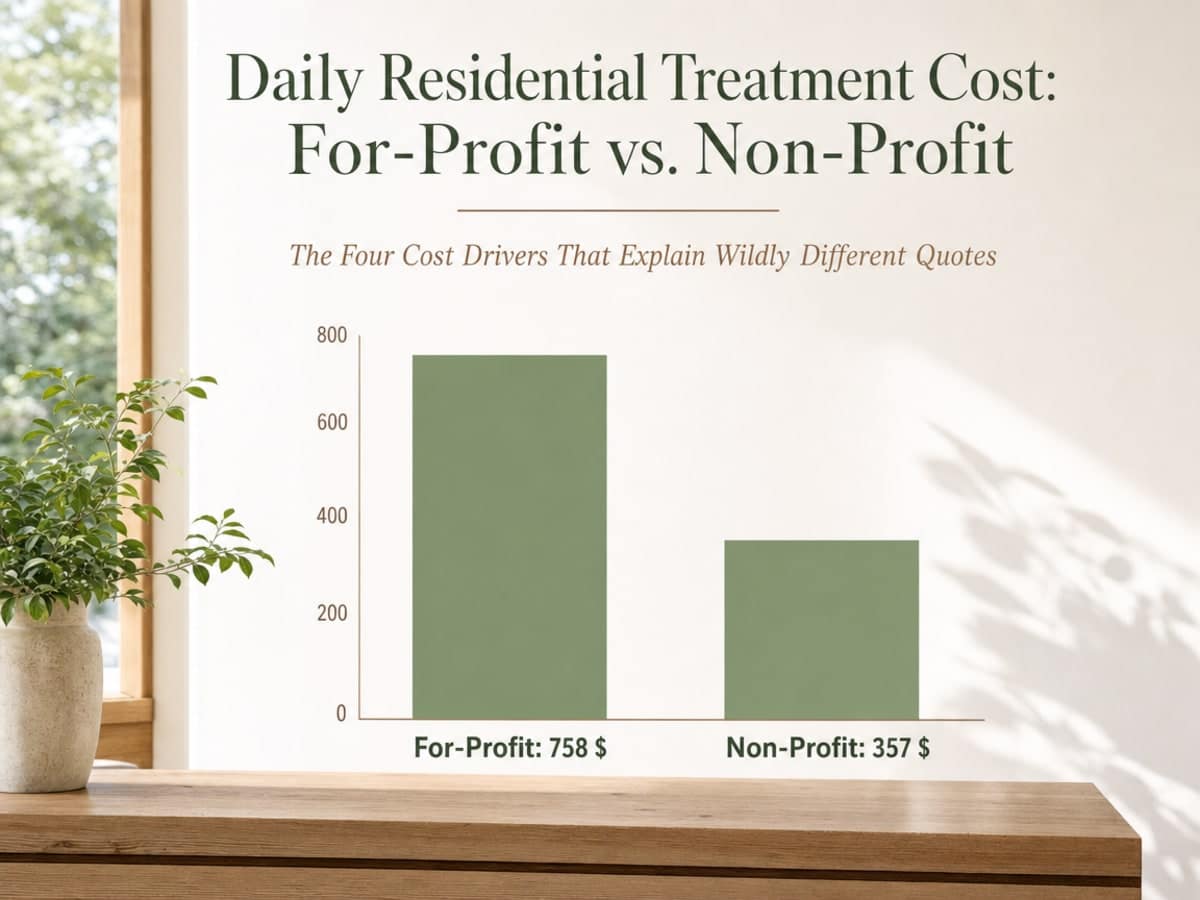
For a concrete anchor: one peer-reviewed national study of opioid use disorder treatment programs found an average residential cost of about $618 per day, with for-profit programs averaging roughly $758 per day and nonprofits around $357 per day 1. That study looked specifically at opioid treatment admissions, not every detox for every substance, so treat it as a reference point rather than your quote.
A medical detox stay is usually 3 to 7 days, sometimes longer for fentanyl, benzodiazepines, or complicated alcohol withdrawal. Multiply the daily rate by your likely length of stay and you have a rough ceiling. The floor is often much lower than you expect, because self-pay is rarely your only option, even if you’re uninsured today. The sections below walk through what’s really on the bill, what drives the number up or down, and the Oklahoma pathways that can shrink it, sometimes to zero.
What Actually Shows Up on a Self-Pay Detox Bill
When two detox facilities quote you numbers that are thousands of dollars apart, it’s usually not because one is cheating you. It’s because they’re bundling different things, or unbundling them differently. Before you call anyone, it helps to know what categories are hiding inside a single “daily rate.”
A typical self-pay medical detox bill breaks down into six buckets:
- Facility and room & board. The physical bed, meals, housekeeping, and 24/7 nursing coverage. This is usually the biggest single line.
- Physician and clinical services. The admitting physician, any psychiatric or addiction medicine consults, and daily medical rounds. Sometimes billed separately from the facility fee.
- Medications. Buprenorphine, methadone, naltrexone, comfort medications for nausea, sleep, blood pressure, or seizures. Costs vary widely by substance and dosing protocol.
- Laboratory and diagnostics. Intake drug screens, blood work, EKG if indicated, repeat labs during stay.
- Monitoring and ancillary services. Vital-sign monitoring, withdrawal scoring (CIWA, COWS), counseling sessions, case management.
- Aftercare planning and transportation. Discharge planning, referrals to residential or outpatient, sometimes transport to the next level of care.
When you compare two facilities, ask whether the quoted price is all-inclusive or whether physician services, medications, labs, and pharmacy are billed separately. A $500/day quote that excludes meds and physician fees can land higher than a $700/day quote that includes everything. Ask whether a longer stay triggers a different daily rate, and what happens if your withdrawal is more severe than expected and clinicians recommend an extra day or two.
You’re not being difficult by asking. You’re reading the bill the way the federal rule assumes you will.
The Four Cost Drivers That Explain Wildly Different Quotes
Withdrawal Severity and Medical Supervision Level
The single biggest reason one facility quotes $400 a day and another quotes $1,200 is how closely clinicians need to watch you. Mild withdrawal from a short opioid run with no other medical issues is a different clinical picture than fentanyl dependence layered on top of benzodiazepines, high blood pressure, or a seizure history. The second scenario needs more nursing hours, more frequent vital-sign checks, more medications, and sometimes a hospital-grade setting.
Detox is usually billed around a level of care. A medically monitored residential bed with 24/7 nursing is less expensive than a medically managed hospital bed with a physician on site around the clock, but both cost more than an outpatient withdrawal protocol with daily check-ins. Where you land is a clinical decision, not a sales decision. When you call, describe what you’ve been using, how much, how long, your last dose, and any other health conditions. That honest picture is what lets the intake team quote a realistic level of care, which in turn drives the number.
Length of Stay and Facility Ownership
The second lever is time. A 3-day stay and a 7-day stay at the same daily rate are obviously different totals, but the daily rate itself often shifts with length of stay. Some facilities discount longer stays. Others charge a higher admission-day rate to cover intake labs, physician assessment, and medication initiation, then step down after day one. Ask whether the quote assumes a flat per-diem or a tiered schedule, and ask what happens if your withdrawal clears faster or slower than planned.
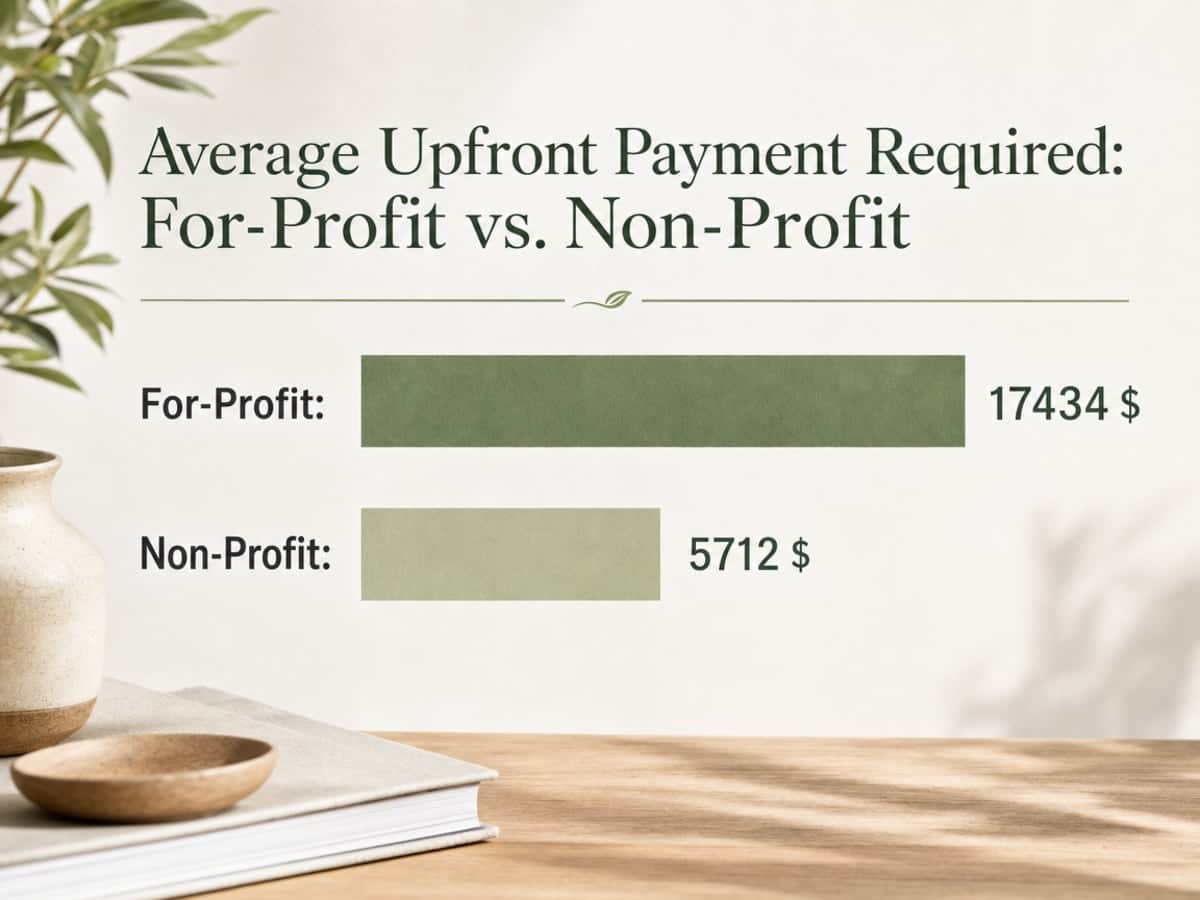
The ownership structure of the facility matters just as much. A national study of opioid use disorder treatment programs found that for-profit residential programs averaged about $758 per day compared with about $357 per day at nonprofit programs, and the upfront payment required before admission averaged $17,434 at for-profit programs versus $5,712 at nonprofit programs 1. That’s a study of opioid treatment admissions specifically, not a universal price list, but the direction holds up across the field: nonprofit and hospital-affiliated programs tend to quote lower sticker prices and ask for less money up front than private, for-profit residential facilities.
This doesn’t mean cheaper is automatically better or that for-profit automatically means worse. It means you should ask the ownership question out loud. “Are you a for-profit or nonprofit facility, and what upfront payment do you require before I can be admitted?” That one exchange explains a lot about why the number on the other end of the line is what it is.
If the upfront ask is a wall for you, say so. Many facilities will route you to a sliding scale, a payment plan, or a referral to a lower-cost program rather than lose the call entirely.
Medications: Buprenorphine, Naltrexone, and Supportive Prescriptions
Medication is a cost category of its own, and it can swing a bill meaningfully. For opioid withdrawal, the two most common medications used during and after detox are buprenorphine and naltrexone, and they are not priced alike. A Government Accountability Office report cited historical uninsured estimates of roughly $200 to $450 per month for daily sublingual buprenorphine and $750 to $1,200 per month for monthly injectable naltrexone 14. Those are older figures and should be treated as a reference point, not a current quote, but the gap between an oral daily medication and a long-acting injectable is still real.
Supportive prescriptions add up too: medications for nausea, insomnia, muscle cramping, elevated blood pressure, or seizure prevention. For benzodiazepine or alcohol withdrawal, the taper medications themselves are a distinct line item.
When you ask for a quote, ask three medication questions. What medications are typically used for someone in your situation? Are those included in the daily rate or billed separately through a pharmacy? And is there a discharge prescription or injectable at the end of detox that you’ll be expected to pay for before you leave?
Labs, Monitoring, and Add-On Services
The fourth driver is everything that happens around the bed. Intake usually includes a urine drug screen, basic blood work, and often an EKG. Repeat labs during the stay are common for alcohol or benzodiazepine detox. Continuous vital-sign monitoring, withdrawal scoring every few hours, and one-to-one observation for high-risk patients all require staff time that shows up somewhere in the bill.
Add-ons vary widely: individual counseling, group sessions, psychiatric consultation, nutrition support, family contact, wearable monitoring technology, transportation to a next level of care, and discharge planning. Some facilities bundle these into the daily rate. Others itemize them. Ask which model the facility uses, and ask whether anything you’d expect to need, like a psychiatric consult or an MAT induction, triggers a separate charge.
You Have More Options Than You Think
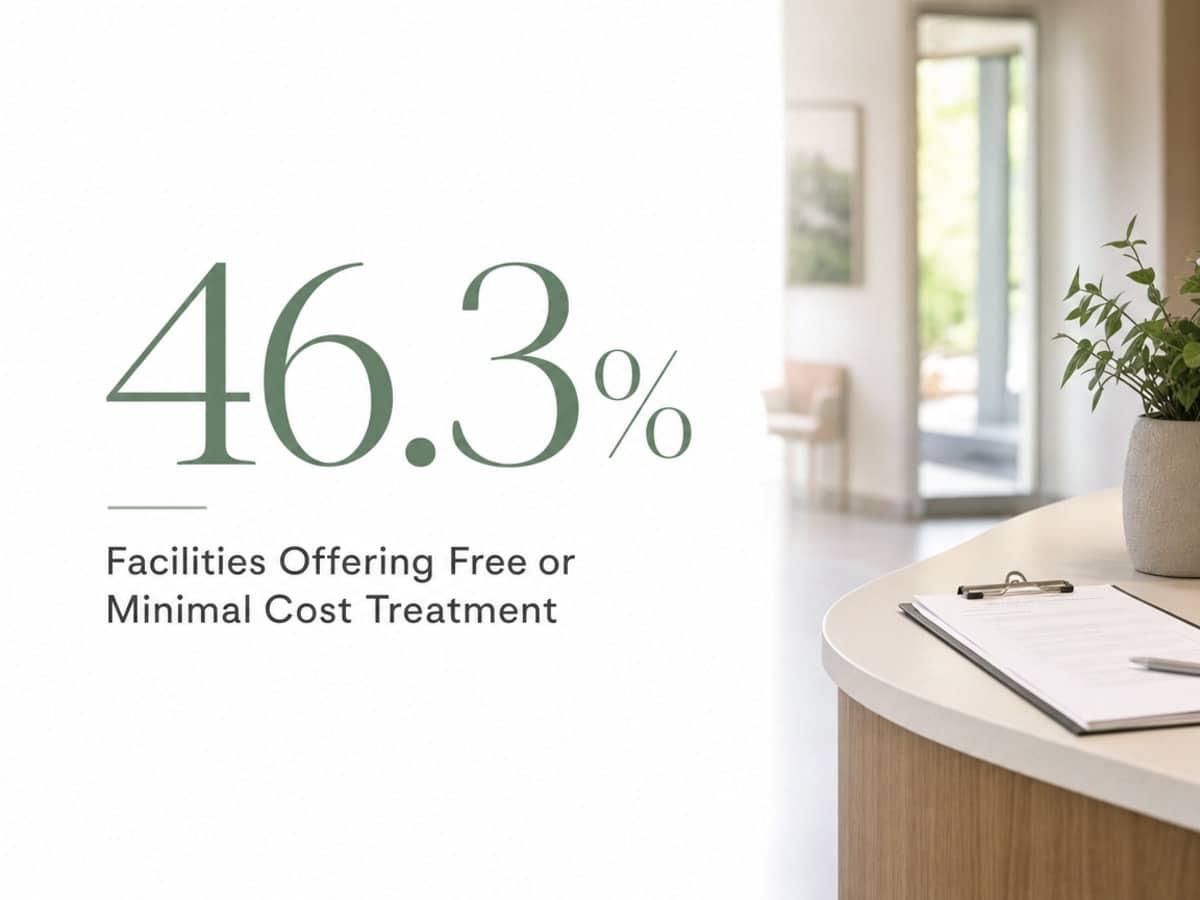
If you’re reading this at 2am and bracing for a five-figure number, here’s something worth sitting with before you make a single call: the national picture is not what most people assume. According to SAMHSA’s 2024 National Substance Use and Mental Health Services Survey, 46.3% of U.S. substance-use treatment facilities offered care at no charge or minimal payment to clients who could not afford to pay, and 89.9% accepted cash or self-payment 2. That doesn’t mean half the beds in the country are free, and it doesn’t guarantee any specific facility will treat you for nothing. What it does mean is that “I can’t afford detox” is not the end of the conversation for roughly half the facilities you might reach.
Self-pay is one road. It’s not the only road, and often it’s not the first road worth checking.
Federal guidance from SAMHSA points to several assistance types that exist alongside cash pricing: sliding-fee scales tied to income, structured payment plans, grants, scholarships, and charity-care programs 3. Each of these works differently. A sliding-fee scale lowers the per-day cost based on what you earn. A payment plan spreads the full cost over months. A grant or scholarship covers part or all of the bill through a specific funding stream, often tied to a diagnosis, a population, or a referral source. Charity care, sometimes a formal written policy at nonprofit hospital-affiliated programs, can discount or waive the bill entirely for patients who qualify 8.
Add to that the possibility that you’re not actually uninsured, you’re not yet enrolled. Medicaid, VA health care, and state-funded programs may be available to you right now even without an active private plan 4. The next section walks through the Oklahoma-specific versions of those pathways.
Before you commit to a self-pay number, ask every facility you call two questions: “Do you offer a sliding scale, payment plan, scholarship, or charity-care program?” and “Do you have anyone on staff who can screen me for Medicaid or other coverage before I pay out of pocket?” Those two questions regularly change the number.
Oklahoma Pathways That Can Drop the Bill to Zero
SoonerCare: Uninsured Is Not the Same as Not Yet Enrolled
Before you accept a self-pay quote, find out whether you qualify for SoonerCare, Oklahoma’s Medicaid program. The behavioral-health benefit explicitly covers inpatient acute care, crisis stabilization, and medical detoxification, along with outpatient substance-use services 9. Detox and residential substance-use services appear in the state’s benefit tables as covered services, though some require prior authorization 10. If you’re approved and the facility participates, the number you’d pay out of pocket for detox can drop to zero or close to it.
Oklahoma’s eligibility guidance lists adults ages 19 to 64 who are not eligible for Medicare among the groups that may qualify, along with individuals seeking behavioral-health services under applicable program categories 11. That matters because many adults who assume they’re permanently uninsured have never actually applied, or last checked years ago when the rules were different.
Two practical moves here. First, when you call a detox facility, ask whether they participate in SoonerCare and whether they have an admissions team member or peer navigator who can help you apply or check eligibility on the spot. Second, if the facility doesn’t take Medicaid, ask for a referral to one that does. An admission delay of a day or two to confirm coverage is often worth thousands of dollars.
ODMHSAS Liability Waivers and Safety-Net Facilities
If SoonerCare isn’t an option, the Oklahoma Department of Mental Health and Substance Abuse Services runs a second track. Under ODMHSAS administrative rules, payment liability may be waived for qualifying uninsured or indigent individuals receiving behavioral-health services through applicable Department facilities. The rule defines uninsured status to include people without private or public coverage, people who have exhausted available behavioral-health benefits, and people whose plan does not cover the needed service, and it describes indigency criteria and waiver-of-liability procedures 12.
Read that carefully: the waiver applies at applicable Department facilities and grant-funded safety-net programs, not automatically at every private detox center in the state. When you call around, ask directly: “Are you an ODMHSAS-contracted facility, and do you accept patients under a waiver of liability for uninsured or indigent clients?” If the answer is yes, ask what documentation you’d need to bring, usually proof of income, residency, and insurance status.
CCBHCs for Assessment, Medication, and Referral
Certified Community Behavioral Health Clinics are a third door worth knocking on. Oklahoma describes CCBHCs as providing access to integrated mental-health and substance-use services for vulnerable individuals regardless of pay source or ability to pay 13. For someone in active opioid dependence, a CCBHC can be the fastest route to an assessment, a buprenorphine prescription or MAT induction, crisis stabilization, and a referral into a medically monitored detox bed if one is clinically needed.
One honest caveat: a CCBHC may not operate a residential medical detox unit itself. If your withdrawal needs 24/7 nursing, the CCBHC’s job is to assess you and route you to a program that does. That’s still progress. You walk in with no coverage and no plan, and you walk out with a clinical recommendation and a referral.
Veterans: VA Health Care and Vet Centers
If you served, you have options that have nothing to do with self-pay. VA health care covers services for substance-use problems, including detox, counseling, and medication for opioid use disorder, for eligible Veterans 15. Enrollment, priority group, and clinical need shape what’s covered and whether any copay applies, but “I don’t have insurance” is not the same answer at the VA that it is at a private facility.
There’s a second lane that even many Veterans don’t know about. Veterans who served in a combat zone may receive free private counseling, alcohol and drug assessment, and related support through Vet Centers, even without VA health-care enrollment 15. A Vet Center can be a low-friction first contact: no bill, no enrollment hurdle on day one, and a clinician who can help you figure out the detox and treatment pathway that fits your service history.
If you’re a Veteran or calling for one, start with the VA or a Vet Center before you accept any self-pay quote.
Get It in Writing: Using the Good Faith Estimate as a Tool
A phone quote is a conversation. A good-faith estimate is a document. Those are different things, and the federal rule that created the second one exists specifically so you don’t have to rely on the first.
If you’re uninsured or planning to pay cash, the facility generally must give you a written good-faith estimate when care is scheduled at least three business days in advance, or when you request one 5. The estimate must identify expected charges for scheduled items and services, including relevant facility and provider charges 6. Ask for it in writing. Not a verbal number, not a text message, a document that lists line items.
When it arrives, check whether these appear separately or are explicitly bundled: facility and room & board, physician services, medications and pharmacy, laboratory and diagnostics, and any ancillary providers who might bill independently. If something you’d expect to need isn’t on the page, ask why. If the quote assumes a 5-day stay and your clinical picture suggests 7, ask for a scenario that reflects the longer stay.
The estimate isn’t a guaranteed final price, especially if your withdrawal needs more services or more days than planned. It is a baseline, in writing, that you can hold up against whatever shows up later.
What to Say on the First Phone Call
The call is the hardest part. Once it’s happening, it goes faster than you think.
Have a few things in front of you before you dial: what you’ve been using, how much per day, your last dose, how long you’ve been using at this level, any other medications or health conditions, and whether you’ve ever had seizures or a complicated withdrawal before. If a family member is making the call, that same information is what the intake nurse will ask for.
Then work through a short list of questions. You don’t have to be smooth about it. Read them off a notebook if you need to.
- “I’m uninsured right now. Can someone screen me for SoonerCare, VA, or ODMHSAS funding before I pay out of pocket?” 4
- “Are you a for-profit or nonprofit facility, and what upfront payment do you require before admission?” 1
- “Do you offer a sliding-fee scale, payment plan, scholarship, or charity-care program?” 3
- “Can you send me a written good-faith estimate with facility, physician, medications, and labs listed separately?” 6
- “If my withdrawal needs an extra day or two, how does that change the number?”
You are not being pushy. You are doing exactly what the people on the other end of the line expect a prepared caller to do. One call replaces a guess with a quote.
Get Real Answers About Detox Costs Now
Speak privately with a caring expert about your self-pay detox options and next steps today.
Frequently Asked Questions
How much does medical detox actually cost without insurance?
There’s no single number. One national study of opioid use disorder treatment programs reported an average residential cost of about $618 per day, with for-profit programs higher and nonprofits lower 1. A typical detox stay runs 3 to 7 days. Your actual quote depends on withdrawal severity, medications, length of stay, and whether the facility is for-profit or nonprofit. Call for a written good-faith estimate.
Can I get detox for free if I live in Oklahoma and have no insurance?
Possibly. SoonerCare’s behavioral-health benefit covers medical detoxification for eligible members 9. Adults ages 19 to 64 who aren’t eligible for Medicare may qualify, especially when seeking behavioral-health services 11. ODMHSAS rules also allow waiver of payment liability for qualifying uninsured or indigent individuals at applicable Department facilities 12. Ask any detox you call whether they participate in these pathways before accepting a self-pay quote.
What is a Good Faith Estimate and how do I ask for one?
It’s a written estimate of expected charges that uninsured and self-pay patients can request before scheduled care 5. The estimate must identify facility and provider charges for the scheduled items and services 6. Ask the facility by phone or email: “Please send me a written good-faith estimate with facility, physician, medications, and labs listed separately.” If your final bill exceeds the estimate by $400 or more per provider, you may dispute it 5.
What’s the difference between being uninsured and not yet enrolled in coverage?
Uninsured means no active coverage of any kind. Not yet enrolled means you may qualify for Medicaid, VA health care, or a state-funded program but haven’t applied or been approved 4. Many people assume they’re permanently uninsured when they actually qualify for SoonerCare or VA benefits right now. Before paying out of pocket, ask the facility to screen you for coverage. That one step can replace a self-pay bill entirely.
What should I ask on the first phone call to a detox facility?
Ask five things. Can someone screen me for SoonerCare, VA, or ODMHSAS funding before I pay out of pocket 4? Are you for-profit or nonprofit, and what upfront payment do you require 1? Do you offer a sliding-fee scale, payment plan, scholarship, or charity-care program 3? Can you send me a written good-faith estimate with line items separated 6? And how does the quote change if my withdrawal needs more days?
Are there options for veterans who need detox but can’t afford it?
Yes. VA health care covers substance-use treatment for eligible Veterans, including detox, counseling, and medication for opioid use disorder 15. Veterans who served in a combat zone may also receive free counseling, assessment, and support through Vet Centers even without VA health-care enrollment 15. Before accepting any self-pay quote, contact the VA or a Vet Center. Eligibility and copays depend on service history and priority group, but “uninsured” rarely applies here.
References
- Admission Practices And Cost Of Care For Opioid Use Disorder Treatment In The United States. https://pmc.ncbi.nlm.nih.gov/articles/PMC8638362/
- Data on Substance Use and Mental Health Treatment Facilities: 2024 National Substance Use and Mental Health Services Survey. https://www.samhsa.gov/data/sites/default/files/reports/rpt56696/2024-nsumhss-annual-report.pdf
- Free & Low Cost Treatment Options for Mental Health, Drugs, and Alcohol. https://www.samhsa.gov/find-support/how-to-pay-for-treatment/free-or-low-cost-treatment
- How to Pay for Mental Health, Drug, or Alcohol Treatment. https://www.samhsa.gov/find-support/how-to-pay-for-treatment
- Know your medical bill rights when not using insurance. https://www.cms.gov/initiatives/your-patient-rights/medical-bill-rights/know-your-medical-bill-rights/know-your-medical-bill-rights-when-not-using-insurance
- No Surprises Act Good Faith Estimate and Patient-Provider Dispute Resolution Requirements. https://www.cms.gov/files/document/gfe-and-ppdr-requirements-slides.pdf
- Financial assistance policy and emergency medical care policy (Section 501(r)(4)). https://www.irs.gov/charities-non-profits/financial-assistance-policy-and-emergency-medical-care-policy-section-501r4
- Is there financial help for my medical bills?. https://www.consumerfinance.gov/ask-cfpb/is-there-financial-help-for-my-medical-bills-en-2124/
- Behavioral Health and Substance Abuse Services – Oklahoma.gov. https://oklahoma.gov/ohca/individuals/mysoonercare/soonercare-benefits/behavioral-health-and-substance-abuse-services.html
- Mental Health and Substance Abuse Services – Oklahoma.gov. https://oklahoma.gov/ohca/individuals/programs/mental-health-and-substance-abuse-services.html
- Eligibility Guidelines – Oklahoma.gov. https://oklahoma.gov/ohca/individuals/mysoonercare/apply-for-soonercare-online/eligibility.html
- Chapter 1. Administration – Oklahoma. https://oklahoma.gov/content/dam/ok/en/odmhsas/documents/policy/provider-certification/administrative-rules/2025/PC–Chapter-1_9-1-25.pdf
- Certified Community Behavioral Health Clinics (CCBHC). https://oklahoma.gov/odmhsas/treatment/ccbhc.html
- Opioid Addiction: Laws, Regulations, and Other Factors Can Affect Medication-Assisted Treatment Access. https://www.gao.gov/assets/gao-16-833.pdf
- Substance Use Treatment For Veterans. https://www.va.gov/health-care/health-needs-conditions/substance-use-problems/