
Key Takeaways
- Oklahoma City detox seekers who are LGBTQ+ face higher rates of alcohol use disorder, yet only about one in six U.S. facilities offer LGBT-specific services 3, 5.
- Affirming care shows up in specifics: chosen-family emergency contacts, protected SOGI data, individualized room assignments, and correct pronouns during overnight medication passes, not in window stickers.
- Oklahoma’s SB 613 explicitly excludes behavioral health and mental health counseling, so medical detox and substance use care remain legally available to trans adults and youth 10.
- Before committing, ask how pronouns are handled at the medication cart, who sees SOGI data, how rooms are assigned for trans patients, and what happens if a staff member discriminates.
What you’re actually afraid of when you walk into detox as a queer or trans person
You already know detox is hard. You’ve probably run the physical part through your head a hundred times: the sweats, the shakes, the vomiting, the not-sleeping, the moment where your body forgets how to be a body. That’s the fear you’re allowed to say out loud.
The other fears are quieter. You’re worried that when you’re at your most exposed, curled up on a bed in a facility gown, someone will call you a name you haven’t used in years. You’re worried the nurse will read your chart, glance at your gender marker, and decide who you are before you speak. You’re worried a chaplain will show up uninvited and ask if you’ve thought about what got you here, in that tone. You’re worried your partner will be turned away at the door because they’re not on some form as a spouse.
You’re worried about being outed. To a roommate. To a family member listed as your emergency contact by default. To a case manager who then puts it in a note that follows you.
You’re worried, honestly, that you’ll get through the worst of withdrawal and still feel unsafe, and you’ll leave against medical advice because staying costs too much of yourself.
Those fears are reasonable. They come from somewhere real, and often from a prior detox or hospital stay that went badly 7. This article is written for you. Not the version of you that has to explain or defend anything. The version of you that just needs medical supervision through withdrawal, and needs to know that walking in here won’t cost you your name, your people, or your privacy.
Why affirming detox matters in Oklahoma right now
The disparity is real, and it shows up at the bedside
If you’ve wondered whether your drinking or using “is really that bad,” or whether you’re overreacting by looking for detox, the numbers say what you already suspect. You’re not imagining the pattern.
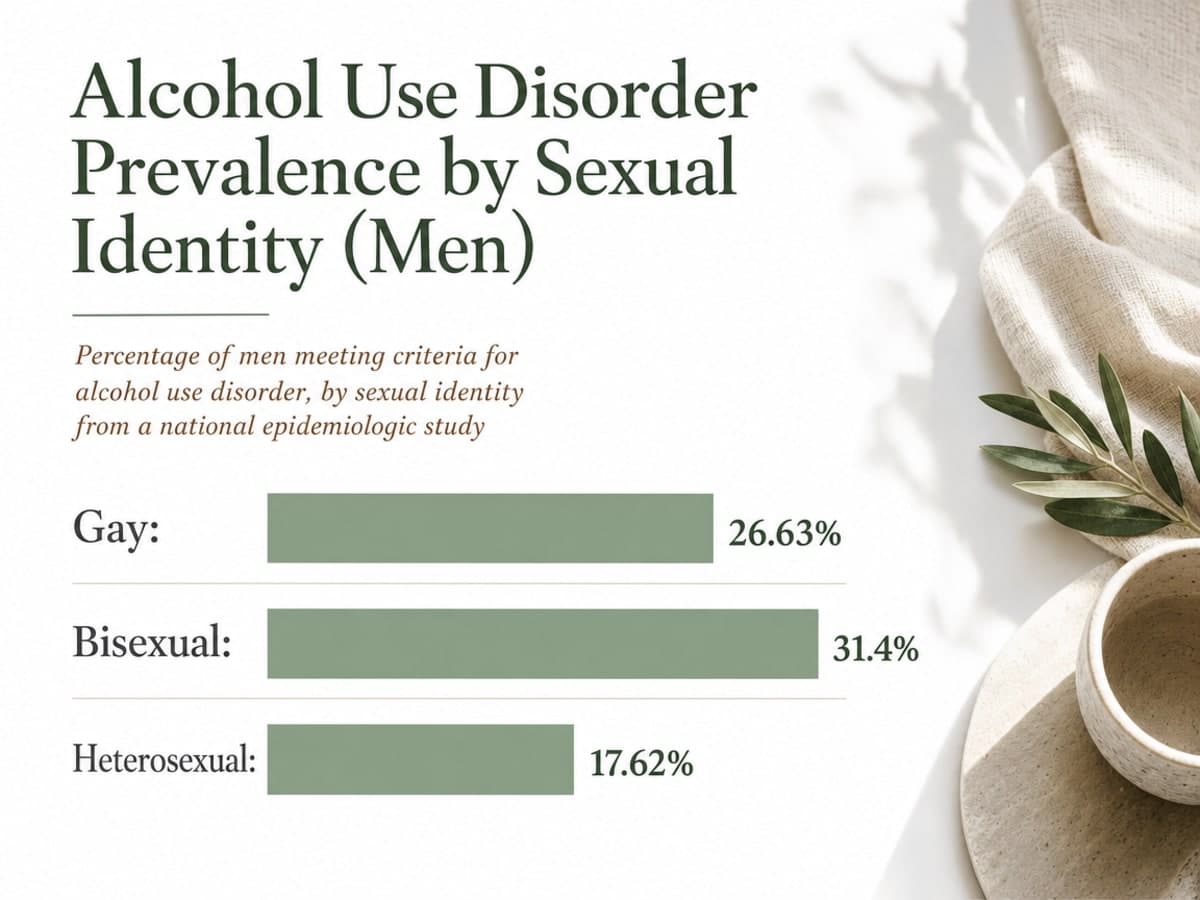
A national epidemiologic study comparing alcohol use disorder rates by sexual identity found that among men, 17.62% of heterosexual men met criteria for alcohol use disorder, compared with 26.63% of gay men and 31.40% of bisexual men 5. That study measured diagnostic criteria in a large U.S. sample, not casual drinking, and the same pattern held for women: 8.54% of heterosexual women met criteria, compared with 16.66% of lesbian and gay women and 22.49% of bisexual women 5. Bisexual adults, in particular, carry an outsized share of the burden.
The review literature on LGBTQ adults points to minority stress, discrimination, and years of hiding as some of the mechanisms behind those numbers, not anything wrong with who you are 18. Living in a place where your identity is contested is exhausting. Drinking, using, and dependence often follow that exhaustion.
Here’s what that means at the bedside. If you’re queer, trans, bi, or nonbinary and you’re reading this in the middle of a withdrawal cycle, the odds that you actually need medical detox are higher than they are for the general population. So is the risk that a bad treatment experience will push you back out the door before the worst of it passes.
That’s why the room you walk into, and the people in it, matter as much as the medication protocol. An affirming environment isn’t a nicety. It’s part of what keeps you in the bed long enough to finish the withdrawal you came in for.
Truly affirming detox is rarer than it should be
You’d think that with disparities this clear, affirming programs would be everywhere. They aren’t.
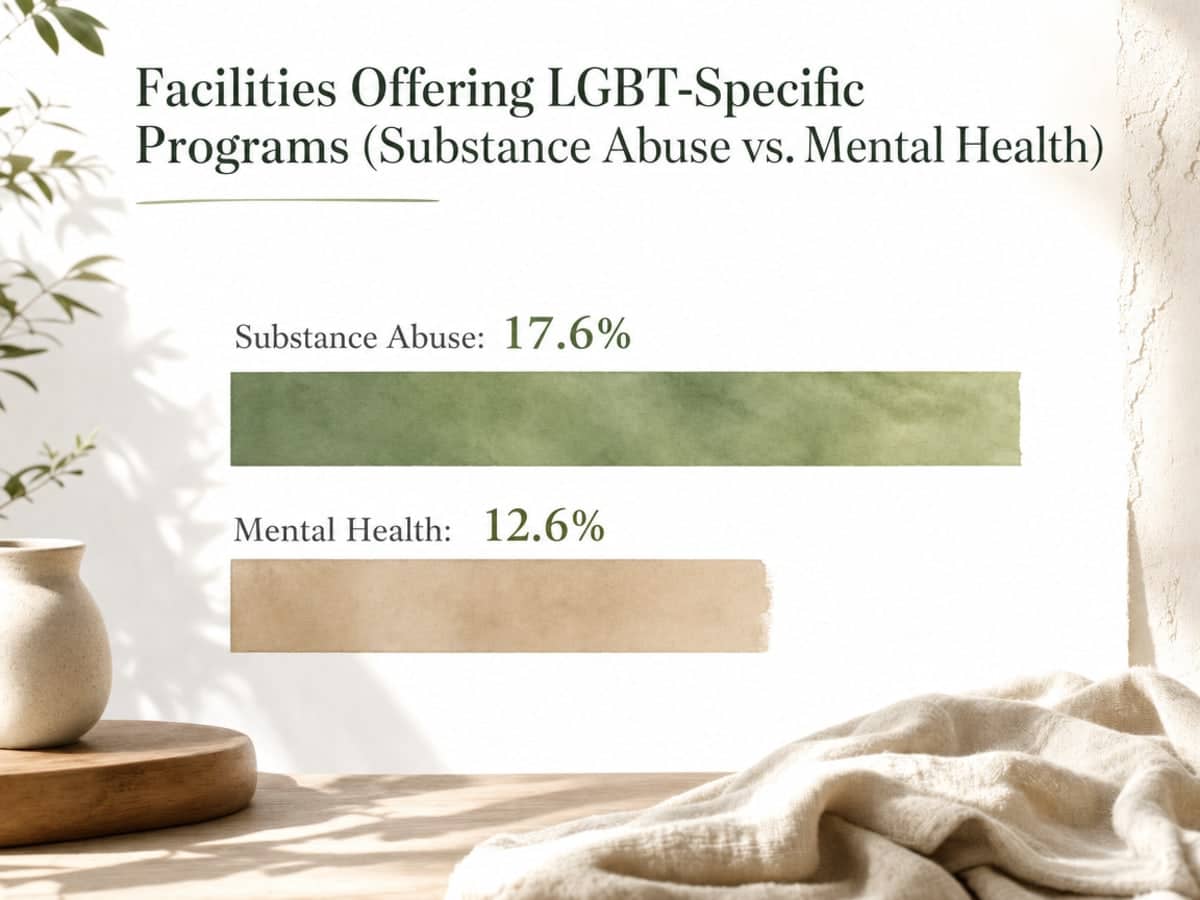
A national survey of U.S. treatment facilities found that only 17.6% of substance abuse programs and 12.6% of mental health programs reported offering LGBT-specific services 3. That’s roughly one in six detox and addiction facilities nationally, and the study noted that local LGBT population density didn’t reliably predict whether a program offered affirming services 3. In other words, higher demand in a city doesn’t automatically produce more affirming supply. Programs have to decide to build it.
What this scarcity means for you, practically, is that you can’t assume. A facility that says “we treat everyone the same” may mean it kindly and still lack the specific practices that keep you safe. A facility that says nothing at all may still have quietly built them. The only way to know is to ask, and to keep asking until you get specific answers about pronouns, roommate assignments, chosen family, and confidentiality.
That’s the point of calling Renewal Springs before you commit. You’re allowed to interview the place that’s about to see you at your most vulnerable. Any facility that treats that call as a burden is telling you something important.
If you’ve been in detox before and it went badly
If this isn’t your first detox, some of what you’re feeling right now might not be about the substance at all. It might be about the last place you tried.
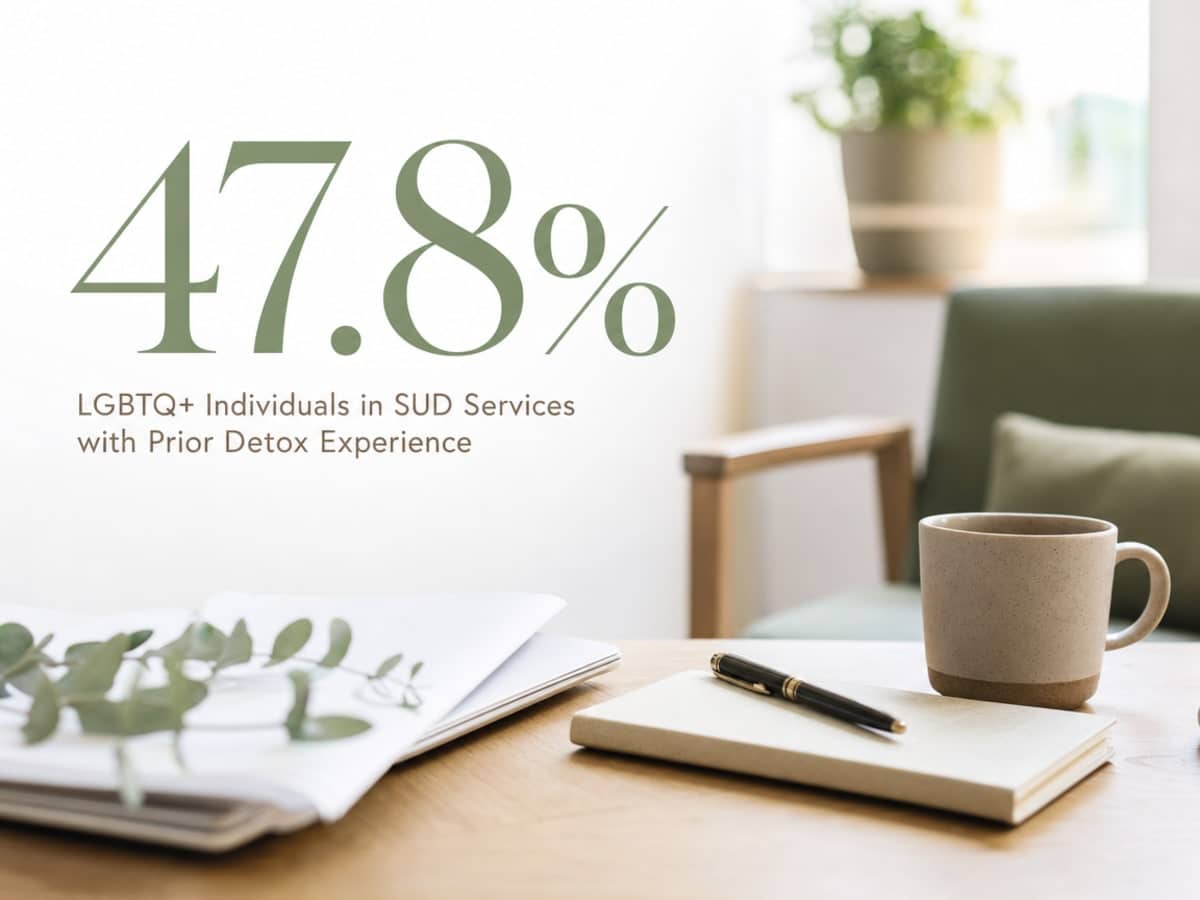
In a 2024 qualitative study of LGBTQ+ people using substance use services, 47.8% of participants had been through detox before, and many described stigma, misgendering, and being made to feel like a curiosity or a problem while they were sick 7. That’s not a small share. That’s roughly half of the LGBTQ+ folks in the study walking into their next appointment carrying a prior bad experience.
You may have been the person whose pronouns kept slipping in group. Or the one whose partner was asked, more than once, how they knew you. Or the one who quietly stopped correcting people because you didn’t have the energy while your body was reorganizing itself. Maybe you left early. Maybe you finished and swore you’d never do it again.
Whatever happened, it counts. It shaped what you expect from the next place. That’s not you being difficult. That’s you being smart.
Coming back to detox after a bad experience takes a kind of courage most people don’t have to summon. You already know what withdrawal feels like, and you’re choosing medical supervision anyway. That’s not a small step. That’s the step. What you deserve this time is a room where the staff earn your trust with specifics, not slogans, and where asking hard questions on the phone before you arrive is treated as exactly the right thing to do.
What affirming actually looks like at Renewal Springs, hour by hour
Intake: how your name, pronouns, and SOGI data are handled
Intake is the moment most LGBTQ+ people brace for. It’s a clipboard, a stranger, and a set of boxes that don’t always fit. Renewal Springs handles this part on purpose, not by accident.
When you walk in, you’ll be asked for your legal name because insurance and medical records require it. You’ll also be asked separately for the name you actually use and the pronouns you want staff to use with you. Both go into the chart. The name you use is what the nurse on the overnight shift will read first, not the one on your ID.
Sexual orientation and gender identity questions are asked directly, not guessed at from appearance or partner. Research on affirming intake supports this approach: routine, respectful SOGI questions on inclusive forms are one of the clearest signals to LGBTQ+ patients that a program is set up for them rather than around them 1. You can decline to answer any of it. Declining doesn’t change your care.
Your SOGI information is protected the same way the rest of your medical record is. It isn’t shared with your emergency contact, your employer, or your family unless you sign a release naming that person and that information specifically. If you’re not out to a parent, a spouse, or a referring clinician, that stays true here. You control the release form. You can revoke it at any point during your stay.
During withdrawal: pronouns, roommate assignment, and who touches you
Withdrawal is when the small stuff gets loud. A wrong pronoun at 3 a.m. lands differently than it does at a dinner party. Renewal Springs staff are trained to use the name and pronouns in your chart, and to correct themselves out loud and move on when they slip, without making it your job to reassure them.
Room assignments are private or gender-specific, and they’re made in conversation with you rather than off a database field. If you’re a trans woman, you aren’t going to be dropped into a men’s unit because a form said so. If you’re nonbinary, you’ll be asked what setup feels safest, and a private room is an option worth asking about on your intake call. This kind of individualized placement is one of the practices affirming-care research identifies as essential rather than optional 2.
Physical care matters here too. Vitals, MAT induction, wearable monitoring for sleep and stress, help with a shower when you’re too sick to stand, those are hands on your body. You’ll be told before someone touches you. If you have a preference about which staff member does that care, say so. If you have a binder, prosthetic, or medication you take that isn’t in your bag, that conversation happens privately, not in a hallway.
Chosen family, partners, and emergency contacts
The person who drove you here at 2 a.m. is the person who should be listed as your emergency contact, whether or not you share a last name, a marriage license, or biology.
Renewal Springs treats chosen family as family. Your partner can be your primary emergency contact. Your best friend can be the person we call if something changes clinically. A parent you’re estranged from doesn’t get default access because they share your surname. You decide who is contacted, in what order, and about what.
Visitation follows the same principle. Same-gender partners aren’t asked how they know you or interviewed about the relationship. If you don’t want a particular person to visit or receive information, that goes in the chart and staff enforce it. The federal SAMHSA framework for LGBTQI+ recovery is explicit that affirming care has to run through policies and interactions, not just statements on a website 13. Emergency-contact policy is one of the places that shows up most clearly.
Discharge planning and connections to affirming aftercare
Detox is the beginning, not the finish line. What happens after you leave the building matters as much as what happens inside it, and discharge planning starts early in your stay, not the morning you go home.
Your case manager will ask what kind of continuing care fits your life: residential treatment, outpatient, MAT maintenance, individual therapy, peer support. They’ll also ask what kind of provider you want on the other end. If you want a therapist who has worked with trans clients before, or a group that isn’t going to require you to closet yourself, that’s a real filter, not a preference to apologize for. Individualized aftercare planning that accounts for identity and community is one of the affirming practices researchers consistently name 2.
You’ll leave with names, phone numbers, and warm handoffs where we can arrange them. If a referral turns out not to fit once you meet them, call back. Replacing a referral isn’t starting over. It’s part of the plan.
The Oklahoma legal picture, without the panic
SB 613 and what it does and doesn’t touch
If you’re trans, or you’re a parent helping a trans teen, SB 613 has probably been sitting in the back of your mind since you started searching. It’s worth reading what the law actually says, because the headlines and the statute are not the same document.
SB 613 is Oklahoma’s 2023 law banning gender transition procedures for minors. It defines those procedures as surgeries or medications intended to affirm a gender identity that doesn’t match sex assigned at birth, and it sets civil, criminal, and licensing penalties for providers who violate the ban 10. That’s the part that got the coverage.
You are allowed to get detox in Oklahoma. Your teen is allowed to get counseling. The law is real, and the carve-out is also real.
Public accommodations, facility policy, and where your protection actually comes from
Here’s the honest piece. Oklahoma state law does not prohibit discrimination on the basis of sexual orientation or gender identity in employment, housing, or public accommodations 12. Oklahoma City has a local ordinance, but its SOGI protections cover housing, not public accommodations like health care facilities 12.
That means the answer to “can this facility legally treat me differently?” is not “no, the state won’t allow it.” The answer is that your protection at any given detox center comes from that facility’s own written policies, its staff training, and its willingness to enforce both.
Renewal Springs has a nondiscrimination policy that covers sexual orientation and gender identity, and staff are trained on it. That’s not a substitute for statewide protection. It’s what stands in for it, day to day, inside these walls. When you call, you can ask to hear the policy read to you. You can ask what happens if a staff member violates it. Those are fair questions, and the answers should be specific.
Insurance, SB 557, and paying for detox
Cost is often the reason people wait longer than they should to call. Here’s what Oklahoma law does for you on that front.
SB 557, in effect since November 2023, strengthens mental health parity in Oklahoma. It requires that any reviewer of a mental health or substance use disorder claim have appropriate, specialized credentials, and it clarifies that parity rules apply to all licensed providers, not just physicians and hospitals 11. In practice, that makes it harder for an insurer to arbitrarily deny detox or MAT coverage without a qualified reviewer looking at your case.
Renewal Springs accepts most major insurance and verifies your benefits for free before you commit to anything. You call, share your insurance details, and get an actual answer about what’s covered. No guessing at bills later.
Questions to ask before you commit, on the phone with any facility
You’re allowed to interview a detox center before you hand over your body for a week. The call is free, and the answers you get on it are more useful than anything on the website. Print or screenshot this list. Use it here, and use it anywhere else you’re considering.
- What name and pronouns will show up on the whiteboard in my room and on the medication cart, and how do you handle it when a staff member slips?
- Who at the facility can see my sexual orientation and gender identity information, and what has to happen before it’s shared with anyone outside the clinical team?
- Can my partner or a chosen-family member be my primary emergency contact, and can I block a biological relative from receiving information?
- How are room and roommate assignments made for trans and nonbinary patients, and is a private room available?
- What specific training have your nurses, techs, and case managers had on working with LGBTQ+ patients, and when did they last do it?
- If a staff member says something discriminatory, what happens to them, and what happens for me?
- Can you connect me to affirming aftercare, including therapists and MAT prescribers who have worked with queer and trans clients before?
If the person on the phone can answer these without pausing to check with a manager, that tells you something. If they can’t, that also tells you something. Either way, you leave the call with more information than you started with, which is the point.
Calling Renewal Springs: what happens next
When you call, a person picks up. You don’t have to have your story ready. You don’t have to disclose anything about your identity to get information. “I’m looking at detox and I have some questions about the environment before I decide” is a complete sentence.
From there, you can ask whatever you need to ask. Use the list from the section above, or bring your own. If you want to know how a specific medication is handled, ask. If you want to talk through what a private room looks like, or whether your partner can stay in the family area during admission, ask. If you’d rather have a friend on the line with you, put them on speaker.
Insurance verification is free and doesn’t commit you to anything. Share your card details and you’ll get a real answer on what’s covered, which matters given the parity protections now in place under Oklahoma law 11.
Making the call is the step. You’re already doing it by reading this far.
Talk With Someone Who Affirms Your Experience
Connect directly to ask about our LGBTQ+ affirming, judgment-free detox environment before you decide.
Frequently Asked Questions
Will staff use my correct name and pronouns during withdrawal, even if they don’t match my ID?
Yes. Your legal name goes on the medical record because insurance and charting require it, but the name you actually use and your pronouns are recorded separately and are what staff use with you, including on the whiteboard in your room and at the medication cart. If a staff member slips, they correct themselves and move on. You don’t have to teach anyone.
Can my partner or chosen family be listed as my emergency contact instead of a biological relative?
Yes. Chosen family counts here. Your partner, best friend, or whoever drove you in can be your primary emergency contact, and you decide who is called, in what order, and about what. A biological relative doesn’t get default access because they share your last name. You can also block a specific person from receiving information or visiting, and that stays in your chart.
Is my sexual orientation or gender identity kept confidential, and who at the facility can see it?
Your sexual orientation and gender identity are protected the same way the rest of your medical record is. Only your clinical team sees them. Nothing is shared with an emergency contact, employer, or family member unless you sign a release naming that person and that information 1. You can decline the questions at intake, and you can revoke a release at any point during your stay.
Does Oklahoma’s SB 613 affect whether I can get detox or counseling as a transgender adult or youth?
No. SB 613 bans certain gender transition procedures for minors, but the statute explicitly excludes behavioral health care services and mental health counseling from that definition 10. Medical detox, substance use counseling, and therapy remain legally permitted for trans adults and trans youth in Oklahoma. A doctor supervising your withdrawal is not doing what the law bans.
How are roommate and room assignments handled for trans, nonbinary, or gender-nonconforming patients?
Assignments are made in conversation with you, not off a database field. Rooms are private or gender-specific, and you’ll be asked what setup feels safest before anything is finalized. Trans women aren’t placed in men’s units because a form says so. If you’re nonbinary, ask about a private room on your intake call. Individualized placement is a core affirming-care practice, not an exception 2.
What questions should I ask on the phone to tell if a detox facility is actually affirming?
Ask specifics, not slogans. How are pronouns handled at the medication cart? Who can see your SOGI data? Can a chosen-family member be your emergency contact? How are rooms assigned for trans and nonbinary patients? When did staff last train on LGBTQ+ care? What happens if a staff member says something discriminatory? A facility with real practices will answer without checking with a manager.
References
- Meeting the Needs of Lesbian, Gay, and Bisexual Clients in Substance Abuse Treatment. https://pmc.ncbi.nlm.nih.gov/articles/PMC5245827/
- Delivering LGBT-sensitive substance use treatment to sexual minority adults. https://pmc.ncbi.nlm.nih.gov/articles/PMC6469851/
- The availability of LGBT-specific mental health and substance abuse treatment programs: A national survey. https://pmc.ncbi.nlm.nih.gov/articles/PMC7704474/
- Disparities in substance use disorder treatment use by sexual identity among adults with substance use disorder. https://pmc.ncbi.nlm.nih.gov/articles/PMC8477369/
- Sexual Orientation Disparities in Substance Use: Comparing Heterosexual and Sexual Minority Men and Women. https://pmc.ncbi.nlm.nih.gov/articles/PMC6925636/
- Mental Health and Substance Use Diagnoses and Treatment by Sexual Orientation and Gender at a Community Health Center. https://pmc.ncbi.nlm.nih.gov/articles/PMC8213009/
- Experiences of and recommendations for LGBTQ+-affirming substance use services: A qualitative study. https://pmc.ncbi.nlm.nih.gov/articles/PMC10765665/
- Top Health Issues for LGBT Populations Information & Resource Kit. https://library.samhsa.gov/sites/default/files/sma12-4684.pdf
- OASAS LGBTQ-Affirming Program Endorsement Standards. https://oasas.ny.gov/system/files/documents/2022/06/lgbtq-affirming-program-endorsement.pdf
- An Act Relating to Health Care (SB 613) – Oklahoma Legislature. https://www.oklegislature.gov/cf_pdf/2023-24%20ENR/SB/SB613%20ENR.PDF
- Senate Bill 557 (amending 36 O.S. § 1250.5(10)) – Mental Health Parity. https://www.oklegislature.gov/cf_pdf/2023-24%20ENR/SB/SB557%20ENR.PDF
- Discrimination Against LGBT People in Oklahoma. https://williamsinstitute.law.ucla.edu/wp-content/uploads/LGBT-Discrimination-OK-Sep-2019.pdf
- Supporting Recovery of LGBTQI+ People: Findings from a Technical Experts Panel Issue Brief. https://store.samhsa.gov/sites/default/files/support-recovery-lgbtqi-community-pep24-08-004.pdf
- Quick Guide for Administrators: Substance Abuse Treatment – Addressing the Needs of Women. https://library.samhsa.gov/sites/default/files/sma13-4788.pdf
- Oklahoma – 2023 National Survey on Drug Use and Health State Estimates. https://www.samhsa.gov/data/sites/default/files/reports/rpt56188/2023-nsduh-sae-state-tables_0/2023-nsduh-sae-state-tabs-oklahoma.pdf
- 2023 TEDS-A Oklahoma | CBHSQ Data. https://www.samhsa.gov/data/node/51076
- Behavioral Health Barometer: Oklahoma, Volume 5. https://www.samhsa.gov/data/sites/default/files/cbhsq-reports/Oklahoma-BH-BarometerVolume5.pdf
- Substance Use Disorders in Lesbian, Gay, Bisexual, and Transgender Adults: A Critical Review. https://www.ncbi.nlm.nih.gov/pmc/articles/PMC5710810/