OKC Rehab Centers: 24/7 Medical Admissions
Key Takeaways
- Oklahoma City runs a 24/7 admissions network — 988, the SAMHSA Helpline, URCs, CSUs, and medical detox intake lines all answer overnight 4, 5.
- Urgent Recovery Clinics and Crisis Stabilization Units handle acute crises, while medical detox facilities manage the full 3-to-10-day withdrawal from alcohol, benzos, or opioids 1, 4.
- SoonerCare covers detox and residential care with prior authorization, and reputable OKC facilities admit acute cases while working the auth in parallel 6.
- Compare whether a facility admits immediately, treats co-occurring mental health conditions together, and arranges a warm handoff to the next level of care before discharge 1, 10.
The First Phone Call Is the Hardest Part
You already know the hardest part. It’s not the withdrawal, or packing a bag, or telling your boss. It’s the phone. The moment between deciding and dialing is where most attempts to get help quietly die.
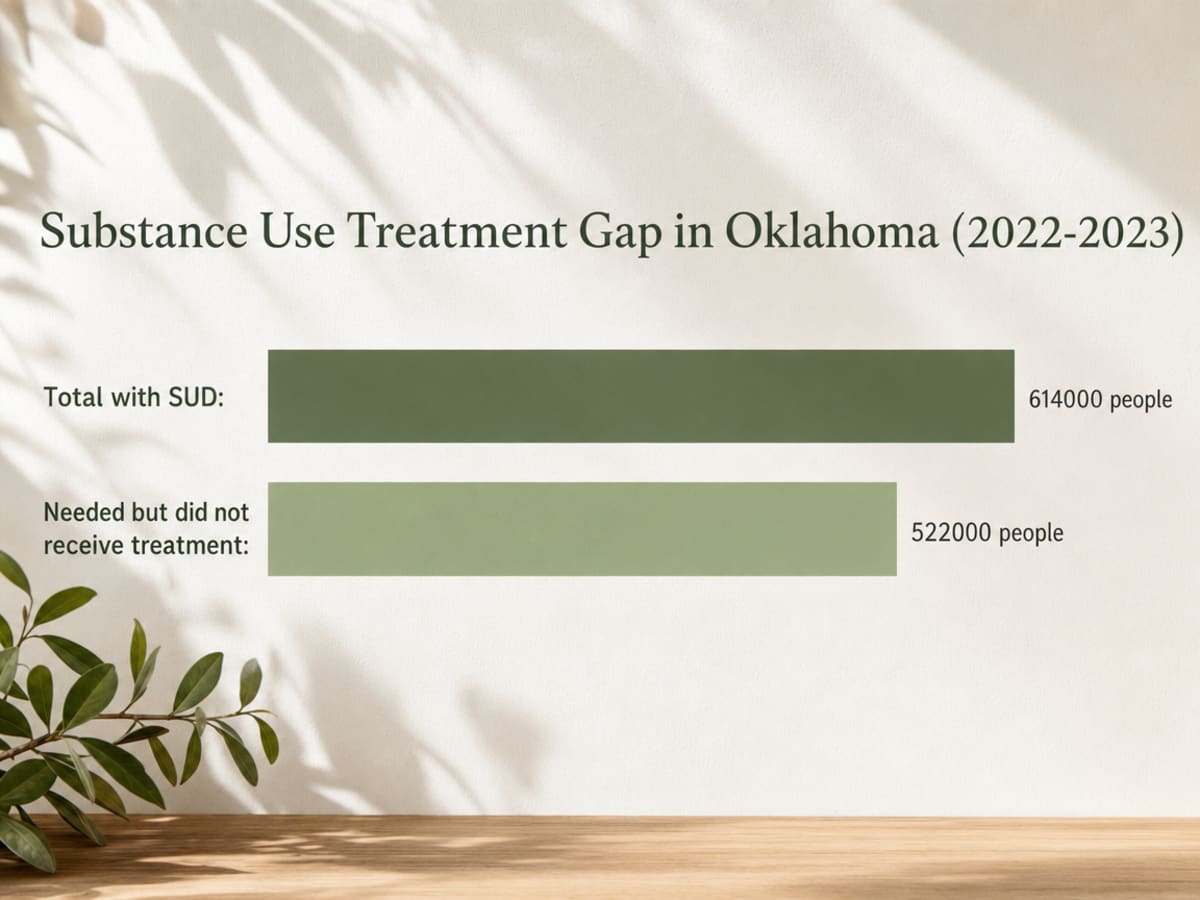
So start with what’s true: in Oklahoma, the gap between the people who need substance use treatment and the people who actually get it is enormous. In 2022–2023, about 614,000 Oklahomans age 12 and older met criteria for a past-year substance use disorder, and 522,000 who needed treatment did not receive it 9. That’s not a story about weakness. It’s a story about a system that is hard to enter, especially at 2 a.m., especially when you’re sick, especially when you’ve already tried once and the answer was a callback tomorrow.
Rapid, around-the-clock admissions exist because that gap is real. Oklahoma City has a 24/7 network built for exactly the window you’re in right now: a crisis lifeline, urgent recovery clinics, crisis stabilization units, and medical detox facilities that answer their phones at night 5, 4. Any of them can be the first door.
You don’t need a plan for the next year. You need a plan for the next hour. The rest of this piece walks you through it — which number to call first, what a nurse will actually ask, how insurance gets sorted, and what the first day inside detox looks like. One call. That’s the whole task in front of you.
Which Door to Use in the Next Hour
988, the SAMHSA Helpline, and Calling a Detox Directly
Three phone numbers can start this. Each opens a different door, and one is not universally better than the others. What matters is which one you’re most likely to actually dial in the next ten minutes.
988 is Oklahoma’s front door if you’re not sure what you need or if the situation feels like a crisis — suicidal thoughts, an overdose scare, a family member who’s threatening to leave and use again. It’s the state’s Comprehensive Crisis Response line, staffed 24/7, and the person who answers can dispatch a mobile crisis team, walk you into a URC, or triage you toward medical detox depending on what they hear 5. You can call or text. Text matters if you’re in the same house as the person you’re calling about.
The SAMHSA National Helpline (1-800-662-HELP) is the option when you want a national, confidential voice that isn’t tied to any local facility. It’s free, 24/7, 365 days a year, and it exists specifically to refer people with substance use and mental health disorders into treatment 3. Some people prefer it because it feels less like committing.
Calling a medical detox facility directly is the fastest route if you already know you need detox — meaning you’ve been drinking heavily every day, using opioids, or taking benzodiazepines regularly, and stopping on your own would be dangerous. Their intake line is answered around the clock, and the person picking up can start the clinical screen immediately, verify insurance while you’re still on the phone, and begin coordinating a bed.
Any of the three works. Pick the one you’ll actually call.
Urgent Recovery Clinics and Crisis Stabilization Units, Explained
These two acronyms come up constantly in Oklahoma, and most people who need them have never heard of them until the middle of the worst night of their year.
An Urgent Recovery Clinic (URC) is essentially a behavioral health urgent care. Open 24/7/365, it’s designed for people in an active mental health or substance use crisis who don’t necessarily need a hospital emergency room but who can’t wait for a Monday morning appointment. You can walk in. Someone brought you in. Police dropped you off. The doors don’t care how you got there.
A Crisis Stabilization Unit (CSU) is the short-term inpatient version of that — a bed, usually for up to a few days, where you can be observed and stabilized when your situation is too acute to send home but not medically severe enough for a hospital admission. Some URCs and CSUs operate together on the same campus.
These sites also operate under Title 43A, which is the Oklahoma statute covering emergency detention for mental health emergencies. Most admissions are voluntary. The legal framework is there for the cases that aren’t 4.
Crisis Stabilization Is Not Medical Detox
Here’s the distinction most competitor pages blur, and it matters for you tonight.
A URC or CSU stabilizes a crisis. It gets you through the next few hours or the next couple of days. Staff can manage a panic spiral, an overdose aftermath, a suicidal moment, or the front edge of withdrawal. What they generally don’t do is walk you all the way through a full medical detox from alcohol, benzodiazepines, or opioids — that’s a different level of care, usually 3 to 10 days, with 24/7 nursing, medication-assisted treatment, and continuous monitoring for seizures, delirium tremens, or protracted opioid withdrawal.
Think of it this way. A URC or CSU is the ER-style front door. A medical detox facility is the inpatient unit where the actual withdrawal is medically managed under the SAMHSA TIP 45 framework of evaluation, stabilization, and preparing you for ongoing treatment 1.
If you already know you’re physically dependent on alcohol, benzos, or opioids, you can skip the crisis door and call a medical detox directly. If you’re not sure, use 988 or a URC first — they’ll route you where you actually need to be, and they won’t send you home to figure it out alone 4, 5.
What Actually Happens on the Admissions Call
The Screening Questions a Nurse Will Ask
When you call a medical detox line, a nurse or intake clinician picks up. They are not going to lecture you. They are going to ask a fairly short list of questions, because they have to decide two things quickly: is it medically safe for you to travel to the facility, and is detox the right level of care for what you’re using.
Expect questions like these:
- When did you last drink or use, and how much?
- How often, and for how long?
- Have you ever had a withdrawal seizure, DTs, or been hospitalized for withdrawal before?
- Are you using anything else — benzos, opioids, stimulants, kratom?
- Any prescribed medications?
- Any medical conditions — heart, liver, seizure disorder, pregnancy?
- Any current thoughts of suicide or self-harm?
- Who’s with you right now, and can they get you to the facility, or do you need transportation arranged?
This is the evaluation step that SAMHSA’s TIP 45 frames as the first component of detox, alongside stabilization and preparing you for ongoing treatment 1, 2. It’s clinical, not judgmental. Answer honestly, especially about how much and how recently. Underreporting is the single most common thing people do on this call, and it makes the medical team’s job harder once you arrive. They’ve heard every number. Yours won’t shock them.
Insurance, SoonerCare, and Prior Authorization Without Sugarcoating
While the nurse is finishing the clinical screen, someone on the admissions team will ask for your insurance information. Most medical detox facilities in Oklahoma City run a benefits check for free while you’re still on the phone, and they can usually tell you within an hour or two what your plan covers, what your out-of-pocket exposure looks like, and whether prior authorization is needed before you walk through the door.
If you have commercial insurance through an employer or the marketplace, medical detox is typically a covered benefit. If you have SoonerCare, Oklahoma’s Medicaid program, detox and residential substance use disorder services are covered for adults and children — with prior authorization required 6. That last phrase is where the friction lives, and pretending otherwise doesn’t help you.
Prior authorization means the facility has to submit clinical documentation to your plan and get an approval before the stay is covered. In an acute situation, most detox admissions can secure expedited authorization the same day, and reputable facilities will admit you and work the authorization in parallel rather than making you wait at home in withdrawal. Ask directly: Will you admit me now and handle the prior auth on your end, or do I need to wait for approval first? The answer tells you a lot about the operation.
If you’re uninsured, say so on the first call. Some facilities have self-pay rates, sliding scales, or scholarship beds, and URCs and CSUs operate as part of the state’s crisis response regardless of your ability to pay 4. Not having a card in your wallet is not a reason to hang up.
The First 24 Hours Inside a Medical Detox
The intake nurse hangs up with a plan. Someone comes to get you, or a family member drives, or in some cases an ambulance is dispatched. From that point, the first day inside a medical detox follows a shape that has been standardized by SAMHSA’s TIP 45 for two decades: evaluation, stabilization, and preparing you for what comes after 1, 2.
Arrival, roughly 2 to 6 hours after your call. You’ll walk in with whatever you brought — most facilities give you a list beforehand, and it’s short. Photo ID if you have it, insurance card if you have it, a phone charger, a few days of clothes. A nurse takes vitals. Blood pressure, heart rate, temperature, oxygen. You’ll give a urine sample. A physician or nurse practitioner does a full medical evaluation: your substance use history, medical history, medications, mental health history, prior withdrawals. This is where the honesty on the phone pays off — the medical team is calibrating a withdrawal protocol to your body, and guessing costs them time.
The first medications, usually within the first few hours. If you’re withdrawing from alcohol, expect a benzodiazepine protocol to prevent seizures and manage tremors, plus fluids, thiamine, and often anti-nausea medication. Opioid withdrawal is typically managed with buprenorphine or, in some settings, methadone, alongside comfort medications for the muscle aches, cramping, and insomnia. Benzodiazepine withdrawal is managed with a careful taper, not a stop. Whatever the substance, the point of this phase is stabilization — bringing your body out of the danger zone so the next several days can be spent actually resting.
Overnight monitoring. A nurse checks on you regularly through the night. Vitals get retaken. Medications get adjusted. If you sleep, that’s a good sign. If you don’t, that’s also expected, and the team plans for it. By the morning of day two, the worst physical symptoms are usually starting to become manageable, though timelines vary by substance and by person.
You will not be alone at any point in these 24 hours. That’s the whole design.
Which Substances Medically Require Supervised Withdrawal
Not every substance requires a medical bed to come off of. Knowing the difference lets you triage yourself accurately at 3 a.m. instead of assuming the worst or, more dangerously, assuming you’ll be fine.
Alcohol, benzodiazepines, and opioids are the three categories where withdrawal can be medically dangerous on its own. Heavy daily alcohol use can produce seizures and delirium tremens within 24 to 72 hours of the last drink, and DTs carry a real mortality risk when untreated. Benzodiazepine withdrawal — Xanax, Klonopin, Valium, Ativan — can also produce seizures and requires a supervised taper rather than a cold stop, especially after months or years of daily use. Opioid withdrawal is rarely fatal in a healthy adult, but it is severe enough that most people who try to quit at home relapse within 48 hours simply to make the sickness stop, and in the fentanyl era, that relapse is where people die.
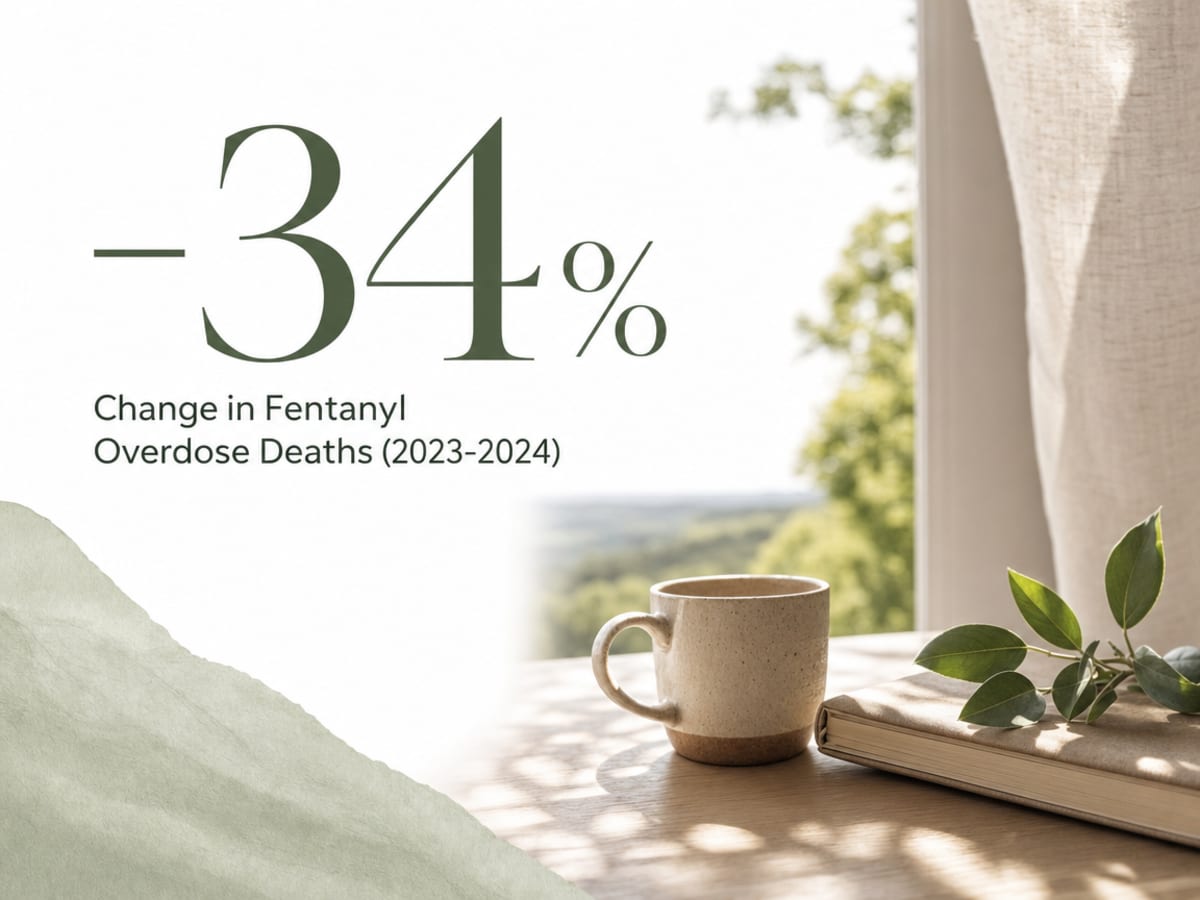
Oklahoma’s overdose picture makes the opioid piece concrete. Fentanyl deaths in the state rose from 127 in 2020 to 730 in 2023 — nearly a six-fold increase — before dropping 34% in 2024 as harm reduction and treatment access expanded. Fentanyl was involved in 86% of opioid-related overdose deaths in 2024 7. That’s the context for why a supervised opioid detox with buprenorphine or methadone induction is not overkill. The street supply is unpredictable enough that a home taper is a gamble against a substance that no longer forgives mistakes.
Stimulants, marijuana, and kratom generally do not require medical detox for physical safety, though the psychological withdrawal from methamphetamine or cocaine — crushing fatigue, depression, sometimes suicidal ideation — is a reason many people still choose an inpatient setting. Kratom withdrawal resembles a milder opioid withdrawal and often responds well to short-term medical support even when it isn’t strictly required.
If you’re using more than one substance, and most people who call are, treat the most dangerous one as the trigger for the level of care. Poly-substance use is the norm at intake, not the exception.

Co-Occurring Mental Health Conditions at Intake
If you also live with depression, PTSD, bipolar disorder, an anxiety disorder, or an eating disorder, you are not an edge case at intake. You are most of the phone calls. Say so on the first call — it changes how the team plans your first 48 hours, not whether they admit you.
SAMHSA’s guidance for co-occurring conditions is that the substance use and the mental health condition get treated together, not in sequence 10. In practice, that means the medical evaluation on arrival includes a psychiatric piece: current medications, prescribers, recent hospitalizations, any active suicidal thoughts. If you were on a psychiatric medication before you started drinking or using, the physician will usually restart or adjust it during detox rather than making you white-knuckle both problems at once.
A few things to tell them without editing: any suicide attempts in the last year, any psychiatric medication you stopped abruptly, any trauma history that makes shared rooms or male or female staff harder for you. This is also where veteran-specific programs and gender-specific units matter — ask what’s available. The point of the co-occurring frame is simple. You bring your whole self to intake. The team plans around all of it.
After Stabilization: The Handoff That Determines Whether Detox Sticks
Here’s the part of the story that gets left out of most brochures. Detox by itself doesn’t fix a substance use disorder. It gets your body out of withdrawal, which is a real and non-trivial medical accomplishment, but the research is clear that detox works only when it hands you off into something else. SAMHSA’s TIP 45 lists that handoff as one of the three core components of detoxification itself — evaluation, stabilization, and fostering patient readiness for and entry into treatment 1, 2. Not “maybe consider it later.” A component of the detox.
What that looks like in practice: somewhere between day two and day four, when you’re eating again and sleeping in stretches, a counselor or case manager sits down with you. They ask what comes next. The honest answer for most people is that they don’t know, and that’s fine. That conversation is the point.
The options usually sort into a few paths:
- Residential treatment, meaning 30 to 90 days of inpatient care where the psychological work of recovery actually happens.
- Partial hospitalization or intensive outpatient, where you sleep at home or in sober living but spend most of your daytime hours in structured treatment.
- Standard outpatient with a counselor and a MAT prescriber if you’re on buprenorphine or naltrexone.
- Peer support and community-based recovery.
Most people end up combining two or three of these.
If You Are the Family Member Making the Call
If you’re the one holding the phone while someone you love sits on the couch behind you, this part is for you. The screening call works the same way whether the person answering the questions is the one using or the one standing next to them. You can call 988, the SAMHSA National Helpline, or a medical detox facility directly and start the process on their behalf 3, 5.
A few things help. Have the basics ready: what they’ve been using, roughly how much, when they last used, any medical conditions or prescriptions you know about, and their insurance card if it’s in the house. If you don’t know the amounts, say so. Guessing badly is worse than admitting you don’t know. The intake nurse will want to talk to the person themselves at some point to confirm consent and get a clinical answer to a few questions, but you can do most of the logistics — insurance verification, transportation, arrival time — while they gather themselves.
Ask directly whether the facility can admit tonight and handle prior authorization in parallel, especially if the coverage is SoonerCare 6. Ask what to pack. Ask what happens if the person changes their mind between hanging up and walking in. Willingness comes and goes in these hours, and a good intake team plans for that instead of pretending it away.
Connect Now for Immediate Medical Detox Admissions
Speak directly with our admissions team for fast, compassionate support when every minute matters most.
Frequently Asked Questions
Can I be admitted to an OKC rehab center in the middle of the night?
Yes. Oklahoma’s crisis response system and medical detox facilities operate 24/7/365, including holidays and overnight hours 5. Urgent Recovery Clinics and Crisis Stabilization Units accept walk-ins around the clock and will not deny screening or referral based on time of arrival 4. Medical detox intake lines are also answered overnight, and admissions teams can start clinical screening and insurance verification at 3 a.m. the same way they do at 3 p.m.
Which substances actually require medical detox versus outpatient tapering?
Alcohol, benzodiazepines, and opioids are the three categories where unsupervised withdrawal carries real medical risk. Alcohol and benzos can produce seizures. Opioid withdrawal is rarely fatal but severe enough that home attempts usually end in relapse. Stimulants, marijuana, and kratom generally don’t require medical detox for physical safety, though inpatient settings help with the psychological piece. SAMHSA’s TIP 45 framework guides how facilities match the level of care to the substance and severity 1.
Does SoonerCare cover detox and residential treatment in Oklahoma City?
Yes. SoonerCare covers detox and residential substance use disorder services for adults and children, with prior authorization required 6. That prior auth is where delay can happen, but reputable OKC facilities admit acute cases and work the authorization in parallel rather than making you wait in withdrawal. Ask directly on the intake call whether they’ll admit tonight and handle prior auth on their end. The answer tells you how the facility operates under pressure.
What is the difference between a Crisis Stabilization Unit and a medical detox bed?
A Crisis Stabilization Unit is a short-term inpatient site, usually up to a few days, for people in acute mental health or substance use crisis who need observation but not a hospital 4. A medical detox bed is where the full withdrawal is medically managed over 3 to 10 days, with 24/7 nursing and medication-assisted treatment following SAMHSA’s evaluation-stabilization-transition framework 1. CSUs handle the crisis. Medical detox handles the withdrawal itself.
Should I call 988, the SAMHSA Helpline, or a detox facility directly?
Call 988 if the situation feels like a crisis or you’re unsure what level of care you need — it’s Oklahoma’s Comprehensive Crisis Response front door and can triage you into local services 5. Call the SAMHSA National Helpline if you want a confidential national voice not tied to any facility 3. Call a medical detox directly if you already know detox is the right level of care. Any of the three works.
What happens if my loved one refuses to go once the bed is ready?
Willingness comes and goes in these hours, and good intake teams plan for that. Call back — the screening doesn’t expire, and admissions staff can talk directly with the person by phone to answer their questions. If the situation escalates to imminent danger, 988 can dispatch a mobile crisis team, and Title 43A provides a legal framework for emergency detention when someone poses a risk to themselves or others 4, 5.
References
- Detoxification and Substance Abuse Treatment. Treatment Improvement Protocol (TIP) Series, No. 45. https://www.ncbi.nlm.nih.gov/books/NBK64115/
- Quick Guide for Clinicians Based on TIP 45—Detoxification and Substance Abuse Treatment. https://nida.nih.gov/sites/default/files/samhsa_detoxification_and_substance_abuse_treatment.pdf
- National Helpline for Mental Health, Drug, Alcohol Issues. https://www.samhsa.gov/find-help/helplines/national-helpline
- Urgent Recovery Clinics and Crisis Stabilization Units. https://oklahoma.gov/odmhsas/treatment/comprehensive-crisis-response/urc-and-csu.html
- Comprehensive Crisis Response. https://oklahoma.gov/odmhsas/treatment/comprehensive-crisis-response.html
- Mental Health and Substance Abuse Services – Oklahoma Health Care Authority. https://oklahoma.gov/ohca/individuals/programs/mental-health-and-substance-abuse-services.html
- Drug Overdose Data – Oklahoma State Department of Health. https://oklahoma.gov/health/health-education/injury-prevention-service/drug-overdose/data.html
- Drug Overdose Data Dashboard – Oklahoma State Department of Health. https://oklahoma.gov/health/health-education/injury-prevention-service/drug-overdose/data/drug-overdose-data-dashboard.html
- OKLAHOMA – National Survey on Drug Use and Health State Tables, 2023. https://www.samhsa.gov/data/sites/default/files/reports/rpt56188/2023-nsduh-sae-state-tables_0/2023-nsduh-sae-state-tabs-oklahoma.pdf
- Quick Guide: For Mental Health Professionals – Based on TIP 42 and TIP 45. https://library.samhsa.gov/sites/default/files/sma10-4531.pdf