Key Takeaways
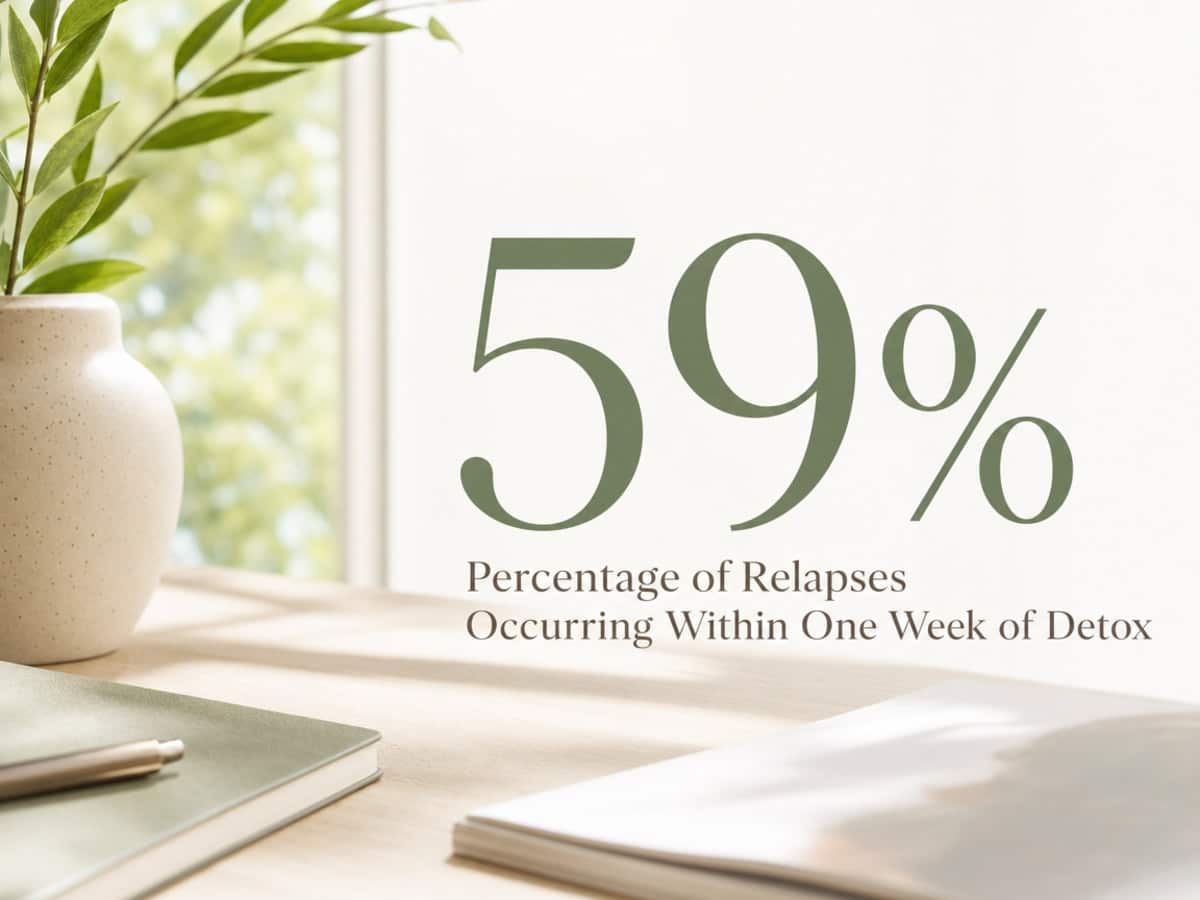
- Detox alone rarely holds; 91% of inpatient opiate detox patients relapse, most within the first week, because withdrawal management does not treat the underlying disorder 17.
- Oxycodone withdrawal follows a predictable arc, starting 8 to 24 hours after the last dose, peaking at 36 to 72 hours, and easing by day 7.
- The first call is short and medical, not moral; state your dose, timing, and other substances honestly so the team can plan medication and coverage.
- Three FDA-approved medications, buprenorphine, methadone, and naltrexone, do different jobs, and buprenorphine days carry 61% lower overdose risk than untreated days 18.
- Starting buprenorphine requires 12 to 24 hours off oxycodone and visible early withdrawal, or it triggers precipitated withdrawal a clinician is trained to prevent 1.
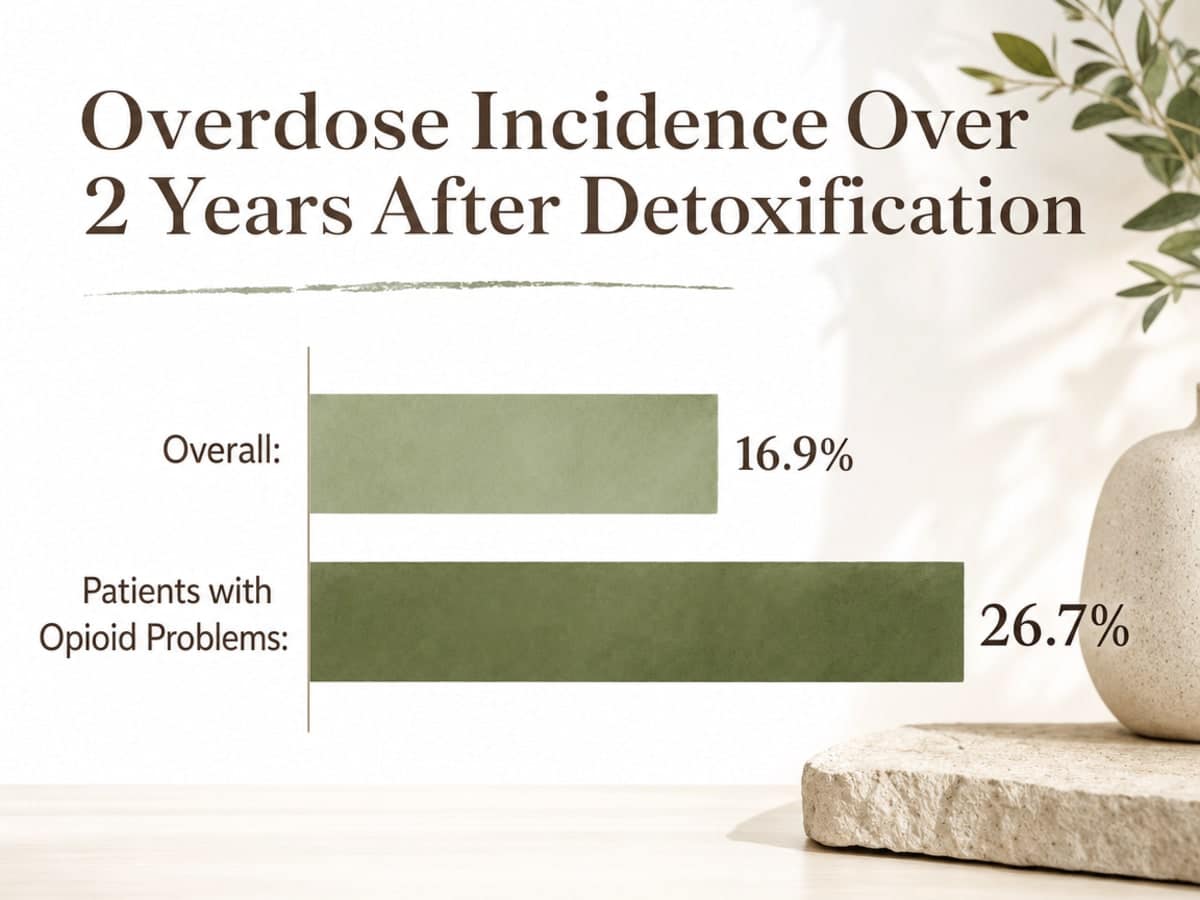
- Tolerance drops fast after detox, so returning to a former dose can be fatal; one prospective study found 26.7% of opioid patients overdosed within two years 16.
- Naloxone belongs in your discharge kit and at home, since federal guidance recommends it for everyone in OUD treatment regardless of which medication they take 8.
- SoonerCare covers medication-assisted treatment in both opioid treatment programs and office-based settings, and private plans must cover it under federal parity rules 14.
The One Thing Most People Get Wrong About Detox
Here’s what nobody tells you when you’re staring at your phone at 4 a.m., trying to decide whether to call for help: finishing detox is not the finish line. It’s the starting line. And if you don’t know that going in, the odds are stacked against you in a way that has nothing to do with your willpower.
A follow-up study of people who completed inpatient opiate detox found that 91% relapsed, and 59% of those relapses happened within the first week after leaving 17. Read that again. Not a year later. Not a month later. The first week. That is not a story about weak people or failed programs. It’s a story about what detox actually does and doesn’t do. Detox gets the drug out of your body. It resets your tolerance. It does not, on its own, treat the disease that made you dependent in the first place.
This matters because you are probably being sold a story right now, maybe by yourself, that if you can just white-knuckle through a week of withdrawal, you’ll be free. You won’t. Not because you’re broken, but because oxycodone dependence rewires the brain in ways a seven-day stay cannot undo alone.
The good news: knowing this changes everything about how you plan the next call. Detox is the on-ramp. Medication and follow-up care are the road. The rest of this guide walks you through both.
What Oxycodone Withdrawal Actually Feels Like
The Timeline: Hours 8 Through Day 7
Let’s not soften this. Oxycodone withdrawal is hard, and pretending otherwise is one of the reasons people try to do it alone and fail. Knowing what’s coming, hour by hour, gives you something the fear can’t take away: a map.
Oxycodone is a short-acting opioid, which means your body notices its absence fast. The first signs usually show up 8 to 24 hours after your last dose. Anxiety creeps in first. Then a runny nose, watery eyes, and a strange restlessness in your legs that makes it impossible to sit still. Yawning that won’t stop. A cold sweat, then chills, then sweat again. You’ll feel like something is wrong, because something is.
Hours 36 to 72 are the hardest. This is the peak. Muscle aches that feel like they’re inside the bone. Stomach cramps. Diarrhea and vomiting that can leave you dangerously dehydrated. A racing heart. Insomnia so complete that even when your body is exhausted, sleep will not come. Your skin may feel like it’s crawling. You may cry without knowing why. None of this means you are weak. It means your nervous system is recalibrating without the drug it had come to expect.
By day 4 or 5, the worst physical symptoms start to loosen their grip. By day 7, most people can eat a full meal again and sleep for more than an hour at a stretch. The catch: emotional symptoms, low mood, low energy, cravings, and trouble sleeping can linger for weeks. Doctors call this post-acute withdrawal, and it’s the part where a lot of people relapse if they’re going through this alone. You should not be going through this alone.
What a Medical Team Does to Make It Easier
Here’s what changes when you’re in a medically supervised setting instead of your bedroom: the worst symptoms get treated as they happen, not endured. A nurse takes your blood pressure at 3 a.m. because your heart rate is climbing. Someone brings you an anti-nausea medication before you ask. IV fluids replace what you’re losing to vomiting and diarrhea. The muscle aches get treated. The insomnia gets treated. The anxiety gets treated.
For the autonomic symptoms, the sweating, the racing heart, the elevated blood pressure, clinicians often use non-opioid medications like lofexidine or clonidine. A systematic review found the two work about equally well, with lofexidine causing fewer side effects 21. These medications don’t get you high. They quiet the parts of your nervous system that are firing too hard.
Then there’s the medication that changes the trajectory: buprenorphine. Once you’ve been off oxycodone long enough to be in early withdrawal, usually 12 to 24 hours, a clinician can give you a small tablet that dissolves under your tongue 1. Within about an hour, the worst of the withdrawal quiets down. Not masked. Actually reduced. Many people describe the moment they take their first dose as the first time in days their body has felt like their own again.
The other thing a team provides is something no home detox can offer: someone checking on you constantly, so if a symptom becomes dangerous, it gets caught before it becomes an emergency. That safety net is why medically supervised withdrawal exists as a defined level of care in Oklahoma 13, and it’s why the phone call is worth making tonight, not next week.
Making the Call: The First 24 Hours
What to Say on the Phone
The first call is the hardest part. You do not need a script, and you do not need to have your story figured out. You just need to dial. Here is what actually happens when you do.
Start with one sentence: “I’ve been taking oxycodone every day and I need help stopping safely.” That’s it. The person who answers has heard it before, from people who sound exactly like you sound right now. They will not lecture you. Their job is to get you in.
They will ask a few questions:
- How much you take in a day.
- How long you’ve been using at that level.
- When your last dose was.
- Whether you’ve tried to stop before and what happened.
- Whether you’re using anything else, alcohol, benzos like Xanax or Klonopin, stimulants.
Answer honestly. This is not a legal conversation. It’s a medical one, and lying about the dose or the timing can make the medication plan wrong.
Ask three things back:
- When can you come in?
- Do they take your insurance, or if you have SoonerCare, does that cover the stay?
- What happens after detox, meaning who arranges the medication and follow-up before you leave 2.
If they can’t answer that last one, keep calling. If you need a starting point, the SAMHSA National Helpline runs 24 hours 12.
What to Bring and What to Expect at Intake
Pack light. A photo ID, your insurance card if you have one, a list of any medications you take, and comfortable clothes for about a week. Slip-on shoes. A phone charger. Something soft to sleep in. Skip anything valuable. Skip anything with alcohol in it, including mouthwash. Do not bring your remaining oxycodone with you, but tell the intake nurse honestly what you took and when.
Intake usually takes an hour or two. A nurse checks your vital signs and asks the same questions you answered on the phone, plus some medical history. A clinician does a brief assessment to score how far into withdrawal you are, which is what tells the team when you can safely start buprenorphine 1. Oklahoma defines this whole process as medical withdrawal management, and it exists as a distinct level of care for exactly this reason 13.
You may feel worse before you feel better. The car ride in, the paperwork, the waiting, all of it is happening while withdrawal is climbing. Tell someone. “My legs are jumping” or “I’m about to throw up” gets you a medication faster than trying to tough it out. The team is not grading you. They are there to make the next 72 hours survivable, and then to help you plan the week after that.
The Three Medications That Change the Outcome
You have heard the words medication-assisted treatment, and maybe someone in your life has told you that swapping one drug for another isn’t real recovery. That’s not what the evidence says. Three medications are FDA-approved for opioid use disorder, and they are not moral positions. They are tools with different jobs. Knowing what each one does, and where you get it, helps you ask for the right one instead of accepting whatever’s easiest to hand out.
- Buprenorphine
- The one most detox patients start with. It’s a partial opioid that sits on the same receptors oxycodone used, quieting cravings and blocking withdrawal without producing much of a high. You get it as a tablet or film that dissolves under your tongue, or later as a monthly injection called Sublocade after you’ve been stable on the daily version for at least seven days 15. A recent analysis found overdose risk was 61% lower on days when someone had an active buprenorphine prescription compared to days without one 18. That is the number to remember when you’re deciding whether to stay on it.
- Methadone
- A full opioid, taken as a liquid you drink once a day at a federally regulated clinic. You show up, you dose, you leave. Over time you may earn take-home doses. A 2025 meta-analysis of randomized trials found methadone had significantly higher treatment retention at six months than buprenorphine-naloxone, though buprenorphine-naloxone had fewer serious adverse events 20. Translation: more people stick with methadone, but buprenorphine is generally safer. Neither is wrong. It depends on how heavy your use has been, whether you can get to a clinic daily, and what feels sustainable.
- Naltrexone
- The outlier. It’s not an opioid at all. It blocks opioid receptors so that if you use, you won’t feel it. It comes as a monthly injection called Vivitrol. The catch: you have to be fully opioid-free for 7 to 10 days before starting, which is a hard ask coming straight off oxycodone. For people who can clear that hurdle, it removes the temptation to relapse in a very direct way 5.
One rule cuts across all three: you don’t have to decide tonight. What matters is that whoever handles your detox is set up to start medication before you walk out the door, not weeks later when the cravings have already won 2.
The 12-to-24-Hour Window: Starting Buprenorphine Safely
This is the part that scares people most, and it’s worth understanding before you’re in it. To start buprenorphine safely, you have to be in early withdrawal first. Not comfortable. Not just past your last dose. Actually feeling it. SAMHSA’s guidance is clear: you need to have been off opioids for at least 12 to 24 hours and be in early withdrawal before the first dose 1.
Why the wait? Buprenorphine binds tightly to the same receptors oxycodone uses, but it only partly activates them. If there is still enough oxycodone on those receptors when the buprenorphine arrives, it shoves the oxycodone off and takes its place, dropping you into sudden, severe withdrawal in a matter of minutes. Clinicians call this precipitated withdrawal, and it feels exactly as bad as it sounds. The 12-to-24-hour rule exists so that doesn’t happen to you.
Here is what that window actually looks like when you’re in a supervised setting. You come in. The team assesses your last dose and starts a symptom score, checking things like pupil size, sweating, gooseflesh, restless legs, and a runny nose. As the hours pass and the score climbs, they treat what they can with non-opioid medications and fluids. When your score crosses into early withdrawal territory, usually somewhere in that 12-to-24-hour range for short-acting oxycodone, they give you the first small dose under your tongue. If it settles you, they give more. Within a few hours, most people are on a dose that holds them steady.
The reason to do this induction in a medical setting instead of at home is simple: if the timing is off, someone is there to fix it. If you’re using pills that turned out to contain fentanyl, which sticks around longer than oxycodone, the window may need to stretch, and a clinician can catch that in real time 9. You do not have to guess. That’s the whole point of the room you’re in.
Why Overdose Risk Spikes Right After Detox
Here is the part nobody wants to say out loud, because it sounds like a reason not to try. It isn’t. It’s a reason to plan.
When you were using oxycodone every day, your body built up a tolerance to it. That’s why the dose that would have knocked you out a year ago barely touched you last month. Detox strips that tolerance away. After a week without opioids, the dose you were taking before is no longer a dose your body can handle. It’s a dose that can kill you.
A prospective study following people after detoxification found that 16.9% had an overdose during a two-year follow-up. Among the subset with opioid problems specifically, that number climbed to 26.7% 16. More than one in four. And these were people who had done the hard work of getting through withdrawal.
The reason is not weakness. It’s biology. You leave detox with a body that has been reset. If you use again at the amount you used to use, you are using a dose meant for a person who no longer exists. The old you had tolerance. The new you does not. Add fentanyl-contaminated pills to that equation, which are now common in counterfeit oxycodone, and the risk compounds fast.
Naloxone: The Discharge Kit You Should Never Leave Without
Ask for naloxone before you pack your bag to go home. Not as a favor. As part of your discharge. If the staff hasn’t offered it, you say: “I want naloxone before I leave, and I want a second one for the person I live with.” That’s the sentence.
Naloxone is a nasal spray or an injection that reverses an opioid overdose in minutes. It works on fentanyl, heroin, and prescription opioids like oxycodone when someone gives it in time 6. It does nothing if you aren’t overdosing, so there’s no risk in having it around. It’s available over the counter now, which means the person who lives with you can pick it up without a prescription and without a conversation with a pharmacist they don’t want to have.
Federal guidance is clear that naloxone should be strongly considered for anyone in OUD treatment, including people on buprenorphine, methadone, or naltrexone 8. That’s not a warning about you. It’s an acknowledgment that overdose risk stays elevated for months after tolerance drops, and that counterfeit pills in circulation now often contain fentanyl you cannot see or taste.
Two doses in the house. One in your bag. Teach the people close to you how to use it. That’s the kit.
Paying for Treatment in Oklahoma
The money question is not shallow. It is the reason a lot of people put off calling for another six months. Let’s take it off the table.
If you have SoonerCare, Oklahoma’s Medicaid program, medication-assisted treatment is covered as a medically necessary service. That coverage applies both in federally regulated opioid treatment programs, where methadone is dispensed daily, and in office-based opioid treatment settings, where a clinician can prescribe buprenorphine 14. Translation: whether the plan your team recommends is methadone at a clinic or buprenorphine at a doctor’s office, SoonerCare is set up to pay for it. You do not have to pick based on what you can afford.
If you have private insurance through work or the marketplace, most plans cover medically supervised detox and follow-up medication treatment. Federal parity rules require insurers to cover substance-use care on the same terms as other medical care. When you call a facility, ask them to run your benefits before you come in. A good intake team does this for free, usually within an hour, and tells you what your out-of-pocket cost looks like before you commit. If they cannot give you a number, ask why.
If you have no insurance at all, you still have options. Oklahoma defines medical withdrawal management as a distinct level of care, and state-funded slots exist for people who qualify 13. The SAMHSA treatment locator can filter for programs that accept uninsured patients or offer sliding-scale fees 11. The National Helpline can also route you to funded options in your area 12.
Do not let a coverage question stop the first call. The facility figures out the money. Your job is to dial.
What Comes After the First Week
You did the hard part. You called. You got through withdrawal. You are sitting on the other side of a week that felt impossible. So what happens now, and why does this next stretch matter as much as the one you just finished?
Week two is where the plan you made at intake becomes real life. If you left on daily buprenorphine, that means picking up your prescription and taking it every morning. It means showing up to a follow-up appointment, usually within seven days, so the clinician can adjust the dose if cravings are breaking through. It also means, for many people, the option to switch to a monthly buprenorphine injection called Sublocade after at least seven days of dose adjustment on the daily version 15. One shot a month is a very different life than remembering a pill every morning while your head is still clearing.
Counseling and peer support belong here too. Not because talking is a cure, but because the reasons you started using, the pain, the sleep problems, the loss, the anxiety, are still in the room. FDA and CDC both frame medication as part of a broader plan, not the whole plan 4, 5.
Here is the number that should decide how long you stay on medication: opioid use during long-term follow-up is significantly reduced by buprenorphine or methadone compared with no treatment 23. Staying on the medicine is the treatment. Coming off too soon is where the first week’s work quietly unravels.
Speak with a Medical Detox Specialist Now
Get immediate answers about safe, supervised oxycodone withdrawal and next steps for medical detox support.
Frequently Asked Questions
How long does oxycodone withdrawal last?
The worst physical symptoms usually start 8 to 24 hours after your last dose, peak between hours 36 and 72, and start easing by day 4 or 5. Most people feel physically human again by day 7. Low mood, poor sleep, and cravings can linger for weeks, which is why medication after detox matters so much.
Is detox alone enough to treat oxycodone addiction?
No, and the evidence on this is not close. A follow-up study of inpatient opiate detox patients found 91% relapsed 17. Detox clears the drug from your body and resets your tolerance. It does not treat the underlying disorder. Medication treatment with buprenorphine, methadone, or naltrexone after detox is what changes the odds 2.
How soon can I start buprenorphine after my last dose of oxycodone?
SAMHSA guidance says at least 12 to 24 hours after your last dose, and you must be in early withdrawal first 1. Starting sooner can trigger precipitated withdrawal, which feels much worse than natural withdrawal. In a supervised setting, a clinician scores your symptoms and times the first dose so this does not happen to you.
Does SoonerCare or private insurance cover oxycodone addiction treatment in Oklahoma?
Yes. SoonerCare covers medically necessary medication-assisted treatment in both opioid treatment programs and office-based settings 14. Most private insurance plans cover medically supervised detox and follow-up medication under federal parity rules. Ask the facility to verify your benefits before you come in. A good intake team does this for free within an hour.
Which medication is right for me: buprenorphine, methadone, or naltrexone?
There is no single right answer. A 2025 meta-analysis found methadone had higher six-month retention, while buprenorphine-naloxone had fewer serious adverse events 20. Naltrexone requires 7 to 10 opioid-free days first, which is hard right after detox. Talk to the clinician who assesses you. Your use history, daily schedule, and access to a clinic all shape the choice.
Should I carry naloxone after leaving detox?
Yes, and so should the people you live with. Your tolerance drops fast during detox, which raises overdose risk if you use again. HHS recommends naloxone for anyone in OUD treatment, including people on buprenorphine, methadone, or naltrexone 8. It is available over the counter as a nasal spray, works on prescription opioids and fentanyl, and does nothing if you are not overdosing 6.
References
- What is Buprenorphine? Side Effects, Treatment & Use. https://www.samhsa.gov/substance-use/treatment/options/buprenorphine
- TIP 63: Medications for Opioid Use Disorder. https://library.samhsa.gov/product/tip-63-medications-opioid-use-disorder/pep21-02-01-002
- Federal Guidelines for Opioid Treatment Programs. https://library.samhsa.gov/sites/default/files/federal-guidelines-opioid-treatment-pep24-02-011.pdf
- Information about Medications for Opioid Use Disorder (MOUD). https://www.fda.gov/drugs/food-and-drug-administration-overdose-prevention-framework/information-about-medications-opioid-use-disorder-moud
- Opioid Use Disorder: Treating | Overdose Prevention. https://www.cdc.gov/overdose-prevention/hcp/clinical-care/opioid-use-disorder-treating.html
- Lifesaving Naloxone | Stop Overdose. https://www.cdc.gov/stop-overdose/caring/naloxone.html
- CDC Clinical Practice Guideline for Prescribing Opioids for Pain — United States, 2022. https://www.cdc.gov/mmwr/volumes/71/rr/rr7103a1.htm
- Naloxone: The Opioid Reversal Drug that Saves Lives. https://www.hhs.gov/system/files/naloxone-coprescribing-guidance.pdf
- Fentanyl | National Institute on Drug Abuse (NIDA) – NIH. https://nida.nih.gov/research-topics/fentanyl
- Opioid Use Disorder Treatment. https://nida.nih.gov/nidamed-medical-health-professionals/treatment/opioid-use-disorder-treatment
- Treatment Locators: Mental Health, Drug, Alcohol Issues. https://www.samhsa.gov/find-help/locators
- National Helpline for Mental Health, Drug, Alcohol Issues. https://www.samhsa.gov/find-help/helplines/national-helpline
- CHAPTER 18 – Oklahoma.gov. https://oklahoma.gov/content/dam/ok/en/odmhsas/documents/policy/provider-certification/administrative-rules/2023/PC–Chapter-18-Final-effective-9-15-23.pdf
- Okla. Admin. Code § 317:30-5-241.7 | State Regulations. https://www.law.cornell.edu/regulations/oklahoma/OAC-317-30-5-241.7
- Sublocade. https://www.accessdata.fda.gov/drugsatfda_docs/label/2021/209819s018lbl.pdf
- Overdose after detoxification: a prospective study. https://pubmed.ncbi.nlm.nih.gov/17280803/
- Lapse and relapse following inpatient treatment of opiate dependence. https://pubmed.ncbi.nlm.nih.gov/20669601/
- Risk of opioid overdose during buprenorphine treatment for …. https://pubmed.ncbi.nlm.nih.gov/41520431/
- Buprenorphine/Naloxone vs Methadone for the Treatment of …. https://pubmed.ncbi.nlm.nih.gov/39418046/
- Buprenorphine-naloxone vs methadone for opioid use …. https://pubmed.ncbi.nlm.nih.gov/40536198/
- Lofexidine versus clonidine for mitigation of opioid withdrawal symptoms: A systematic review. https://pubmed.ncbi.nlm.nih.gov/31791720/
- Loss of tolerance and overdose mortality after inpatient opiate detoxification: follow up study. https://pubmed.ncbi.nlm.nih.gov/12727768/?dopt=Abstract
- Long-term follow-up assessment of opioid use outcomes …. https://pmc.ncbi.nlm.nih.gov/articles/PMC8710136/