Key Takeaways
- Long-term opioid dependence in Oklahoma City often traces back to years of aggressive prescribing, not personal failing, and a supervised taper is the medical response to that history.
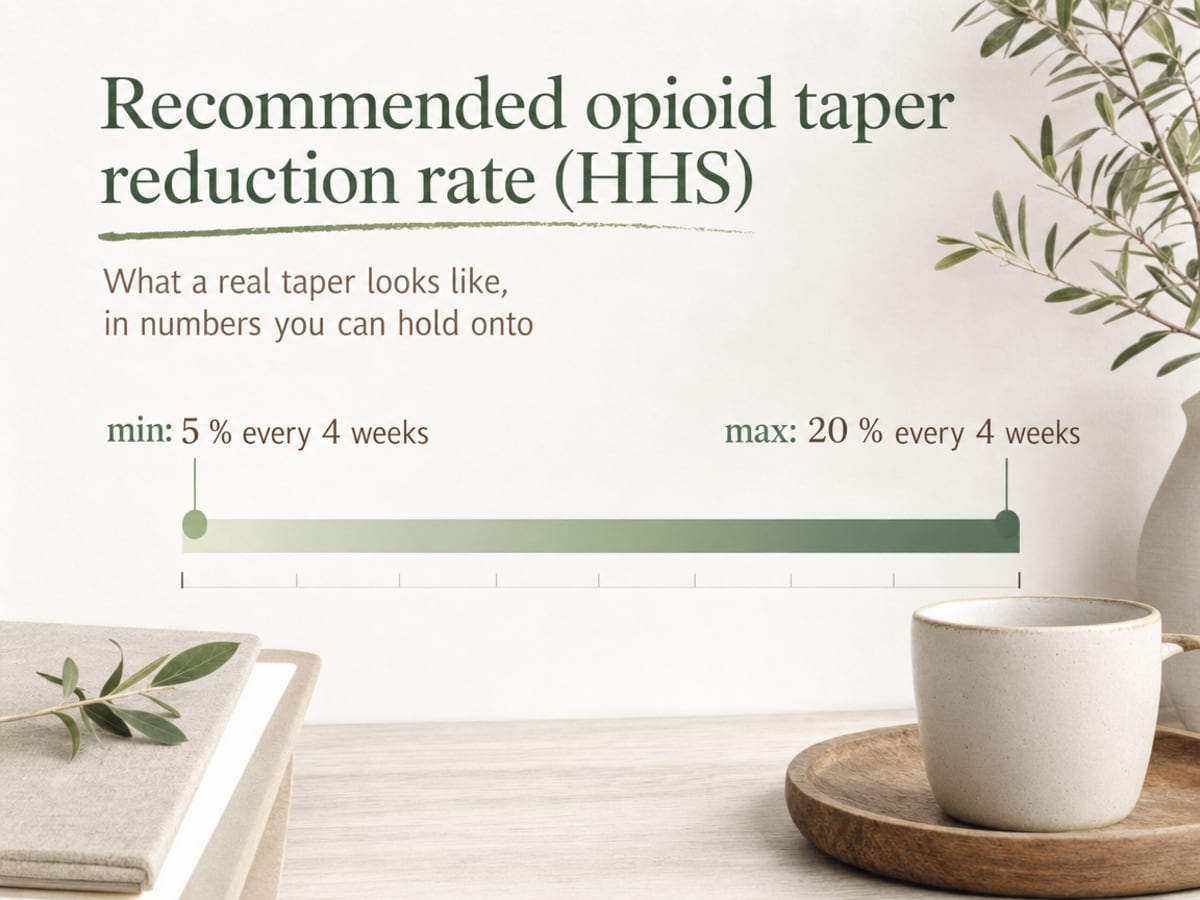
- Evidence-based tapers move slowly, typically 5-20% every 4 weeks or 10% per week to start, and the schedule should bend around your body rather than a fixed calendar 1, 4.
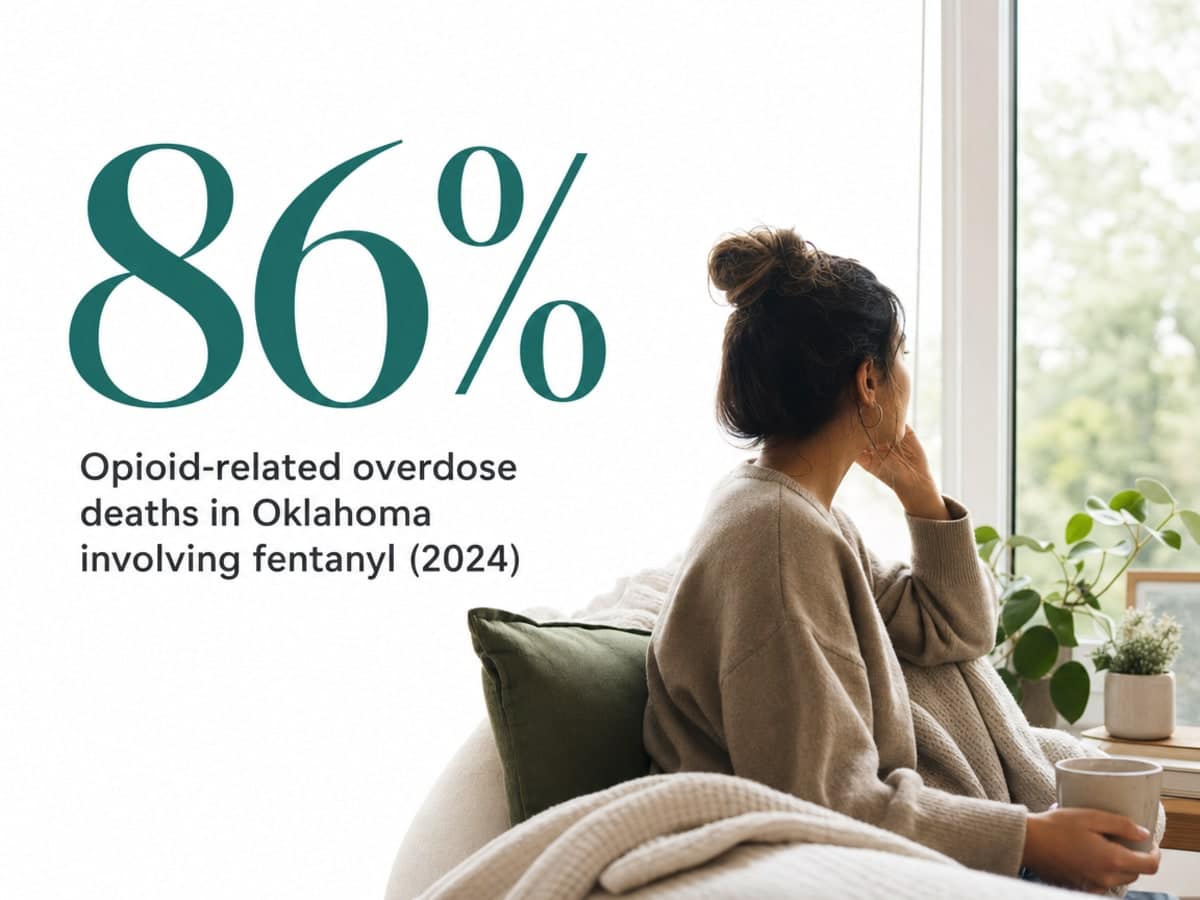
- Rapid or abrupt discontinuation raises withdrawal severity and pushes some patients toward the illicit supply, where fentanyl was involved in 86% of Oklahoma opioid overdose deaths in 2024 2.
- Before acting, compare pace, symptom management, 24/7 monitoring, mental health support, and whether buprenorphine is offered as a bridge when a straight taper stalls 1, 8.
When the medication that helped you now feels like a trap
You took the pills the way you were told. After the surgery, or the back injury that never quite healed, or the years of pain that finally got a name, someone in a white coat handed you a prescription for oxycodone, hydrocodone, or morphine and said this will help. And it did help, for a while. That part is real. You are not imagining it.
Now something has shifted. Maybe the dose that used to take the edge off does not touch it anymore. Maybe you have noticed that skipping a dose brings on chills, restlessness, a bone-deep unease that lifts only when the next pill goes down. Maybe your prescriber has started talking about tapering and the word itself makes your chest tight. You are not weak for feeling that. Your body has adapted to a medication it took every day for months or years. That is chemistry, not character.
Coming off prescribed opioids is a medical process. It has a pace, a plan, and people whose job is to keep you safe while your nervous system relearns how to run without the drug. Federal guidance is direct on this point: opioids should not be tapered rapidly or stopped suddenly 1. You deserve a slower path, and in Oklahoma City you can find clinicians who know how to build one with you.
You are not the fentanyl headline
If you have read the news in Oklahoma the last few years, you have probably absorbed a story that does not fit your life. It is a story about fentanyl pressed into fake pills, about young people who did not know what they were taking, about overdose numbers that keep climbing. That story is real and it is devastating. It is also not your story.
You were prescribed oxycodone, hydrocodone, or morphine by a licensed clinician who wrote your name on a pad. You picked it up at a pharmacy. You took it as directed, mostly. Somewhere along the way your body got used to it. That is a different situation than what dominates the overdose headlines, and it deserves to be treated differently.
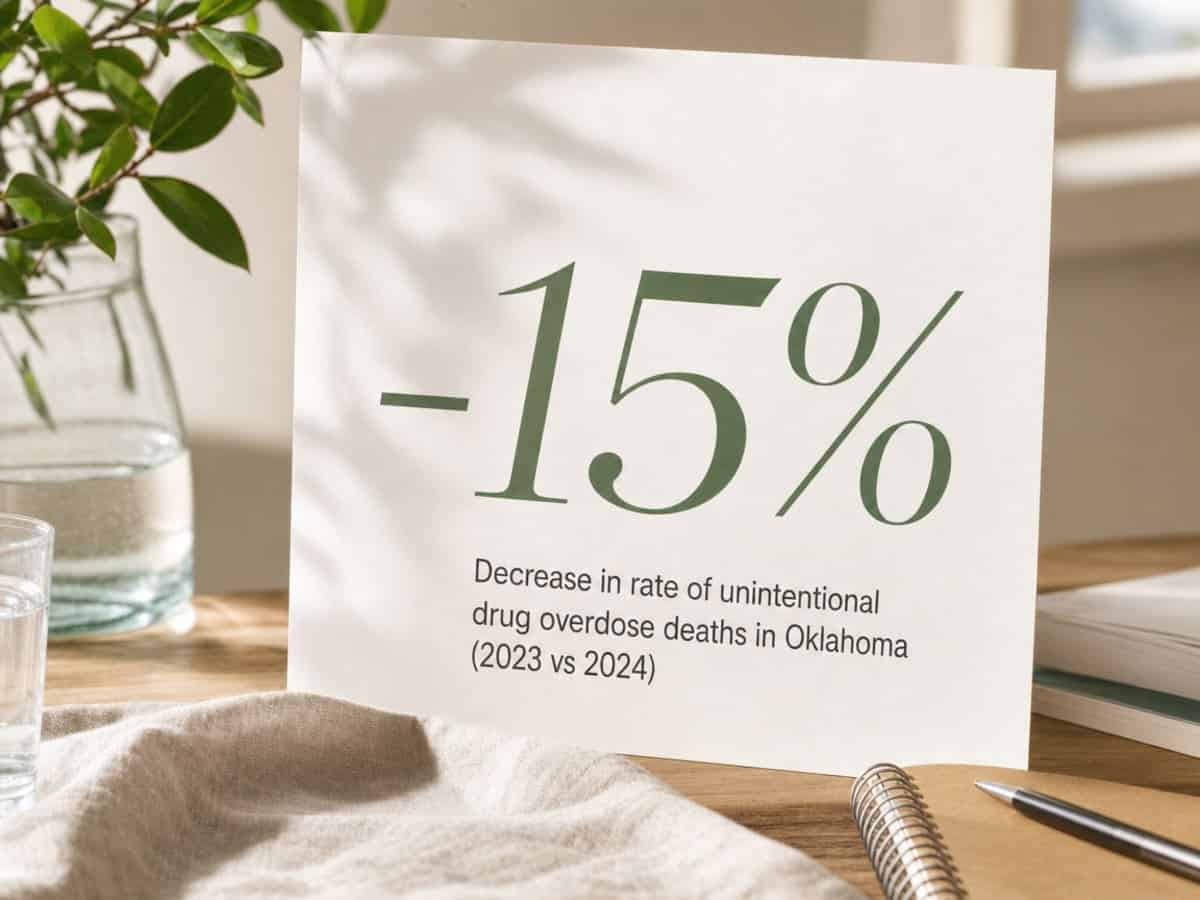
The state data backs this up. In 2024, fentanyl was involved in 86% of Oklahoma’s opioid-related overdose deaths, while the rate of unintentional prescription opioid overdose deaths had already dropped 68% between 2013 and 2019 2. The overdose crisis moved. It moved off the pharmacy shelf and into the illicit supply, where an unmarked pill can contain anything.
Why does this matter for you? Because it changes the risk math of two choices people sometimes make when a taper feels too hard. The first is stopping abruptly and toughing it out. The second is filling the gap with pills bought outside a pharmacy. Ten years ago the second option was dangerous. Now it can be fatal on the first try. A pill that looks like the oxycodone you know may not be oxycodone at all.
This is not meant to scare you. It is meant to name why a supervised taper is the safer path in 2024 in a way it might not have felt in 2014. You are not a headline. You are a person whose nervous system needs time to adjust, and the clinicians who do this work in Oklahoma City understand the difference. A slow, monitored reduction, done with someone watching your vitals and adjusting when your body says wait, keeps you out of both failure modes. It is a medical plan, not a moral test, and you get to build it with a team that treats you like the patient you have always been.
How Oklahoma City ended up with so many patients on long-term opioids
If you feel like you are one of many people in this city carrying a pill bottle you did not ask to be dependent on, you are right. There is a reason for that, and it is not you.
For most of the 2000s and into the 2010s, Oklahoma prescribed opioids at a rate that dwarfed the national average. In 2017 alone, the state saw 88.1 opioid prescriptions written for every 100 people 11. That is nearly one prescription per resident, in a single year. If you were treated for a car wreck on I-40, a rotator cuff repair, a bad disc, or the aftermath of a work injury during those years, oxycodone or hydrocodone was very likely part of the plan. Doctors were taught to treat pain aggressively. Patients were told these medications were safe when taken as directed. Both of those messages turned out to be more complicated than anyone admitted at the time.
The correction, when it came, was steep. By 2019 the state reported that opioid prescriptions had dropped roughly 28%, and total pills dispensed had fallen from about 300 million to 200 million 12. That is progress on paper. In real lives, it also meant a lot of people who had been on these medications for years were suddenly being told the plan was changing. If you are one of them, your dependence is a predictable outcome of a system that put you on long-term opioids and is now, sometimes clumsily, trying to bring you off. A careful taper is how you finish that story on your own terms.
What a real taper looks like, in numbers you can hold onto
The pace: 5-20% every 4 weeks, or 10% per week to start
When you hear the word taper, it helps to have actual numbers in your head so the plan feels like a plan and not a mystery. Here is what the guidelines say.
Federal HHS guidance for clinicians describes common tapers as a reduction of 5% to 20% every 4 weeks 1. That is on the slower end of what you might picture. If you have been on your dose for years, a schedule closer to the low end of that range often causes less withdrawal and less anxiety in the days between changes.
Oklahoma’s own pocket guide gives clinicians a different starting point: a 10% reduction of the original dose per week is described as a reasonable place to begin, and for people who have been on opioids a long time, 10% per month is often easier to tolerate 4. The CDC guideline echoes 10% per week as a reasonable opening pace for many patients 6. Put those together and you get a range, not a rule.
What does that look like on a real bottle? If you are taking 40 mg of oxycodone a day, a 10%-per-week schedule drops you by 4 mg each week. A 10%-per-month schedule drops you by the same 4 mg, but you sit at each new dose for four weeks before the next step. A 5%-every-4-weeks schedule is 2 mg every month. All three of those are inside the guideline range. None of them is a failure. The slower ones are usually kinder to your body.
If a prescriber has told you the plan is faster than any of these numbers, you are allowed to ask why. A clinical team doing this work in Oklahoma City can look at your dose, how long you have been on it, and your other health issues, and give you a pace built for your body rather than a calendar.
Why the schedule bends around you, not the other way
A taper on paper and a taper in your life are two different things. The paper version is a percentage. The lived version is Tuesday, when you did not sleep well and your knees ache and your daughter has a school thing at six.
Good tapering guidance builds that reality in. The VA/DoD evidence review is honest about this: there is not enough evidence to say one taper schedule is best for everyone, and a collaborative, patient-centered approach is what the research supports 7. Oklahoma’s pocket guide says the same thing in plainer language, urging clinicians to individualize the pace and to use regular follow-up rather than a set-it-and-forget-it schedule 4.
What that means for you: the plan should have a pause button. If a dose step lands hard, if your sleep falls apart, if your mood dips in a way that worries you or the people around you, a clinical team should be willing to hold the current dose for a week or two before dropping again. The VA taper decision tool is designed for exactly that kind of check-in, giving clinicians a way to slow down or pause during withdrawal rather than push through 9.
You are not failing the taper if the taper needs to bend. You are doing it the way the guidelines say it should be done.
When buprenorphine becomes the bridge
Sometimes a straight taper stalls. You get to a certain dose and the next step keeps knocking you flat, or the pain that started this whole thing years ago comes back louder than you can manage. That is not the end of the road. It is often the point where buprenorphine enters the conversation.
Buprenorphine is a different kind of opioid medication. It attaches to the same receptors as oxycodone or morphine but behaves more gently, with a ceiling that makes it safer and a long action that smooths out the ups and downs between doses. HHS taper guidance names it directly as an option to consider when a standard taper is difficult 1. VA pharmacy materials describe it as a reasonable choice for chronic pain, including specific tapering approaches such as reducing a transdermal patch by 5 mcg per hour every 2 to 4 weeks 8.
Bringing up buprenorphine does not mean starting over or admitting defeat. For some patients it is the bridge that gets them off high-dose oxycodone or hydrocodone with less suffering, and for others it becomes the long-term pain medication that finally works. A clinical team in Oklahoma City can tell you whether it fits your situation.
The failure mode nobody warns you about: being tapered too fast
There is a version of this story that gets less attention than it should. It is not the person who kept taking more pills than prescribed. It is the person whose doctor got nervous, or retired, or left the practice, and whose taper suddenly went from a slow ramp to a cliff. Maybe the new prescriber cut the dose in half at the first visit. Maybe the refill did not come and there was no plan for the gap. Maybe you were told, kindly but firmly, that this was policy now.
If any of that is happening to you, it is not a personal failing. It is a mismatch between the pace your body can handle and the pace your current setup is offering. A medically supervised taper in Oklahoma City can pick up where a rushed prescriber left off, hold the current dose while your system steadies, and rebuild the schedule at a rate the evidence actually supports. You are allowed to ask for that.
What medical supervision actually adds during withdrawal
Symptom management, sleep, and the first hard week
The first week of a dose drop is often the hardest one. Not because you cannot do it, but because your body is running a full-throated protest. You may sweat through your sheets, run hot and cold, feel your muscles twitch, lose your appetite, and watch sleep disappear right when you need it most. Anxiety climbs. Restless legs kick you awake at two in the morning. None of that means the taper is failing. It means your nervous system is adjusting, and it is temporary.
What medical supervision adds during that stretch is boring in the best way. Non-opioid medicines for nausea, muscle cramps, and blood pressure spikes. Something to help you sleep that is not another opioid. A quiet room. Fluids. A clinician who checks on you and knows the difference between hard withdrawal and something that needs a slower pace.
The HHS taper guide is specific that mental health should be watched closely during dose reductions, because anxiety and mood can slide fast when opioids come down 1. Having someone in the room who is looking for that, and who can pause the taper if your body says wait 9, is what turns the first hard week into a week you get through instead of one that sends you back to the pill bottle.
24/7 monitoring, including wearable vitals
Round-the-clock monitoring is not overkill for a prescribed-opioid taper. It is how you avoid ending up as a statistic in the wrong dataset. Oklahoma hospitalization data show that opioids remain among the most common substances involved in drug overdose hospitalizations in the state, alongside non-opioid pain medications and stimulants 14. Many of those hospital visits start with a dose change gone sideways at home.
Medically supervised detox in Oklahoma City puts a licensed clinician within reach at any hour, not just during a 15-minute appointment slot two weeks out. Vitals are checked on a schedule. Renewal Springs pairs that with wearable biotech from Huml Health that reads your heart rate, sleep quality, and stress levels in real time, so the team can see a rough night forming before you have to describe it in the morning. If your blood pressure spikes at three a.m. or your sleep breaks apart for the third night, someone notices and something changes.
That is the practical difference between adjusting a taper with data and adjusting it with guesswork.
Signs your taper needs a clinical team, not another refill
You know your body better than anyone with a clipboard. Trust that. There are patterns that tell you a taper has moved past what you should handle at home with a monthly follow-up, and calling for more help is not giving up. It is reading the signs correctly.
Ask for medically supervised care if any of these are true for you right now:
- Your prescriber cut your dose faster than 10% at a time, or you were told to stop within days, and your body is reeling. Both HHS and Oklahoma’s prescribing guidelines say abrupt or rapid discontinuation should be avoided 1, 5.
- You are between refills and have thought about buying a pill from somewhere that is not a pharmacy. In today’s Oklahoma supply, a counterfeit pill can carry fentanyl 2, and the risk of a first-try overdose is real.
- Withdrawal is knocking you out of work, sleep, or parenting for more than a day or two after each step down.
- Your mood has darkened. Anxiety, panic, or thoughts of not wanting to be here can spike during a taper, and HHS guidance specifically flags close mental health monitoring as part of safe dose reduction 1.
- You have other health issues, such as heart, lung, or liver conditions, that make withdrawal harder on your body.
- You have tried a taper before and it stalled or reversed.
None of these mean you failed. They mean the plan needs more hands on it. A clinical team in Oklahoma City can take over the pace, manage the symptoms, and keep you out of the hospital data 13.
What happens after the last dose
Finishing the taper is a real milestone. It is also not the end of the story, and pretending otherwise sets people up to feel blindsided by what comes next.
For a few weeks after your last dose, your body is still resetting. Sleep can stay uneven. Energy dips and climbs. Some pain you had learned to tune out under the medication may feel louder for a while as your nervous system recalibrates. This stretch is temporary, but it deserves a plan. Nonopioid pain care, gentle movement, and behavioral health support all belong in it, and Oklahoma’s tapering guidance treats those as core pieces rather than extras 4.
Some people finish a taper and do well with periodic check-ins. Others discover the underlying pain needs a different long-term answer, or that anxiety and low mood need their own treatment now that they are not blurred by daily opioids. A small number transition into an opioid treatment program for ongoing structured support, which SAMHSA outlines federally 10. None of those paths is a failure. They are honest next steps, and you get to choose which one fits the life you are building.
Talking with an Oklahoma City clinical team
If you have read this far, some part of you already knows the plan you have now is not quite the plan you need. That is worth listening to. You do not have to have a taper schedule drafted or a diagnosis ready. You just have to be willing to have a conversation.
A first call with a clinical team in Oklahoma City usually covers the basics: what you take, how long you have taken it, what has been tried, what your pain and sleep look like now, and what you are worried about. From there, the team can talk with you about whether a slower supervised taper, an inpatient stretch to get through the hardest days, or a buprenorphine bridge 8fits your situation. Insurance benefits are checked so cost is not the reason you stop.
You have carried this quietly long enough. Making the call is a small act, and it counts. A team that does this work every day can meet you where you are and help you build the taper your body can actually handle.
Ready for a safe, supported opioid taper?
Connect now for expert guidance on a medically supervised prescription opioid withdrawal plan.
Frequently Asked Questions
Does needing a taper mean I’m addicted to my prescription opioids?
No. Dependence and addiction are not the same thing. If you have taken oxycodone, hydrocodone, or morphine daily for months or years, your body has adapted to the medication. That is physical dependence, and it happens to people who follow their prescription exactly. A taper is how you unwind that adaptation safely, which is why federal guidance treats it as a routine medical process rather than a diagnosis 1.
How long does a medically supervised opioid taper usually take?
It depends on your dose, how long you have been on it, and how your body responds. Federal guidance describes common tapers as 5% to 20% every 4 weeks 1, while Oklahoma’s pocket guide suggests 10% per week as a starting point and 10% per month for long-term patients 4. Some tapers finish in weeks. Many take months. A slower pace is not a setback.
What withdrawal symptoms should I expect when tapering off oxycodone, hydrocodone, or morphine?
The common ones are sweating, chills, restless legs, muscle aches, nausea, stomach upset, anxiety, and broken sleep. Mood can dip too, which HHS specifically flags for close monitoring during dose reductions 1. Symptoms usually peak in the first few days after a step down and ease over the following week. Non-opioid medications and supportive care make most of them manageable rather than something you white-knuckle alone.
Can I just stop my opioids on my own or cut the pills in half?
Please do not. Both HHS and Oklahoma’s prescribing guidelines are direct that opioids should not be tapered rapidly or stopped suddenly, because abrupt discontinuation worsens withdrawal and raises the chance of a return to opioids from unsafe sources 1, 5. Splitting pills also does not give you an even dose across the day. A clinician can build a schedule with pharmacy support so each step is consistent and monitored.
What happens to my chronic pain during and after the taper?
Pain often feels louder for a stretch as your nervous system recalibrates, then usually settles. Some people find their pain is not worse off the medication once the adjustment period passes. Oklahoma’s pocket guide treats nonopioid pain care, gentle movement, and behavioral health support as core parts of tapering rather than add-ons 4. If the underlying pain still needs treatment, your team can plan a different long-term approach.
When should I ask about buprenorphine instead of continuing a straight taper?
Bring it up if the taper keeps stalling, if each step down flattens you for days, or if pain is returning in ways you cannot manage. HHS names buprenorphine as an option to consider when a standard taper is difficult 1, and VA pharmacy guidance describes it as a reasonable choice for chronic pain, including specific taper approaches such as reducing a transdermal patch by 5 mcg per hour every 2 to 4 weeks 8.
References
- HHS Guide for Clinicians on the Appropriate Dosage Reduction or Discontinuation of Long-Term Opioid Analgesics. https://www.hhs.gov/system/files/Dosage_Reduction_Discontinuation.pdf
- Data – Oklahoma.gov. https://oklahoma.gov/health/health-education/injury-prevention-service/drug-overdose/data.html
- Drug Overdose Data Dashboard – Oklahoma.gov. https://oklahoma.gov/health/health-education/injury-prevention-service/drug-overdose/data/drug-overdose-data-dashboard.html
- Pocket Guide: Tapering Opioids for Chronic Pain. https://oklahoma.gov/content/dam/ok/en/health/health2/documents/pocket-guide-tapering.pdf
- OKLAHOMA OPIOID PRESCRIBING GUIDELINES. https://oklahoma.gov/content/dam/ok/en/health/health2/aem-documents/prevention-and-preparedness/injury-prevention/drug-overdose/oklahoma-opioid-prescribing-guidelines.pdf
- CDC Guideline for Prescribing Opioids for Chronic Pain. https://www.cdc.gov/mmwr/volumes/65/rr/rr6501e1.htm
- Dose, Duration, and Tapering of Opioids. https://www.healthquality.va.gov/guidelines/Pain/cot/DoseDurationTapering_Opioids_CST_Final0210_508.pdf
- Buprenorphine for the Management of Chronic Pain. https://www.va.gov/formularyadvisor/DOC_PDF/CRE_Buprenorphine_for_chronic_pain_Mar_2024.pdf
- Pain Management Opioid Taper Decision Tool. https://www.pbm.va.gov/PBM/AcademicDetailingService/Documents/Pain_Opioid_Taper_Tool_IB_10_939_P96820.pdf
- Federal Guidelines for Opioid Treatment Programs. https://library.samhsa.gov/sites/default/files/federal-guidelines-opioid-treatment-pep24-02-011.pdf
- Oklahoma Opioid Summary – National Institute on Drug Abuse. https://nida.nih.gov/sites/default/files/21981-oklahoma-opioid-summary_0.pdf
- OKLAHOMA COMMISSION ON OPIOID ABUSE. https://www.oklahoma.gov/content/dam/ok/en/oag/resources/meetings/community-task-force-on-substance-abuse/commission-reports/opioid_report_2019_-_annual_report-2.pdf
- Drug Overdose Hospitalizations – Oklahoma Digital Prairie. https://digitalprairie.ok.gov/digital/api/collection/stgovpub/id/641310/download
- Oklahoma drug overdose deaths, 2019-2023 – page 3. https://digitalprairie.ok.gov/digital/collection/stgovpub/id/729608/