
Key Takeaways
- Private detox in Oklahoma City centers on confidentiality, not luxury, with 42 CFR Part 2 generally requiring your written consent before a program shares identifying treatment information 1, 2.
- Employers, family, and licensing boards cannot be contacted without a signed release, and self-pay is the cleanest way to keep a claim off your insurance record 1.
- Compare facilities on four points before giving your name: ODMHSAS certification, who prescribes withdrawal medication, how they handle Part 2 consents, and the discharge plan 3, 4, 10.
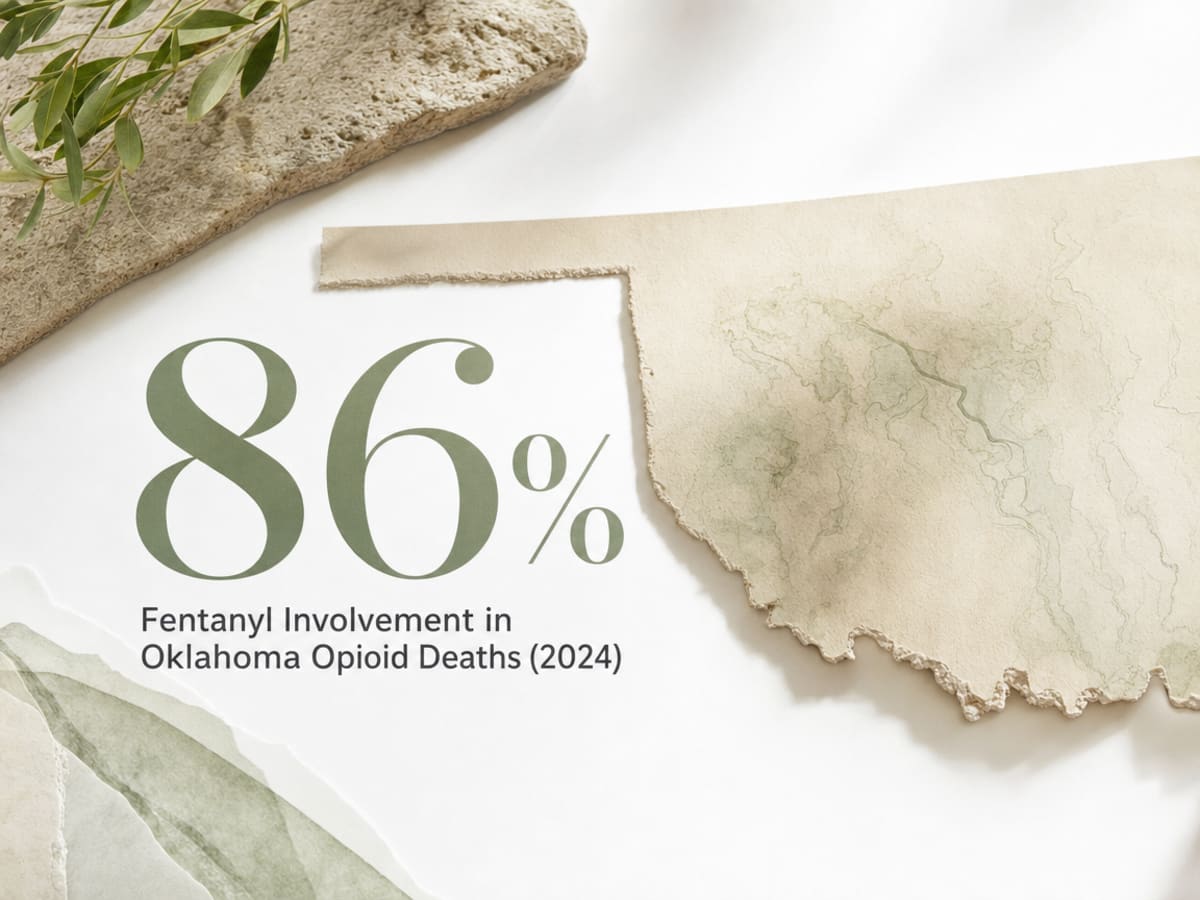
- Oklahoma saw 1,019 overdose deaths in 2024 with fentanyl involved in 86% of opioid-related deaths, making supervised withdrawal with a medication handoff the honest standard 3, 4, 5, 6.
What ‘Private’ Actually Means When You’re Searching at 2 a.m.
You’re reading this at a hard moment, and that already took something. Maybe you cleared your browser history before you opened this tab. Maybe your phone is on silent in a bathroom or a parked car. Whatever brought you here, the question underneath your search is probably not which detox has the nicest furniture. It’s who will find out.
That’s what “private” needs to mean on this page. Not spa robes. Not a chef’s menu. Not a quiet view. Private as in confidential. Private as in your name, your employer, your neighbors, your in-laws, and your kids’ school pickup line don’t become part of this story unless you decide they do.
There’s a legal spine behind that promise, and it matters. Substance use disorder treatment records held by federally assisted programs sit under a heightened federal confidentiality rule called 42 CFR Part 2, which generally requires your written consent before most disclosures and limits how any shared information can be used again downstream 1, 2. It’s not a magic cloak, and we’ll walk through the real limits in the next section. But it is a stronger protection than the one that covers most of your other medical care, and it exists specifically because people like you need to be able to ask for help without the ask becoming the problem.
So if you came here looking for discretion rather than luxury, you’re in the right place. Keep reading. You don’t have to decide anything yet.
The Confidentiality Framework: 42 CFR Part 2 in Plain English
What Part 2 Protects, and What It Doesn’t
Here’s the short version of what the law actually does for you. 42 CFR Part 2 is a federal confidentiality rule written specifically for substance use disorder treatment records held by federally assisted programs. Its statutory authority sits in the Code of Federal Regulations and exists because Congress recognized that people avoid asking for help when they’re afraid the asking will be used against them 2. The rule generally requires your written consent before a program can share identifying information about you, and it limits how anyone who receives that information can use it or pass it along again 1.
In 2024, federal rulemaking updated Part 2 to align more closely with HIPAA on certain points while keeping the heightened protections that make Part 2 stricter than ordinary medical privacy 1. Translation: your detox records are not treated like a routine lab result. They carry an extra layer of consent and re-disclosure rules.
What Part 2 doesn’t do is give you absolute invisibility. There are defined exceptions, and anyone who promises you “completely anonymous” treatment is overselling it. The rule contemplates disclosures in the following situations 1, 2:
- True medical emergencies
- Specific court orders that meet a higher bar than a routine subpoena
- Mandated reporting of certain crimes or child abuse
- Program audits and evaluations under tightly controlled conditions
So the honest frame is this: Part 2 gives you a strong, consent-based wall around your treatment information, with a small number of narrow doors the law has defined in advance. You get to see the doors before you walk in.
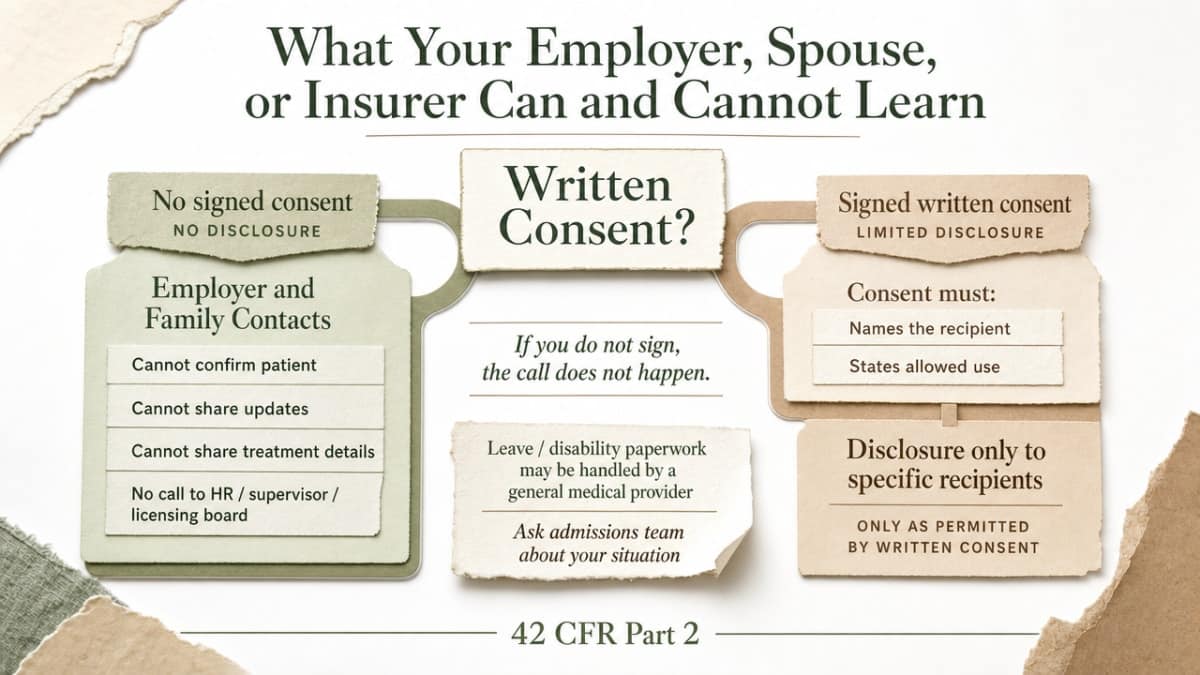
What Your Employer, Spouse, or Insurer Can and Cannot Learn
Let’s get specific, because the abstract version of “your records are protected” is not what’s keeping you awake.
- Your employer
- A detox program cannot call your HR department, your supervisor, or your professional licensing board to tell them you’re in treatment. That disclosure requires your written consent, and that consent has to name who’s receiving the information and what they’re allowed to do with it 1. If you don’t sign, the call doesn’t happen. If you’re using FMLA or short-term disability, the paperwork can often be handled through a general medical provider rather than by identifying the specific condition, though you’ll want to ask the admissions team to walk through your situation.
- Your spouse, parents, or adult children
- Same rule. The program cannot confirm you are a patient, cannot share updates, and cannot leave a voicemail that identifies the facility, unless you’ve signed a consent naming that specific person 1. Some people sign a limited consent so one trusted family member can coordinate logistics. Some people sign nothing. Your call.
- Your insurer
- This is where the protection narrows, and you should know it going in. If you want insurance to pay, the payer will see claims information tied to a diagnosis and level of care. That’s not a Part 2 loophole; it’s how billing works. What Part 2 still limits is how the payer can re-disclose that information downstream 1, 2. If you prefer to self-pay to keep the claim off your insurance record entirely, say that on the first call and ask what the cash option looks like.
How a Discreet Admission Actually Works
The First Confidential Call: What Gets Said and What Gets Logged
Here’s what happens if you call tonight. You don’t have to give your real name on the first ring. You can start with a first name only, or just a question. The admissions line is a conversation, not an intake form you have to finish before you’re allowed to hang up.
The person on the other end will usually ask three things, in roughly this order:
- What you’re using and how much
- Whether you’ve had a seizure, DTs, or a dangerous withdrawal before
- Whether you’re safe right now
Those questions aren’t to build a file on you. They’re to figure out if you need to be seen urgently or if you have time to think.
What gets logged depends on how far the call goes. If you only ask general questions, no clinical record is created. If you share identifying details and the call shifts into a pre-screening, that information becomes part of a protected record under 42 CFR Part 2, which means it cannot be shared downstream without your written consent except in the narrow situations the rule defines 1, 2. You can ask, directly, “What are you writing down right now?” A good admissions team will tell you.
You can also ask to self-pay to keep the call off any insurance trail, or ask what a benefits check would look like without an authorization being filed yet. Nothing has to happen tonight that you didn’t agree to.
Arrival, Belongings, and Communication Rules Inside
If you decide to come in, arrival can be quieter than you’re picturing. Some people drive themselves. Some are dropped off by one trusted person who doesn’t come inside. You can ask for a specific entrance, a time of day with less foot traffic, and that no one page your name in a common area. These aren’t unusual requests.
You’ll be asked to turn in medications, anything sharp, and sometimes personal electronics for a defined window. That part surprises people, so it’s worth saying out loud: your phone may be held or limited during the first days of withdrawal, both for medical reasons and because unfiltered contact with the outside world during acute symptoms is often what trips up the next week. You can ask in advance what the specific policy is and when you’ll have supervised phone access.
Communication going out follows the same consent rule that governed your first call. The facility cannot confirm you are there to anyone, including a worried parent or a boss, unless you’ve signed a release naming that person 1. If you want your spouse to get updates and your employer to get nothing, that’s a two-line decision on an intake form. You get to draw the circle yourself, and you can redraw it later.
Medical Detox, Honestly: Opioids, Alcohol, and Benzodiazepines
Why Detox Alone Is a First Step, Not a Cure
Before anything else, you deserve to hear this plainly: medical detox is the opening chapter, not the whole book. The National Institute on Drug Abuse is explicit that detoxification manages the acute phase of withdrawal, and that detoxification alone, without ongoing treatment afterward, generally leads to resumed use 3. That isn’t a scare line. It’s the reason an honest program spends part of your first conversation asking what comes next.
Think of medical detox as three connected stages:
- A clinical assessment that figures out what you’ve been using, how much, how long, and what medical risks you carry in with you.
- Medically supervised withdrawal, usually with medication to blunt symptoms and lower danger.
- A transition plan into continuing care, whether that’s residential treatment, outpatient counseling, medication maintenance, or some combination 3.
If a facility sells you only on the middle stage, keep looking. The honest version of this work treats detox as the door you walk through, not the room you stay in. You get through the hardest few days with help, and you leave with a next step already lined up.
Opioid Withdrawal: Methadone, Buprenorphine, Naltrexone, Lofexidine
Opioid withdrawal is miserable, but with medication it does not have to be dangerous or unmanageable. NIDA identifies methadone, buprenorphine, and naltrexone as the three FDA-approved medications for opioid use disorder, and names lofexidine as a non-opioid option specifically for easing withdrawal symptoms 4. Each one does something different, and the right choice depends on your history, your health, and what you want the next six months to look like.
Methadone and buprenorphine are long-acting medications that reduce cravings and withdrawal and, importantly, lower the risk of overdose and death compared with no treatment at all 4. Buprenorphine is often started in the first day or two of detox once you’re in enough withdrawal that it won’t make you sicker. Methadone is dispensed through specialized programs with more structure. Naltrexone is a different kind of tool. It blocks opioids from working, so it’s typically started after you’ve fully cleared them from your system, which may be after the initial detox window closes. Lofexidine doesn’t treat the underlying disorder, but it can quiet the sweating, cramping, and restlessness enough to make the first days bearable 4.
Alcohol and Benzodiazepine Withdrawal: Why Medical Supervision Matters
Alcohol and benzodiazepine withdrawal belong in a different category of risk than most people realize. Unlike opioid withdrawal, which is punishing but rarely fatal on its own, severe alcohol withdrawal can bring seizures and delirium tremens, and abrupt benzodiazepine withdrawal, especially after long-term daily use of Xanax, Klonopin, Ativan, or Valium, can trigger seizures as well. This is the specific reason you don’t do this alone in a hotel room, and it’s the reason “just stopping” at home over a weekend can go wrong fast.
Medical supervision changes the math. In a monitored setting, your vital signs are checked around the clock, withdrawal severity is scored on a standardized scale, and medications are titrated to keep symptoms inside a safe range. For alcohol, that usually involves a tapering benzodiazepine protocol along with hydration, vitamin repletion, and seizure precautions. For benzodiazepine dependence, a careful cross-taper or slow dose reduction is used rather than a cold stop.
None of this makes you weak for needing it. It makes you a person who respected the actual medicine involved. And consistent with NIDA’s framing, the goal of these days is to get you through acute withdrawal safely so that a longer plan, whether counseling, outpatient care, or ongoing medication, can actually begin 3.
Oklahoma’s Overdose Picture, Labeled Statewide
A quick word on numbers, because you’ve probably seen scary headlines and don’t need more of them pointed at you personally. The statistics below describe Oklahoma as a whole, not Oklahoma City specifically, and not you. They’re here to give you honest context for the decision you’re weighing, not to pressure you.
In 2024, the CDC recorded 1,019 drug overdose deaths in Oklahoma, with an age-adjusted rate of 25.5 deaths per 100,000 residents 5. The Oklahoma State Department of Health reports that fentanyl was involved in 86% of the state’s opioid-related overdose deaths that year 6. That dominance of fentanyl is why so many detox conversations now start with the question, “Do you know what was actually in what you were using?” Often the answer is no, and that uncertainty is part of why medical supervision during withdrawal has become a bigger deal than it was a decade ago.
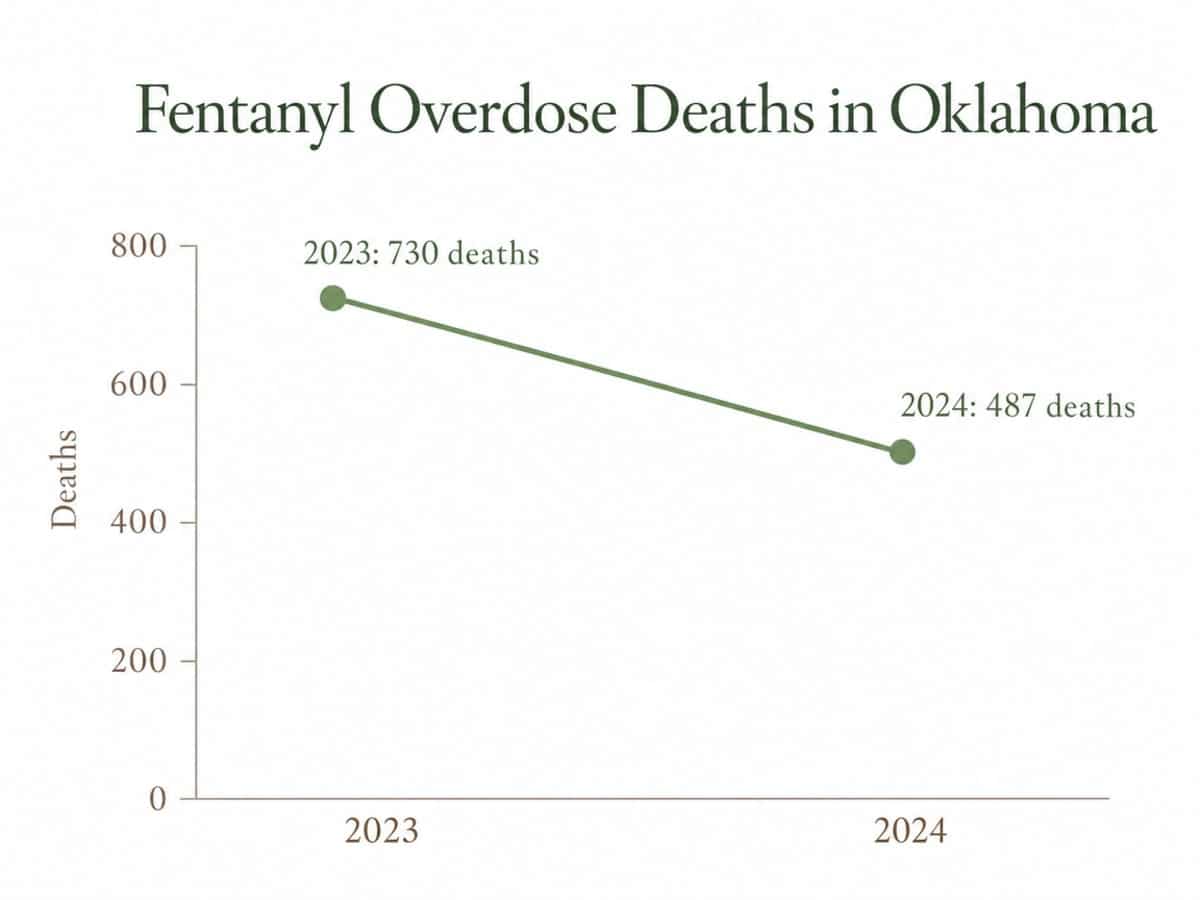
There is some good news in the trend, carefully stated. Fentanyl overdose deaths in Oklahoma dropped from 730 in 2023 to 487 in 2024, after climbing from 127 in 2020 and 606 in 2022 6. That’s a meaningful decline, likely reflecting a mix of naloxone distribution, expanded treatment access, and changes in the drug supply 6. It is not evidence that the risk has gone away, and it doesn’t say anything about any one neighborhood, hospital, or facility.
If you’ve been using opioids in the last couple of years, you’ve been using in a market shaped by fentanyl, whether you knew it or not. That’s the honest reason a supervised withdrawal, with people watching your vitals and medication available to blunt what comes next, is worth the call.
Insurance, SoonerCare, and What the First Benefits Call Covers
Money is the second thing most people worry about, right after who’s going to find out. Here’s what the benefits conversation actually looks like so you don’t walk into it blind.
If you have SoonerCare, inpatient medical detox and residential substance use treatment are covered benefits for eligible members, but they generally require prior authorization before admission 7, 8. The OHCA behavioral health manual sets an initial maximum of five days for adult chemical-dependency detoxification based on medical necessity, with the possibility of extension if the clinical picture supports it 9. That five-day number is an authorization window, not a promise or a hard discharge date. It also excludes detoxification for caffeine, nicotine, or cannabis alone from reimbursement 9. If alcohol, opioids, or benzodiazepines are in the picture, you’re generally inside the covered category.
If you have commercial insurance, the mechanics are similar in spirit. The payer will want a diagnosis, a level-of-care recommendation, and documentation of medical necessity before authorizing days. Coverage, copays, deductibles, and network status vary by plan, so a verification call is the only way to know your specific numbers.
When you ask for a benefits check, you can say exactly this: “Please verify my coverage, but do not file an authorization yet.” That keeps your options open, including self-pay if you’d rather the claim never touch your insurance record. A good admissions team will quote what they can confirm, flag what they can’t, and tell you plainly that authorization is not the same as a guarantee of payment 8. Ask about the cash rate too. For some readers, paying out of pocket is the cleanest way to keep the paper trail narrow.
How to Verify a Facility Before You Hand Over Your Name
Before you give anyone your full name, you’re allowed to ask the facility to prove a few things. Here’s a short checklist you can run in under ten minutes.
- Ask about state certification. In Oklahoma, residential-level providers, including medical detox facilities, are required to hold ODMHSAS certification, and those seeking SoonerCare reimbursement also carry national accreditation 10. Any legitimate program will name their certifying body without hesitation.
- Ask who prescribes and monitors medication during withdrawal. For opioids, that means a clinician who can start buprenorphine or arrange methadone, and who will coordinate what you leave on 4. For alcohol or benzodiazepines, that means medical staff on-site around the clock.
- Ask how they handle 42 CFR Part 2 consent forms, specifically who they will and will not call without your written permission 1, 2. The answer should be specific, not reassuring-sounding.
- Ask what the discharge plan looks like before admission, because NIDA is clear that detox without a next step tends to come undone 3.
If those four answers come back clean, you’ve done your homework.
A Direct Note to Veterans
If you served, this part is for you. You already know that VA care has its own paperwork, its own prescribers, and its own quiet concerns about what a diagnosis means for benefits, security clearance, or future employment. A community detox facility can work alongside the VA without handing over control of your record.
Two things matter most:
- If you’re on VA-prescribed medication for alcohol or opioid use disorder, that medication should generally continue through an inpatient stay unless there’s a clear medical reason to stop it 11. Ask any program directly how they coordinate with your VA prescriber and whether they can keep you on your current dose without a gap.
- The VA is explicit that opioid detoxification alone, without transition to medication treatment before discharge, is not recommended for veterans with opioid use disorder 11. Translation: don’t accept a plan that ends when the acute symptoms do. Ask what you’ll leave on and who will prescribe it next week. Your consent still governs what gets shared with the VA or anyone else 1.
Making the Call: What the Next Hour Can Look Like
You don’t have to be ready to pack a bag. You just have to be ready to ask a few questions out loud.
Here’s what the next hour can look like. You step somewhere you can talk. You dial. You say, “I want to ask about detox, and I’d rather not give my full name yet.” You describe what you’ve been using and whether you’ve had a dangerous withdrawal before. You ask what gets written down, who they can and can’t call, and whether self-pay is an option if you’d rather keep insurance out of it 1. You ask what medication you’d leave on and who prescribes it next 3, 4.
If the answers sound honest and specific, you take the next small step. If they don’t, you hang up and call somewhere else. Either way, you did something tonight you weren’t doing an hour ago. That counts.
Speak Privately With a Medical Detox Expert Now
Get confidential answers and immediate support for safe, supervised detox in Oklahoma City.
Frequently Asked Questions
Will my employer or professional licensing board find out I went to detox?
Not unless you sign a written consent naming them. 42 CFR Part 2 generally bars a detox program from confirming you are a patient, let alone sharing clinical details, without your specific written permission 1. If you need medical leave, your general physician can often handle documentation without identifying the condition. Ask admissions how they word any paperwork before you sign.
Can I check in without using my real name or leaving a paper trail?
You can start the call with a first name only and ask questions before giving identifying information. Once you’re clinically admitted, a legal medical record exists, though Part 2 limits who can see or re-share it 1, 2. If you want to keep insurance out of it entirely, ask about self-pay on the first call. That’s the cleanest way to narrow the paper trail.
How long does medical detox usually last, and what happens after?
Acute withdrawal typically runs several days, and SoonerCare’s initial authorization window for adult chemical-dependency detox is up to five days based on medical necessity, with extensions possible 9. After that, NIDA is clear that detox alone generally leads to resumed use, so the honest plan includes a next step: residential care, outpatient counseling, or ongoing medication for opioid or alcohol use disorder 3, 4.
Does SoonerCare or private insurance cover detox in Oklahoma City?
SoonerCare covers inpatient medical detox and residential SUD treatment for eligible members with prior authorization, though caffeine, nicotine, or cannabis-only detox is excluded 7, 9. Private plans vary widely by diagnosis, level of care, and network status. Ask for a benefits verification without filing an authorization yet, and remember that authorization is not the same as a guarantee of payment 8.
I’m a veteran on VA-prescribed medication. Can I continue it during detox?
Generally yes. VHA Directive 1160.04(2) requires current medications for alcohol or opioid use disorder to be continued during inpatient care unless clinically contraindicated 11. The directive also warns against opioid detox alone without transition to ongoing medication treatment before discharge 11. Ask any facility how they coordinate with your VA prescriber and what you’ll leave on. Your consent still controls what gets shared 1.
What should I say on the first phone call if I’m not ready to commit?
Try this: “I want to ask about detox, and I’d rather not give my full name yet.” Then ask what gets written down, who they can and can’t call without your consent 1, whether self-pay is an option, and what medication you’d leave on if you came in 4. If the answers are specific and honest, take the next small step. If not, hang up.
References
- Confidentiality of Substance Use Disorder (SUD) Patient Records. https://www.federalregister.gov/documents/2024/02/16/2024-02544/confidentiality-of-substance-use-disorder-sud-patient-records
- 42 CFR 2.1 — Statutory authority for confidentiality of substance use disorder patient records. https://www.ecfr.gov/current/title-42/chapter-I/subchapter-A/part-2/subpart-A/section-2.1
- Treatment and Recovery. https://www.nida.nih.gov/publications/drugs-brains-behavior-science-addiction/treatment-recovery
- Medications for Opioid Use Disorder. https://nida.nih.gov/research-topics/medications-opioid-use-disorder
- Drug Overdose Mortality | Stats of the States. https://www.cdc.gov/nchs/state-stats/deaths/drug-overdose.html
- Data. https://oklahoma.gov/health/health-education/injury-prevention-service/drug-overdose/data.html
- Combined SoonerCare Benefit Guide. expansion with Choice 2.13.23. https://oklahoma.gov/content/dam/ok/en/okhca/docs/individuals/mysoonercare-portal/benefits-charts/Combined-SoonerCare%20Benefit%20Guide.%20expansion%20with%20Choice.pdf
- Behavioral Health and Substance Abuse Services. https://oklahoma.gov/ohca/providers/types/behavioral-health-and-substance-abuse-services.html
- Behavioral Health Prior Authorization Procedures. https://oklahoma.gov/content/dam/ok/en/okhca/docs/providers/types/behavioral-health/OHCA%20BH%20Manual.pdf
- Provider Certification. https://oklahoma.gov/odmhsas/policy/provider-certification.html
- VHA DIRECTIVE 1160.04(2) — Veterans Health Administration Programs for Substance Use Disorders. https://www.va.gov/vhapublications/ViewPublication.asp?pub_ID=10070