
Key Takeaways
- Alcohol withdrawal turns dangerous because the brain enters a state of overactivity after heavy drinking stops, and that surge can trigger seizures, hallucinations, or delirium tremens without obvious buildup 5, 7.
- Match what you’re seeing to the right door: seizures, hallucinations, worsening confusion, fever, uncontrollable shaking, or repeated vomiting mean 911, while tremor, sweating, and anxiety with clear orientation mean a 24/7 medical detox call.
- Use the clock since the last drink to act early — seizure risk climbs at 12–24 hours and delirium tremens emerges 24–72 hours in, so getting mild cases into supervised care before hour 12 blunts the climb 5, 6.
- A calm stretch is not proof of safety, and community screening tools miss severe cases 45–56% of the time, so don’t let a quiet moment or a hospital discharge become the stopping point of care 10, 11.
Call 911 Now or Call a Detox Now: A 60-Second Decision
If you’re reading this while someone you love is shaking, sweating, or saying things that don’t make sense, you’re already doing the right thing by checking. Take a breath. The next 60 seconds are about one question: is this an emergency room situation right now, or is this a supervised medical detox situation in the next few hours?
Here is the short version. Call 911 or get to the nearest emergency room right now if the person is having a seizure, has already had one, is seeing or hearing things that aren’t there, can’t recognize you or where they are, has a fever, is sweating through their clothes, is shaking so hard they can’t hold a cup, can’t keep water or medication down, or is getting more confused instead of less. These signs line up with what hospital teams treat as severe withdrawal and the clinical reasons for inpatient medically supervised care 2, 4.
Call 911 / Go to the ER
- Seizure right now, or one in the last 24 hours
- Seeing, hearing, or feeling things that aren’t there
- Severe confusion — doesn’t know you, the date, or where they are
- Fever or skin hot to the touch
- Whole-body shaking they can’t stop
- Can’t keep water or pills down
- Chest pain, trouble breathing, or passing out
- Prior history of DT or withdrawal seizures
Call Renewal Springs (24/7)
- Mild hand tremor
- Anxiety, restlessness, or irritability
- Sweating, but alert and oriented
- Trouble sleeping
- Nausea without repeated vomiting
- Wants to stop drinking and needs supervised care
- No prior seizures or DT, no major medical illness
If the person is in the right column — awake, oriented, uncomfortable but stable — a 24/7 medically supervised detox in Oklahoma City is the right next call. The rest of this guide walks you through what to watch for, how to read the clock since the last drink, and exactly what to say when you pick up the phone.
Signs That Mean the Emergency Room, Not the Morning
Some withdrawal symptoms can wait a few hours for a detox intake call. These cannot. If you see any of the following, stop reading, put the phone down on speaker, and dial 911. You can call a detox facility after the person is medically stable.
A seizure, or signs one just happened. This looks like the whole body stiffening and jerking, eyes rolling back, or losing consciousness and falling. After a seizure, the person may be confused, groggy, bitten their tongue, or wet themselves. Even one seizure means the next one could come soon, and alcohol-withdrawal seizures sometimes happen with no other warning symptoms at all 5. This is not something to “watch and see” at home.
Hallucinations. They are seeing bugs crawling on the wall, hearing voices nobody else hears, or swearing someone is standing in the corner of the room. They may reach for things that aren’t there. They might think the lamp is a person. This is not them being dramatic. It is their brain in a dangerous state of overactivity 8.
Severe confusion that keeps getting worse. They can’t tell you what day it is, don’t recognize their own house, can’t finish a sentence, or don’t know who you are. If they were oriented an hour ago and now they aren’t, that trajectory matters more than any single answer. Worsening confusion plus sweating, racing heart, and tremor is how delirium tremens shows up 6.
Fever, drenching sweat, or a racing pulse they can’t calm. Skin hot to the touch, pajamas soaked through, a pulse you can see pounding in their neck. These are signs the body’s stress system is running away from them 4.
Whole-body shaking they can’t stop. Not a fine hand tremor. Coarse, full-body shaking that keeps them from holding a glass or standing steady.
Can’t keep water or pills down. Repeated vomiting means they can’t take oral medication to calm the withdrawal, and they’re getting more dehydrated by the hour. Any detox facility would send them to the ER anyway for IV fluids and IV medication 2.
Chest pain, trouble breathing, or passing out. Withdrawal puts enormous strain on the heart. Treat these the way you’d treat them in anyone else — as an emergency.
A history of DT or withdrawal seizures. If they’ve been through this before and it got bad, the next time has a higher chance of being bad too. Prior DT or seizures is one of the specific clinical reasons for inpatient hospital care, not outpatient detox 2.
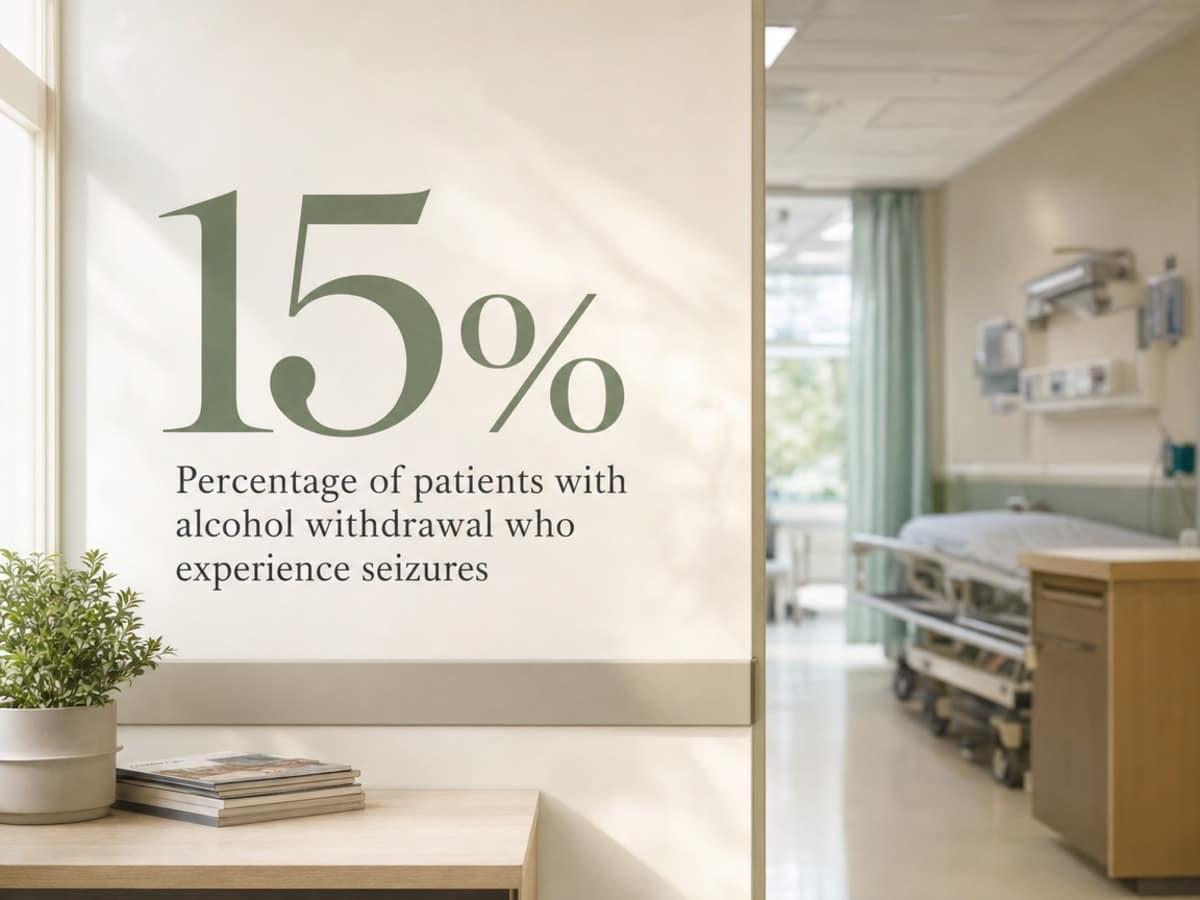
To put the stakes in plain numbers: a 2025 clinical review found hallucinations occur in roughly 2–8% of people in alcohol withdrawal, seizures in up to 15%, and delirium tremens in about 3–5% — and DT can be fatal without prompt treatment 7. Most people won’t hit the worst outcomes. But “most” is not a number you want to gamble a loved one on at 2 a.m. If what you’re watching matches this list, the ER is the right call right now.
Signs That Mean Supervised Detox in the Next 12 Hours
Not every symptom is a 911 symptom. Some are the body’s early warning that withdrawal is starting and that the next 12 hours should happen under medical eyes, not alone in a bedroom. If what you’re seeing is uncomfortable but stable, this is where a 24/7 medical detox like Renewal Springs becomes the right phone call.
Here is what mild-to-moderate withdrawal usually looks like in the first hours after someone stops or sharply cuts back on heavy drinking:
- A fine hand tremor. Hold out a glass of water and you can see it wobble. They’re still steady on their feet.
- Anxiety, restlessness, or a short fuse. They can’t sit still. Little things set them off.
- Sweating, but alert. Clammy forehead, damp shirt — and they still know who you are, what day it is, and where they are.
- Trouble sleeping. Pacing at 3 a.m., dozing for 20 minutes, waking soaked.
- Nausea or one episode of vomiting. They can still sip water and keep it down.
- A faster-than-normal pulse and mild headache.
- A clear statement that they want to stop. Or a quiet, honest, “I can’t do this on my own.”
These are the symptoms that respond well to a medically supervised detox: round-the-clock vital-sign monitoring, medications to blunt the withdrawal before it climbs, IV fluids if needed, and staff who know what the next 48 hours typically bring. The NIAAA notes that a subset of people who drink heavily need several days of medical detoxification precisely because abrupt cessation can turn dangerous 13.
Call Renewal Springs now if the person is in this zone and none of the 911 signs from the previous section are present. The window matters. Early withdrawal can escalate — and the goal is to get them on medication and under observation before the clock pushes them into the 12–48 hour seizure window 6. Waiting until morning is a gamble you don’t need to take when a 24/7 line is open tonight.
The Clock Since the Last Drink: What to Watch For and When
One of the most useful questions you can answer right now is simple: when was their last drink? Not their last binge, not last night in general — the actual last swallow. Alcohol withdrawal follows a rough schedule, and knowing where you are on the clock helps you predict what’s coming next instead of being blindsided by it.
Here’s how the hours tend to unfold after someone who drinks heavily stops or sharply cuts back.
- 6–12 hours: Early symptoms. Hand tremor, sweating, anxiety, nausea, trouble sleeping, a faster pulse. The person is usually still clear-headed.
- 12–24 hours: Seizure risk climbs. Withdrawal seizures most often happen in this window, and they can occur with no other dramatic warning signs beforehand 5, 6. Some people also start seeing or hearing things that aren’t there.
- 24–48 hours: Seizure risk continues. Hallucinations become more likely. Withdrawal symptoms typically start in this 24–48 hour window after blood alcohol drops and can persist 5–7 days overall 3.
- 24–72 hours: Delirium tremens window. Severe confusion, agitation, fever, racing heart, and persistent hallucinations most often emerge here, with DT commonly developing one to four days in 5, 6.
- Day 5–7: Symptoms generally ease for people who make it through without complications 3.
A few things to keep in mind as you watch that clock tick.
The timeline is a guide, not a guarantee. Some people have a seizure at hour 10. Some develop DT closer to day 4. Chronic heavy drinkers, people who’ve had bad withdrawals before, and anyone with other medical problems can move faster or hit harder than this schedule suggests.
“They look fine” at hour 8 doesn’t mean they’ll look fine at hour 20. The most dangerous windows — the seizure window and the delirium window — are still ahead of you in the first day. This is why getting a mild-to-moderate case into supervised care before hour 12 matters so much. Medication started early can blunt the climb before it ever reaches the top.
If you don’t know when the last drink was, assume you’re already inside the risk window. Many heavy drinkers taper down over a day or two rather than stopping cold. The brain starts withdrawing when the blood alcohol level drops, not only when the bottle gets put away. If they’ve been drinking far less than usual for the past 24–48 hours, treat the clock as already running.
Overnight is the hardest stretch. Seizures and delirium don’t respect business hours, and a sleeping person can’t tell you something is wrong. If you’re staring at hour 10 or hour 14 and thinking about going to bed yourself, that’s the moment to call a 24/7 line and get them into supervised care instead of hoping to make it to morning.
Use the clock to make a decision, not to talk yourself into waiting. If any of the emergency signs from the earlier section show up at any point on this timeline, the window closes and the ER becomes the only right answer.
Why a Calm Moment Can Lie to You
Here is the trap that catches more families than any other: the person stops shaking for an hour, drinks a glass of water, says they feel better, and everyone exhales. You put down the phone. You decide to wait and see. Three hours later, something is very wrong.
A calm moment is not the same as a safe moment. Alcohol withdrawal is a wave, not a straight line. The brain is in a state of overactivity that can quiet down for stretches and then surge again, and seizures can arrive without any of the dramatic buildup you might expect 5. The window between “they seem okay” and a first seizure is often shorter than families realize.
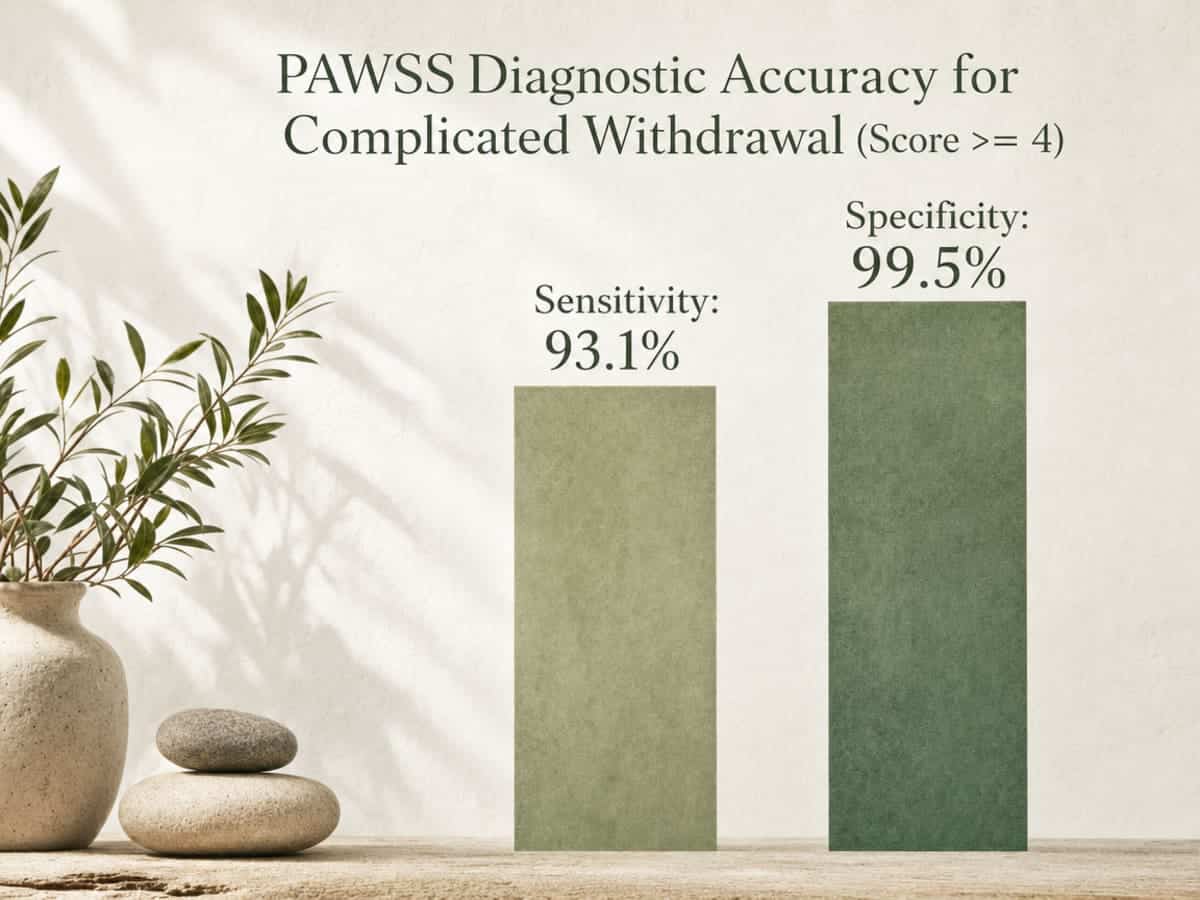
Clinicians know this, which is why hospitals use scoring tools to try to predict who will crash. The best-studied one is called PAWSS. In a prospective study of 403 hospitalized patients, a PAWSS score of 4 or higher caught complicated withdrawal with 93.1% sensitivity — meaning on a medical ward, with trained staff, the tool rarely missed people who were about to get into trouble 9. That is a reassuring number. But it was earned inside a hospital.
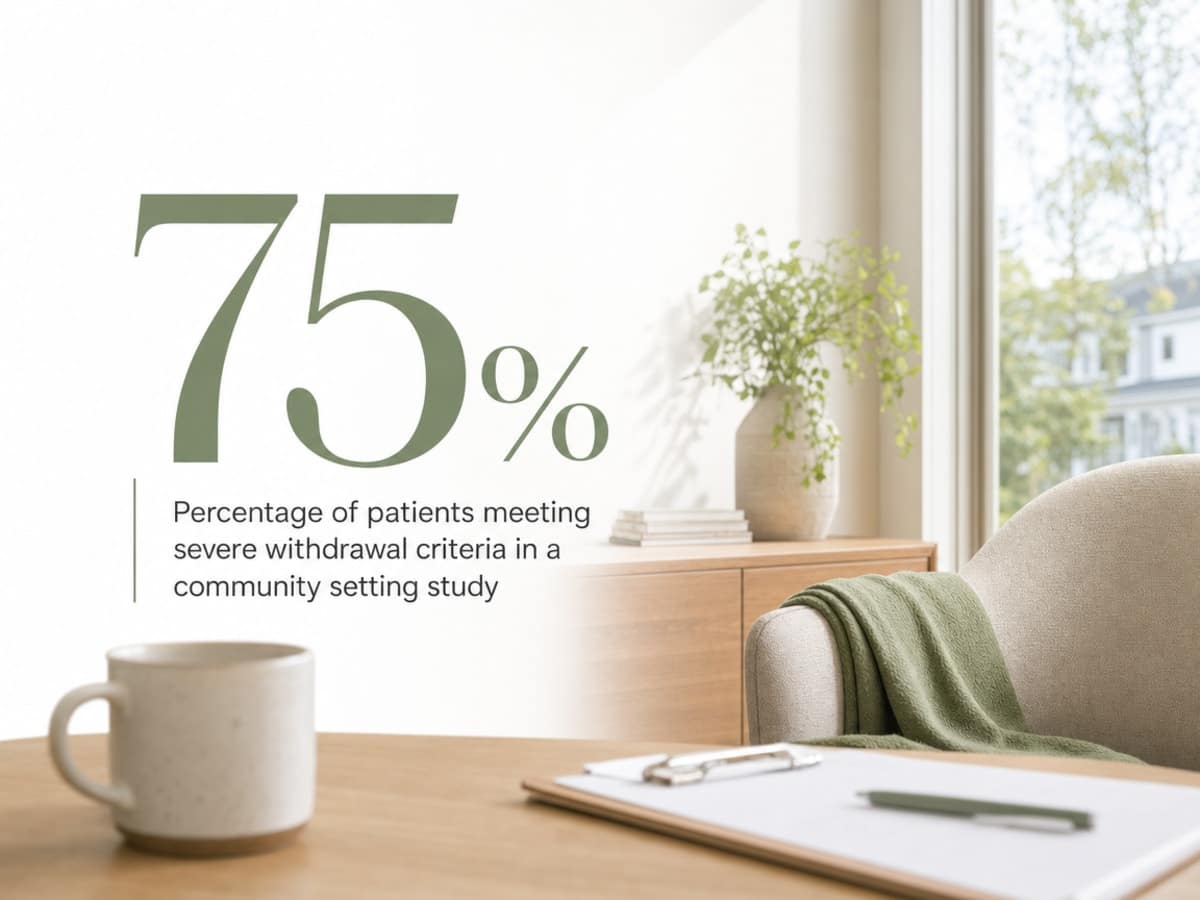
Outside a hospital, the picture changes. A 2025 study of 228 people in a community withdrawal-management setting found that modified versions of the same scale had sensitivity ranging from only 44% to 55%, and 75% of those patients went on to meet severe withdrawal criteria 10. Translated into plain English: in a non-hospital setting, a tool meant to flag the dangerous cases missed roughly half of them.
You are not holding a clipboard in a hospital. You are standing in a hallway. If a trained screener outside a hospital misses this often, a quiet half hour on the couch is not proof of anything. It is a pause.
What to Say When You Call 911
When the dispatcher picks up, you have about 30 seconds to give them what they need to send the right help. Panic makes people start in the middle. Start at the top.
Say these things, in this order:
- Your address, out loud, first. Street number, street name, apartment or unit, city. If you get disconnected, this is the one thing that has to be said.
- “This is a medical emergency. Alcohol withdrawal.” Those two phrases together tell the dispatcher this isn’t a drunk person — it’s someone whose body is in crisis because they stopped drinking.
- What you’re actually seeing right now. Plain words. “He had a seizure five minutes ago.” “She’s seeing people who aren’t here.” “He doesn’t know where he is.” “She’s shaking all over and can’t stand up.” “He’s burning up and soaked in sweat.”
- When their last drink was, if you know. “About 18 hours ago.” “Yesterday morning.” “We’re not sure, maybe two days.”
- Any history that matters. Prior seizures, prior DT, seizure medication, other medical conditions, other drugs or benzodiazepines in the house. Prior DT or withdrawal seizures is a specific reason emergency teams escalate care 2.
- Their age and whether they’re breathing and responsive.
Then stay on the line. The dispatcher may walk you through what to do until paramedics arrive — turning the person on their side if they’re seizing, clearing anything sharp nearby, not putting anything in their mouth. Do what they say. Unlock the front door. Turn on a porch light. Put the dog in another room. You are not overreacting. Severe withdrawal is treated as an emergency because it can turn fatal without prompt care 7.
What to Say When You Call Renewal Springs
If the person in front of you is uncomfortable but stable — tremor, sweating, anxious, not sleeping, nauseous but keeping water down, oriented to who and where they are — the next call is to a 24/7 medical detox line. In Oklahoma City, that’s Renewal Springs. The intake team is awake. You are not interrupting anyone.
Have these things ready before you dial. It makes the call shorter and gets your person into care faster.
- When their last drink was, as close as you can pin it down.
- How much they usually drink in a day, and for how long. “A fifth of vodka a day for about six years” tells the nurse more than “a lot.”
- What you’re seeing right now. Plain words: shaking hands, sweating, can’t sleep, anxious, threw up once.
- Any history of bad withdrawals, seizures, or DT. This changes the plan 2.
- Other medical conditions and medications. Heart problems, diabetes, seizure medication, benzodiazepines, opioids.
- Insurance card. They’ll verify benefits for you, usually while you’re still on the phone.
Say it straight: “My husband is in alcohol withdrawal. His last drink was about ten hours ago. He’s shaking and sweating but still answering me. I need to get him into detox tonight.” That one sentence tells intake everything they need to start the admission. If anything shifts toward the emergency column while you’re waiting — a seizure, hallucinations, worsening confusion — hang up and dial 911. The detox team would tell you to do the same.
What You Can Do in the Room Right Now
While you’re waiting on paramedics or an intake nurse, there are small, concrete things you can do that actually help. None of them replace medical care. All of them make the next few minutes safer.
Stay with them. Don’t leave them alone to “sleep it off” in another room. Severe withdrawal can shift fast, and someone needs eyes on them 6.
Keep the room calm and dim. Turn off the TV. Lower the lights. Move anything sharp or breakable out of arm’s reach. A quiet room is less overwhelming for a brain that’s already overfiring.
If they’re seizing: gently turn them on their side, cushion their head with a folded towel, and move furniture away. Do not hold them down. Do not put anything — a spoon, a wallet, your fingers — in their mouth. Note the time it started. Most seizures stop on their own within a couple of minutes. If one lasts longer than five minutes, or a second one starts, that is a 911 call if you haven’t already made one.
Offer small sips of water if they’re alert and keeping fluids down. Don’t force it. Don’t try to feed them pills from the medicine cabinet, and absolutely don’t give them “just a little drink” to take the edge off. Home-managed tapering in someone this deep is not safe 13.
Gather information. Write down the last-drink time, how much they usually drink, current medications, prior withdrawal history, and any medical conditions. Hand this to the paramedics or read it to the intake nurse. You’ve just saved them twenty minutes of questions and gotten your person into treatment faster.
After the ER: Why Detox Is Step One, Not the Finish Line
If tonight ends with a hospital visit, that’s a win. The ER’s job is to keep the body alive through the worst of it — stop the seizure, calm the heart, replace the fluids, get benzodiazepines on board. What the ER doesn’t do is treat alcohol use disorder. Most emergency departments stabilize the acute crisis and discharge, often within a day or two. That discharge is not the end of the story. It’s the handoff.
Medically supervised detox is what comes next. It picks up where the ER leaves off: several days of monitored tapering, sleep support, nutrition, and symptom management while the brain settles back toward baseline. The NIAAA notes that a subset of people who drink heavily need several days of medical detoxification, and that evidence-based treatment should follow withdrawal management 13. The ASAM guideline makes the same point — withdrawal management is one phase of care, not the whole of it 11.
Once your person is medically stable, that’s the window to call Renewal Springs. Admission from an ER discharge is routine. Bring the discharge paperwork and the last-drink timeline, and the intake team can take it from there.
A Note for Veterans and Their Families
If the person you’re worried about tonight is a veteran, there are a few things worth knowing. The VA issued a 2024 notice standardizing how its facilities handle alcohol withdrawal, requiring written protocols for assessment, medication, levels of care, and transfer when symptoms get worse 1. That’s useful context, but it does not change the decision in front of you. A seizure, hallucinations, or severe confusion is still a 911 call, whether the nearest VA facility is five minutes away or fifty.
Once the acute danger is past, veterans in the Oklahoma City area have options. Renewal Springs runs a dedicated veteran detox track, and the intake team can coordinate with VA benefits and continuing care. Mention military service when you call — it changes what the admission conversation looks like, not whether you qualify for help tonight.
Unsure If Withdrawal Is Dangerous? Call Now
Get immediate guidance if alcohol withdrawal symptoms are becoming severe or frightening right now.
Frequently Asked Questions
How do I know if alcohol withdrawal is a 911 emergency right now?
Call 911 if you see a seizure, hallucinations (seeing or hearing things that aren’t there), severe or worsening confusion, a fever with drenching sweat, a racing pulse, whole-body shaking they can’t control, repeated vomiting that keeps them from holding down fluids, or chest pain and trouble breathing. A prior history of DT or withdrawal seizures also pushes this into emergency territory 2, 4.
How long after the last drink do dangerous withdrawal symptoms usually start?
Early symptoms like tremor, sweating, and anxiety often show up 6–12 hours after the last drink. Withdrawal typically begins within 24–48 hours after blood alcohol drops and can last 5–7 days 3. Seizures most often happen in the 12–24 hour window and can appear without other warning signs 5, 6. Delirium tremens usually emerges 24–72 hours in, sometimes stretching to day four 5.
Can someone die from alcohol withdrawal at home?
Yes. Alcohol withdrawal is one of the few withdrawals that can be fatal without prompt treatment, especially when delirium tremens develops 7. Chronic heavy drinkers who stop suddenly are at real risk, which is why the NIAAA notes abrupt cessation can be life-threatening and some people need several days of medical detox 13. Don’t try to tough it out at home when severe symptoms show up — call for help.
If they seem calmer now, is it safe to just wait until morning?
No. Withdrawal comes in waves. Seizures can happen without warning, and a quiet half hour doesn’t mean the risk has passed 5. A 2025 study in a community withdrawal setting found that modified screening tools missed severe cases 45–56% of the time, with sensitivity between 44% and 55% 10. If you’ve already seen an emergency sign tonight, or you’re still inside the first two days, call now.
What’s the difference between going to the ER and going to a medical detox?
The ER handles the acute crisis — stopping a seizure, calming the heart, giving IV fluids and benzodiazepines. It stabilizes the body, then usually discharges within a day or two. A medical detox like Renewal Springs is where the next several days happen: monitored tapering, medication, sleep and nutrition support, and planning for continuing care. ASAM and SAMHSA both frame detox as one phase of treatment, not the finish 11, 3.
What should I do in the room while I wait for help?
Stay with them. Keep the room quiet and dim, move sharp objects away, and offer small sips of water only if they’re alert. If a seizure starts, turn them on their side, cushion their head, and don’t put anything in their mouth 6. Don’t give them another drink to “take the edge off” — home tapering isn’t safe here 13. Write down the last-drink time and current medications for responders.
References
- VHA Notice 2024-09, Alcohol Withdrawal Management. https://www.va.gov/vhapublications/ViewPublication.asp?pub_ID=11928
- VA/DoD Clinical Practice Guidelines: Pocket Card. https://www.healthquality.va.gov/guidelines/MH/sud/VADoDSUDCPGPocketCard.pdf
- Medication for the Treatment of Alcohol Use Disorder. https://library.samhsa.gov/sites/default/files/sma15-4907.pdf
- Acute Alcohol Withdrawal. https://www.ncbi.nlm.nih.gov/books/NBK65581/
- Introduction to Alcohol Withdrawal. https://pmc.ncbi.nlm.nih.gov/articles/PMC6761824/
- Alcohol Withdrawal with Delirium Tremens. https://pmc.ncbi.nlm.nih.gov/articles/PMC10414982/
- Alcohol Withdrawal. https://pmc.ncbi.nlm.nih.gov/articles/PMC11801492/
- The emergency medicine management of severe alcohol withdrawal. https://pubmed.ncbi.nlm.nih.gov/28188055/
- Prospective Validation Study of the Prediction of Alcohol Withdrawal Severity Scale (PAWSS) in Medically Ill Inpatients: A New Scale for the Prediction of Complicated Alcohol Withdrawal Syndrome. https://pubmed.ncbi.nlm.nih.gov/25999438/
- Applying a Modified Version of the Prediction of Alcohol Withdrawal Severity Scale in a Canadian Community Withdrawal Management Setting. https://pubmed.ncbi.nlm.nih.gov/40328513/
- Clinical guideline highlights for the hospitalist: 2020 American Society of Addiction Medicine clinical practice guideline on alcohol withdrawal management. https://pubmed.ncbi.nlm.nih.gov/34910619/
- SAEM GRACE: Phenobarbital for alcohol withdrawal syndrome in the emergency department. https://pubmed.ncbi.nlm.nih.gov/37589203/
- Alcohol Use Disorder: From Risk to Diagnosis to Recovery. https://www.niaaa.nih.gov/health-professionals-communities/core-resource-on-alcohol/alcohol-use-disorder-risk-diagnosis-recovery