
Key Takeaways
- Physical tells like pinpoint pupils, heavy nodding, slurred speech, and chronic constipation reveal active use, but sedation with steady breathing separates intoxication from a life-threatening overdose.
- A pattern of failed attempts to quit reflects neurological adaptation, not weak willpower, and signals a medical condition better addressed by clinical treatment than repeated promises.
- Withdrawal symptoms between doses—sweating, yawning, dilated pupils, muscle aches—arrive faster and hit harder with fentanyl, making unsupervised abstinence extremely difficult to sustain 16.
- A visibly contracting life, with abandoned hobbies, job loss, and time consumed by obtaining the drug, matches DSM-5 criteria and is often observable even when use is hidden 11.
- Continued use despite job loss, legal trouble, or hospitalization signals a maturing disorder, since opioid use rewires reward circuits and blunts learning from painful outcomes 14.
- Escalating amounts or frequency indicate tolerance, and with counterfeit pills carrying unpredictable fentanyl content, that tolerance offers no protection against a fatal dose 19.
- A prior overdose or near-miss is the strongest predictor of another, demanding accessible naloxone, no solo use, and immediate arrangement of medically supervised withdrawal 1.
What You’re Actually Watching For
You’ve probably already noticed something: sleep at odd hours, pinpoint pupils in bright light, disappearing money, or a flat affect where your adult child used to laugh easily. If you’re here, your instincts are likely ahead of your certainty—and that matters.
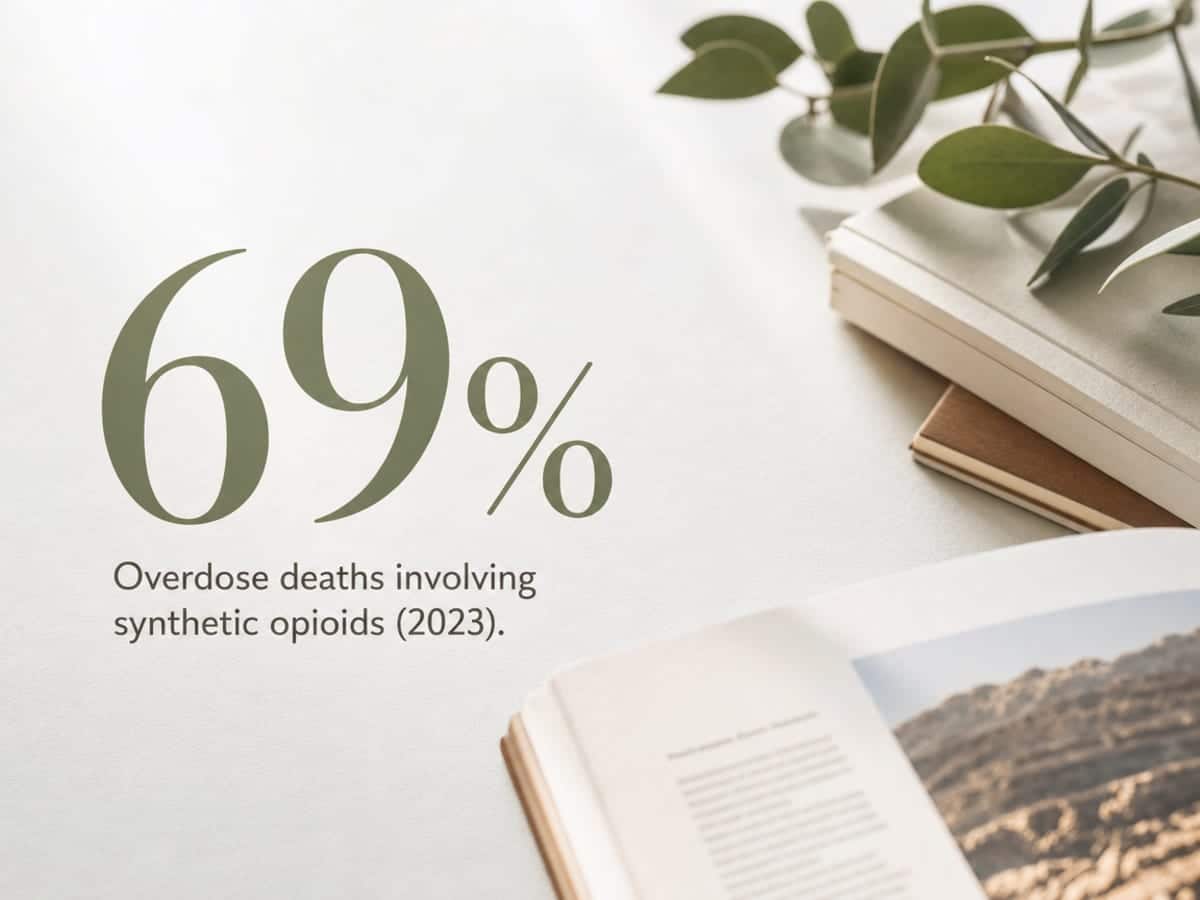
Fentanyl has changed the conversation around drug use. It’s a synthetic opioid so potent that a counterfeit pill can be fatal on a first use. In 2023, roughly 69% of U.S. overdose deaths involved synthetic opioids, primarily illicit fentanyl and its analogs 5. This statistic underscores the urgency of recognizing a pattern of use.
This guide helps you differentiate between three critical questions: Is this active use? Is this an ongoing disorder? Is this a medical emergency happening right now? Each question demands a different, specific action.
Three Categories Parents Keep Confusing
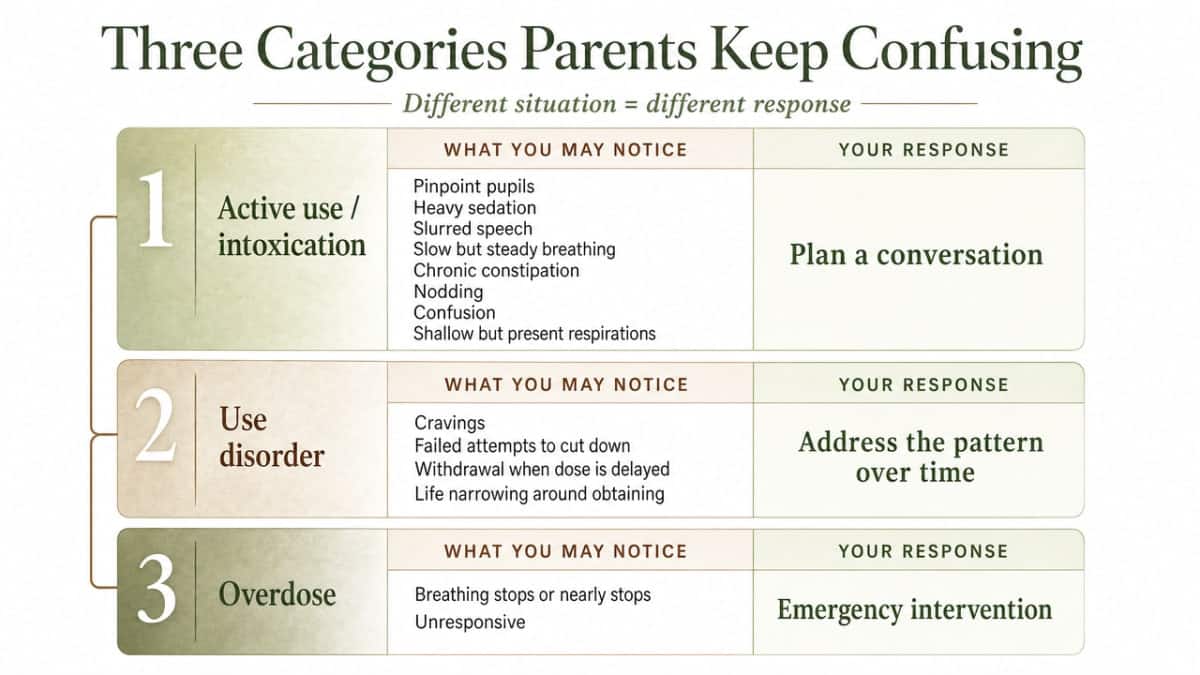
Many resources conflate distinct situations into one symptom list, leading to confusion. Understanding the difference between active use, a use disorder, and an overdose is crucial for appropriate intervention.
Active use or intoxication describes fentanyl’s expected effects. You might observe pinpoint pupils, heavy sedation, slurred speech, slow but steady breathing, chronic constipation, and “nodding” (head dropping). BMJ Best Practice identifies these as signs of opioid intoxication: miosis, sedation, confusion, slurred speech, and shallow but present respirations 20. Your response here is relational, focusing on planning a conversation.
A use disorder is the underlying pattern of behavior over weeks and months. It includes cravings, failed attempts to reduce use, withdrawal symptoms when a dose is delayed, and life narrowing around obtaining and using the drug. DSM-5 defines opioid use disorder by at least two of these criteria within a 12-month period, with severity increasing as more criteria are met 11. This situation requires medical, non-emergency action, such as supervised withdrawal and a subsequent treatment plan.
An overdose is an immediate medical emergency. The person is not merely sedated but their body is failing. Signs include inability to be woken up, breathing slowed to a few breaths per minute or stopped, blue or gray lips and fingernails, and gurgling or choking sounds 2, 23. The correct action is to call 911, administer naloxone, and remain with them until help arrives 1.
The 7 Signs, Ordered by Urgency
Sign 1: Physical Tells You Can See in the Room
Observe physical indicators: pinpoint pupils unresponsive to light changes, heavy-lidded sedation leading to nodding, slurred speech, chronic constipation, unexplained weight loss, and occasional track marks if injecting. More commonly, a distinct sedation pattern is observed due to counterfeit pills containing fentanyl.
BMJ Best Practice lists miosis, sedation, slurred speech, chronic constipation, weight loss, and needle marks as signs of opioid intoxication and dependence 20. NIDA adds confusion, drowsiness, and muscle stiffness to the fentanyl-specific presentation 19.
Crucially, sedation with steady breathing indicates intoxication. However, sedation accompanied by extremely slow breathing, gurgling, or blue-tinged lips points to Sign 7 territory—an overdose requiring immediate 911 intervention. The physical signs you observe in Sign 1 help establish a pattern for future discussion, not immediate confrontation.
Sign 2: Pattern of Failed Attempts to Stop or Cut Back
Repeated cycles of promising to stop, brief periods of abstinence, and subsequent relapse are a significant indicator. This aligns with the DSM-5 criterion of “persistent desire or unsuccessful efforts to cut down or control opioid use” 11. Fentanyl’s potency makes willpower an insufficient tool against the neurological adaptations that develop with regular use 19.
This pattern signals a medical condition, not merely experimentation or a bad habit. It responds better to medical treatment than to repeated promises. Document these attempts and their duration; this data will be valuable when speaking with healthcare professionals.
Sign 3: Withdrawal Between Doses
Observe symptoms when your adult child goes several hours without using: runny nose, persistent yawning, goosebumps, restless legs, sweating and chills, diarrhea, nausea, muscle and joint aches, dilated pupils (unlike the pinpoint pupils of active use), and heightened irritability 14, 21.
Fentanyl withdrawal often includes dysphoria, anxiety, and vomiting, symptoms measured by standardized scales like COWS 13. A key distinction with fentanyl is the timing: users frequently report withdrawal starting faster, being more intense, and lasting longer than with heroin or prescription pills 16.
While standardized scores may not always show fentanyl withdrawal as objectively more severe than other opioid withdrawal in hospitalized patients 15, the subjective experience of dread and inability to cope is clinically documented 16. Acknowledging this helps you understand the challenge of medically supervised withdrawal.
Sign 4: Life Contracting Around Use
A shrinking social circle, abandoned hobbies, job loss or neglect, and life revolving around drug access rather than relationships are common signs. This corresponds to the DSM-5 criterion of important social, occupational, or recreational activities being given up or reduced due to opioid use 11.
You might also notice “a great deal of time spent obtaining, using, or recovering” from the drug 12. Daily routines shift, meals are skipped, and communication becomes erratic.
Trust your observations. If your adult child’s life has significantly narrowed to accommodate fentanyl use, this contraction is a clear indicator. It’s often visible even when other aspects of use are hidden.
Sign 5: Continued Use Despite Real Consequences
This sign involves continued opioid use despite significant negative repercussions like job loss, eviction, accidents, relationship breakdowns, legal issues, or hospitalizations. In DSM-5 terms, this is persistent or recurrent social, interpersonal, or physical problems caused or worsened by the drug 11.
This can be particularly distressing for parents, as it defies the expectation that consequences lead to behavior change. Opioid use disorder rewires the brain’s reward system, making it difficult to learn from painful outcomes 14. This explains why repeated negative events may not alter behavior as expected.
Continued use after severe consequences indicates a maturing use disorder. DSM-5 severity increases with the number of criteria met; six or more indicates severe opioid use disorder 12, where medication-assisted treatment is most crucial.
Sign 6: Tolerance and Escalating Amounts or Frequency
An increasing need for the drug to achieve the same effect, or a diminished effect from the same amount, indicates tolerance. This is a DSM-5 criterion for opioid use disorder 11. The frequency of use may also increase, with doses lasting shorter periods.
With fentanyl, tolerance is particularly dangerous. The margin between an effective dose and a fatal one is narrow, especially with counterfeit pills where fentanyl content varies 19. Tolerance built on one batch offers no protection against the next, increasing overdose risk even for experienced users.
Escalating use or seeking stronger sources is a significant red flag, directly correlated with overdose risk. At this stage, having naloxone readily available in the home is a vital preparation 1.
Sign 7: A Prior Overdose or Near-Miss
A previous overdose, whether reversed by naloxone, treated in an ER, or managed informally, is the strongest predictor of a future overdose. If this has occurred, the risk is immediate and severe.
The signs of an overdose are distinct: inability to be woken up, breathing slowed to a few breaths per minute or stopped, blue or gray lips and fingernails, a limp body, gurgling or choking sounds, and extremely small pupils 2, 23. The DEA also notes cold and clammy skin, cyanosis, and respiratory failure 7.
If there’s been a prior overdose, three actions are critical:
- Ensure naloxone is accessible and everyone knows how to use it 1,
- Ensure your child is not using alone, and
- Actively arrange medically supervised withdrawal without delay.
This sign transforms the checklist into a countdown.
Why Fentanyl Withdrawal Is Its Own Problem
While all opioid withdrawal is difficult, fentanyl withdrawal presents unique challenges. The symptoms are familiar: chills, body aches, vomiting, diarrhea, dysphoria, irritability, anxiety, runny nose, yawning, dilated pupils, and goosebumps 13, 14. However, individuals describe fentanyl withdrawal as “stronger, more painful, occurring more frequently, lasting longer, and having a faster onset” compared to heroin withdrawal 16. While standardized clinical scores may not always reflect this increased severity 15, the lived experience is real and should be taken seriously.
A critical medical consideration is the timing of buprenorphine, a medication for opioid use disorder. Starting buprenorphine too soon after fentanyl use can trigger severe precipitated withdrawal. Studies show a significantly higher risk of severe withdrawal for those who took buprenorphine within 24 to 48 hours of their last fentanyl exposure 17. This is because fentanyl lingers in body tissues longer than heroin, making buprenorphine induction complex 18.
Due to these complexities, a home detox is no longer a viable or safe option. ASAM explicitly recommends medication-managed withdrawal over abrupt cessation and advises against ultra-rapid detox due to risks 22. Your adult child needs clinical supervision to safely manage withdrawal and correctly time buprenorphine induction.
What to Do Tonight vs. This Week
If You Think It’s an Overdose Right Now
If your adult child cannot be woken up, is breathing fewer than one breath every five seconds or not at all, has blue or gray lips or fingertips, is limp, or is making gurgling or snoring sounds they cannot be roused from, treat it as an overdose 2, 23.
Immediately call 911. Administer naloxone if available—one dose in the nostril, followed by a second if there’s no response in two to three minutes, as fentanyl overdoses often require multiple doses 23. Position them on their side to prevent choking if they vomit. Stay with them. If trained, perform rescue breathing. Do not attempt to walk them around, put them in a cold shower, or wait for them to “sleep it off” 3.
If You’re Preparing for the Conversation
A direct, concise conversation is best, delivered when your adult child is not intoxicated or in severe withdrawal. State what you’ve observed and express your fear for their life, as this is the most critical concern. Avoid ultimatums about finances or living arrangements initially.
Instead, offer a concrete solution: you have identified a facility for medically supervised withdrawal and are prepared to drive them there immediately. Have the contact information ready. SAMHSA’s National Helpline is a free, confidential, 24/7 resource in English and Spanish 9, and their treatment locator can help find local options 10. If they decline, do not argue; simply state you will ask again. Keep naloxone in the house regardless 1. This conversation is often the first of many, establishing you as a consistent advocate for a safer path.
Choosing Medically Supervised Withdrawal Over a Home Detox
The desire to manage detox at home is understandable, but it is no longer a safe or effective approach with fentanyl. While provisional CDC data showed a decline in U.S. opioid-involved deaths from 55,296 in 2024 to 44,564 in 2025 4, this progress, largely due to wider naloxone access and expanded medication treatment, does not mitigate the risk of a home detox.
Home detox fails for three reasons:
- ASAM explicitly recommends medication-managed withdrawal over abrupt cessation and warns against ultra-rapid detox due to the risk of adverse events or death 22.
- Fentanyl withdrawal is reported to be faster and harder to endure, leading many to relapse when unsupervised 16.
- The precise timing of the first buprenorphine dose after fentanyl exposure requires clinical expertise 17, 18.
Supervised withdrawal provides round-the-clock symptom management, safe buprenorphine induction, and a crucial handoff to ongoing treatment, which is vital for saving lives.
The Destination After Detox: Ongoing Medication Treatment
Detox is merely a transitional phase. Without a subsequent treatment plan, the mortality risk in the weeks following discharge increases significantly due to rapidly diminished tolerance, making a return to previous doses potentially fatal. This critical step is often overlooked by families but is essential for long-term recovery.
The FDA has approved three medications for opioid use disorder: buprenorphine, methadone, and naltrexone 8. Buprenorphine and methadone reduce cravings and withdrawal by acting on opioid receptors without the overdose risk of illicit use. Naltrexone blocks opioid effects and is typically started after a longer washout period. ASAM’s 2020 update emphasizes that individuals leaving withdrawal management should be offered one of these medications and evaluated for co-occurring mental health conditions, rather than simply discharged with a phone number 24.
Before your adult child enters supervised detox, inquire about the discharge plan. If it doesn’t include a specific handoff to buprenorphine, methadone, or naltrexone with a scheduled appointment, press for more details. This seamless transition is fundamental to successful treatment.
Speak With a Medical Detox Specialist Now
Get immediate answers and support for fentanyl detox questions, any time you’re ready to reach out.
Frequently Asked Questions
How can I tell the difference between fentanyl withdrawal and an overdose?
During withdrawal, your adult child will be awake but uncomfortable, exhibiting symptoms like sweating, shivering, yawning, a runny nose, and dilated pupils 14. An overdose, conversely, involves inability to be woken up, very slow or stopped breathing, blue or gray lips or fingernails, and pinpoint pupils 2, 23. Withdrawal requires clinical attention, while an overdose demands immediate 911 and naloxone.
Should I try to help my adult child detox from fentanyl at home?
No. ASAM specifically advises against abrupt cessation or ultra-rapid detox due to the risk of serious harm, recommending medication-managed withdrawal instead 22. Fentanyl withdrawal is rapid and intense, and the precise timing for buprenorphine induction after fentanyl exposure is a complex clinical decision 17, 18. Home detox attempts often lead to relapse, which significantly increases overdose risk.
Why can starting buprenorphine too soon after fentanyl use make withdrawal worse?
Buprenorphine partially blocks the same receptors as fentanyl. If administered while a significant amount of fentanyl is still in the body, it can displace the fentanyl, causing sudden and severe precipitated withdrawal. Studies indicate a higher risk of severe withdrawal for individuals who took buprenorphine within 24 to 48 hours of fentanyl use 17. This timing requires professional clinical judgment 18.
Should I keep naloxone in the house even if my child hasn’t overdosed?
Yes. Naloxone effectively reverses opioid overdoses, including those from fentanyl, and is harmless to individuals not experiencing an opioid overdose 1. If there’s any suspicion of opioid use, keep naloxone accessible and ensure all adults in the household know its location and how to administer it. Suspected fentanyl overdoses may require more than one dose 23.
What happens after medically supervised withdrawal ends?
Withdrawal management is a bridge to further treatment, not the end point. The FDA has approved buprenorphine, methadone, and naltrexone for opioid use disorder 8. One of these medications should be initiated before discharge, with a follow-up appointment already scheduled. ASAM’s 2020 update also recommends evaluating for co-occurring mental health conditions 24. Without this continuity of care, the mortality risk in the weeks following detox increases sharply.
What do I say when I confront my adult child about fentanyl use?
Choose a moment when they are neither high nor in withdrawal. Briefly state what you’ve observed, express your fear for their life, and offer a concrete solution: a phone number for supervised withdrawal and a ride today or tomorrow. The SAMHSA National Helpline is a free, confidential, 24/7 resource in English and Spanish 9. Avoid ultimatums. If they refuse, reiterate your offer next week.
References
- Lifesaving Naloxone | Stop Overdose. https://www.cdc.gov/stop-overdose/caring/naloxone.html
- Preventing Opioid Overdose. https://www.cdc.gov/overdose-prevention/prevention/index.html
- Naloxone-Fact-Sheet-508.pdf. https://www.cdc.gov/stop-overdose/media/pdfs/2024/04/Naloxone-Fact-Sheet-508.pdf
- Release. https://www.cdc.gov/nchs/pressroom/releases/20260513.html
- About Overdose Prevention. https://www.cdc.gov/overdose-prevention/about/index.html
- Data Resources | Overdose Prevention. https://www.cdc.gov/overdose-prevention/data-research/facts-stats/index.html
- Facts about Fentanyl. https://www.dea.gov/resources/facts-about-fentanyl
- Information about Medications for Opioid Use Disorder (MOUD). https://www.fda.gov/drugs/food-and-drug-administration-overdose-prevention-framework/information-about-medications-opioid-use-disorder-moud
- National Helpline for Mental Health, Drug, Alcohol Issues. https://www.samhsa.gov/find-help/helplines/national-helpline
- Find Substance Use Disorder Treatment. https://www.samhsa.gov/substance-use/treatment/find-treatment
- Who to Treat. https://www.ncbi.nlm.nih.gov/books/NBK558319/table/box1/?report=objectonly
- Addressing Opioid Use Disorder in General Medical Settings. https://www.ncbi.nlm.nih.gov/books/NBK574912/
- Managing Opioid Withdrawal Symptoms During the Fentanyl Era: A Review. https://pmc.ncbi.nlm.nih.gov/articles/PMC11016949/
- Opioid withdrawal: role in addiction and neural mechanisms. https://pmc.ncbi.nlm.nih.gov/articles/PMC11166123/
- Fentanyl withdrawal: Understanding symptom severity and its relationship to illicit fentanyl use. https://pmc.ncbi.nlm.nih.gov/articles/PMC9992259/
- Characterizing opioid withdrawal experiences and treatment engagement among people who use fentanyl. https://pmc.ncbi.nlm.nih.gov/articles/PMC11062512/
- Evidence of Buprenorphine-precipitated Withdrawal in Persons Who Use Fentanyl. https://pmc.ncbi.nlm.nih.gov/articles/PMC9124721/
- Opioid Use Disorder Treatment in the Fentanyl Era. https://pmc.ncbi.nlm.nih.gov/articles/PMC9859934/
- Fentanyl | National Institute on Drug Abuse (NIDA) – NIH. https://nida.nih.gov/research-topics/fentanyl
- Opioid use disorder – Symptoms, diagnosis and treatment. https://bestpractice.bmj.com/topics/en-us/200
- Treatment of Opioid Use Disorder. https://www.ncbi.nlm.nih.gov/books/NBK558319/
- American Society of Addiction Medicine (ASAM) National Practice Guideline for the Use of Medications in the Treatment of Addiction Involving Opioid Use. https://pmc.ncbi.nlm.nih.gov/articles/PMC4605275/
- Safety Advice for Patients & Family Members. https://library.samhsa.gov/sites/default/files/safety-advice-for-patients-family-members.pdf
- The ASAM National Practice Guideline for the Treatment of Opioid Use Disorder: 2020 Focused Update. https://pubmed.ncbi.nlm.nih.gov/32511106/