
Key Takeaways
- If you’re searching in the middle of the night, know that Oklahoma has three separate paths to detox, and identifying the right one saves hours of dead-end calls.
- ‘State funded’ in Oklahoma splits into SoonerCare Medicaid, ODMHSAS safety-net programs, and SAMHSA’s federal locator, and most people end up using two of the three doors.
- If you have SoonerCare, medical detox is already a covered benefit, so call the facility first to confirm acceptance and let their intake staff handle prior authorization 1, 2.
- If you’re uninsured, ask facilities to connect you to an ODMHSAS-funded program through a crisis center, CCBHC, or state hospital, which can also help you apply for SoonerCare 3.
- While waiting on hold, use FindTreatment.gov filtered by ZIP code, detoxification, and your payment type, or call 1-800-662-HELP or text your ZIP to 435748 4, 5, 6.
- Oklahoma treatment facilities dropped from 195 in 2020 to 177 in 2024, so expect three to four calls, ask who to try next, and widen your radius 16.
- When you call, lead with who needs detox, name the substance, state your payment situation, then ask about bed availability, accepted coverage, and referrals.
- Break the search into the first hour, first day, and first week, and start planning what comes after detox before the stay ends 10.
If you’re searching at 2 a.m., start here
If you’re reading this in the middle of the night, or between shifts, or in a hospital parking lot, you’ve already done the hardest part. You picked up the phone. That counts.
Here’s what you need to know before you scroll any further: in Oklahoma, medical detox is covered by SoonerCare (the state’s Medicaid program) 1, and there’s a separate safety-net system called ODMHSAS for people who don’t have insurance at all 3. Those aren’t the same door. Knowing which one fits your situation saves you hours of dead-end calls.
This guide walks you through three ways in, in the order most likely to get you or your loved one into a bed the fastest:
- Door 1: SoonerCare, if you have Medicaid
- Door 2: ODMHSAS, if you’re uninsured or underinsured
- Door 3: SAMHSA’s national tools, which work in the background while you wait on hold 4
For everyone else, take a breath. You’re going to make a few calls today. Not twenty. A few. Let’s start with what “state funded” actually means where you live.
What ‘state funded’ actually means in Oklahoma
Three doors, not one
When you type “state funded detox near me” into a search bar, you’re really asking three different questions at once. And in Oklahoma, they each have a different answer.
The first door is SoonerCare, the name for Oklahoma’s Medicaid program. If you or your loved one already has a SoonerCare card, medical detox is a covered benefit. That includes inpatient acute care, crisis stabilization, and medical detox itself 1. This is the fastest door for most people who qualify, because the funding is already sitting there waiting to be used.
The second door is ODMHSAS, the Oklahoma Department of Mental Health and Substance Abuse Services. This is the state’s safety-net system for people who don’t have insurance, don’t have SoonerCare yet, or fall into the gap where they earn too much for Medicaid but can’t afford private coverage 3. ODMHSAS runs state hospitals, community mental health centers (called CCBHCs), and crisis centers all across Oklahoma.
The third door is SAMHSA’s FindTreatment.gov, the federal treatment locator 4. This isn’t a funding source. It’s a search tool that lists every state-licensed facility in the country and lets you filter by what you can pay, where you live, and what kind of care you need. Think of it as the map that shows you where the other two doors are.
You don’t have to pick just one. Most people end up using two of the three, sometimes all three. A social worker might use FindTreatment.gov to find a facility, then call to check if it takes SoonerCare, then loop in ODMHSAS if the answer is no. Knowing all three doors exist means you stop hitting the same wall over and over.
Why publicly supported detox is more common than it feels
When you’re on your fifth phone call and every voicemail sounds like a dead end, it’s easy to believe that state-funded detox barely exists. It does exist, and there’s more of it than the search feels like.
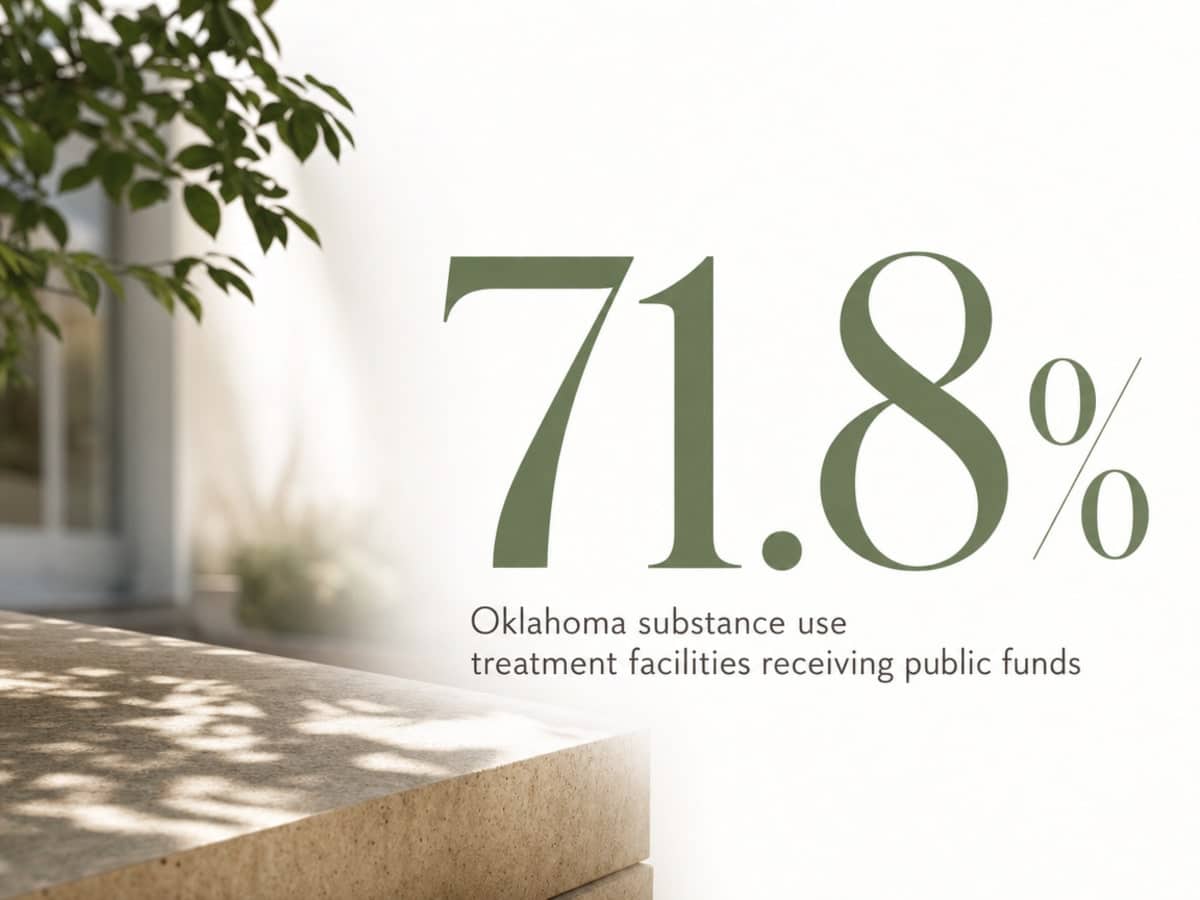
A 2023 peer-reviewed analysis of SAMHSA survey data (with facility data through 2020) estimated that 71.8% of substance use treatment facilities in Oklahoma received public funds 16. This indicates that public funding is a significant part of the Oklahoma treatment system, not a minor component. The doors are more common than the signs on them suggest.
Why does it still feel so hard? A few reasons. Facilities specialize, so a place that treats outpatient counseling may not do medically supervised withdrawal. Bed counts change hour by hour. Some programs list on Google, some only show up on ODMHSAS or SAMHSA rosters. And staff turnover means the person who answers the phone may not be the person who admits you.
Read that percentage as permission to keep dialing. You’re not looking for a needle in a haystack. You’re looking for the right door in a building that has many of them.

Door 1: SoonerCare, if you have Medicaid
What SoonerCare covers for detox
If you have a SoonerCare card in your wallet, you already have the biggest piece of this puzzle. Medical detox is a covered mental health benefit under Oklahoma Medicaid, right alongside inpatient acute care and crisis stabilization 1. You are not asking for a favor. You are using a benefit that already belongs to you.
Here’s what that means in practice. SoonerCare’s own service list shows detox and residential substance use disorder services as covered for both children and adults 2. If detox connects into medication for opioid use disorder, like buprenorphine or methadone, those medications are federally required Medicaid benefits too 7, 10. So the medicine that keeps someone comfortable during withdrawal, and the medicine that helps them stay stable after, are both on the covered list.
What SoonerCare does not do is guarantee that every detox facility in Oklahoma takes it. Some do. Some don’t. That’s the piece you have to check facility by facility, which is why the phone calls matter more than the search results. Coverage is real. Access still takes a few conversations.
Prior authorization, in plain language
Prior authorization is the step that trips up almost everyone, so let’s slow down here. SoonerCare covers detox, but the coverage is marked “prior authorization required” 2. That phrase sounds like a wall. It isn’t. It’s a phone call, and you’re usually not the one making it.
Here’s how it actually works. Once a detox facility agrees to admit you, someone on their staff, usually an intake coordinator or a nurse, calls SoonerCare. They explain why detox is medically necessary right now: what substance, how long, what withdrawal symptoms, what risks. SoonerCare reviews it and either approves the stay or asks for more information. In most cases this happens the same day, sometimes within a couple of hours.
You do not need to memorize medical necessity criteria. You do not need to fill out a form yourself. What you do need is your SoonerCare member ID number ready when you call, and a willingness to answer honest questions about drinking or drug use during intake. The more accurate the information, the smoother the approval.
Parity rules under federal Medicaid law are supposed to keep prior authorization for behavioral health from being stricter than for physical health 11, 13. That doesn’t erase the step, but it does mean detox isn’t held to a higher bar than any other hospital-level care.
The calls to make today
Two calls, in this order.
- Call the detox facility itself. Ask two questions: “Do you accept SoonerCare?” and “Do you have a bed available, and if not, when?” If they say yes to SoonerCare, ask them to start the prior authorization process. If they say no, thank them and move on. Don’t spend twenty minutes explaining the situation to a facility that can’t help.
- Call SoonerCare Member Services (the number is on the back of your card). Tell them you’re trying to access detox and ask them to confirm your coverage is active and to help you find a facility in your area that takes SoonerCare. They can also tell you if you’re in a managed care plan, which sometimes changes which facilities are in-network.
If you strike out on both calls, that’s your signal to open Door 2 or Door 3. You have not failed. You have just learned which door isn’t yours today. Keep a small notebook or notes app open and write down who you called, what they said, and what time. When you’re tired, that list is what keeps you from calling the same wrong number twice.
Door 2: ODMHSAS, if you’re uninsured or underinsured
How Oklahoma’s safety-net system is built
If you don’t have SoonerCare, and you don’t have private insurance, you are not out of options. You’re just walking through a different door.
ODMHSAS, the Oklahoma Department of Mental Health and Substance Abuse Services, is what the state calls its safety-net system for mental health and substance use treatment 3. “Safety net” is a bureaucratic phrase, but the meaning is simple: it’s the network of programs the state pays for so that people without coverage can still get care. That includes withdrawal management, crisis stabilization, and connections to residential and outpatient treatment after detox.
ODMHSAS doesn’t work like a single hospital. It’s a network. Some services are delivered at state-operated hospitals. Others come through community mental health centers, called CCBHCs, that contract with the state. Others run through crisis centers designed to handle the first 24 to 72 hours 3. The reason your search feels scattered is because the system itself is spread across different buildings, phone numbers, and websites.
You don’t need to know the org chart. You need to know that when a facility asks about payment and you say “I don’t have insurance,” the next question should be, “Can you connect me to an ODMHSAS-funded program?” That phrase moves the conversation.
Crisis centers, CCBHCs, and state hospitals
Three types of ODMHSAS locations show up most often in a detox search 3. Knowing what each one does saves you from driving to the wrong address.
Crisis centers are the closest thing to a walk-in door. They’re built for people in acute distress, including active withdrawal, suicidal thoughts, or a mental health emergency. Staff there can assess you, keep you safe for a short stay, and either detox you on site or hand you off to a facility that can. If you don’t know where to start and someone is not safe waiting, a crisis center is usually the right first stop.
CCBHCs, or Certified Community Behavioral Health Clinics, are outpatient hubs that can screen you, start paperwork, and route you toward detox and longer-term care. They’re the door for people who are stable enough to sit in a waiting room but need help figuring out where to go next. Many will help you apply for SoonerCare on the same visit, which can open Door 1 later this week.
State hospitals handle the most acute inpatient care. You usually reach them through a referral from a crisis center, CCBHC, or emergency room rather than by walking in.
Ask which of the three fits your situation before you drive anywhere. One phone call to ODMHSAS saves an hour in traffic.
Door 3: SAMHSA tools that work while you’re on hold
FindTreatment.gov, filter by filter
While you’re waiting on hold with SoonerCare or driving toward a crisis center, open FindTreatment.gov on your phone. It’s SAMHSA’s official locator, and it lists mental health and substance use treatment programs across the country 4. Every facility on it is state-licensed, which means you’re not sorting through paid ads or old Yelp pages.
Start with three filters and ignore the rest for now.
- Location
- Type in your ZIP code, not just “Oklahoma City.” The map will fan out from where you actually are, so you see the closest options first.
- Type of care
- Pick “detoxification” or “withdrawal management.” Regular outpatient counseling won’t help someone who needs medical supervision to come off alcohol, opioids, or benzos safely.
- Payment accepted
- Choose “Medicaid” if you have SoonerCare, or “sliding fee scale” and “payment assistance” if you don’t. This one filter cuts the list down more than any other.
Each result shows a phone number, address, and what the facility treats. Call before you drive. Bed availability changes hourly, and the website can’t see tonight’s roster. If a listing looks right but doesn’t answer, note the name and come back to it in an hour.
The National Helpline and HELP4U text option
If the website feels like too much right now, use your voice. SAMHSA’s National Helpline is 1-800-662-HELP (4357). It’s free, confidential, and open 24 hours a day, 365 days a year, in English and Spanish 6. You can also text your ZIP code to 435748 (HELP4U) and get referral information back 5.
The person on the other end isn’t a counselor, and they won’t diagnose anyone. What they will do is take your ZIP code, ask a few questions about insurance and substance, and give you names and numbers of state-licensed programs near you. That’s it. No pressure, no upsell.
Call this line when you’re too tired to search, when the search isn’t working, or when it’s 3 a.m. and every office is closed.
Why beds feel tight in Oklahoma right now
If you’ve called four places and heard “we’re full” three times, that’s not you doing something wrong. Oklahoma’s treatment system has actually gotten smaller in the last few years, and the numbers back up what you’re feeling on the phone.
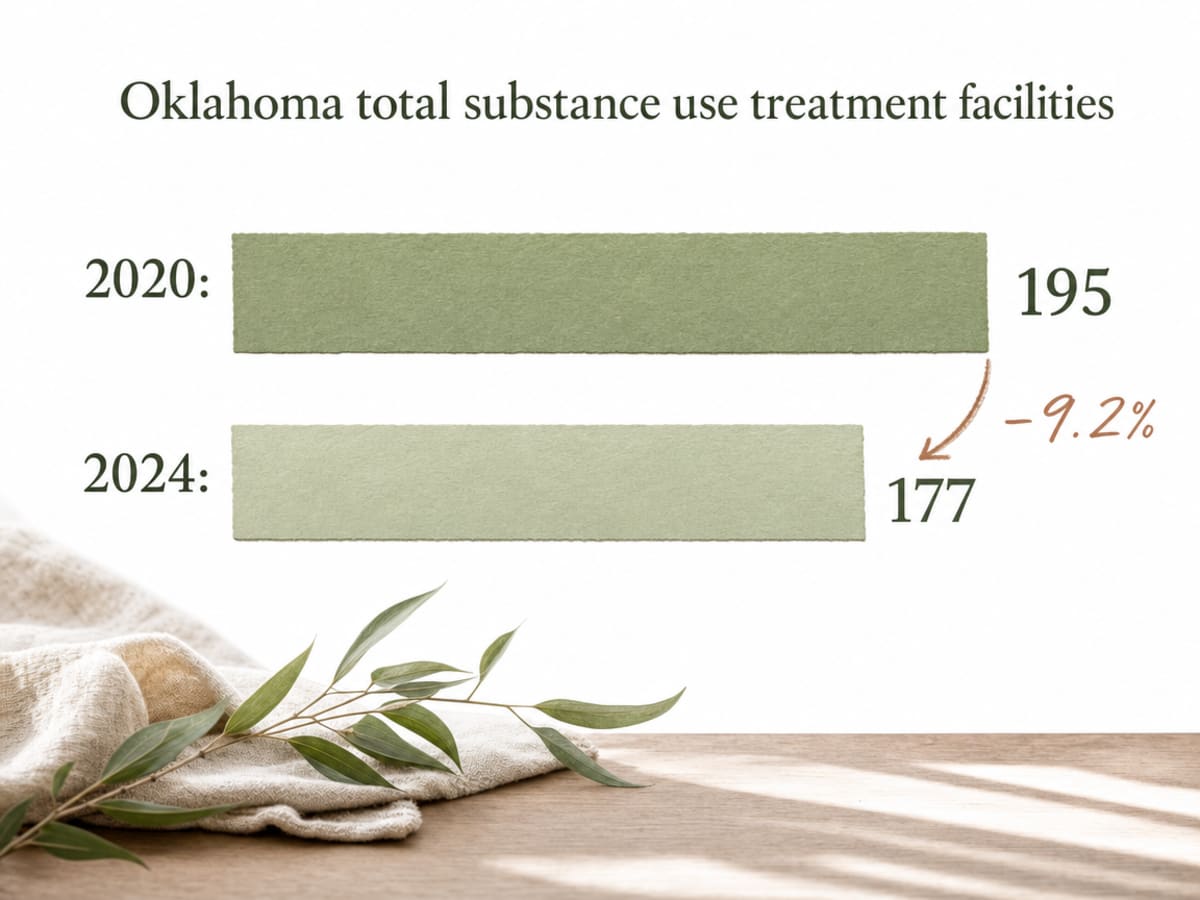
The count of substance use treatment facilities in Oklahoma dropped from 195 in 2020 to 177 in 2024, a decline of about 9.2% 16. Fewer facilities means fewer beds, longer waitlists, and more calls before you land somewhere that can take you. That’s the honest picture. And it’s why the same three or four names keep coming up in every search.
Here’s what to do with that information:
- Don’t give up after two rejections. In this system, three or four calls is average, not excessive.
- Ask every facility the same question: “If you can’t take me, who should I call next?” Intake staff know who has beds this week. They’ll often name a program you wouldn’t find on Google.
- Expand your radius. If nothing in Oklahoma City has an opening, ask about Tulsa, Norman, Lawton, or smaller towns within a couple hours. A bed 90 minutes away that opens tomorrow beats a bed in your ZIP code that opens in ten days.
The system is tight. It isn’t closed.
What to say when you call
Most people freeze up on the first call. That’s normal. You’re tired, you’re scared, and the person on the other end sounds like they’ve done this a thousand times. Here’s a short script that gives you back some ground.
Open with one sentence: “I’m looking for medical detox for myself” (or “for my son, my sister, my husband”). Then say what substance. “He’s been drinking heavily every day for two years and wants to stop.” Or “She’s been using fentanyl and is in withdrawal right now.” That’s enough for the intake person to know what department to send you to.
Next, share your payment situation in one line. “I have SoonerCare” 1, or “I don’t have insurance and I’m looking for state-funded options” 3, or “I’m not sure what I have, can you help me figure it out?” Being direct here saves everyone twenty minutes.
Then ask three questions, in this order:
- Do you have a bed available, and if not, when?
- Do you take SoonerCare, or offer sliding-scale or ODMHSAS-funded care?
- If you can’t take us, who should we call next?
Write down the answers. If the person is warm and helpful, ask their name so you can call back. If they’re rushed, that’s not personal, it’s the system. Move to the next number on your list. You are allowed to hang up and try again in an hour if you need to breathe.
The first hour, first day, first week
You don’t have to figure this whole thing out tonight. Break it into three windows and take them one at a time.
The first hour. Pick one number and dial it. If you have SoonerCare, call the number on the back of the card and ask for behavioral health help 1. If you don’t, call SAMHSA’s National Helpline at 1-800-662-HELP (4357) or text your ZIP code to 435748 5, 6. If someone is in active withdrawal from alcohol or benzos, or talking about hurting themselves, go straight to an emergency room or a crisis center 3. One call. That’s the whole first hour.
The first day. Make three to five calls to detox facilities on your list. Use the short script from earlier. Write down names, times, and next steps. If you don’t have SoonerCare and think you might qualify, ask a CCBHC to help you apply the same day you visit 3. If a facility agrees to admit you or your loved one, they’ll start the prior authorization call to SoonerCare while you gather what you need for intake: ID, medication list, insurance card if you have one, and a small bag 2.
The first week. Detox itself usually runs three to seven days depending on the substance. During that stretch, ask about what comes next before it ends. Residential treatment, outpatient care, medication for opioid use disorder 10, a sober living house — the plan for day eight matters as much as the bed for day one. If admission gets delayed, keep calling. Beds open on Mondays. Beds open when someone discharges. Beds open when you’re the person who called back a third time.
You are not behind. You are moving. If you’re in the Oklahoma City area and want a warm handoff instead of another cold call, Renewal Springs Detox can verify your benefits and walk you through what admission would look like from here.
Talk Now About Local Detox Options Nearby
Connect instantly for guidance on finding available state-funded or insurance-covered detox in your area.
Frequently Asked Questions
Does SoonerCare actually cover detox in Oklahoma?
Yes. Medical detoxification is listed as a covered mental health benefit for SoonerCare members, right alongside inpatient acute care and crisis stabilization 1. Detox and residential substance use disorder services are covered for both children and adults, though prior authorization is required before admission 2. You already have the benefit. The work is finding a facility that accepts it and has a bed.
What if I don’t have insurance at all?
You still have a path. ODMHSAS runs Oklahoma’s safety-net system for people who are uninsured or fall in the coverage gap, including state hospitals, community behavioral health clinics, and crisis centers 3. Call one of them directly, or use SAMHSA’s National Helpline at 1-800-662-HELP (4357) for referrals 6. A CCBHC can also help you apply for SoonerCare on the same visit.
What is prior authorization, and how long does it take?
Prior authorization is SoonerCare’s approval step before your detox stay begins 2. You don’t handle it yourself. The facility’s intake staff calls SoonerCare, explains why detox is medically necessary, and waits for approval. In most cases it clears the same day, sometimes within a few hours. Have your SoonerCare member ID ready and be honest about substance use during intake so the request moves quickly.
How do I use FindTreatment.gov to filter for state-funded detox?
FindTreatment.gov is SAMHSA’s official locator for state-licensed programs 4. Enter your ZIP code, set the type of care to “detoxification” or “withdrawal management,” and set payment to “Medicaid” if you have SoonerCare or “sliding fee scale” and “payment assistance” if you don’t 5. Each result shows a phone number and service list. Call before you drive, because bed availability changes throughout the day.
Can I call someone right now if I don’t know where to start?
Yes, and you don’t have to explain much to get help. SAMHSA’s National Helpline is 1-800-662-HELP (4357), free, confidential, and open 24 hours a day, 365 days a year, in English and Spanish 6. You can also text your ZIP code to 435748 (HELP4U) and get referrals back 5. They’ll ask about insurance and substance, then give you names and numbers of nearby state-licensed programs.
What should I say when I call a detox center?
Keep it short. Start with, “I’m looking for medical detox for myself” or for your family member, then name the substance. Say your payment situation in one line: “I have SoonerCare” 1 or “I don’t have insurance and need state-funded options” 3. Then ask three things: is a bed open, do you take SoonerCare or sliding-scale, and if not, who should I call next? Write down the answers.
References
- Behavioral Health and Substance Abuse Services – Oklahoma.gov. https://oklahoma.gov/ohca/individuals/mysoonercare/soonercare-benefits/behavioral-health-and-substance-abuse-services.html
- Mental Health and Substance Abuse Services – Oklahoma.gov. https://oklahoma.gov/ohca/individuals/programs/mental-health-and-substance-abuse-services.html
- ODMHSAS Facilities – Oklahoma.gov. https://oklahoma.gov/odmhsas/about/odmhsas-facilities.html
- Treatment Locators: Mental Health, Drug, Alcohol Issues. https://www.samhsa.gov/find-help/locators
- Find Substance Use Disorder Treatment. https://www.samhsa.gov/substance-use/treatment/find-treatment
- National Helpline for Mental Health, Drug, Alcohol Issues. https://www.samhsa.gov/find-help/helplines/national-helpline
- Assisted Treatment. https://www.medicaid.gov/federal-policy-guidance/downloads/sho20005.pdf
- Guide to Mental Health and Substance Use Disorder Services – CMS. https://www.cms.gov/files/document/roadmap-behavioral-health-english.pdf
- Coverage of Mental Health and Substance Use Disorder Services. https://www.cms.gov/marketplace/technical-assistance-resources/coverage-mental-health-substance-use-disorders.pdf
- CMS Issues Guidance about Expanded Medicaid Coverage Treatment of Opioid Use Disorders. https://www.cms.gov/newsroom/news-alert/cms-issues-guidance-about-expanded-medicaid-coverage-treatment-opioid-use-disorders
- CMS finalizes mental health and substance use disorder parity rule for Medicaid and CHIP. https://www.cms.gov/newsroom/press-releases/cms-finalizes-mental-health-and-substance-use-disorder-parity-rule-medicaid-and-chip
- Substance Use Disorders Resources – Medicaid. https://www.medicaid.gov/medicaid/benefits/behavioral-health-services/substance-use-disorders
- Parity – Medicaid. https://www.medicaid.gov/medicaid/benefits/behavioral-health-services/parity
- 2023 National Directory of Drug and Alcohol Use Treatment Facilities. https://www.samhsa.gov/data/report/2023-national-directory-of-drug-and-alcohol-use-treatment-facilities
- 2024 Data on Substance Use and Mental Health Treatment Facilities. https://www.samhsa.gov/data/report/2024-n-sumhss-annual-report
- State and Service Estimates of Substance Use Treatment Facilities …. https://pmc.ncbi.nlm.nih.gov/articles/PMC10749104/
- Oklahoma: National Survey of Substance Abuse Treatment Services. https://www.samhsa.gov/data/sites/default/files/quick_statistics/state_profiles/NSSATS-OK19.pdf