
Key Takeaways
- Kratom dependence produces opioid-like withdrawal, so medical supervision protects against the physical and psychiatric symptoms that peak between days two and four 10, 18.
- No FDA-approved treatment exists for kratom use disorder, and clinical decisions rely on case reports and expert judgment rather than settled protocols 1, 19.
- The core treatment choice is between buprenorphine/naloxone, used in 89.5% of reported expert cases, and non-opioid symptom management with clonidine or lofexidine 6, 8, 9.
- Detox is only the acute phase — long-term relapse prevention, behavioral treatment, and addressing the pain, anxiety, or opioid history behind kratom use determine what holds 7, 10.
Why kratom dependence needs medical eyes on it
You probably didn’t start using kratom to get addicted to it. Most people don’t. You picked it up because it helped you get through opioid withdrawal, dulled chronic pain, quieted anxiety, or gave you enough energy to keep working. It did the job for a while. Then the dose crept up, the mornings got harder without it, and the quit attempts stopped sticking. That’s not a character flaw. That’s dependence, and it has a physiology behind it.
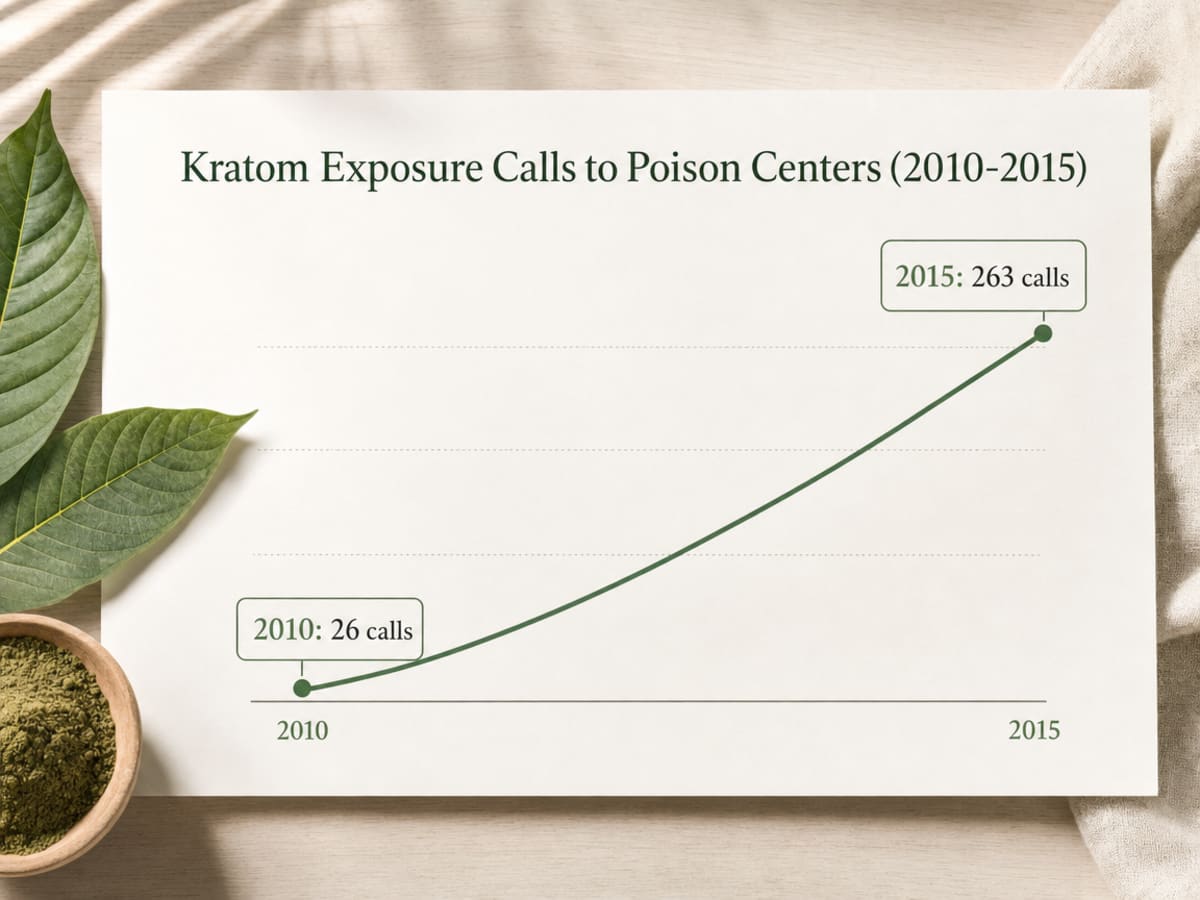
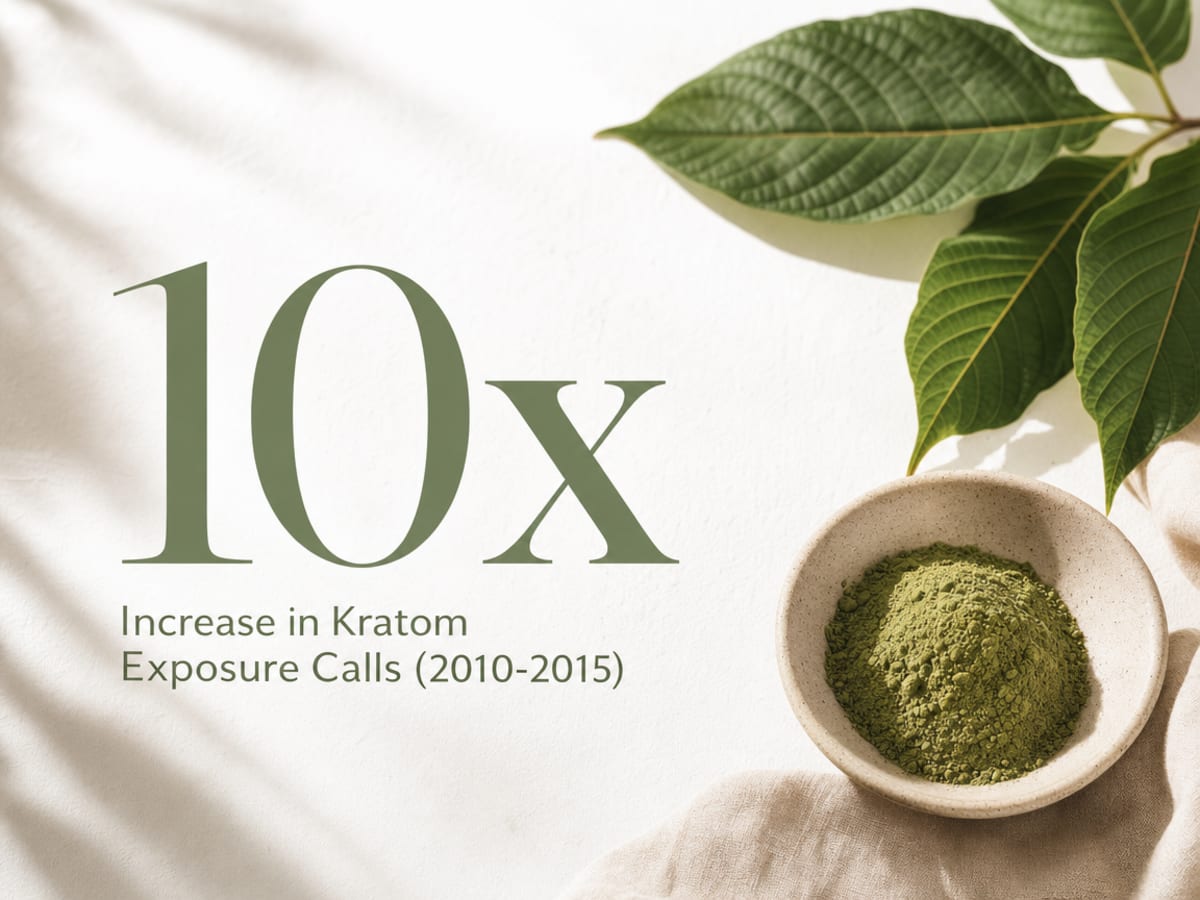
Here’s the part that surprises people: kratom-related calls to U.S. poison centers rose from 26 in 2010 to 263 in 2015 — roughly a tenfold jump in five years 3. That’s not the whole picture of use, just the sharp end where things went wrong enough to phone a poison center. The FDA has since flagged kratom for serious adverse events including liver toxicity, seizures, and substance use disorder 2. And the products on shelves today aren’t only dried leaf anymore. Concentrated 7-hydroxymitragynine extracts and kratom-kava combinations have changed what clinicians are actually treating 4, 20.
So why medical supervision? Because withdrawal from kratom often looks and feels like opioid withdrawal, and doing it alone at home — especially if you’re using high daily doses, extracts, or mixing substances — means riding out symptoms that a clinical team can genuinely soften. Vitals monitoring, medication options, a bed you don’t have to leave for 72 hours: none of that is overkill. It’s the difference between white-knuckling and being taken care of while your body resets.
The honest state of the evidence
Here’s what you deserve to hear up front: there is no FDA-approved medication for kratom withdrawal or kratom use disorder. NIDA states plainly that no approved medical therapies exist for these conditions 1, and StatPearls confirms there are no formal, evidence-based guidelines for kratom toxicity treatment 19. If a clinic tells you they follow a settled protocol, they’re overstating what the science actually supports.
What does exist is a growing base of case reports, small case series, and expert reviews. Two treatment approaches dominate the published literature. One is buprenorphine/naloxone, the same medication used for opioid use disorder — a 2021 expert survey found it was used in 89.5% of isolated kratom use disorder cases reported by responding clinicians, though that’s a narrow expert sample, not a general prescribing rate 6. The other is symptom-based care using clonidine, lofexidine, and supportive medications without an opioid agonist 9, 13. A scientific expert forum has argued that buprenorphine and methadone should not automatically be first-line, especially for patients who have never used opioids, because you can create a new opioid dependence in the process of treating an old kratom one 8.
So the honest picture is this: clinicians are making individualized judgment calls, backed by pharmacology that explains why kratom withdrawal resembles opioid withdrawal 18, but not backed by controlled trials 7, 16. That’s not a reason to skip treatment. It’s a reason to choose a setting where a medical team can adjust the plan as your body tells them what’s working.
What a real clinical assessment looks like
The questions the intake team will actually ask
The first conversation isn’t a test. It’s a mapping exercise. A good intake team is trying to figure out how your body will react when the kratom stops, and that answer lives in the specifics of your use. Expect questions that feel granular, because granular is what makes the treatment plan safer for you.
How many grams per day, and split across how many doses? When was your last dose, and what time? How many years have you been using? Have you tried to stop before, and what happened in the first 24 to 72 hours? What form are you using — plain leaf powder, capsules, an extract shot, a 7-OH tablet? Where do you buy it, and has the product changed recently? A clinician who skips these questions is guessing at your withdrawal risk 7.
The intake will also cover what’s around the kratom. Are you using kava with it, or alongside it? Alcohol, benzodiazepines, opioids — past or present? Any prescription painkiller history, even years ago? This matters because it shapes whether a medication like buprenorphine is on the table, and whether polysubstance withdrawal needs its own plan 4, 8. Expect questions about your medical history too — liver issues, seizures, past hospitalizations 2— and about why you started kratom in the first place. Pain, anxiety, opioid withdrawal, and energy for shift work are the four answers we hear most, and each one changes what aftercare should address.
Why product type matters: leaf, extract, and 7-OH
Not all kratom is the same thing pharmacologically, and your clinician needs to know which version you’ve been taking. Traditional leaf powder contains mitragynine as the dominant alkaloid, with much smaller amounts of 7-hydroxymitragynine. Concentrated extracts pack more mitragynine per gram, so the effective dose can be several times what the label suggests. Then there are 7-OH tablets and shots — products the FDA has flagged separately because concentrated 7-hydroxymitragynine behaves more like a classical opioid at the receptor, with correspondingly higher dependence and overdose concern 20.
Why does this matter at intake? Two people might both say “I use kratom every day,” and one is drinking tea from crushed leaf while the other is taking 7-OH tablets. Their withdrawal severity, their dosing math for any buprenorphine induction, and their overdose risk profile are not the same 5, 20.
There’s also the co-use question. CDC data through 2025 shows kratom appearing in about 30% of kava-related poison center reports, and serious medical outcomes have roughly doubled alongside that trend 4. If your “kava drink” from a local bar actually contained kratom, that changes the assessment too. Bring the packaging, the bottle, or a photo of the label to intake if you can. Guessing at what you took makes everything downstream harder to dose correctly.
What kratom withdrawal feels like — and when each symptom hits
The physical timeline: onset, peak, and tail
If you’ve missed a dose by six or eight hours, you already know the early signal: a restless, wired-but-tired feeling that no amount of coffee fixes. That’s the front edge of withdrawal, and the pattern that follows tends to track opioid withdrawal closely because mitragynine acts at opioid receptors along with adrenergic and serotonin sites 18.
Here’s the rough shape most people move through. Onset usually shows up 6 to 24 hours after your last dose, depending on how much you were using and how long. You’ll notice runny nose, watery eyes, yawning, sweating, and that crawling-skin restlessness. Muscle aches settle into the legs and back. Your gut wakes up in ways you don’t want — cramping, nausea, diarrhea. Sleep gets shredded.
Days 2 through 4 are the peak for most people. Heart rate and blood pressure climb, chills alternate with sweats, and the GI symptoms often hit hardest here. This is the window where a clinical team earns its keep — checking vitals, keeping you hydrated, dosing medication on a schedule your body can actually feel 10.
By days 5 to 7, the acute autonomic storm eases. What can linger, though, is a tail: low energy, poor sleep, cravings, and mood dips that stretch weeks. Published case series describe prolonged symptoms even with treatment, sometimes requiring doses up to 24 mg/day of buprenorphine/naloxone to keep them manageable 11. That tail is why aftercare exists — the acute part ends, the vulnerability doesn’t, not right away.
The psychiatric side almost nobody warns you about
The runny nose and cramping get talked about. The mental symptoms usually don’t, and that’s where people get blindsided.
Anxiety spikes early and tends to run alongside the physical symptoms. Irritability, restlessness, and a low-grade dread are common. What surprises people is how sharp the intrusive thoughts can get. One published case report describes severe obsessive thoughts during kratom withdrawal that were significant enough to warrant treatment with lorazepam 14. That’s one case, not a rule — but if your mind starts looping on something dark or catastrophic during those first few days, you’re not losing it. That symptom has been documented, and there are medications a clinical team can use to bring it down.
Depressed mood, poor concentration, and insomnia can outlast the physical symptoms by weeks. This matters for two reasons. First, untreated psychiatric symptoms are one of the biggest relapse drivers in the tail period. Second, if you started kratom to manage anxiety, depression, or trauma symptoms in the first place, those underlying conditions come back into view once the kratom is gone — and they need their own treatment plan, not just detox 7. Say something on day one if the mental side gets loud. It’s part of the picture your team is watching for.
The medication debate: buprenorphine or symptom-only taper
The buprenorphine/naloxone pathway and how dosing is set
Buprenorphine/naloxone — you probably know it as Suboxone — is the medication that shows up most often in published kratom treatment cases. It’s a partial opioid agonist, which means it sits on the same receptors kratom has been activating and calms the withdrawal signal without producing the full opioid effect. That’s why it can turn a brutal day-three peak into something you can actually sleep through.
The dosing question has an unusually specific answer for a field with so few guidelines. Buresh and colleagues reviewed the published case literature and proposed starting ranges tied to how much kratom you’d been using per day. For people using less than 20 grams per day, they suggested 4/1 mg to 8/2 mg of buprenorphine/naloxone daily. For heavier use above 40 grams per day, the proposed starting range was 12/3 mg to 16/4 mg daily. Across the cases they analyzed, the correlation between kratom daily dose and buprenorphine dose was 0.84 — a tight enough relationship that intake grams meaningfully predict where a clinician starts you 5. Those numbers came from a small case-based review, not a randomized trial, so your medical team will still titrate to how you actually respond.
Timing is more flexible than most people expect. One case series reported successful induction as early as eight hours after the last kratom dose, and some patients needed doses climbing to 24 mg/day to keep prolonged withdrawal symptoms in check 11. The first documented buprenorphine case for kratom dependence, published in 2018, described full symptom relief and stable maintenance afterward 12— the template most subsequent clinicians have worked from.
The non-opioid pathway: clonidine, lofexidine, and supportive meds
There’s a second route through withdrawal that doesn’t involve starting an opioid at all. It leans on medications that quiet the autonomic storm — the racing heart, sweating, blood pressure spikes, and restlessness — without touching opioid receptors.
Clonidine is the workhorse here. It’s an alpha-2 adrenergic agonist, which sounds technical, but the effect is straightforward: it turns down the sympathetic nervous system that goes into overdrive during withdrawal. Lofexidine works on the same receptor family and was specifically approved for opioid withdrawal symptoms. A published inpatient kratom detox protocol has used intravenous clonidine plus oral dihydrocodeine and lofexidine as a combined approach 9. An earlier case report described successful management with symptom-triggered clonidine and scheduled hydroxyzine — the latter helping with anxiety, itching, and sleep without adding a controlled substance to the plan 13.
Beyond those anchors, the supportive stack is what you’d expect: ondansetron for nausea, loperamide for diarrhea, NSAIDs or acetaminophen for muscle aches, trazodone or hydroxyzine for sleep. If psychiatric symptoms flare — the severe obsessive thoughts described in one published case, for instance — a short course of lorazepam has been used 14. None of this is exotic. It’s the same symptomatic toolkit used across many withdrawal syndromes, dosed and adjusted around your actual symptoms rather than a fixed schedule.
The honest limitation of this route: it treats symptoms without occupying the opioid receptors kratom was hitting, so the acute discomfort is often more noticeable in the first 48 to 72 hours than with buprenorphine. That’s exactly where 24/7 medical supervision earns its keep — a team watching vitals, adjusting doses in real time, and keeping you comfortable enough to stay the course.
How clinicians decide between the two
There’s no algorithm that spits out an answer here. What there is: a set of factors your medical team weighs together, usually within the first day of assessment.
Severity and duration of use come first. Someone using 5 grams of leaf a day for six months looks different from someone using 60 grams of extract a day for three years. Higher daily doses, longer histories, and use of concentrated or 7-OH products push the conversation toward buprenorphine because the withdrawal will be more severe and the receptor activity is more classically opioid-like 5, 20. Prior opioid history matters too. If you’ve been on prescription painkillers, heroin, or fentanyl in the past — or if you’re using kratom specifically to manage opioid withdrawal — an opioid agonist medication is a natural fit and often the safer choice.
The dissenting view deserves airtime. A scientific expert forum has argued that methadone and buprenorphine should not automatically be first-line for people presenting with kratom withdrawal, particularly opioid-naïve patients, and recommended considering clonidine, lofexidine, and gradual tapering first 8. The concern is real: starting an opioid agonist creates a new dependence you’ll eventually need to taper off. For a younger patient with no opioid history using moderate amounts of leaf, that trade may not make sense.
What clinicians actually reach for tells its own story. In a 2021 systematic review and expert survey, buprenorphine was used in 89.5% of isolated kratom use disorder cases treated by the responding clinicians 6. That’s a narrow expert sample reporting their own practice, not a general prescribing rate across all treatment settings — and it doesn’t settle the debate about whether it should be. But it does tell you what the physicians most engaged with this problem are choosing when they see it. Your job at intake isn’t to pick the pathway yourself. It’s to give the team the specifics — daily grams, product type, prior opioid history, what you started kratom for — so the choice fits you rather than a template.

Inpatient detox, outpatient care, and home induction
Where you go through withdrawal matters as much as what medication you’re on. The right setting depends on your daily dose, what else is in your system, your medical history, and what home actually looks like for the next week.
Inpatient medical detox is the safer default when you’ve been using high daily amounts, taking concentrated extracts or 7-OH products, mixing kratom with kava, alcohol, benzodiazepines, or opioids, or when past quit attempts have knocked you flat by day two 4, 20. Twenty-four-hour supervision means someone is checking your vitals through the night, adjusting medication when the peak hits harder than expected, and catching complications early. One published case describes a patient whose unrecognized kratom withdrawal contributed to postoperative complications and an ICU admission — a reminder that this syndrome can escalate quickly when nobody is watching for it 15. At Renewal Springs in Oklahoma City, that supervision includes wearable monitoring through Huml Health, which tracks vitals, sleep, and stress in real time — useful data when your team is deciding whether to hold, increase, or taper a dose overnight.
Outpatient detox can work for stable patients using lower daily amounts of leaf, with no significant polysubstance use and a safe, sober home environment. You come in for daily or near-daily visits, get medication and monitoring, and sleep in your own bed. Home induction of buprenorphine/naloxone has also been reported successfully in selected kratom use disorder cases — patients starting the medication outside a clinical facility with structured guidance 21. The evidence there is limited to case reports, so selection criteria aren’t settled. Higher-risk profiles belong in a bed with a nurse down the hall.
What happens after detox
Detox ends the acute physical crisis. It doesn’t end the reasons you started using kratom in the first place. That distinction is where a lot of recoveries live or die, so it’s worth taking seriously before you walk out the door.
The published literature is direct on this point: clinicians managing kratom withdrawal are advised to plan for long-term relapse prevention, not just symptom resolution, because the vulnerability window extends well past the acute taper 10. If you were started on buprenorphine/naloxone during detox, maintenance is a real conversation — some patients in published case series stayed on it afterward to prevent relapse and manage prolonged symptoms 11, 12. Others taper off over weeks to months. Neither path is wrong. What matters is that the decision is made with a prescriber who knows your history, not left to you alone at 3 a.m. when cravings hit.
Behavioral treatment carries most of the weight here, precisely because the pharmacology evidence is thin 7. Individual counseling, group work, and treatment for the underlying pain, anxiety, depression, or trauma that kratom was medicating — that’s the work that keeps the tail symptoms from becoming a relapse. If you started kratom to get off opioids, your aftercare plan needs to address opioid use disorder directly. If pain was the driver, you need a pain management plan that doesn’t route back through kratom or unmanaged prescriptions.
Step-down care usually means residential treatment, an intensive outpatient program, or standard outpatient counseling, matched to how stable you are leaving detox. Renewal Springs’ role is the medical detox piece and the handoff — helping arrange what comes next before discharge, so you’re not searching for a therapist while your sleep is still broken. Bring family into that planning if you can. The people around you shape the environment you’re returning to, and recovery holds better when they understand what you’re working with.
Speak with someone who truly understands kratom withdrawal
Connect directly for support and answers about safe, supervised kratom detox right now.
Frequently Asked Questions
How long does kratom withdrawal last?
The acute physical part usually runs 5 to 7 days. Symptoms start 6 to 24 hours after your last dose, peak around days 2 through 4, and taper from there 10. What can stretch on is the tail — low energy, poor sleep, cravings, and mood dips lasting weeks. Published case series describe prolonged symptoms even with treatment, which is why aftercare matters as much as detox itself 11.
Will I be put on Suboxone for kratom withdrawal?
Maybe. Buprenorphine/naloxone is the most commonly reported medication in the kratom treatment literature, used in 89.5% of isolated kratom use disorder cases in one 2021 expert survey 6. But it’s a real clinical decision, not automatic. An expert forum has argued it shouldn’t be first-line for opioid-naïve patients because you’re starting a new opioid dependence 8. Your daily dose, product type, and prior opioid history all shape the answer.
Can I taper off kratom at home instead of going to detox?
Sometimes, if your daily amount is modest, you’re using leaf rather than extracts or 7-OH, you’re not mixing with other substances, and home is stable. Home induction of buprenorphine/naloxone has been reported successfully in selected cases 21. What makes home tapering risky: high daily doses, concentrated products, polysubstance use, past failed attempts, or a history where withdrawal knocked you flat by day two. Those profiles belong in a bed with medical staff watching vitals.
Is there an FDA-approved treatment for kratom addiction?
No. NIDA states plainly that no approved medical therapies exist for kratom withdrawal or kratom use disorder 1, and StatPearls confirms there are no formal, evidence-based guidelines 19. What clinicians work from is a base of case reports, small case series, and expert reviews. That gap is exactly why individualized medical supervision matters more here, not less — the plan gets adjusted around how your body actually responds, not a fixed protocol.
What if I use 7-OH products or mix kratom with kava or other substances?
Say so at intake, and bring the packaging if you can. Concentrated 7-hydroxymitragynine products behave more like classical opioids at the receptor, and the FDA has flagged them separately for higher dependence and overdose concern 20. Kratom-kava co-use has climbed too — CDC data shows kratom appeared in 30% of kava-related poison center reports by 2025 4. Your withdrawal severity, medication choice, and monitoring plan all shift when concentrated or combination products are involved.
What happens after detox is finished?
The acute part ends. The vulnerability doesn’t, not right away. Published guidance on kratom withdrawal specifically recommends planning for long-term relapse prevention, not just symptom resolution 10. That usually means residential treatment, an intensive outpatient program, or standard counseling, plus treatment for whatever kratom was medicating — pain, anxiety, depression, or opioid use disorder 7. If you were started on buprenorphine, maintenance versus taper is a real conversation to have with your prescriber, not alone.
References
- Kratom | National Institute on Drug Abuse (NIDA) – NIH. https://nida.nih.gov/research-topics/kratom
- FDA and Kratom. https://www.fda.gov/news-events/public-health-focus/fda-and-kratom
- Notes from the Field: Kratom (Mitragyna speciosa) Exposures Reported to Poison Centers — United States, 2010–2015. https://www.cdc.gov/mmwr/volumes/65/wr/mm6529a4.htm
- Increase in Poison Center Reports Linked to Kratom-Containing Kava Products — National Poison Data System, United States, 2000–2025. https://www.cdc.gov/mmwr/volumes/75/wr/mm7512a1.htm
- Treatment of Kratom Withdrawal and Dependence With Buprenorphine/Naloxone: A Case Series and Systematic Literature Review. https://pubmed.ncbi.nlm.nih.gov/32858563/
- Pharmacotherapy for Management of ‘Kratom Use Disorder’. https://pubmed.ncbi.nlm.nih.gov/33974767/
- Controversies in Assessment, Diagnosis, and Treatment of Kratom Use Disorders. https://pmc.ncbi.nlm.nih.gov/articles/PMC11344726/
- Kratom withdrawal: Discussions and conclusions of a scientific expert forum. https://pmc.ncbi.nlm.nih.gov/articles/PMC10311168/
- Kratom Dependence and Treatment Options: A Comprehensive Review. https://pubmed.ncbi.nlm.nih.gov/32682371/
- Kratom Withdrawal: A Systematic Review with Case Series. https://pubmed.ncbi.nlm.nih.gov/30614408/
- Management of kratom dependence with buprenorphine/naloxone: A case series. https://pubmed.ncbi.nlm.nih.gov/33617752/
- Treatment of Kratom Withdrawal and Addiction With Buprenorphine. https://pubmed.ncbi.nlm.nih.gov/30383616/
- A Case Report of Kratom Addiction and Withdrawal. https://pubmed.ncbi.nlm.nih.gov/27057581/
- The diagnosis of severe obsessions in the setting of kratom withdrawal and treatment with lorazepam: Case report. https://pubmed.ncbi.nlm.nih.gov/32924857/
- Complicated postoperative course secondary to kratom withdrawal: a case report. https://pubmed.ncbi.nlm.nih.gov/31719971/
- Kratom as an opioid alternative: harm, or harm reduction?. https://pubmed.ncbi.nlm.nih.gov/36001875/
- Kratom as a potential substance use disorder harm reduction agent. https://pmc.ncbi.nlm.nih.gov/articles/PMC11169875/
- An update on the clinical pharmacology of kratom: uses, abuse potential, and safety. https://pubmed.ncbi.nlm.nih.gov/38217374/
- Kratom – StatPearls. https://www.ncbi.nlm.nih.gov/books/NBK585120/
- Concentrated 7-OH Opioid Products. https://www.fda.gov/media/187898/download
- Kratom use disorder: case reports on successful treatment with home induction of buprenorphine-naloxone. https://pubmed.ncbi.nlm.nih.gov/37499179/